
Expected Unexpected Behavior Activities and Printables
Teaching kids expected behaviors is an important aspect of their development. Social skills for kids and important for them to learn. Navigating expected unexpected behavior is a great way to teach important social skill behaviors, especially in a small group. These printable task cards and workbook will help your children or students avoid unexpected behaviors in any social situation.
Check out some more social skills activities here or even some SEL crafts for preschoolers here.
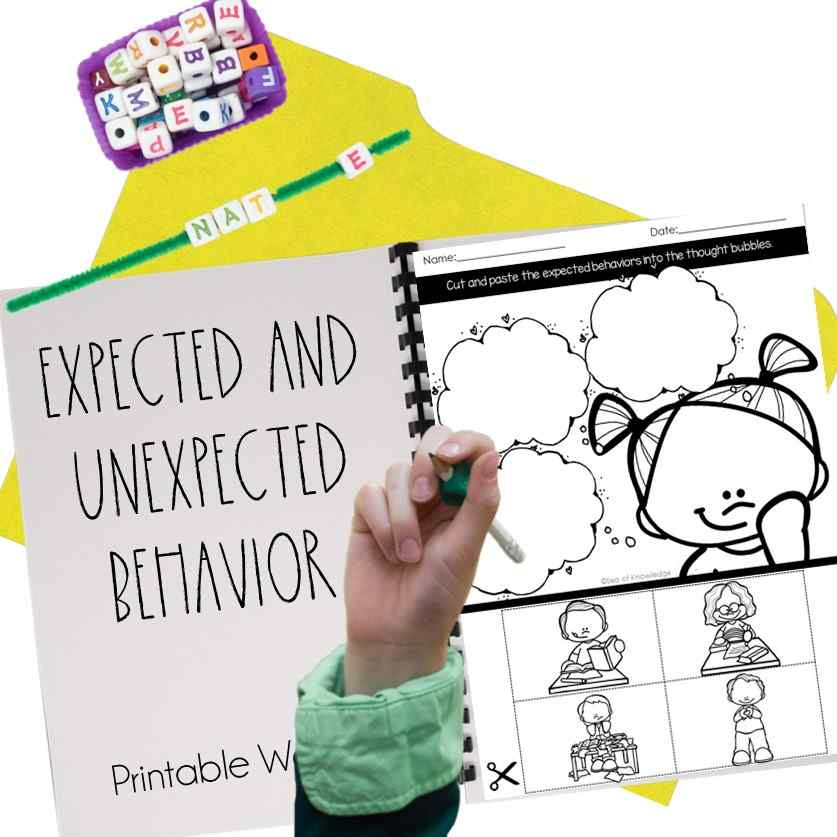
Get your free set of printables at the end of this post!
A quick note: a few of the images you see here were created with AI. School policies don’t allow me to share real classroom photos, so this was the best way to still show how the activities are used.
Looking for engaging SEL activities for kindergarten? This September kindness challenge includes 30 simple ideas that help children practice friendship, respect, sharing, and cooperation during the busy back-to-school season.
Social Skill Stories (written in language for kids):
Search and Find Books for Kids That Do More Than Keep Children Busy
Not every search and find book for kids helps children build real-life skills. Many are simply filled with random objects to spot, leaving little opportunity to teach kindness, empathy, friendship, or social skills. If you’re looking for an activity that keeps children engaged and encourages meaningful conversations, this printable bundle offers over 60 pages of search-and-find challenges, emotions activities, real-life social scenarios, and kindness practice designed to help children learn while they play.
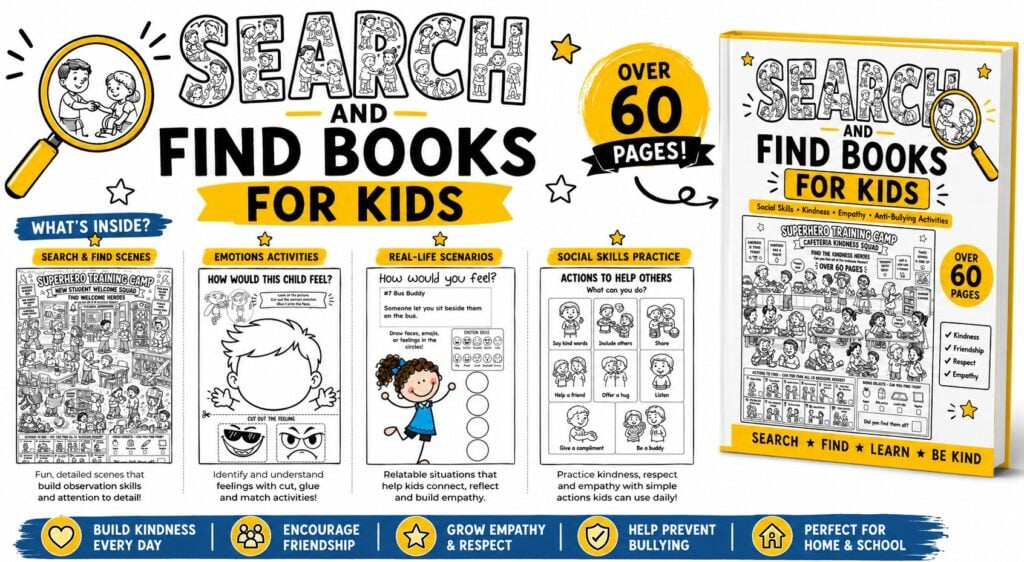
Perfect for classrooms, homeschool, counseling sessions, speech therapy, and quiet time, these activities help children notice emotions, solve everyday social situations, practice respectful choices, and develop stronger observation skills.
Instead of another worksheet that gets completed and forgotten, these pages encourage discussion, critical thinking, and positive behavior—making them a fun way to reinforce the social skills many children struggle with most.
Grab the Free Token Board to Pair With This Social Story
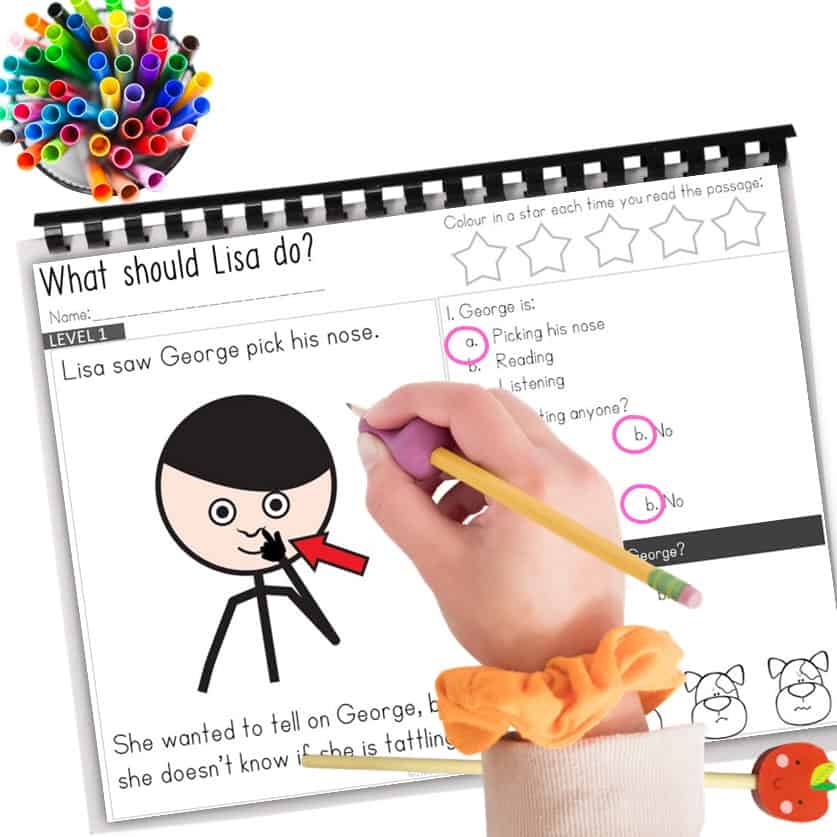
If you are using this keeping clothes on social skills story, I highly recommend pairing it with a simple token board. Kids do so much better when there is something visual and concrete they are working toward, especially when we are teaching a new boundary or replacement behavior.
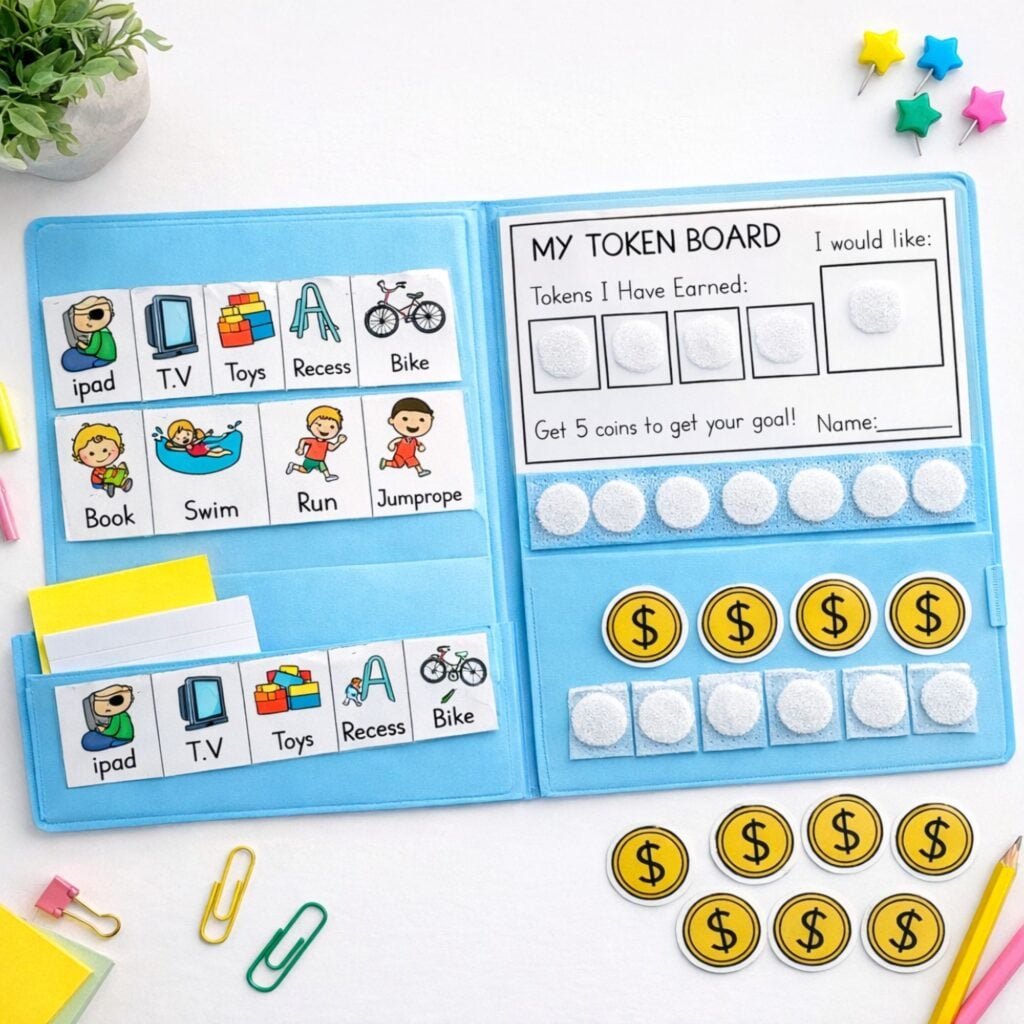
I created a FREE printable token board that you can laminate and use with Velcro coins, real tokens, or even little stars. Your student picks a preferred activity, earns five tokens for demonstrating the expected behavior, and then celebrates reaching their goal in a positive and structured way.
It works beautifully with this story, but honestly, it also works with accepting no, toilet routines, gentle hands, and any other social skill you are teaching. You can grab the free token board below and start using it right away in your classroom or at home.
[Grab the FREE Token Board Here]
Unexpected choices free resources
There are many ways to help kids develop good social behavior ettiquette; like using a video clip, modeling behaviors in class, social scenarios and more!
It’s a great way to have kids reflect on their own behaviors and these are essential skills for social emotional learning in the classroom and beyond.
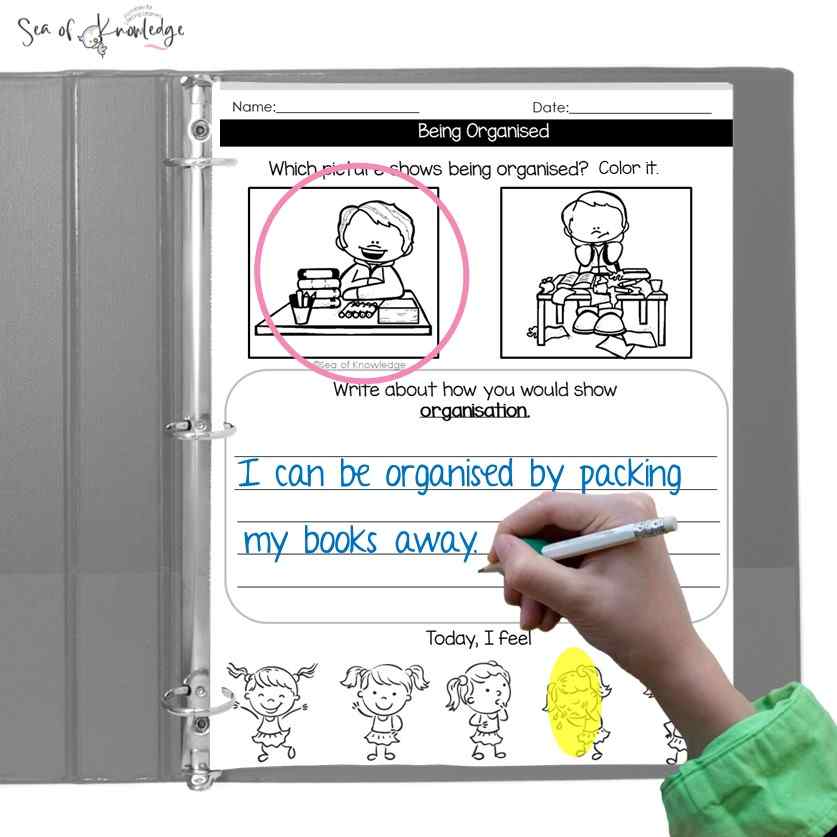
Social skills worksheets and printables for kids with special needs.
I have written on many important skill sets for social skills, if you haven’t yet, check out this social story printables for anger management and calm down techniques.
When children learn how to behave appropriately in different situations, they are more likely to succeed in school, build positive relationships with peers and adults, and develop a sense of responsibility and self-discipline.
Get this printable sample at the end of this post.
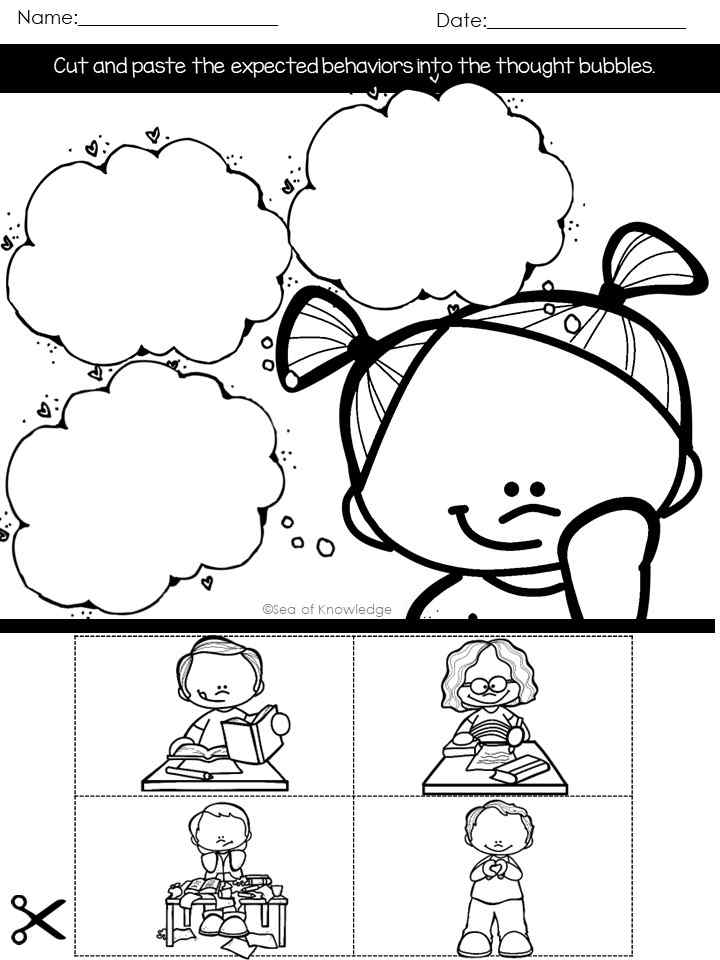
As teachers and parents, it is our responsibility to teach children the skills they need to exhibit appropriate behaviors. In this blog post, we will discuss some effective strategies for teaching expected behaviors to kids.
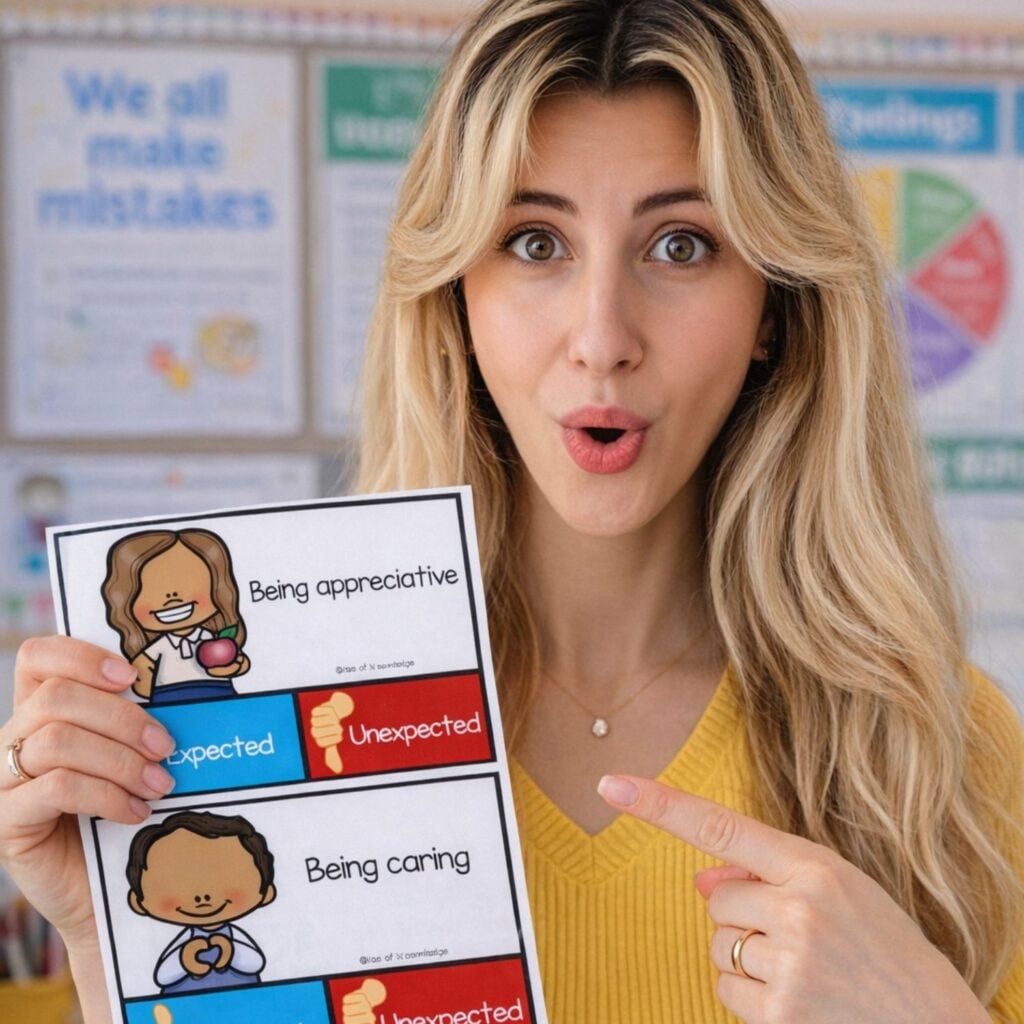
Unexpected behavior sort
The full printable unit covers some great social expectations like personal space, staying on task, being cooperative, team work and more!
See the FULL expected and unexpected behavior activity bundle here.
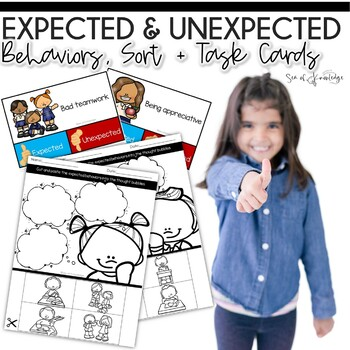
Some of the themes covered in this bundle also include unspoken rules in a social world.
This is a great resource to have on hand for when you need quick ways to develop kids’ social behaviors in a fun and interactive way.
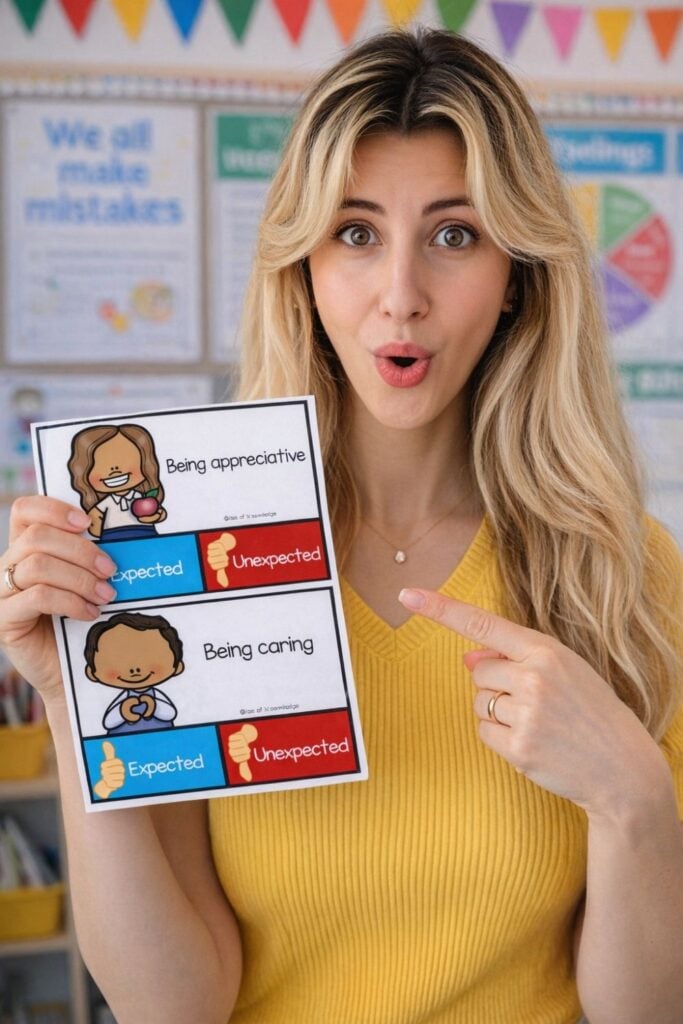
One of the main activities included in this bundle are these task cards.
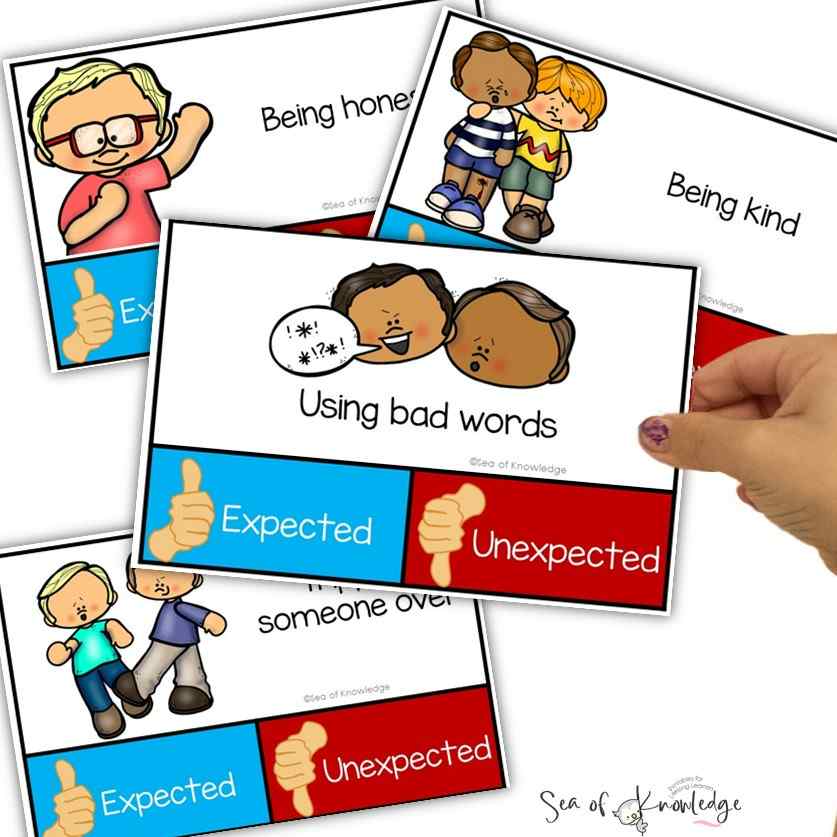
It’s a great idea to have these cards laminated and stored in your classroom ready for use when you need them. Kids will choose whether the behavior shown on the card is expected or unexpected.
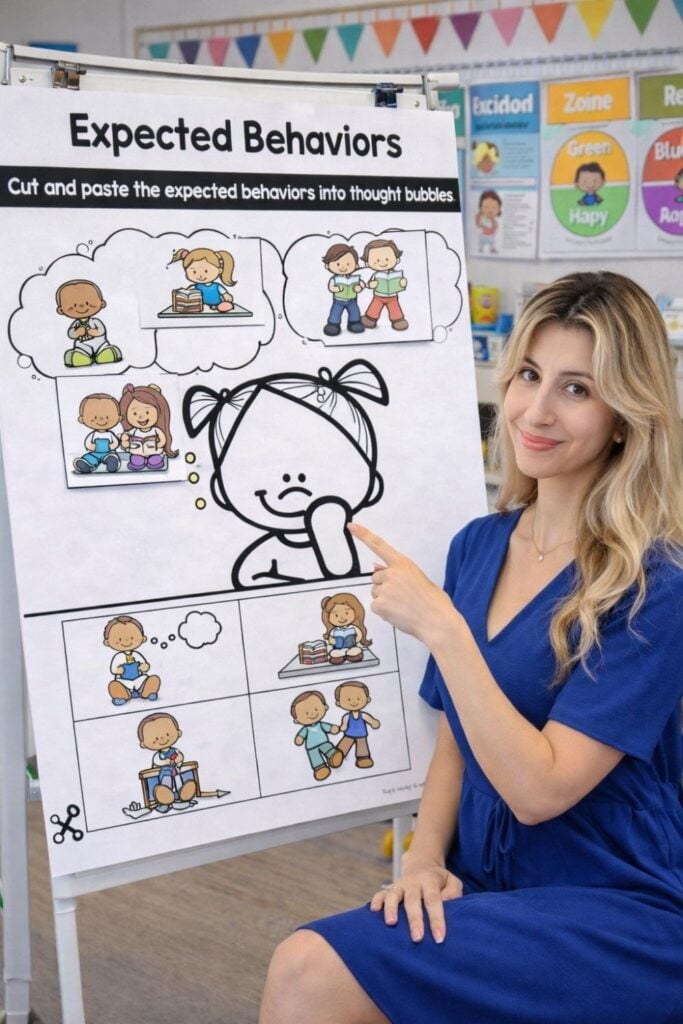
You can use pegs to help them show their responses.
This in turn will also bring up fun conversations where kids will show their understanding about each of the behaviors shown.
It will also develop perspective taking and at the end of the day develop their sense of belonging as part of the group.
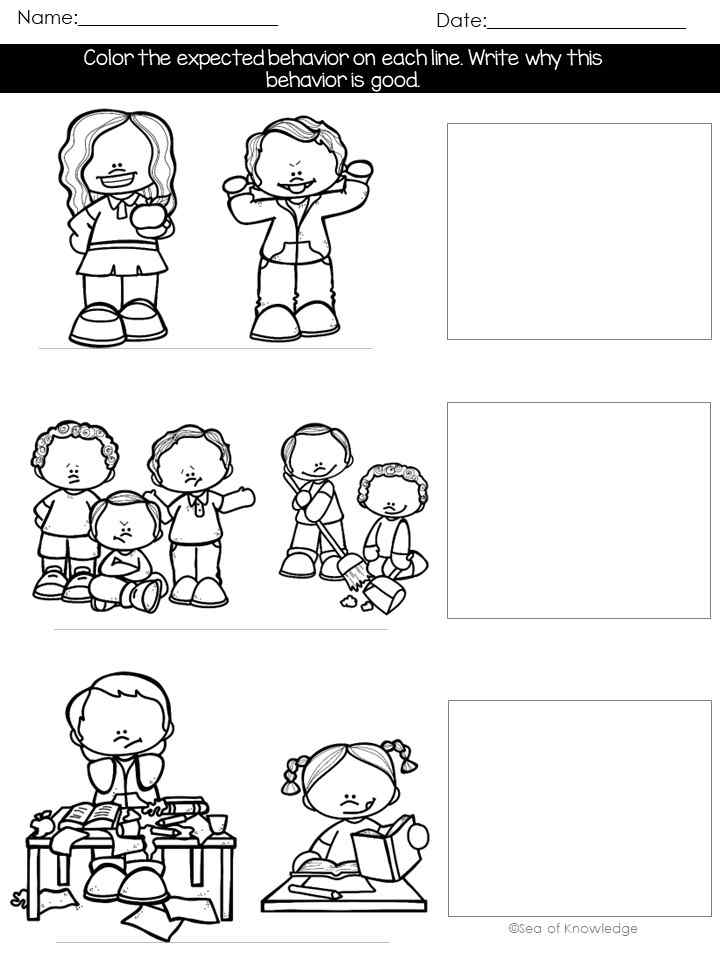
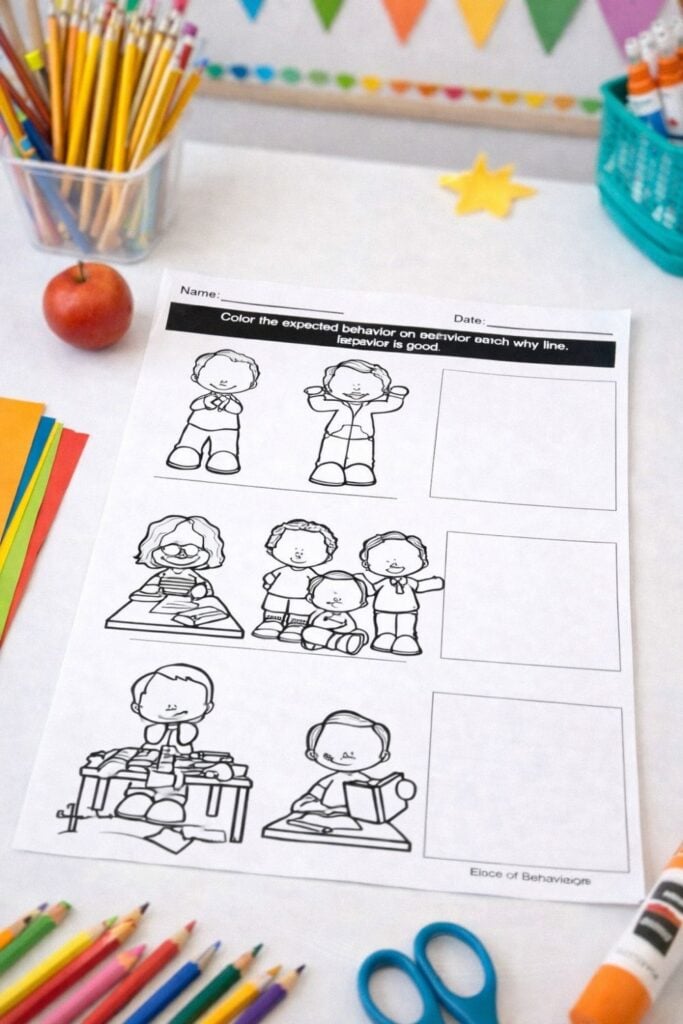
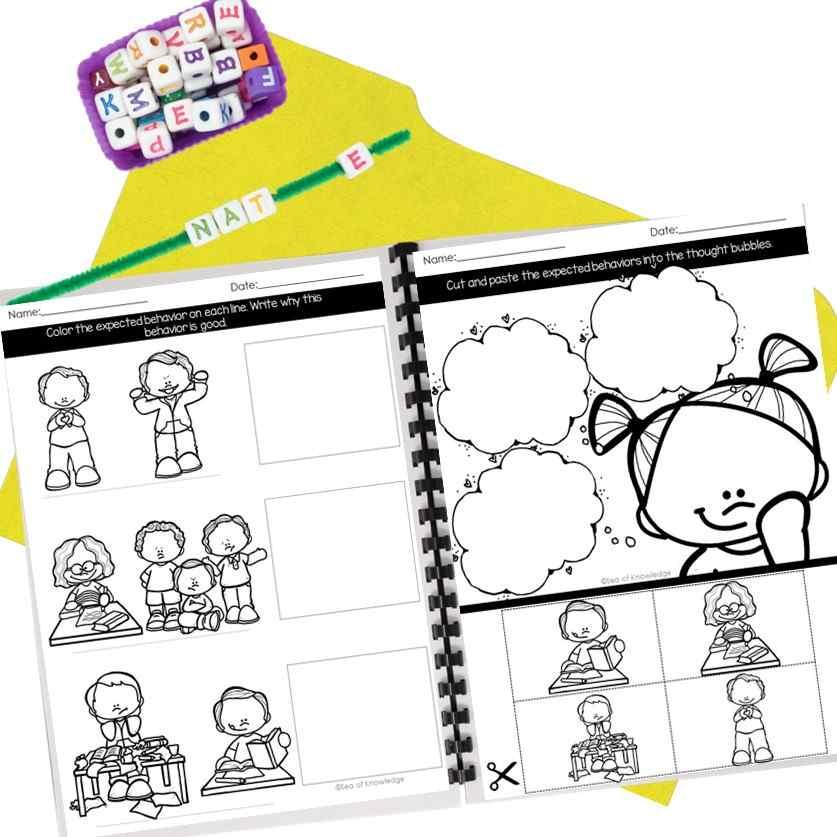
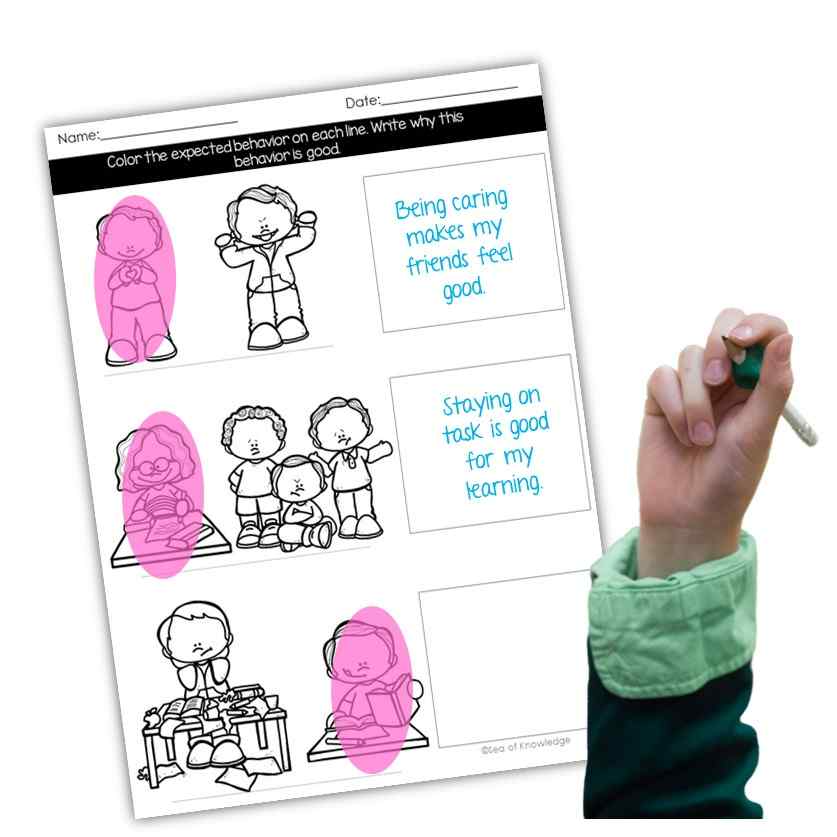
You want to decrease attention-seeking behaviors and develop positive behaviors and this printable workbook below will do just that!
Unexpected behaviors activities
These printables are perfect for when you need preschoolers, special needs or kinders to work on these skills.
The workbook pages are easy to master and understand. You can differentiate these to help students understand what to do next.
More ways to teach these expectations:
Set clear expectations: The first step to teaching kids expected behaviors is to set clear expectations.
This involves defining what behaviors are expected of children in different situations, such as in the classroom, during playtime, and at home.
Clear expectations help children understand what is expected of them and give them a sense of direction.
Be sure to communicate these expectations in a way that is age-appropriate and easy to understand.
Model good behavior: Children learn by example, and therefore it is essential to model good behavior.
Teachers and parents should demonstrate expected behaviors consistently in front of children.
Get a sample of these printables at the end of this post!
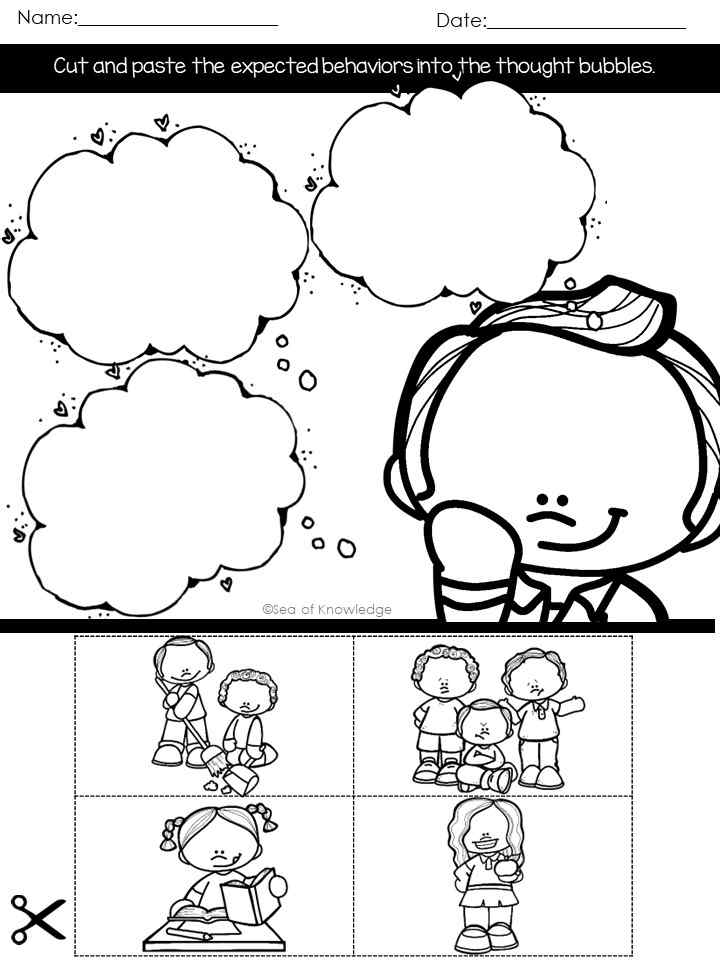
For example, if you want children to be polite and respectful, be sure to use polite language and show respect to others.
Children are more likely to adopt behaviors that they see modeled by adults.
Reinforce positive behaviors: When children exhibit expected behaviors, it is important to acknowledge and reinforce these behaviors.
Praise children for their positive behavior, and let them know that their behavior is appreciated.
For example, if a child is sharing with others, praise them for being kind and generous. This positive reinforcement encourages children to continue exhibiting the expected behavior.
Use consistent consequences: When children exhibit unexpected behaviors, it is important to use consistent consequences.
This means that the consequences for breaking the rules should be the same every time. For example, if a child is not following directions, they might lose a privilege.
Consistent consequences help children understand the importance of following rules and the consequences of breaking them.
Using positive reinforcement
Use positive language: When teaching expected behaviors, it is important to use positive language.
Instead of telling children what not to do, focus on what they should do. For example, instead of saying, “Don’t run,” say, “Please walk.” This positive language encourages children to focus on the expected behavior instead of the negative behavior.
Involve children in creating expectations: Children are more likely to follow the rules when they have a say in creating them.
Teachers and parents can involve children in creating expectations by asking for their input on what behaviors are important to them.
This approach can help children take ownership of their behavior and feel more invested in following the rules.
In conclusion, teaching expected behaviors is an essential aspect of children’s development.
By setting clear expectations, modeling good behavior, reinforcing positive behaviors, using consistent consequences, using positive language, and involving children in creating expectations, teachers and parents can help children develop the skills they need to behave appropriately in different situations.
With these strategies in place, children are more likely to succeed in school, build positive relationships with peers and adults, and develop a sense of responsibility and self-discipline.
Expected Unexpected Behavior Activities
Grab the FULL packet of expected and unexpected behaviors task cards + printable workbook below.
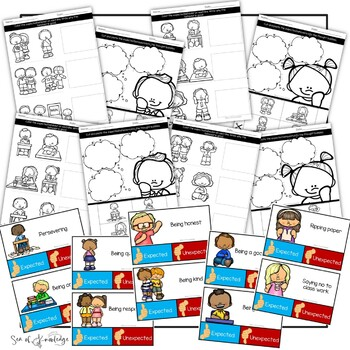
OR you could try a sample of these to see if they would work with your students / kids.

3 More Free expected and Unexpected Behaviors Worksheet pdf
#1 Expected and Unexpected Behavior Practice (Quick Win)
This is one of those activities I keep bookmarked because it just works. These expected and unexpected behavior Boom Cards are perfect for quick discussions, whole-class modeling, or small groups when you need kids to actually think about their choices.
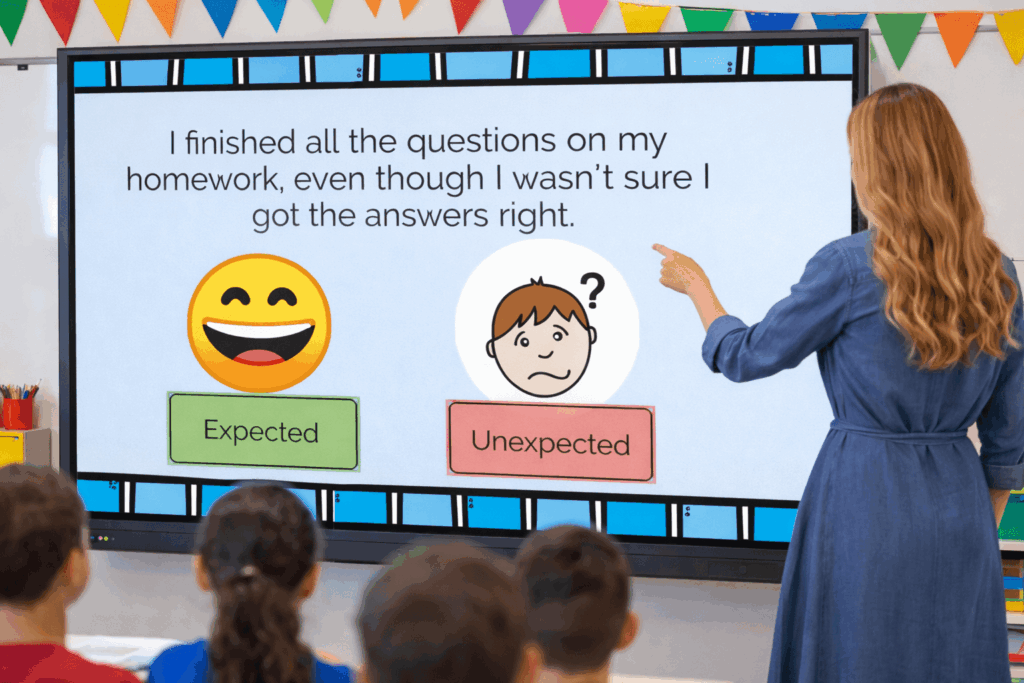
I like using these during morning meetings or right after a tricky moment in the classroom. We read the scenario, pause, and talk it out. No lecturing. No long explanations. Just real situations kids recognize and can relate to.
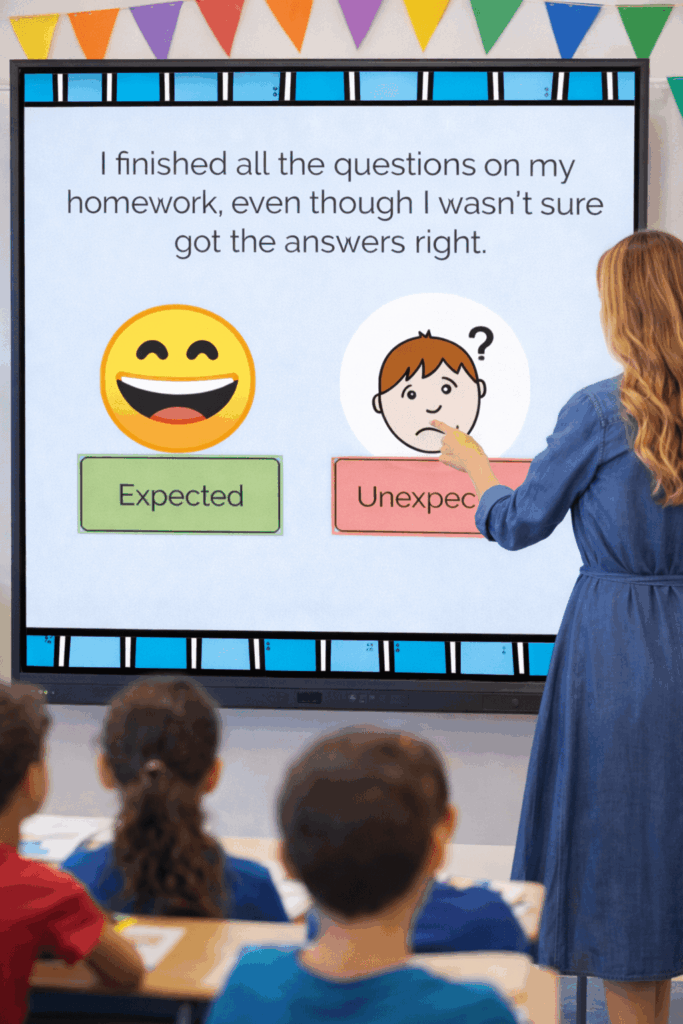
It’s especially helpful for speech therapy, SEL lessons, and social skills practice because the visuals do the heavy lifting and the language stays simple. Low prep, high impact, and easy to reuse all year.
👉 Grab it here: Expected and Unexpected Behavior Boom Cards
#2 Expected vs Unexpected Behavior Sorting Cards
These expected and unexpected behavior sorting cards are one of my go-to activities when kids need clear visuals and simple language. No big speeches. No overthinking. Just real scenarios they actually recognize.
I like laying these out on a white table and letting students work through them together. The green and red cues make it easy to talk about choices without turning it into a lecture. It works well for SEL time, social skills groups, and speech sessions when you want discussion without overwhelm.
Low prep, hands-on, and perfect for quick behavior check-ins throughout the year.
👉 Grab the cards here:
Expected Unexpected Behaviors Sorting Activity
#3 Expected vs Unexpected Behavior Anchor Chart and Visuals
This expected vs unexpected behavior poster is one of those visuals I like to keep up all year. It gives kids a clear reference without turning behavior talks into a long lesson or a power struggle.
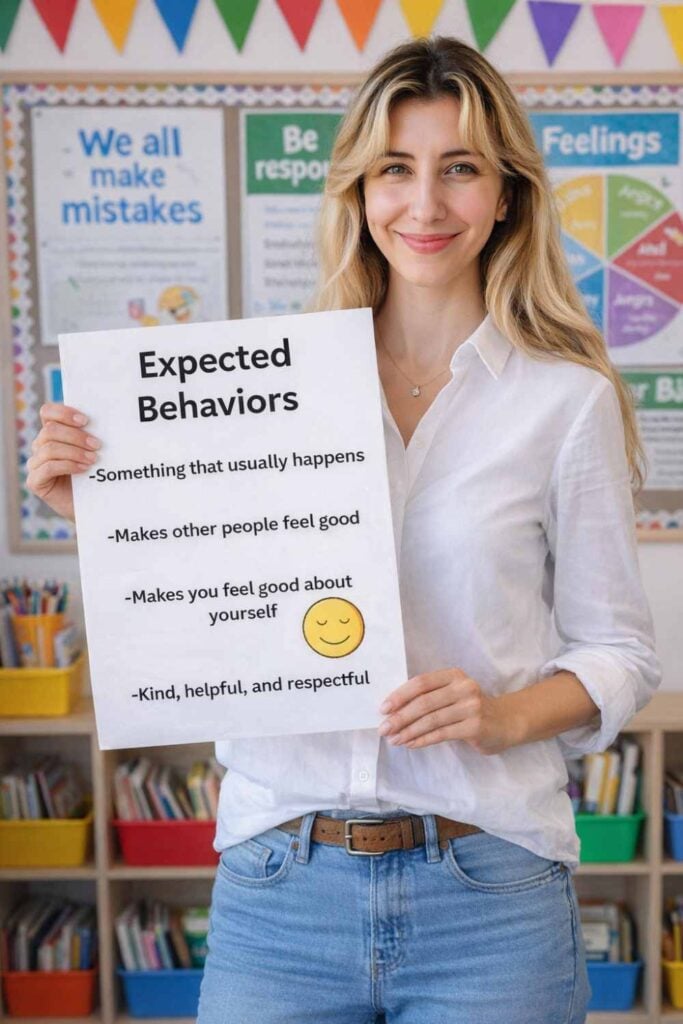
I use this chart during morning meetings, SEL check-ins, or right after a situation where kids need a quick reset. We point, read it together, and talk through what expected behavior actually looks like in real life. Simple language. Clear expectations. No overexplaining.
The packet also includes visuals and worksheets, which makes it easy to reinforce the same ideas during small groups or independent work. It works especially well for younger learners, SPED, and kids who benefit from seeing expectations spelled out clearly.
👉 Grab the free poster and packet here:
Expected vs Unexpected Behaviors Visuals and Worksheets
Teaching behavior doesn’t have to mean constant reminders or long conversations that go nowhere. When expectations are clear, visual, and consistent, kids actually start to make better choices on their own.
These expected and unexpected behavior visuals have made a big difference in my classroom because they keep things simple. We talk it through, point to the visuals, and move on. No power struggles. No big reset needed.
If you’re looking for low-prep tools that support SEL, social skills, and classroom routines without adding more to your plate, these are easy ones to keep in your back pocket. Sometimes the simplest visuals are the ones that stick the longest.

Thanks for having kid friendly behavior reminders