4 Fun Phonics Activities for Kindergarten With Printables and Digital Activities
A student can name a letter, tell you its sound, and still get stuck when those sounds appear together in a word. If that sounds familiar, these ideas for helping students blend letter sounds are a useful starting point. The next step is choosing phonics activities for kindergarten that give students practice with the specific skill they need.
I am adding more and more activities right inside the hub right here and over $500 in value already. 😉
I like having a mix of printable activities and digital games available. Some learners need to hear a word again. Others need to move a letter, say a sound, or write the missing part before the task makes sense.
These four resources from my Sea of Knowledge TPT store cover letter sounds, CVC word reading, sound substitution, and rhyming. Below, you’ll find practical ways to use each one in small groups, intervention, literacy centers, or learning at home.
Choosing Phonics Activities for Kindergarten
Start with a quick observation rather than handing every student the same task. Can the student connect a familiar letter with its sound? Can they blend a short word made from taught letter-sound patterns? Can they hear what changes when you replace one sound?
These are related skills, but they are not interchangeable. Phonics connects speech sounds with written letters. Phonemic awareness involves hearing and working with individual sounds in spoken words. Rhyming belongs to the broader area of phonological awareness.
You can work on these areas alongside one another. Students do not need to master every rhyming task before beginning letter-sound instruction or reading simple words. Choose activities that match your teaching sequence and the learner’s current needs.
1. Practice Letter Sounds With Mouth Cues
Sometimes “say the sound” needs a little more explanation. Showing what your lips and mouth do gives students something concrete to notice while you model.
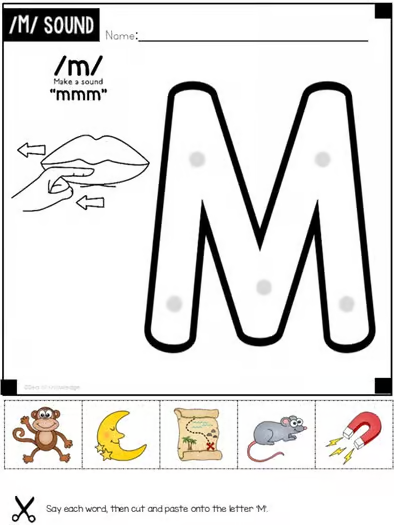
My Letter Sound Fluency Sound Cards and A to Z Letter Sound Worksheets with Mouth Cues provide a visual starting point for this practice. In the M worksheet shown, students see a mouth cue, a large letter M, and pictures to say, cut, and paste onto the letter.
Try this teaching routine: Show the letter, model /m/, and invite students to notice that your lips come together. Let them watch in a small mirror if helpful. Say the sound together, then name the pictures before students begin the cutting and pasting.
For example, say “map” slowly and draw attention to /m/ at the beginning. Then ask, “What sound do you hear first?” Connecting the spoken sound to the printed letter keeps the activity focused on phonics rather than simply completing a craft.
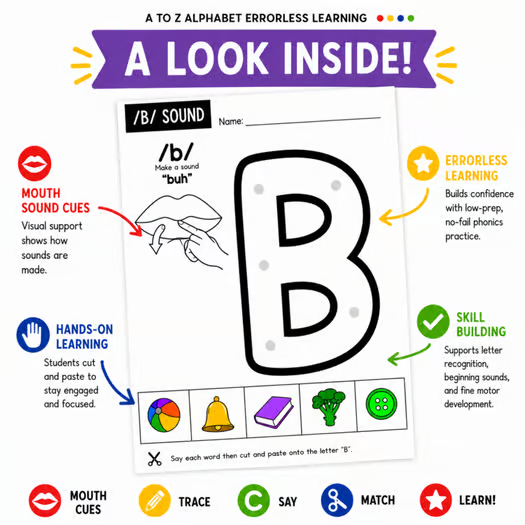
For learners who need more support, my ideas for teaching letter sounds to struggling students offer additional ways to make practice manageable.
Keep review brief and accurate. Introduce a small number of letter-sound correspondences, revisit familiar ones, and add new learning gradually. Fluency grows from secure practice; it does not need to become a race.
2. Read CVC Words With Gumball Boom Cards
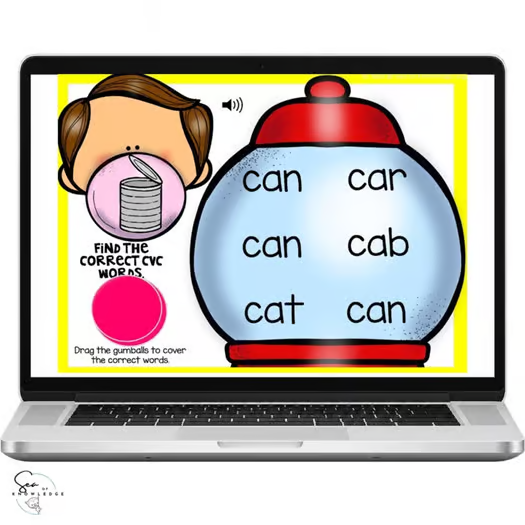
A word like can looks simple until it sits beside car, cab, and cat. Suddenly, students need to check the whole word instead of noticing the first two letters and making a hopeful guess.
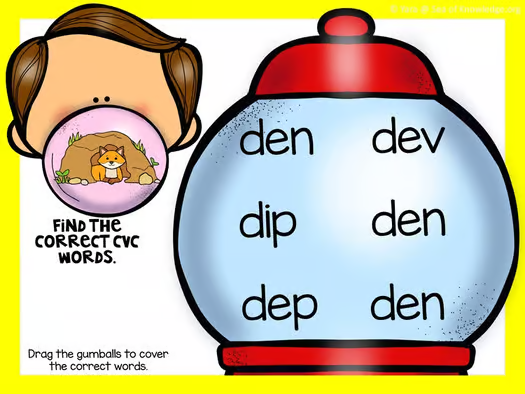
The Reading CVC Words Short Vowels Gumball Boom Cards turn that close reading into a digital activity. Students use the pictured target word and drag gumballs to cover matching CVC words in the gumball machine.
Model one card before independent practice. Name the picture so everyone knows the target word. Point to a printed choice and model reading from left to right, blending the sounds. Then compare the word with the target.
On the can example, pause at the last letter. Ask, “Does this word end with /n/?” Read cat as cat and explain why it is a different word. The picture establishes the target; students still need to read the printed choices.
When introducing short a, choose familiar words with letter-sound patterns you have taught. This short a sound word list gives you examples for a quick warm-up before the digital game.
For extra practice, write one target word on a whiteboard and change a single letter. Read both versions together. This gives students another opportunity to notice that a small change in print can change the word.
You can alternate digital practice with these low-prep CVC activity sheets when students need another way to revisit short vowel words.
3. Change One Sound With Sound Swap Worksheets
Once students are comfortable with familiar CVC words, changing one sound gives them a new reason to listen closely. What happens when cat becomes hat? Which sound changed, and which sounds stayed the same?
My Sound Swap CVC Words Phoneme Substitution Worksheets make that change visible. The cat example shows cat changing to hat, bat, and rat. Students identify the new beginning sound and connect it with the missing letter.
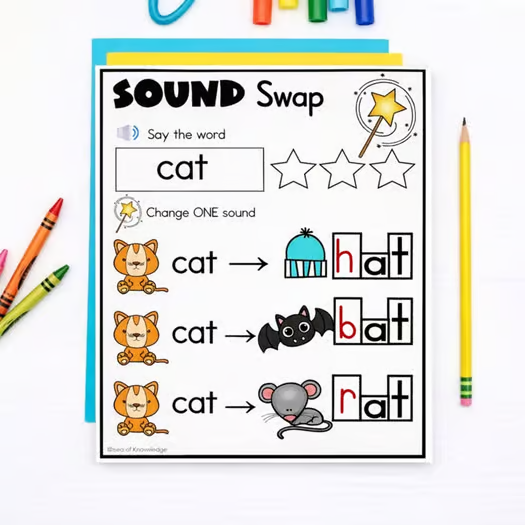
Begin orally. Say, “Cat. Change /k/ to /h/. What word now?” Model the answer if needed. Repeat the original word and the new word so students can hear the difference.
Next, show the printed words. Point out that the a and t stay the same while the first letter changes. Have students complete the missing letter, then blend and read the new word.
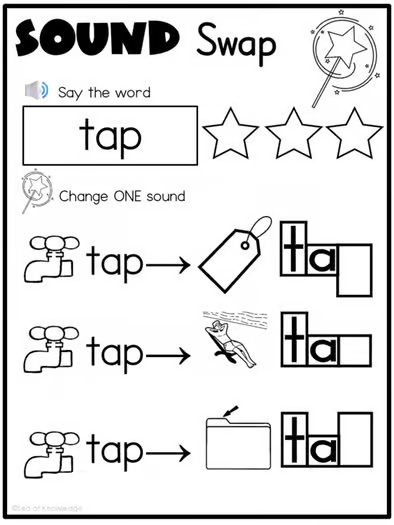
The tap example provides a different challenge: changing the final sound to make words such as tag, tan, or tab. Name each picture clearly before asking students to work out the new word. An unfamiliar picture label should not turn into a phonics guessing game.
For a hands-on adaptation, build the original word with magnetic letters. Physically swap one letter, say the new sounds, and read the new word. Then return to the worksheet and make the same change in writing.
If a student changes more than one sound, slow down. Say both words and compare the beginning, middle, and end. Work through one example together before asking for another independent response.
4. Listen for Rhymes With Audio Boom Cards
Words can start with different sounds and still rhyme. Hen and men belong together because their endings sound the same. Hat and kit do not rhyme, even though both end with /t/.
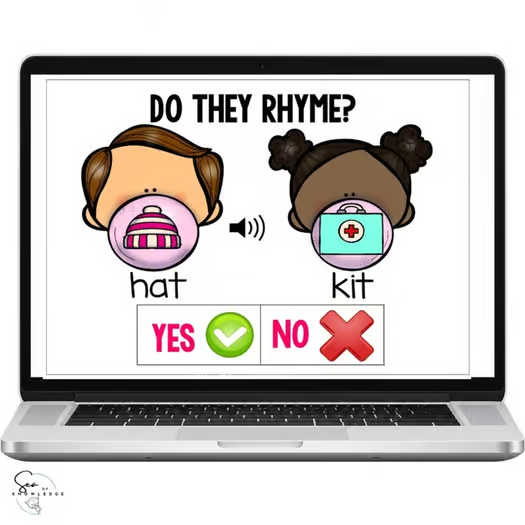
My Rhyming Words with Audio Boom Cards ask students a simple question: “Do they rhyme?” The pictured word pairs and yes-or-no choices give the activity a consistent format.
Use the audio, then say both words together. Model hen, men and emphasize the shared ending. Invite the student to repeat the pair before choosing yes or no.
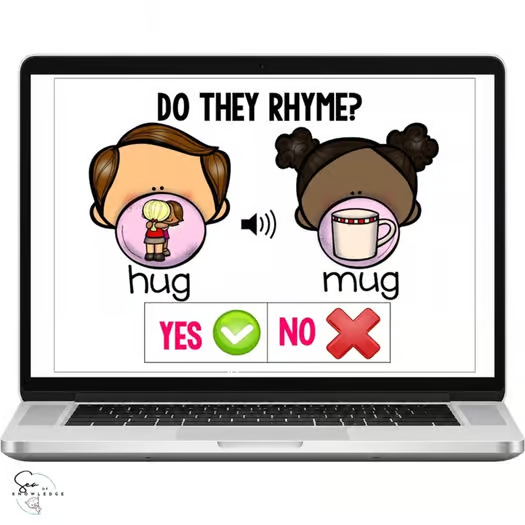
For a nonrhyming example, say hat, kit. Explain that matching only the last consonant is not enough: the vowel and the sounds after it need to match. Keep the explanation short, and follow it with another spoken example.
If you want to continue the same listening focus away from a screen, these rhyming games for kindergarten provide more playful practice ideas.
For an oral extension, offer two choices: “What rhymes with hen: men or hat?” Generating a rhyme independently can be a later challenge. A student who can recognize a rhyming pair may still need support to think of a new rhyming word.
Using Printable and Digital Phonics Activities in Small Groups
You do not need to use all four resources in one lesson. Pick one main teaching target and choose a short activity that gives you useful information about the student’s learning.
For a letter-sound group: Model one correspondence, practice saying the sound, and complete a few picture responses together. Finish with a quick check using the printed letter.
For a CVC reading group: Review the sounds needed for the target words, model one gumball card, and listen while each student reads a choice aloud. Notice whether errors involve the vowel, the ending, or blending.
For a sound substitution group: Make a change orally, repeat it with letter tiles, and complete one Sound Swap example. Focus on the same sound position until students understand the task.
For another printable option on a different day, try this CVC reading dice game. It gives students a change of format while keeping the focus on reading short words.
Simple Adaptations for Intervention, Special Education, and ESL
Preview picture vocabulary. Say each pictured word and check understanding. For English learners, knowing what a picture represents and decoding its written label are separate demands.
Reduce the number of responses. Cover part of a worksheet, complete one row together, or model the first response. These supported alphabet learning activities offer another option when learners need a highly scaffolded starting point.
Separate motor demands from the reading goal. A student can point, say the sound, or choose a letter tile before an adult helps with cutting or writing. If dragging on a screen is difficult, ask the student to identify a choice while an adult operates the device.
Give specific feedback. Instead of only saying “try again,” point to the part that needs checking: “You read the beginning. Let’s look at the last letter.” Then model and give the student another supported turn.
Respect speech differences. Mouth cues can support noticing sounds, but a student’s ability to pronounce a sound is not the same as their ability to identify it. Accept an appropriate pointing or selection response when spoken production is difficult.
Move From Phonics Practice to Reading
Games and worksheets give students focused practice with particular skills. They also need opportunities to use taught letter-sound patterns in actual reading and spelling.
After practicing individual CVC words, choose a suitable sentence from these CVC short vowel decodable sentence worksheets. Check that its spellings match what the student has learned, then support them to read the words in order.
Keep the goal clear: notice the sounds, connect them with print, and read accurately. A little focused practice with the right level of support can make the next reading task feel more manageable.
Choose the resource above that matches your students’ current learning: letter sounds, CVC word reading, changing sounds, or hearing rhymes. Start with one clear model and a few thoughtful responses. The gumballs can handle the decoration; you can focus on the teaching.