CVC Short Vowel Decodable Sentences Worksheets for Kindergarten (Free & Printable)
Free CVC short vowel decodable sentence worksheets for kindergarten. Includes printable PDF pages, fluency practice, and multi-sensory phonics activities using dot markers and play dough.
If you’re teaching early readers, using CVC short vowel decodable sentences worksheets is one of the most effective ways to build strong foundational reading skills. To build early decoding skills alongside sentence reading, incorporating CVC blending flashcards can be a powerful addition. These help students practice blending individual sounds before applying those skills to full CVC decodable sentences, strengthening both phonics accuracy and reading confidence.
If your students are starting to blend simple words, these CVC short vowel decodable sentences worksheets are a fun way to build confidence while practicing real reading fluency skills.
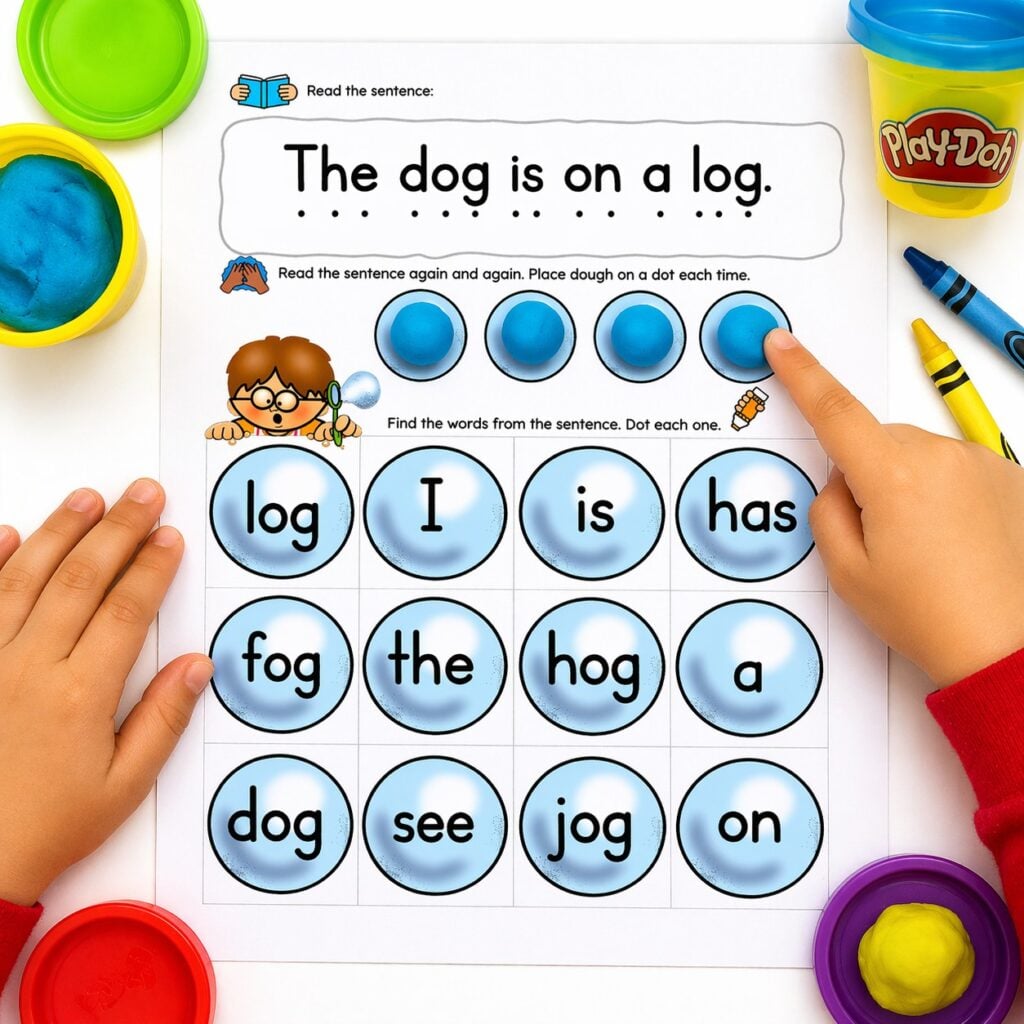
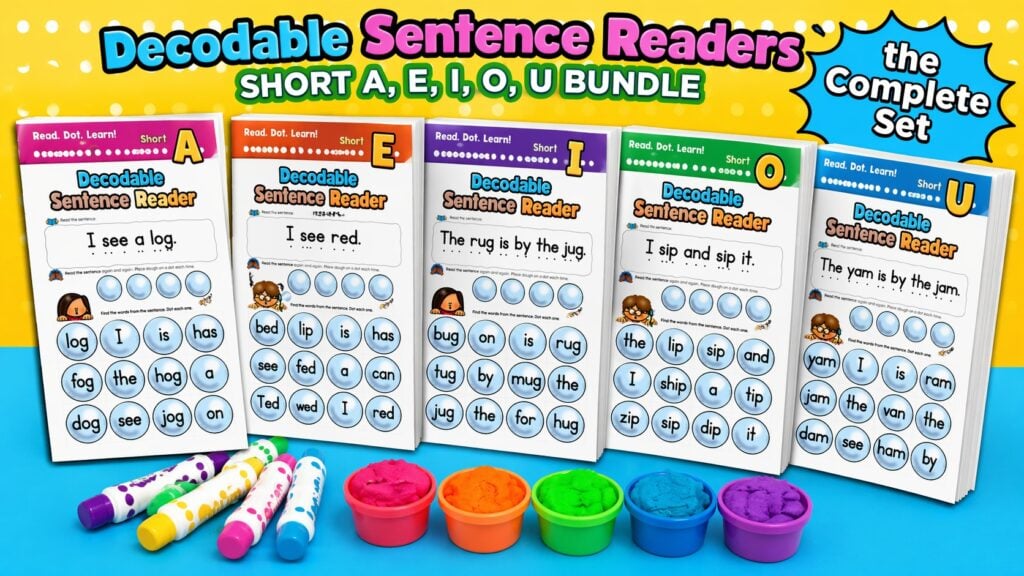
If your students can read CVC words but freeze in sentences… this is what’s missing. The Complete Set builds confidence by bridging the gap between word reading and real sentence fluency.
These structured, phonics-based worksheets help children practice blending, decoding, and reading fluency using simple, predictable text. Whether you’re a classroom teacher, tutor, or homeschool parent, incorporating decodable CVC sentence practice can dramatically improve reading confidence.
For students who need additional foundational practice, these preschool CVC words worksheets are a great starting point. They focus on simple word building, which supports the transition into reading full decodable sentences and complements your worksheet routine.
In this guide, we’ll walk through why these worksheets work, how to use them effectively, and how a complete short vowel CVC bundle can save you time while maximizing results.
What Are CVC Short Vowel Decodable Sentences?
CVC words are consonant-vowel-consonant words like cat, sit, dog, and hut. These are the first step in early phonics instruction.
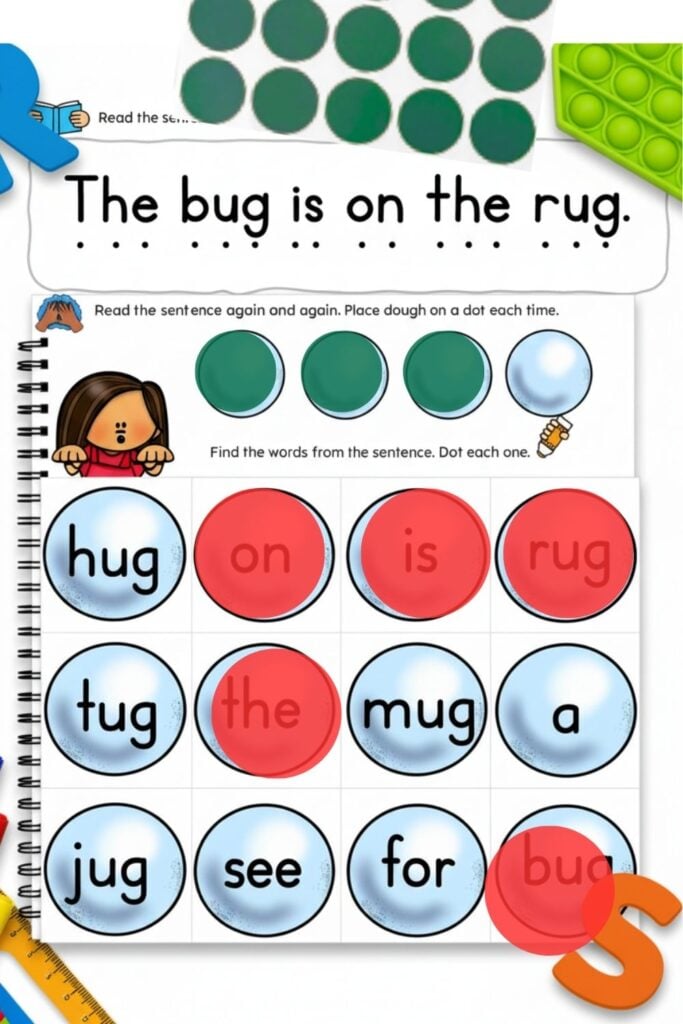
Decodable sentences are carefully written using only phonics patterns that students have already learned.
If you’re looking to expand your phonics centers, these engaging CVC activity sheets provide extra hands-on practice. They reinforce the same short vowel patterns used in decodable sentences, helping students retain and apply their skills.
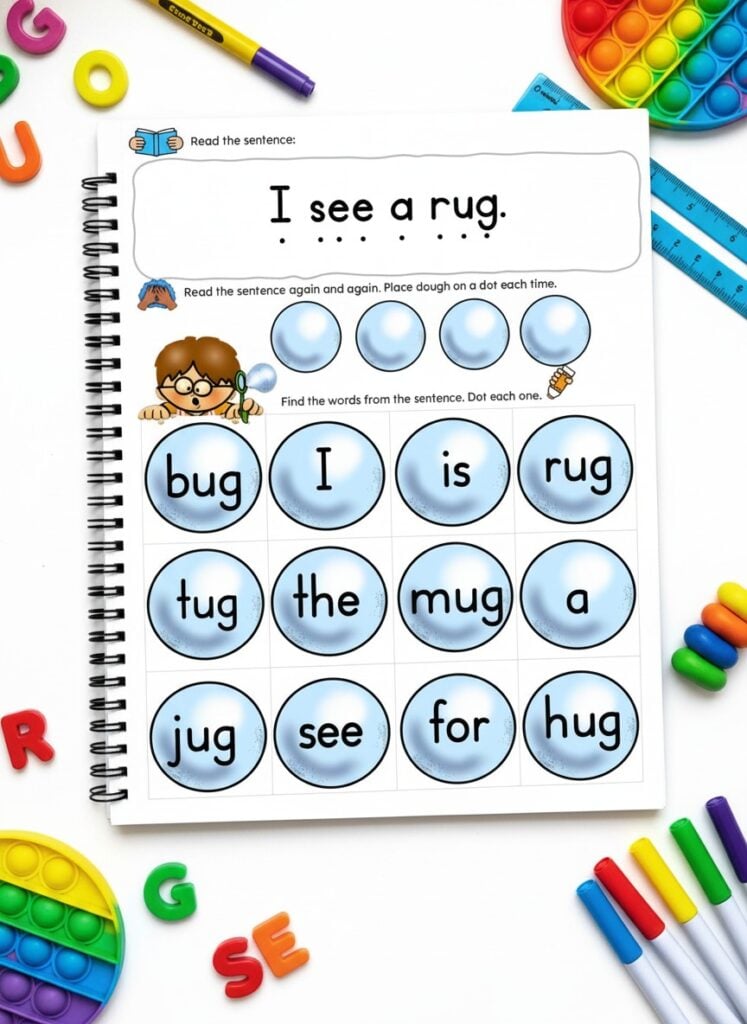
👉 Example from your worksheet:
“I see a hut.”
This type of sentence allows students to:
- Decode independently
- Practice short vowel sounds (like short u)
- Build reading fluency through repetition
Why Use CVC Decodable Sentence Worksheets for Short Vowel Instruction?
When teaching short vowels, random or unpredictable text can slow progress. That’s where CVC decodable sentence worksheets make a real difference.
1. They Align with the Science of Reading (SOR)
Decodable sentences follow a structured literacy approach, meaning:
- Students only read patterns they’ve been taught
- No guessing from pictures or memorization
- Focus is on phonics and decoding
This builds strong neural pathways for reading, especially in early learners.
You can also make learning more interactive with a CVC worksheet reading dice game. This adds a fun, game-based element while still reinforcing decoding and fluency skills practiced in your worksheets.
2. They Reinforce Short Vowel Patterns in Context
Worksheets like your short vowel “u” example (hut, cut, nut) give repeated exposure to the same vowel sound.
Instead of isolated practice, students:
- See the vowel in multiple words
- Read it in a sentence
- Apply it immediately
This repetition is key for mastery.
3. They Bridge the Gap Between Words and Fluency
Many students can read single CVC words but struggle with sentences.
Your worksheet structure solves that by:
- Starting with a simple sentence
- Encouraging repetition (“read again and again”)
- Building toward fluency
To strengthen phonological awareness alongside decoding, try incorporating rhyming games for kindergarten. Rhyming builds sound awareness, which directly supports students as they work through CVC words and sentences.
👉 This is exactly how students move from decoding → fluent reading
4. They Build Word Recognition Alongside Decoding
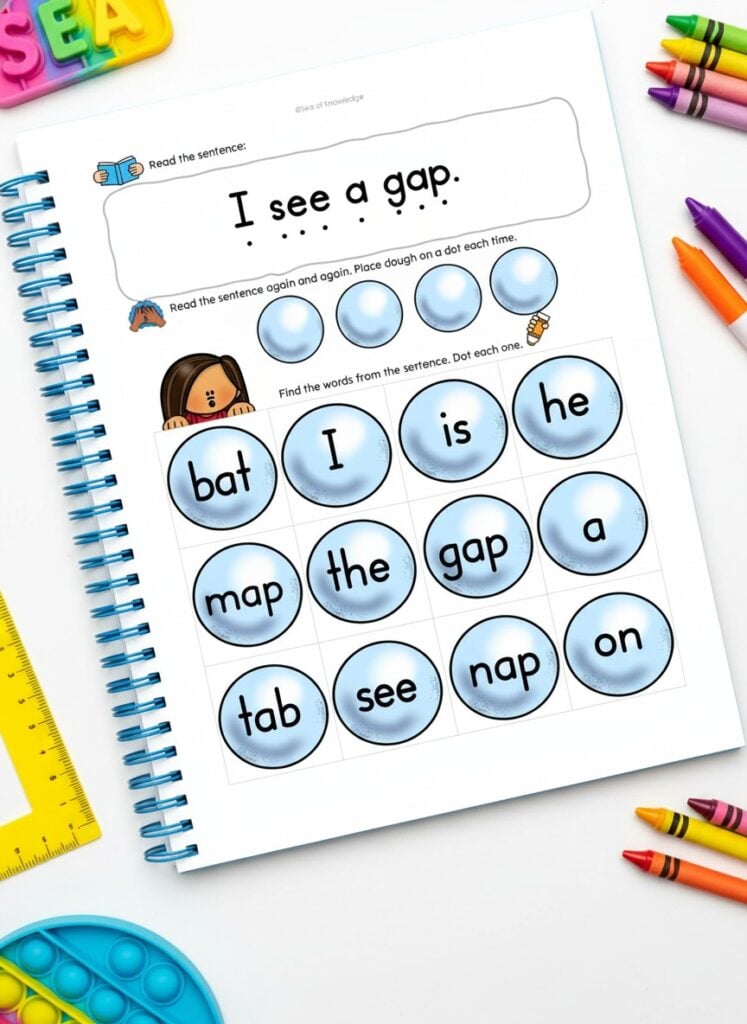
In your sample worksheet:
- Students read: “I see a hut.”
- Then identify words like hut, see, a
This builds:
- Sight word recognition
- Word tracking skills
- Sentence comprehension
When students begin to confuse spelling patterns, targeted support like C or K rule activities can help clarify when to use each letter. This strengthens both decoding and spelling accuracy within CVC word practice.
How to Use CVC Worksheets with a Science of Reading (SOR) Approach
This is where your resource becomes especially powerful.
Your worksheet already supports multi-sensory learning, which is a key part of SOR.
dents:
- Read the sentence
- Tap each word (as shown in your worksheet)
👉 This reinforces:
- Left-to-right tracking
- Word segmentation
- Attention to each word
2. Use Play Dough or Dot Markers (Multi-Sensory Learning)
Your worksheet includes dots for repetition, which is perfect.
Students can:
- Place play dough on each dot as they reread
- Use dot markers (bingo daubers)
- Cover each circle after each successful read
👉 Why this works:
- Engages motor skills + visual learning
- Reinforces repetition without boredom
- Supports struggling readers through tactile input
For a more comprehensive literacy routine, you can also use busy learning binder printables to organize and revisit CVC sentence work. These are especially helpful for centers, independent work, or ongoing review.
This aligns directly with multi-sensory structured literacy practices.
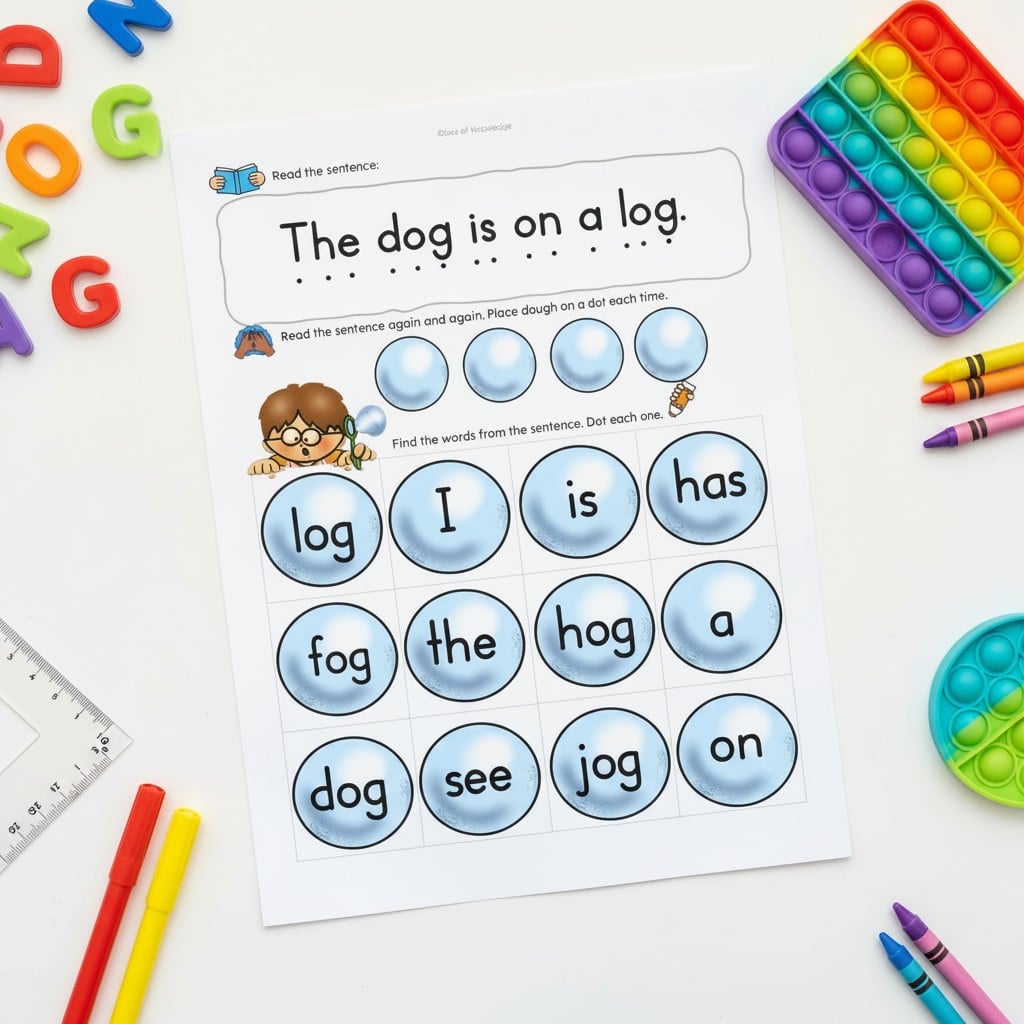
3. Find and Dab the Words
In your example:
Students locate words like hut, see, a from the sentence.
👉 This builds:
- Word recognition
- Visual discrimination
- Connection between sentence and word list
4. Repeated Reading for Fluency
The “read again and again” section is critical.
Students:
- Re-read the same sentence multiple times
- Build speed and confidence
👉 This is one of the most effective fluency strategies in early reading.
CVC Short Vowel Mega Bundle (All Vowels Included)
If you’re planning phonics instruction, using a complete CVC short vowel bundle is far more effective than isolated worksheets.
If your students can read CVC words but freeze in sentences… this is what’s missing. The Complete Set builds confidence by bridging the gap between word reading and real sentence fluency.
This resource goes beyond a single worksheet (like the short u example shown) and includes:
✅ Full Short Vowel Coverage:
- Short A
- Short E
- Short I
- Short O
- Short U
✅ Consistent Worksheet Structure:
- Read the sentence
- Tap each word
- Repeat with manipulatives
- Find and identify words
👉 This consistency helps students focus on reading skills, not directions.
Using CVC short vowel decodable sentences worksheets is one of the most effective ways to support early readers.
When combined with multi-sensory strategies like tapping, dot markers, and play dough, these worksheets become a powerful tool aligned with the Science of Reading.
And with a full short vowel CVC mega bundle, you can provide structured, consistent practice that helps every student succeed.
Free CVC Sentence Decodable Worksheets (1 Page from Each Vowel)
If you’d like to try these activities before committing to the full resource, you can grab a free set of CVC sentence decodable worksheets.
This free download includes:
- ✅ 1 worksheet for each short vowel (a, e, i, o, u)
- ✅ Simple decodable CVC sentences
- ✅ Built-in fluency practice (read and repeat)
- ✅ Find and dab word activities
- ✅ Multi-sensory options using play dough or dot markers
👉 These pages follow the same structured format shown in the sample (like the short u worksheet: “I see a hut.”), so students get consistent, predictable practice.
💡 Why Start with the Free Set?
This free resource is perfect for:
- Trying out decodable sentence routines
- Assessing student readiness with short vowel sounds
- Using in small groups, centers, or intervention
- Introducing multi-sensory phonics practice aligned with the Science of Reading
If your students respond well to this format, the full CVC Short Vowel Mega Bundle includes complete coverage of all vowels with consistent, scaffolded practice.
If your students can read CVC words but freeze in sentences… this is what’s missing. The Complete Set builds confidence by bridging the gap between word reading and real sentence fluency.
👉 This allows you to move beyond single worksheets and build a systematic phonics routine that supports decoding, fluency, and word recognition.

![Simple Alphabet Chart Printable [with matching letter tiles]](https://www.seaofknowledge.org/wp-content/uploads/2023/01/Print-Alphabet-Chart-Printable.jpg)
![Unicorn Sight Word Game [Editable Template]](https://www.seaofknowledge.org/wp-content/uploads/2023/01/build-letters-in-a-sight-word-game.jpg)