10 Types of Cyberbullying With Real Examples Kids Understand [FREE Infographic Downloads]
A mean comment in a group chat. An embarrassing photo shared without permission. A fake account pretending to be a friend. Some types of cyberbullying are easy to recognize; others are surprisingly subtle. If your students are still learning the basics, start with these free types of bullying infographic posters before introducing what bullying looks like online.
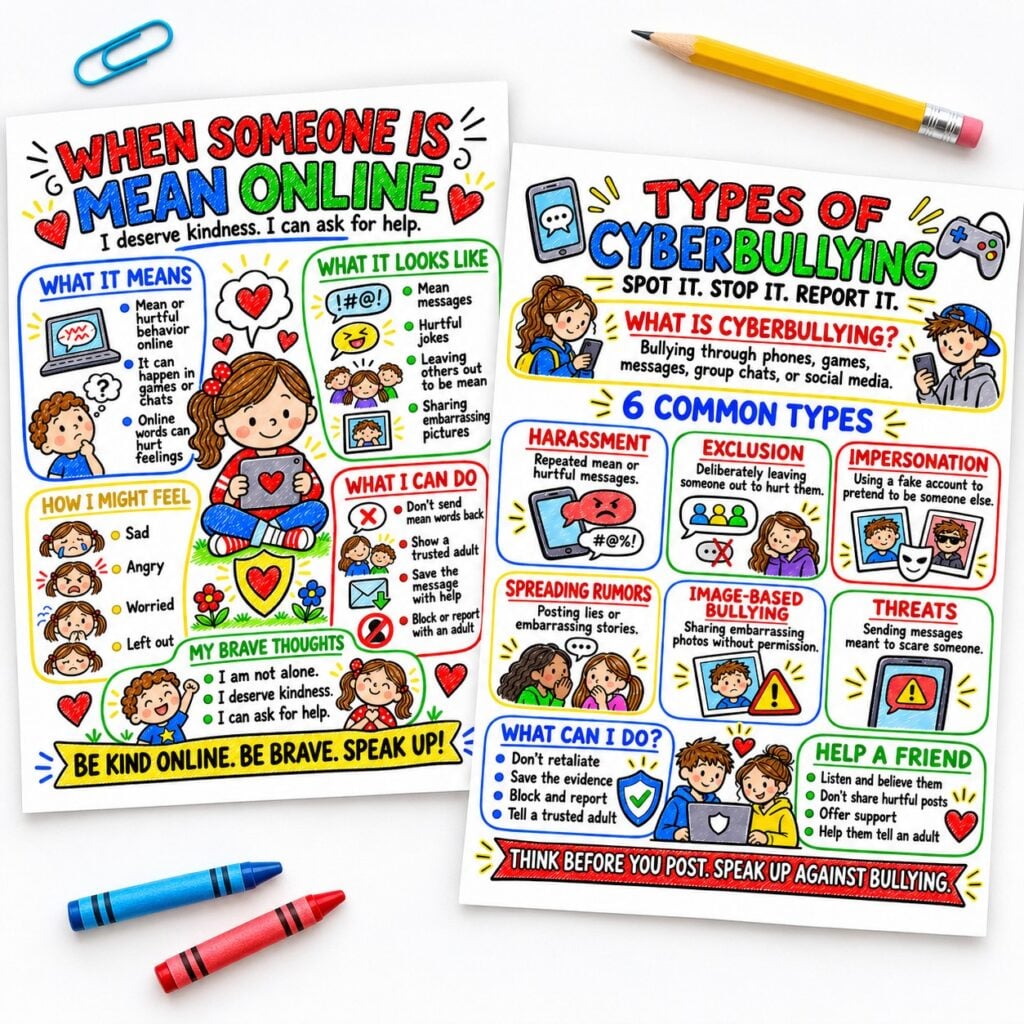
Below you’ll find 10 types of cyberbullying with examples kids understand, practical classroom discussion ideas, and two FREE cyberbullying infographic posters—one for younger learners and one for older students. No complicated lesson prep required.
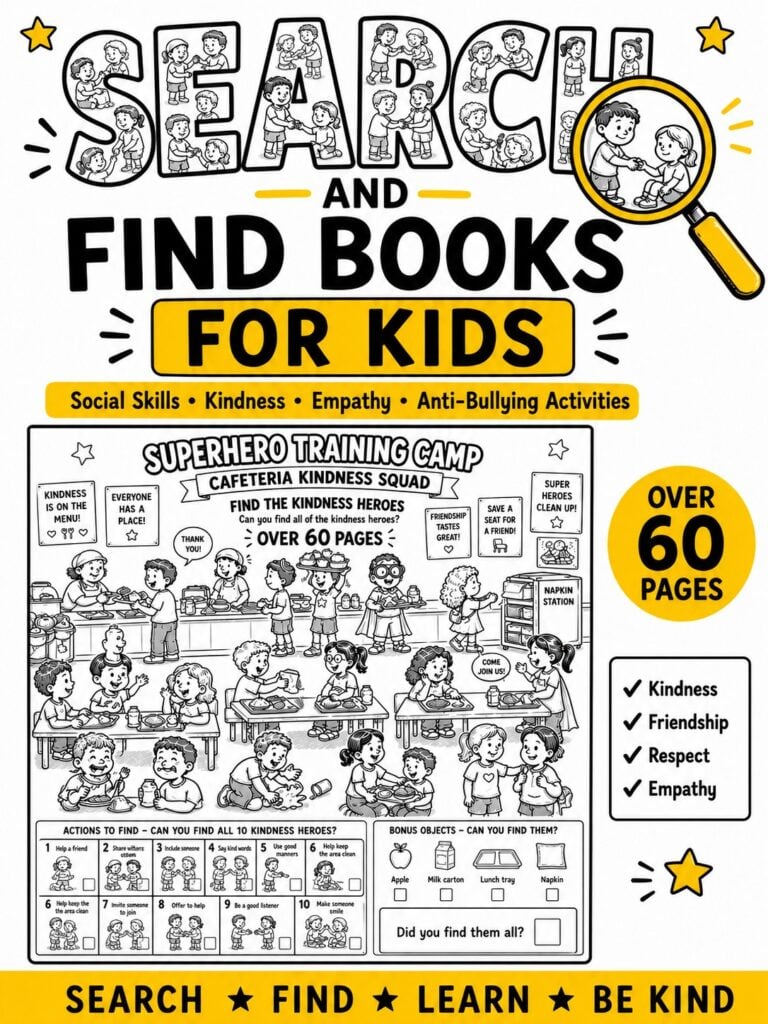
Can Kids Spot Bullying Before It Happens?
Teaching kindness is easy. Helping kids recognize unkind behavior, exclusion, and bullying? That’s where things get tricky!
The Search and Find Anti-Bullying Activity Book makes these important conversations easier with 60+ pages of engaging I Spy activities that encourage children to explore kindness, empathy, friendship, and respect.
Kids get to search, find, and think about social situations—all while having fun!
What Is Cyberbullying?
Cyberbullying is bullying that happens through digital devices and online spaces such as messages, games, apps, social media, and group chats. It can involve hurtful comments, exclusion, threats, impersonation, or embarrassing images.
Unlike an unkind remark that happens once, bullying often involves repeated targeting or a power imbalance; however, a single serious threat or widely shared humiliating post still needs an adult’s attention.
It helps to teach children the difference between a disagreement, an unkind choice, and bullying. A bullying social story with relatable situations can help students discuss that distinction without turning every awkward friendship moment into a bullying label.
10 Types of Cyberbullying With Real-Life Examples
These categories overlap, so one situation can fit more than one type. Use the examples to start conversations rather than asking children to memorize a list of unfamiliar labels.
1. Harassment
Repeatedly sending cruel messages, insults, or unwanted comments. Example: A student receives a mean message every time they join an online game.
2. Exclusion
Deliberately leaving someone out online to embarrass or isolate them. Example: Classmates repeatedly create group chats just to make one child feel unwanted.
3. Impersonation
Pretending to be someone else using a fake profile or account. Example: Someone copies a student’s photo and sends embarrassing messages in their name.
4. Spreading Rumors (Denigration)
Posting or sharing lies to damage someone’s reputation. Example: A false story about a classmate is passed around a school group chat.
5. Image-Based Bullying
Sharing or editing pictures and videos to humiliate someone, including fake or AI-generated images. Example: A student posts an embarrassing photo without permission.
6. Threats and Intimidation
Sending messages designed to frighten or control someone. Example: A child receives a message saying they will be hurt if they tell a teacher.
7. Trolling
Deliberately provoking or upsetting someone with hostile comments. Example: A player repeatedly posts hurtful remarks to make another child react.
8. Flaming
Using aggressive, insulting messages in an online argument. Example: Several students pile into a chat to attack one classmate.
9. Outing and Trickery
Tricking someone into sharing a secret, then revealing it to others to hurt them. Example: A private message is screenshotted and circulated to embarrass its sender.
10. Doxxing or Cyberstalking
Exposing someone’s private information or repeatedly monitoring and contacting them in a frightening way. Example: Someone shares a student’s address while threatening them in messages.
Ask students: Who was hurt? Was it deliberate? Has it happened before? What could a bystander do? For a follow-up lesson about responding to unkind behavior, try these strategies for when someone teases you.
Is It Cyberbullying or Just an Unkind Comment?
Not every disagreement online is cyberbullying. A classmate choosing not to join a chat is different from a group repeatedly excluding one child to humiliate them. Likewise, a thoughtless joke and a coordinated campaign of hurtful memes are not the same situation.
For a quick lesson, read three scenarios aloud and have students decide whether each shows conflict, an unkind action, or possible bullying. Ask what information they would need before deciding. These anti-bullying activities for kids make useful follow-up practice when the discussion needs more examples.
Below you’ll find 10 types of cyberbullying with examples kids understand, practical classroom discussion ideas, and two FREE cyberbullying infographic posters—one for younger learners and one for older students. No complicated lesson prep required.
Can Kids Spot Bullying Before It Happens?
Teaching kindness is easy. Helping kids recognize unkind behavior, exclusion, and bullying? That’s where things get tricky!
The Search and Find Anti-Bullying Activity Book makes these important conversations easier with 60+ pages of engaging I Spy activities that encourage children to explore kindness, empathy, friendship, and respect.
Kids get to search, find, and think about social situations—all while having fun!
FREE Cyberbullying Infographic for Younger Kids (Grades K–2)
Younger children may already use tablets, games, or supervised messaging, even if they are not on social media. The When Someone Is Mean Online poster uses friendly visuals and simple language to teach what hurtful online behavior can look like, how it might feel, and how to ask a trusted adult for help.
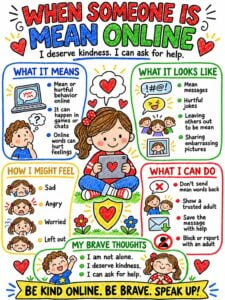
How to use it: Read one section at a time, then model a short sentence students can say: “Someone sent me a mean message. Can you help me?” Use the feelings faces to support younger students, English language learners, and children who benefit from visual prompts. Pair it with these free good friend posters for a positive lesson on kindness and inclusion.
FREE printable download: Younger students’ cyberbullying poster (color, portrait).
FREE Types of Cyberbullying Infographic for Older Students (Grades 3–8)
For upper elementary and middle school students, the Types of Cyberbullying infographic explains six especially recognizable examples: harassment, exclusion, impersonation, spreading rumors, image-based bullying, and threats. It also shows what to do and how to help a friend.
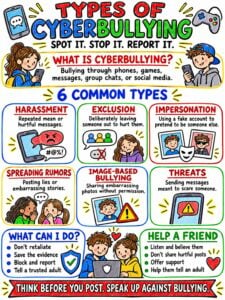
How to use it: Display the poster, give pairs an imaginary group-chat scenario, and ask them to identify the behavior, choose a safe response, and practice telling an adult. For younger students who need gentler wording, this guide to talking to kindergarteners about bullying provides age-appropriate discussion ideas.
FREE printable download: Older students’ six-types cyberbullying infographic (color, portrait).
What Should Kids Do If Cyberbullying Happens?
- Tell a trusted adult. A parent, teacher, or counselor can help decide what to do next.
- Don’t retaliate or forward the messages. Responding angrily may make the situation worse.
- Save evidence with help. Keep screenshots, dates, usernames, and links before reporting or blocking.
- Block and report. Use the game’s, app’s, or platform’s reporting tools and involve school staff when relevant.
- Support the person targeted. Don’t like, repost, or laugh at humiliating content; offer friendship and adult support.
The StopBullying.gov reporting guide gives families practical steps for keeping evidence and reporting. The eSafety kids’ guide also explains how children can ask for help.
Children who have been targeted might need support with confidence and managing big feelings. A gentle coping skills social story and infographic provides language and strategies they can practice before they need them.
How to Teach Cyberbullying Prevention in a Classroom
A short lesson can work better than a lengthy lecture. Try this 10-minute routine:
- Spot it (2 minutes): Show a scenario involving a group chat, game, or shared photo.
- Talk it through (3 minutes): Ask what makes the behavior hurtful and what an onlooker might notice.
- Practice a response (3 minutes): Students rehearse telling a trusted adult or reporting an account.
- Finish positively (2 minutes): Invite students to write one way they can make online spaces kinder.
If children struggle with inclusion and peer relationships, use this making friends social story to practice positive interaction before introducing online group-chat situations. You can also reinforce confidence with these growth mindset infographics and use the respecting differences lesson plans to build empathy across the classroom.
Teach Bullying Prevention Early With an Anti-Bullying I Spy Book
One of the easiest ways to begin these lessons with younger children is to make kindness visible. My Search and Find Books for Kids: Anti Bullying Set uses search-and-find activities to help children explore empathy, friendship, feelings, and positive social choices. It is a natural companion to the younger cyberbullying poster, especially when children are still learning to spot hurtful versus helpful behavior.
Can Kids Spot Bullying Before It Happens?
Teaching kindness is easy. Helping kids recognize unkind behavior, exclusion, and bullying? That’s where things get tricky!
The Search and Find Anti-Bullying Activity Book makes these important conversations easier with 60+ pages of engaging I Spy activities that encourage children to explore kindness, empathy, friendship, and respect.
Kids get to search, find, and think about social situations—all while having fun!
Frequently Asked Questions About Cyberbullying
What are the most common examples of cyberbullying?
Hurtful messages, online exclusion, spreading rumors, fake accounts, threats, and embarrassing images are common examples. The exact behavior matters more than the label.
Is leaving someone out of a group chat cyberbullying?
Not automatically. But deliberately and repeatedly excluding a person to humiliate them can be part of a bullying pattern.
Can one post count as cyberbullying?
Yes, a single threatening or humiliating post can cause serious harm, especially when it is shared widely. Children should seek help rather than wait for an incident to happen again.
What age should children learn about cyberbullying?
Start with simple concepts like kind words, asking for help, and safe behavior as soon as children use connected devices. Older students can explore fake accounts, privacy, and social media scenarios in more detail.
Download Your FREE Cyberbullying Posters
Choose the age-appropriate printable above and use it as a classroom display, digital citizenship lesson visual, counselor handout, or take-home conversation starter.
Both posters are designed to help kids recognize harmful behavior, ask for help, and practice being kind online.