Types of Bullying Infographic: Cutest Posters to Help Kids Recognize and Deal with Unkind Behavior
Worried a child may be experiencing bullying? These free types of bullying infographic posters help kids spot warning signs, avoid common mistakes, and know exactly what to do next.
If you’re looking for a simple types of bullying infographic to help children understand unkind behavior, these printable posters are designed to make difficult conversations easier. Many children know when something feels wrong, but they may struggle to explain what happened or how to respond. Visual supports can help break these concepts into manageable steps.
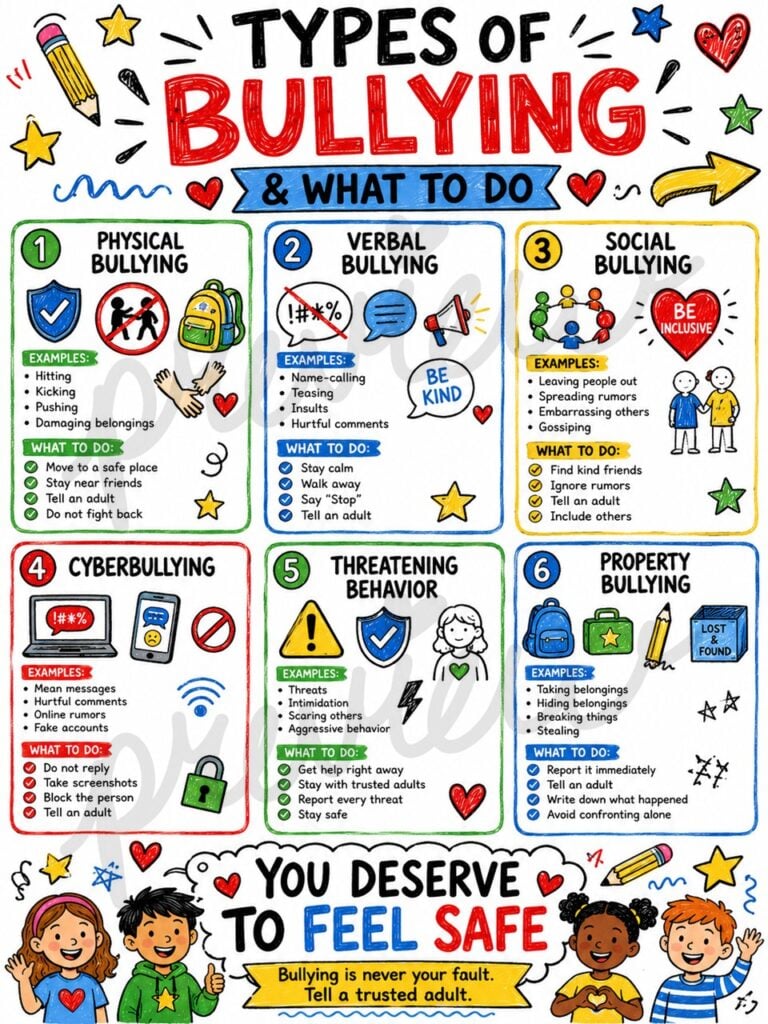
Social Stories are a great way to talk about difficult topics with students of all ages and at times, posters like these really do help as reminders throughout the year!
Support Big Feelings Here
Big feelings can feel overwhelming for kids and tweens, especially during friendships, school stress, anxiety, confidence struggles, and everyday growing up moments. That’s why I created this growing SEL & Coping Skills Workbook Series filled with calming activities, reflection prompts, movement breaks, coping tools, confidence building exercises, and creative emotional support activities designed to help kids feel safe, supported, and understood.
These colorful anti-bullying posters, social skills visuals, and optional coloring worksheets provide a child-friendly way to discuss kindness, friendship, safety, and getting help from trusted adults. Whether you’re a teacher, school counselor, homeschool parent, or special education educator, these resources can help support meaningful conversations about respectful behavior.
Why Use a Types of Bullying Infographic?
Many children learn best through visuals. A clear bullying infographic for kids can help students:
- Recognize different types of unkind behavior
- Understand when to ask for help
- Learn simple response strategies
- Build social awareness
- Strengthen emotional literacy
- Practice self-advocacy skills
- Support classroom discussions about kindness
These resources are especially useful for visual learners, younger children, and students who benefit from explicit social instruction.
#1 Types of Bullying & What To Do Poster Set
The first poster introduces four common forms of bullying in a simple, visual format. Children learn about physical, verbal, social, and online bullying while also seeing a clear action step for each situation.
Instead of overwhelming students with lengthy explanations, this bullying prevention poster focuses on recognition and safety. The bright colors, simple icons, and large text make it easy for students to scan and understand.
The set includes:
- Full-color classroom poster
- Black-and-white coloring version
- Student discussion prompts
- Social-emotional learning support
This resource works well during Bullying Prevention Month, SEL lessons, morning meetings, counseling sessions, and classroom discussions.
Related Keywords Used Naturally:
types of bullying infographic, bullying poster for schools, anti bullying activities, bullying awareness poster, elementary bullying lessons, cyberbullying activities, social bullying examples, verbal bullying examples, classroom counseling resources, SEL posters.
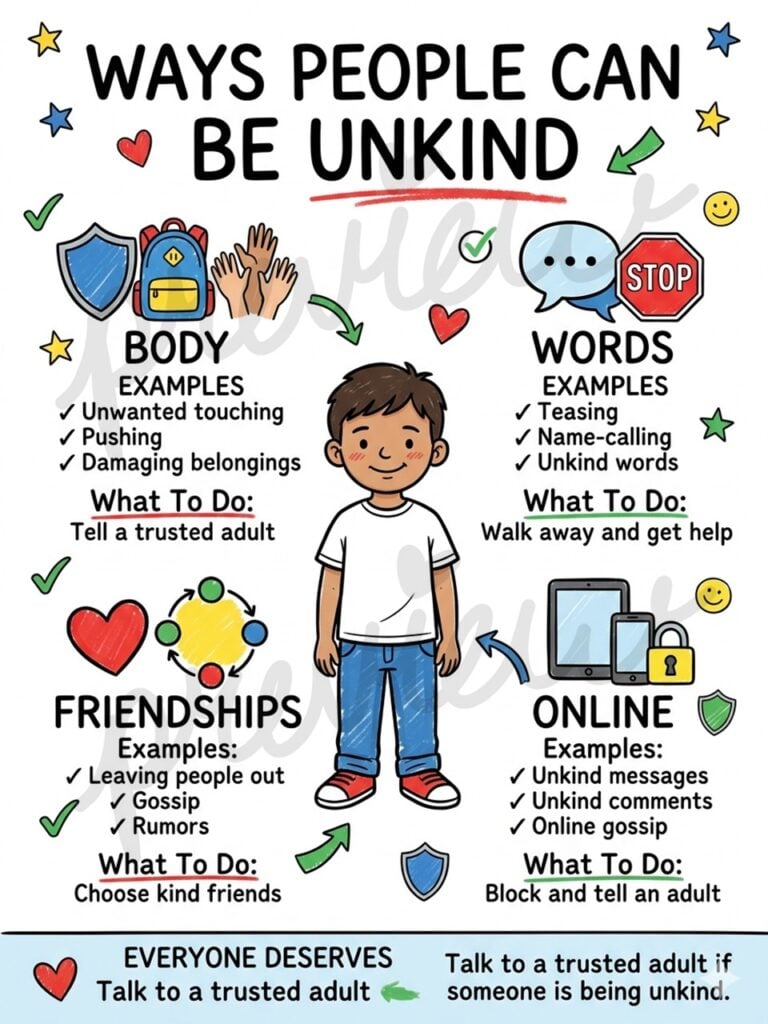
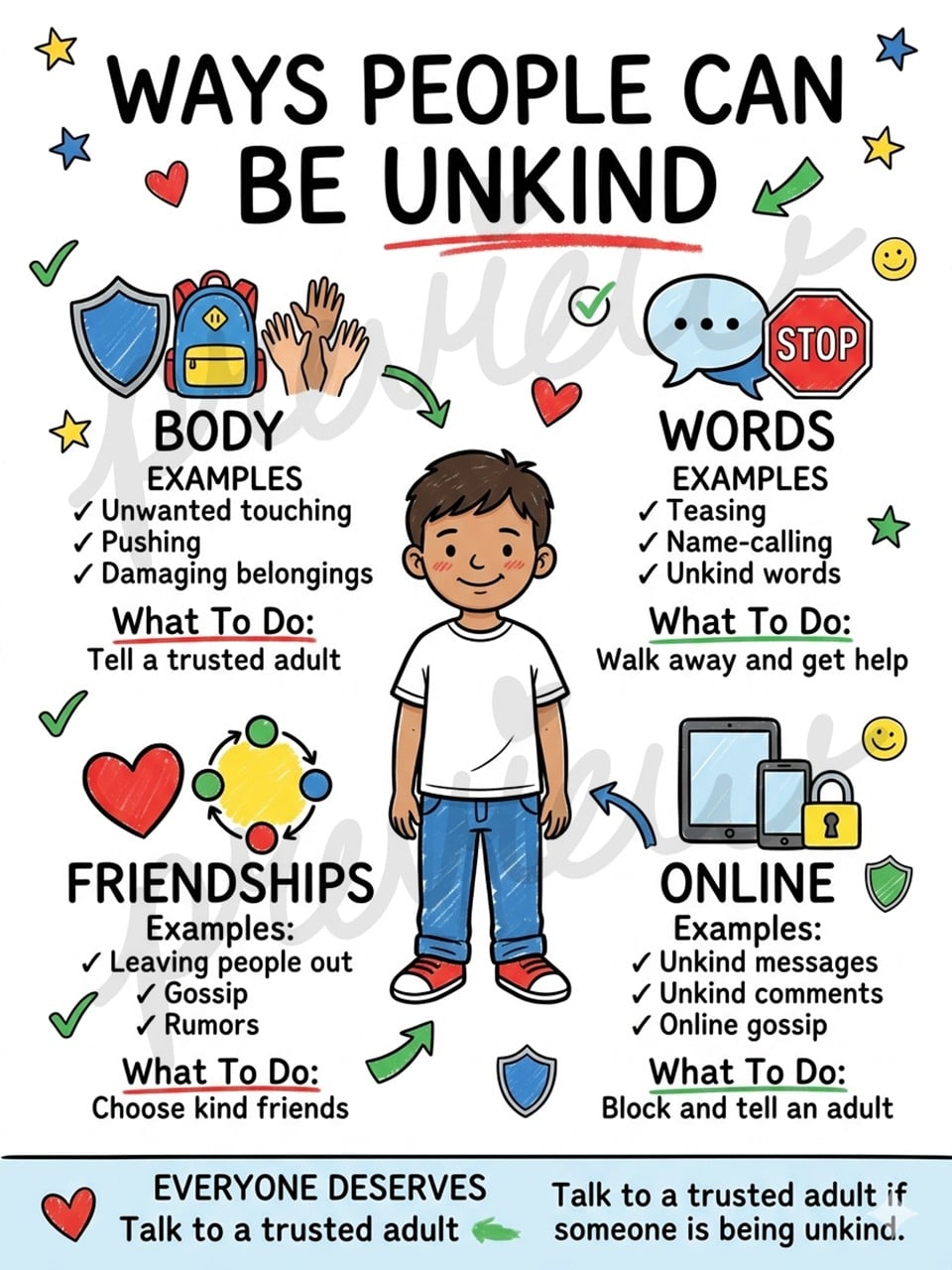
#2 Ways People Can Be Unkind Poster
Sometimes younger students understand the concept of “unkind choices” more easily than formal definitions. This poster helps children identify behaviors that may hurt others while focusing on positive actions they can take.
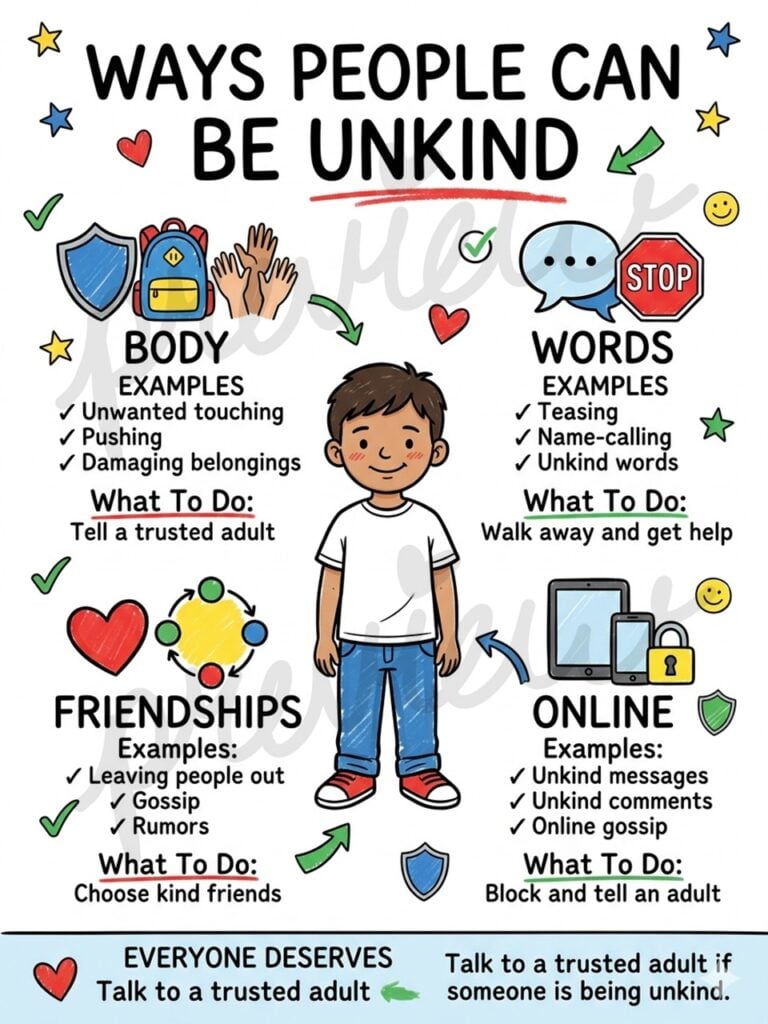
The infographic breaks behavior into four easy categories:
- Body
- Words
- Friendships
- Online
This makes it ideal for kindergarten, first grade, and special education settings where students benefit from simplified language and visual supports.
The optional coloring sheet version also encourages discussion while reducing anxiety around more serious topics.
This printable works well as a kindness poster for classrooms, social skills poster, or friendship lesson visual.
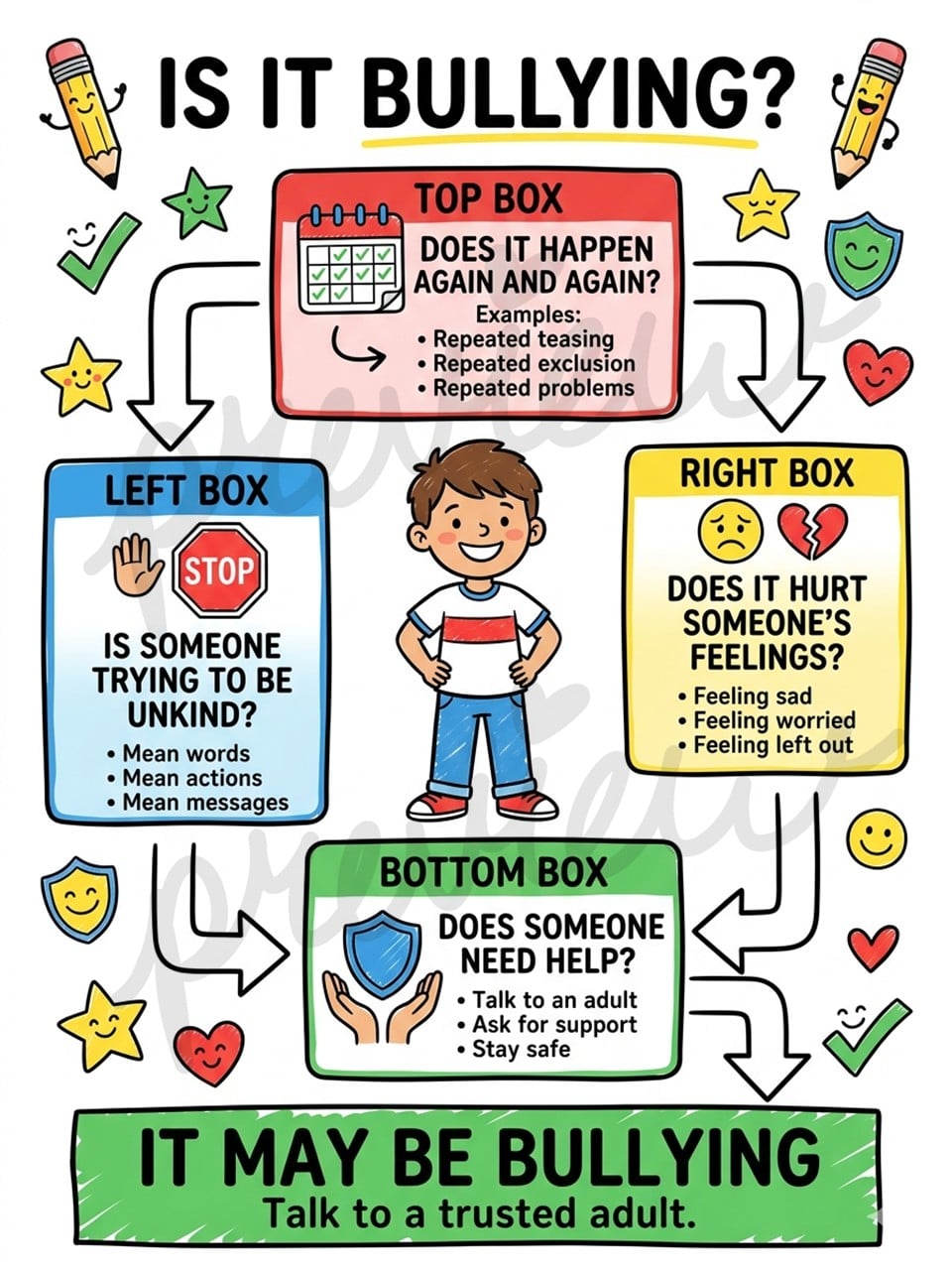
#3 Is It Bullying? Visual Decision Poster
One of the most common questions children ask is:
“How do I know if it’s bullying?”
This poster provides a simple visual decision-making tool that helps students think through a situation.
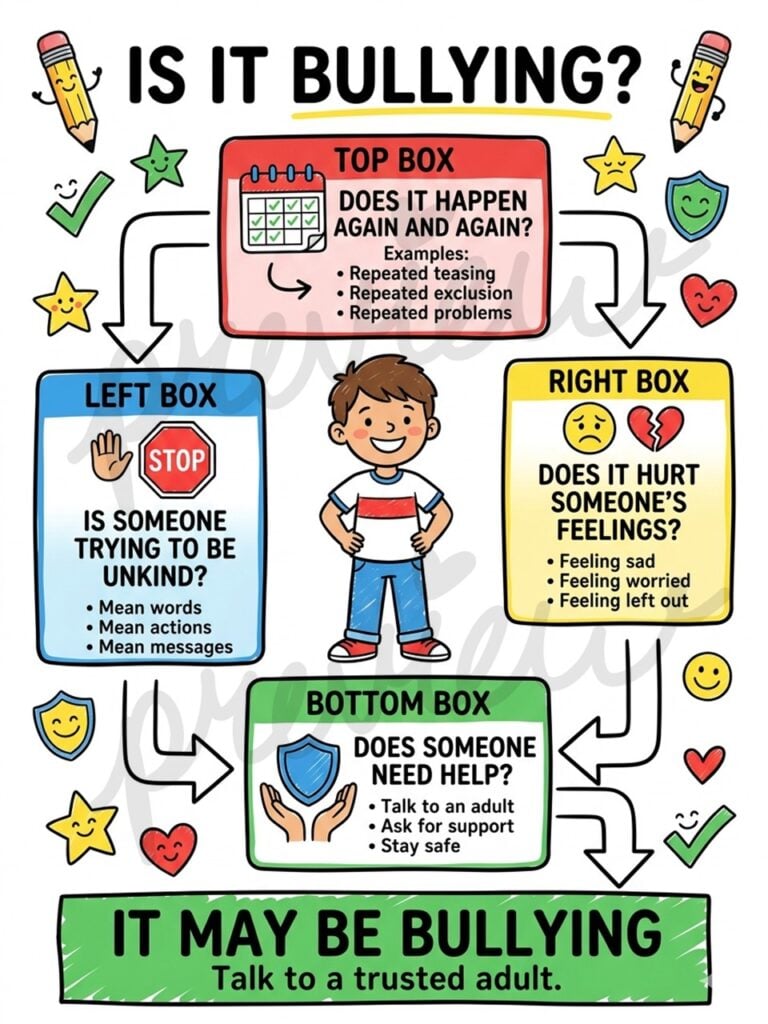
Questions include:
- Does it keep happening?
- Is someone being unkind?
- Does it hurt someone’s feelings?
- Does someone need help?
This visual approach helps students learn when they should seek support from a trusted adult.
The poster is especially helpful for:
- School counselors
- Special education classrooms
- Social skills groups
- Small-group SEL instruction
- Autism support classrooms
Many educators use this type of bullying prevention visual support during conflict-resolution lessons and friendship units.
Support Big Feelings Here
Big feelings can feel overwhelming for kids and tweens, especially during friendships, school stress, anxiety, confidence struggles, and everyday growing up moments. That’s why I created this growing SEL & Coping Skills Workbook Series filled with calming activities, reflection prompts, movement breaks, coping tools, confidence building exercises, and creative emotional support activities designed to help kids feel safe, supported, and understood.
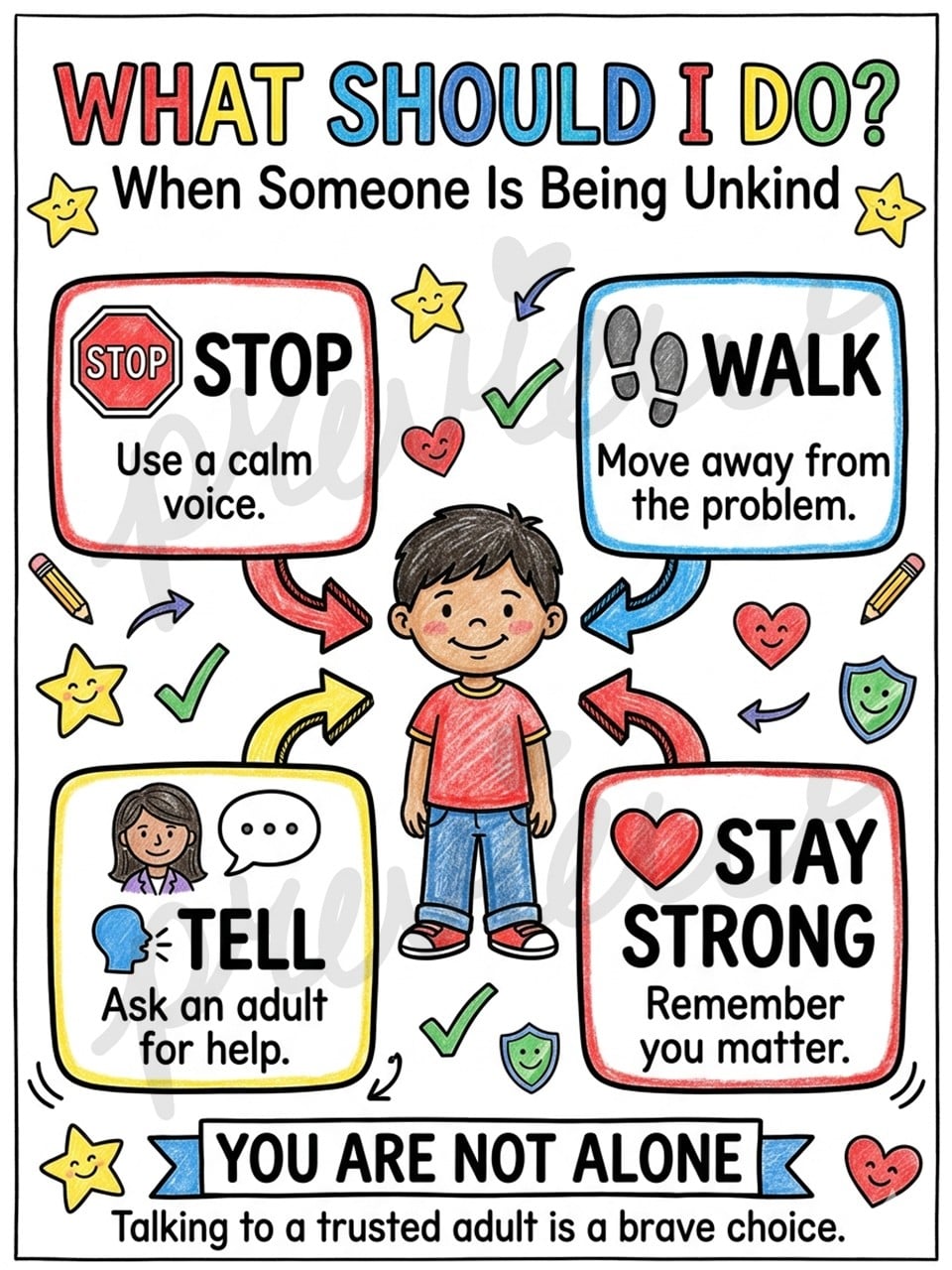
#4 What Should I Do? Action Steps Poster
Knowing what bullying is is only part of the solution. Children also need clear strategies.
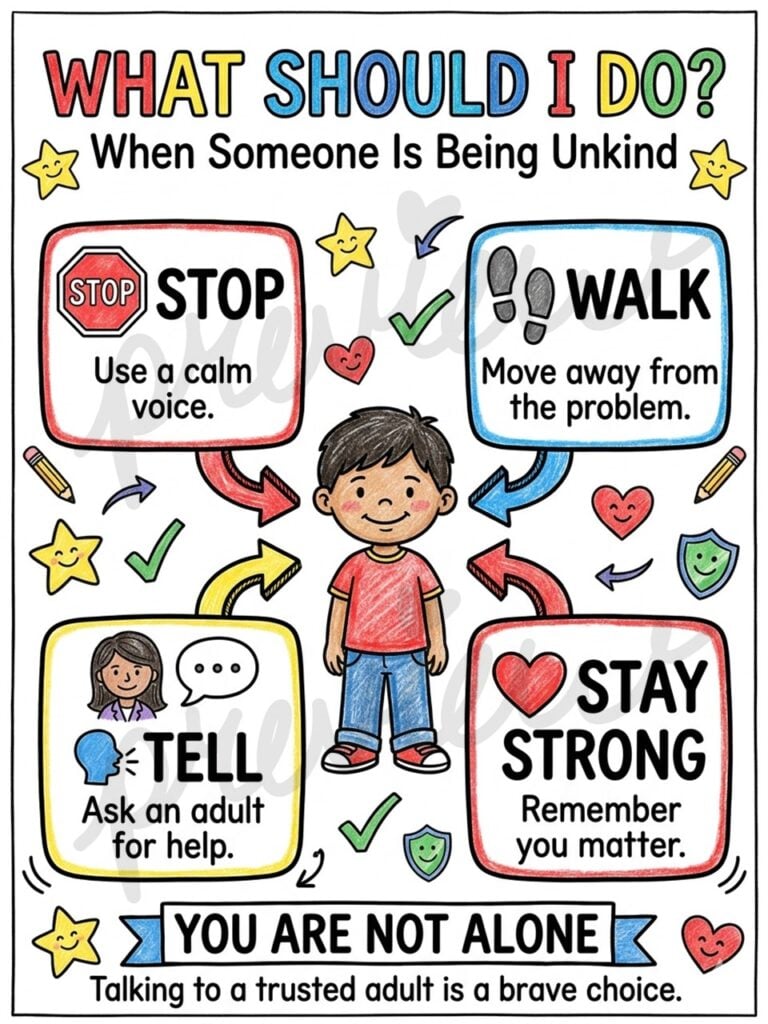
This poster teaches four simple actions:
STOP
Use a calm voice.
WALK
Move away from the problem.
TELL
Ask an adult for help.
STAY STRONG
Remember that you matter.
Because the poster uses very little text and large visual cues, it is particularly useful for younger learners and students who need concrete reminders.
The matching coloring page can be used as an independent activity, counseling worksheet, or take-home reinforcement page.
This resource supports bullying intervention strategies, social emotional learning activities, character education lessons, and school counseling resources.
Optional Coloring Worksheets
Many students process information better when they can interact with it.
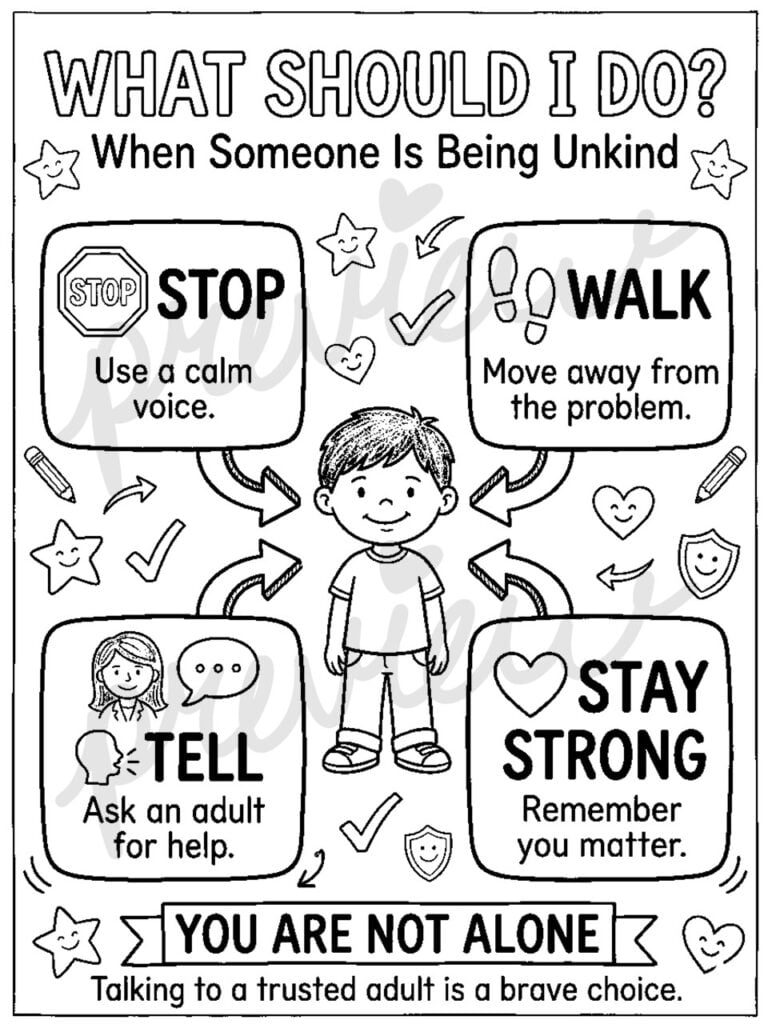
The black-and-white versions allow children to:
- Color while discussing scenarios
- Practice identifying emotions
- Reinforce social skills concepts
- Engage in calm SEL activities
- Create classroom bulletin board displays
These printable pages are especially popular in:
- Counseling offices
- Resource rooms
- Homeschool settings
- Autism classrooms
- Primary classrooms
Teachers often use them as follow-up activities after reading books about kindness, friendship, and empathy.
Support Big Feelings Here
Big feelings can feel overwhelming for kids and tweens, especially during friendships, school stress, anxiety, confidence struggles, and everyday growing up moments. That’s why I created this growing SEL & Coping Skills Workbook Series filled with calming activities, reflection prompts, movement breaks, coping tools, confidence building exercises, and creative emotional support activities designed to help kids feel safe, supported, and understood.
Additional Friendship and Social Skills Resources
#5 Teaching Children How to Play With Others
Some social conflicts happen because children are still learning how friendships work. If you’re supporting students who need extra help navigating social situations, this guide on how to teach an autistic child to play with others shares practical strategies for building cooperative play skills, turn-taking, communication, and peer interactions. These foundational friendship skills can help prevent many playground misunderstandings before they begin.
#6 Good Friend Poster
A strong friendship curriculum often focuses on what children should do, not just what they should avoid. This good friend poster helps students identify positive friendship traits such as kindness, sharing, listening, helping, and including others. It pairs perfectly with anti-bullying lessons because students can compare unkind behaviors with healthy friendship behaviors.
#7 Michael Jackson Millennials Article
For older students and discussion groups, popular culture can sometimes be used to explore themes such as kindness, empathy, and how people connect across generations. This article about Michael Jackson and millennials offers an interesting perspective on how different generations discover music, connect with stories, and build shared experiences.
Teaching children about bullying doesn’t have to be overwhelming. A simple types of bullying infographic, paired with visual supports and discussion activities, can help students recognize problems, understand their feelings, and know where to turn for help.
These printable resources combine anti-bullying education, social emotional learning, friendship skills, school counseling supports, conflict resolution activities, kindness lessons, social skills instruction, character education, bullying prevention activities, and classroom SEL resources into child-friendly visuals that are easy to understand and remember.
Grab the Free Types of Bullying Infographic Set
Help children recognize unkind behavior and learn what to do next with this free Types of Bullying Infographic Set. Featuring colorful classroom posters, student-friendly visuals, and optional coloring pages, these printables make it easy to discuss physical, verbal, social, and online bullying in a way kids can understand.
Perfect for classrooms, counseling offices, homeschool lessons, and social-emotional learning activities. 💙💛💚❤️
Whether you’re a teacher, counselor, homeschool parent, or special educator, these posters can help create meaningful conversations about kindness, safety, friendship, and respect.

![Christmas Name Tracing Craft [Character Education]](https://www.seaofknowledge.org/wp-content/uploads/2022/12/Christmas-Name-Tracing-Craft.jpg)

![Size of the Problem Activities Kids Actually Get [+ 10 Freebies]](https://www.seaofknowledge.org/wp-content/uploads/2025/09/Size-of-the-Problem-4.jpg)