How to Teach an Autistic Child to Play With Others [Free Infographic Poster]
Learn how to teach an autistic child to play with others using calm social skills strategies, visual supports, teamwork activities, and free printable autism posters for classrooms and home.
Teaching autistic children how to play with others is not about forcing them to become extremely social overnight. It is about helping them feel safe, supported, and confident enough to interact with peers in ways that work for them.
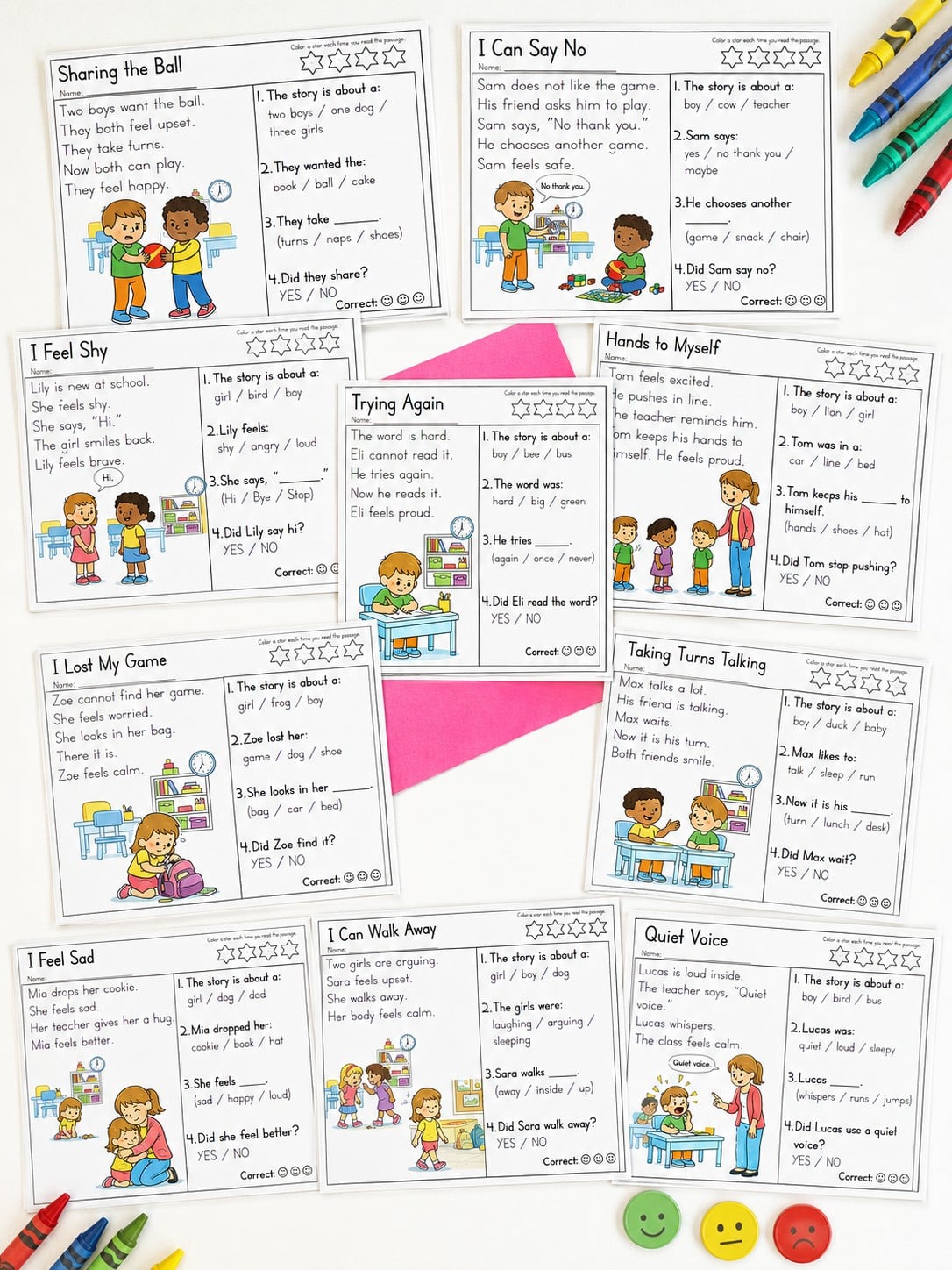
Using visuals consistently can make social expectations feel much less overwhelming for autistic children. I also love pairing activities like this with social story templates because they help break complicated social situations into smaller, predictable steps kids can actually follow and practice over time.
For some children, group play feels overwhelming because there are so many things happening at once. They may be trying to process noise, body language, emotions, movement, sharing, waiting, and unexpected changes all at the same time. That can make even a simple classroom game feel exhausting.
I think one of the biggest misconceptions adults have is assuming social skills “just happen naturally.” For many autistic children, social interaction needs to be taught clearly, visually, and gently over time.
>>> Grab this social emotional learning poster at the end of the post!
Research actually supports this approach. Studies have found that explicit social skills instruction, visual supports, modeling, and peer mediated interventions can significantly improve social interaction and cooperative play for autistic children.
Some children struggle with looking toward peers or listening during group activities, especially when social situations already feel overstimulating. These gentle eye contact social story resources can help children understand what respectful listening and attention can look like without creating shame or pressure around communication differences.
One review published in the Journal of Autism and Developmental Disorders found that structured peer interaction strategies helped increase both communication and engagement during play activities. Journal of Autism and Developmental Disorders
Start Small Instead of Jumping Into Big Group Play
One thing I learned quickly working in special education is that many children do better when social expectations are introduced gradually.
Sometimes adults immediately encourage full group participation, but that can feel intimidating for a child who is still learning how to tolerate being near peers comfortably.
Parallel play is often the best starting point. This is when children play beside each other without needing constant interaction. A child may color next to another student, build blocks at the same table, or complete a sensory activity nearby without directly engaging the entire time.
Group play can become difficult very quickly when frustration builds up and children do not yet know how to express their feelings calmly. That is why I often use a frustrated social skills story alongside teamwork activities to help children learn coping tools, calming phrases, and emotional regulation strategies during peer interactions.
Honestly, this stage is incredibly important and often overlooked.
A child learning to feel calm around others is already building social tolerance and confidence. That matters.
Researchers from the National Autistic Society also discuss how autistic children may prefer structured or predictable interactions first before moving into more socially demanding play situations.
Visual Supports Can Make Social Skills Easier to Understand
One thing that helps tremendously is making social expectations visual instead of relying only on verbal reminders.
One thing I always remind parents and teachers is that social interaction skills usually need to be taught directly and visually rather than assumed. These ideas connect really well with my article on teaching social skills where I share simple ways to build communication, cooperation, and confidence through structured practice and visual supports.
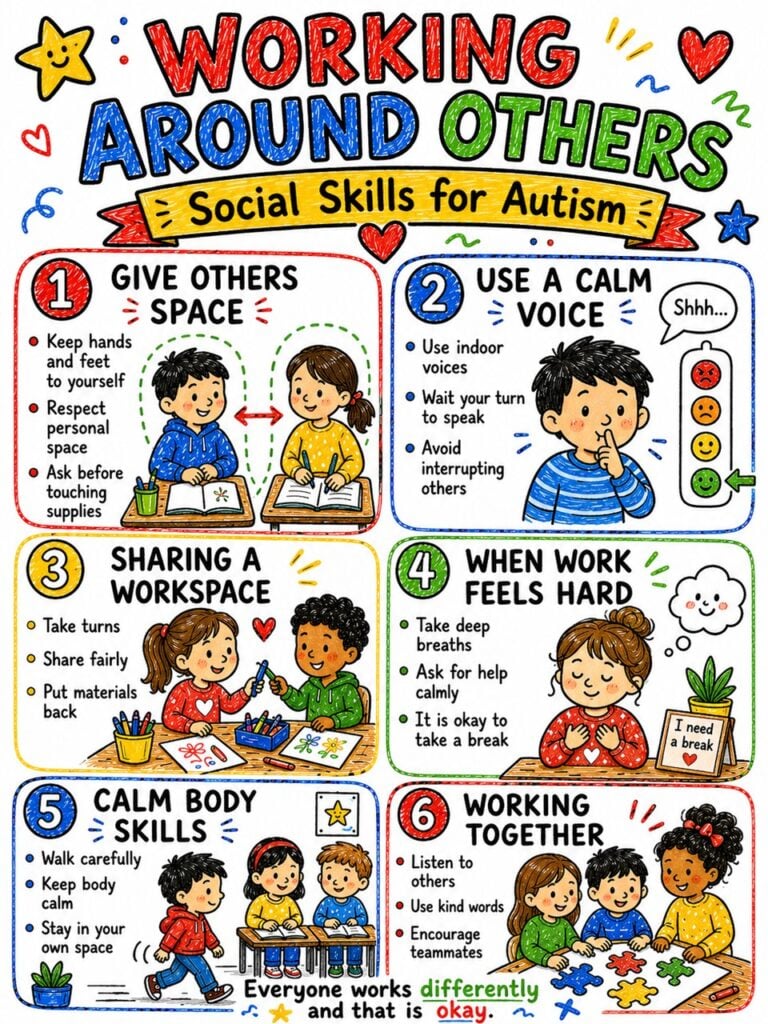
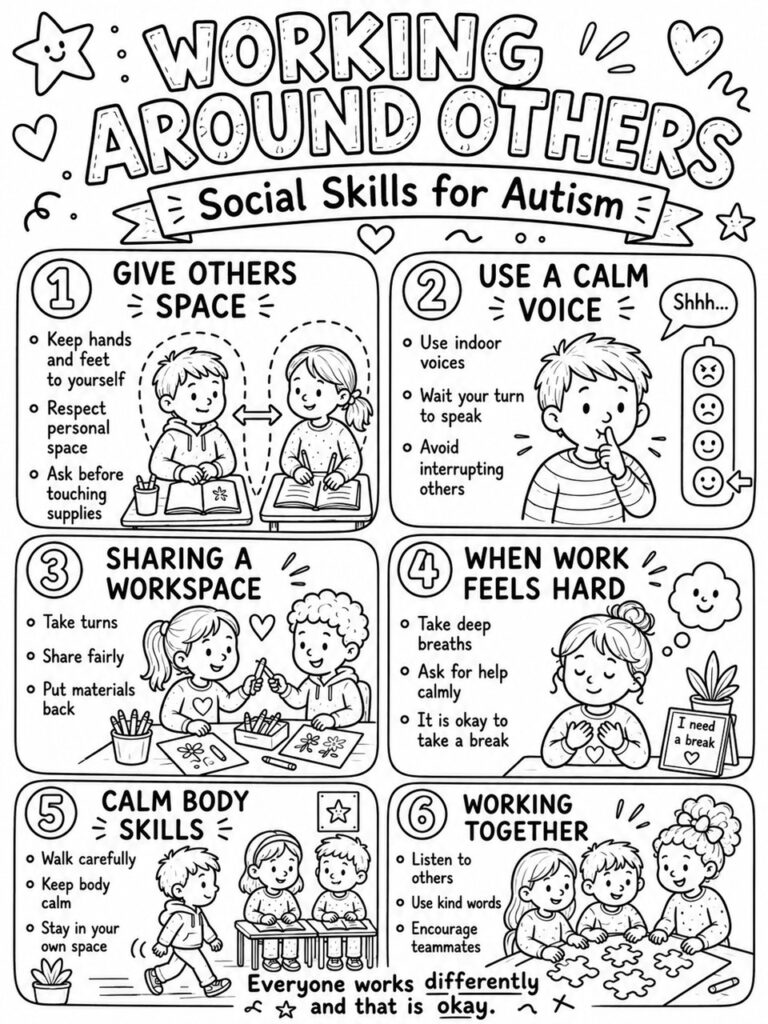
That is actually why I created the “Working Around Others Social Skills” posters. The posters break social interaction into smaller, easier to understand concepts like respecting personal space, using a calm voice, taking turns, and working together kindly.
Many autistic children process visual information more effectively than spoken instructions alone. Visual supports reduce pressure because children can refer back to them independently without feeling constantly corrected.
The colorful version of the poster works really well in:
• classrooms
• calm corners
• counseling spaces
• autism support rooms
• SEL lessons
I also made a blackline version because honestly… kids LOVE coloring activities far more than long discussions about behavior. The blackline poster gives students a calmer, more hands on way to talk about friendship skills, teamwork, and group behavior while coloring the visuals themselves.
Research from the Indiana Resource Center for Autism explains that visual supports can help autistic learners better understand routines, expectations, communication, and social situations by making abstract concepts more concrete.
Teach Cooperative Play Through Structured Activities
Free play can sometimes feel confusing because the rules constantly change. Structured activities are usually much easier for children learning social interaction skills.
Honestly, some kids engage WAY more when social emotional learning feels interactive instead of lecture based. That is why printable social skills coloring sheets can work so well for autism support classrooms, calm corners, SEL groups, and counseling sessions because children can discuss friendship and teamwork skills while coloring at the same time.
Simple turn taking games, partner activities, sensory bins, matching tasks, sticker activities, and cooperative art projects are often great starting points because expectations are clearer and more predictable.
I have also found that shorter activities work best at first.
Sometimes adults accidentally push social interaction too long and the child becomes overwhelmed right at the point they were actually succeeding. A few calm minutes of positive interaction is far more valuable than a stressful 30 minute group activity.
The goal is helping children associate peer interaction with safety and success rather than anxiety.
Model the Language Children Need During Play
A lot of autistic children know they are upset during social situations but may not yet have the language to express what they need.
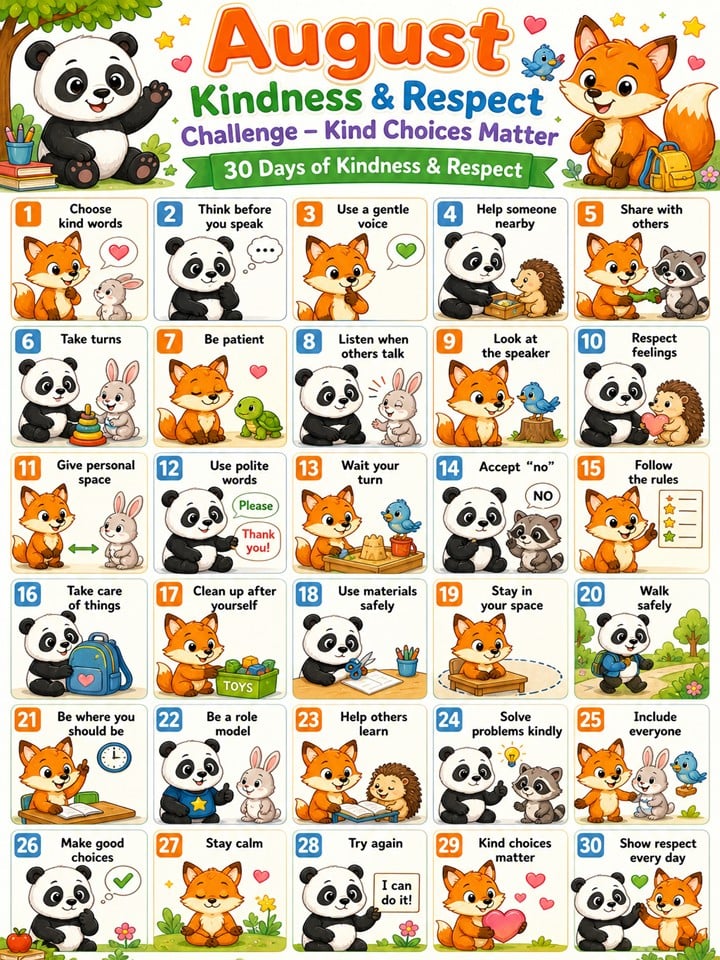
If you are unsure which social behaviors to target first, it can help to focus on one or two manageable skills at a time instead of trying to teach everything at once. This helpful list of social skills gives great ideas for breaking larger social goals into smaller teachable steps for autistic students and young learners.
Instead of expecting children to figure this out automatically, it helps to model simple phrases repeatedly during play.
Things like:
“I need a turn next.”
“Can I play too?”
“I need a break.”
“Can you help me?”
“Let’s share.”
These small scripts reduce pressure because children are not trying to invent social responses on the spot.
The Centers for Disease Control and Prevention (CDC) autism resources also emphasize that structured modeling and guided social interaction can support communication and peer relationships in autistic children.
Emotional Regulation Matters Just as Much as Social Skills
Sometimes what looks like “not wanting to play with others” is actually emotional overload.
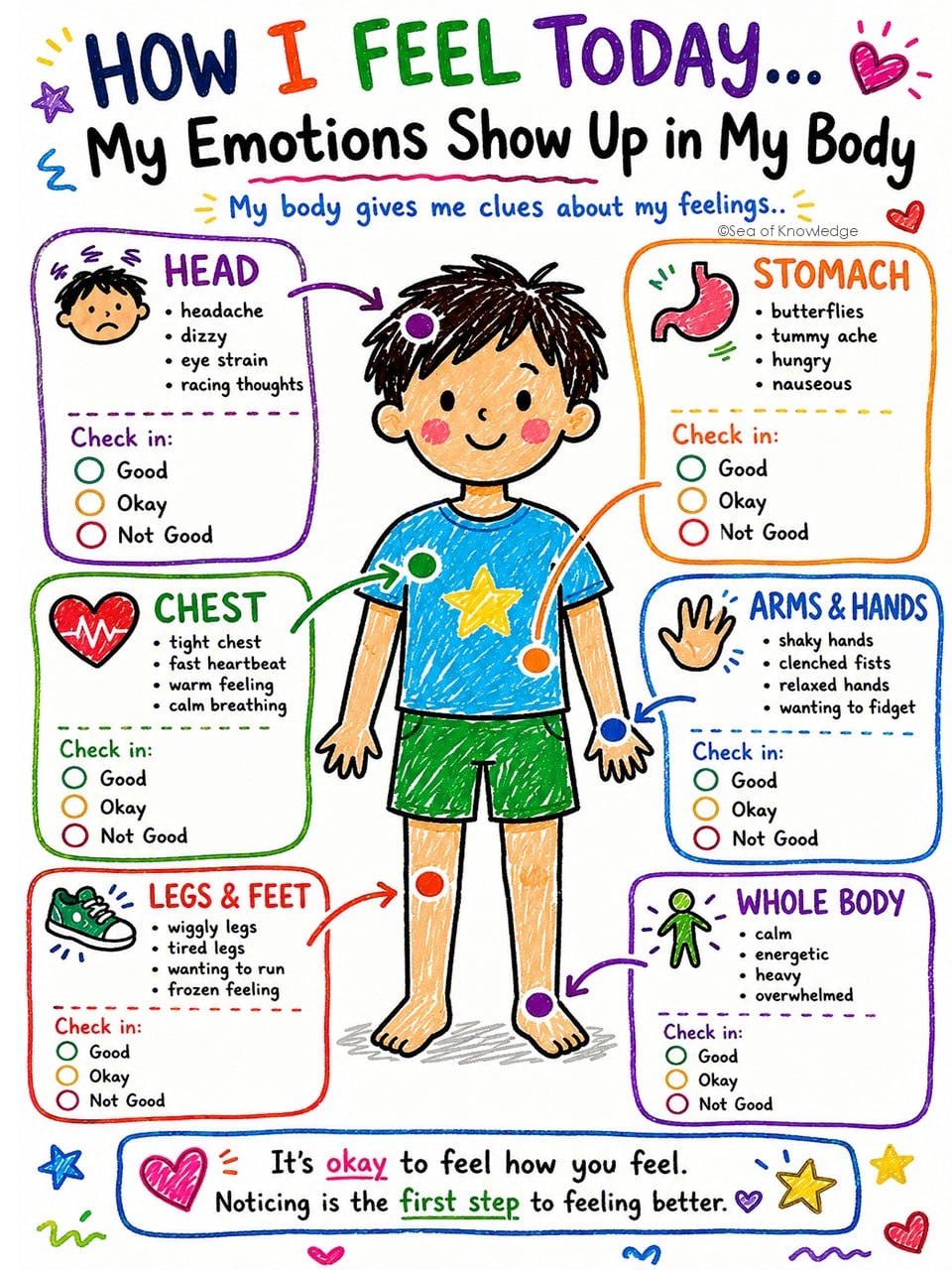
Changes in routines or friendships can sometimes affect group play and classroom behavior more than adults realize. These gentle social stories about people leaving can help children process transitions, emotional changes, and feelings of uncertainty that may impact social confidence and peer interaction.
A child may already be working extremely hard just to manage sensory input, transitions, frustration, or anxiety in the environment. If their nervous system feels overwhelmed, social interaction becomes much harder.
That is why emotional regulation and social skills usually need to be taught together.
Taking breaks, using calming tools, deep breathing, movement breaks, and having predictable routines can all support more successful social interaction later.
I think this is such an important reminder because autistic children are often corrected for behavior without adults realizing the child may already be dysregulated before the interaction even started.
Every Child Will Socialize Differently
One thing I always try to remind teachers and parents is that success does not have to look identical for every child.
Some autistic children may love large group games eventually. Others may prefer one close friendship, quieter activities, or shorter interactions. That does not mean they are failing socially.
The goal is not forcing children to mask who they are.
The goal is helping them build confidence, communication skills, emotional safety, and positive experiences with peers over time.
And honestly, sometimes the smallest moments become the biggest wins. Sitting beside another child calmly, sharing one item, asking for help politely, or participating in a short group activity can be enormous progress for a child who previously found social interaction overwhelming.
Those little moments matter more than people realize.
Grab the Free Working Around Others Social Skills Poster
To help make these social concepts more visual and easier to understand, I created a free “Working Around Others Social Skills” poster set for autistic students, special education classrooms, counseling rooms, and SEL lessons.
The posters walk children through important social skills like:
• respecting personal space
• using a calm voice
• sharing workspaces
• working together kindly
• asking for help calmly
• keeping a calm body during group activities
I created both a full color version and a blackline coloring version because honestly, some kids respond SO much better when social skills become interactive instead of feeling like another lecture.
The blackline version works especially well for:
• calm corner activities
• SEL small groups
• morning work
• social story follow ups
• autism support classrooms
• occupational therapy sessions
• counseling discussions
I also love using visuals like these before group activities begin instead of only correcting behavior after problems happen. Children often feel more successful when expectations are shown clearly ahead of time.
You can download the free printable poster set below and use it at home, in therapy sessions, or in the classroom to support cooperative play and teamwork skills.