Good Friend Poster Printables for Teaching Friendship Skills [Access to 50+ SEL Infographics]
Get access to a growing bundle of Social Skills Infographics and download these simple friendship posters for kids featuring kind words, including others, calm problem solving, and SEL friendship skills for preschool, kindergarten, first grade, and special education classrooms.
Teaching kids how to be a good friend sounds simple until someone grabs the only purple marker, someone else declares they are “never playing again,” and suddenly your peaceful classroom has turned into a tiny courtroom with crayons. This is why a good friend poster can be such a helpful visual tool for young learners.
Friendship skills don’t always come naturally to every child. The activities in this friendship building activities for kids challenge help children practice being supportive, inclusive, and respectful friends.
>>>Grab these SEL Friendship posters at the end of this post.
If you are working on building stronger classroom relationships and emotional awareness, these ideas pair perfectly with teaching social skills in a hands on and visual way. Friendship posters can help reinforce the same social expectations children practice during role play, morning meetings, and group activities throughout the school day.
>>>Grab the Friendship Poster Bundle below.<<<<
A friendship poster gives kids clear, simple reminders they can see, understand, and return to throughout the day. Instead of only saying, “Be kind,” the poster shows what kindness looks like, sounds like, and feels like in real classroom moments.
This set of good friend posters is designed to support social emotional learning, friendship skills, relationship skills, conflict resolution, and positive classroom community building in a way that feels child friendly and easy to use.
Research supports this kind of work too. CASEL describes social emotional learning as the process of helping children build skills for empathy, supportive relationships, emotion management, and caring decision making.
Many teachers also combine friendship visuals with social skills worksheets for autism pdf resources to give students extra support with communication, emotions, and peer interaction. Visual supports and simple step by step reminders can make social situations feel much less overwhelming for some learners.
Their framework includes five major SEL areas, including social awareness, relationship skills, and responsible decision making, which fit beautifully with friendship poster work in early childhood and elementary classrooms.
Why a Good Friend Poster Belongs in Every SEL Classroom
A good friend poster works because it makes abstract social skills more concrete. Young children may hear “be respectful” or “use kind words,” but many still need examples they can picture. Posters help turn those invisible expectations into something visible.
A strong SEL poster can support children who are learning how to share, listen, take turns, apologize, and solve problems calmly. It also helps teachers avoid repeating the same instruction seven hundred times before lunch, which is a small miracle and should probably come with snacks.
>>>Grab these SEL Friendship posters at the end of this post.
In one large meta analysis of 213 school based SEL programs involving more than 270,000 students, Durlak and colleagues found that students who participated in SEL programs showed improvements in social and emotional skills, attitudes, behavior, and academic performance.
These friendship visuals also work beautifully alongside social skills activities for special needs students because they provide clear examples of what positive social interactions look like. I especially love pairing posters with games, partner tasks, and calm role play situations so students can practice the skills in a relaxed way.
The study also reported an 11 percentile point gain in achievement for students receiving SEL instruction compared with controls.
That does not mean one poster fixes every friendship problem. If only. But a classroom poster can become a daily anchor for explicit teaching, reminders, role play, and calm conversations after tricky social moments.
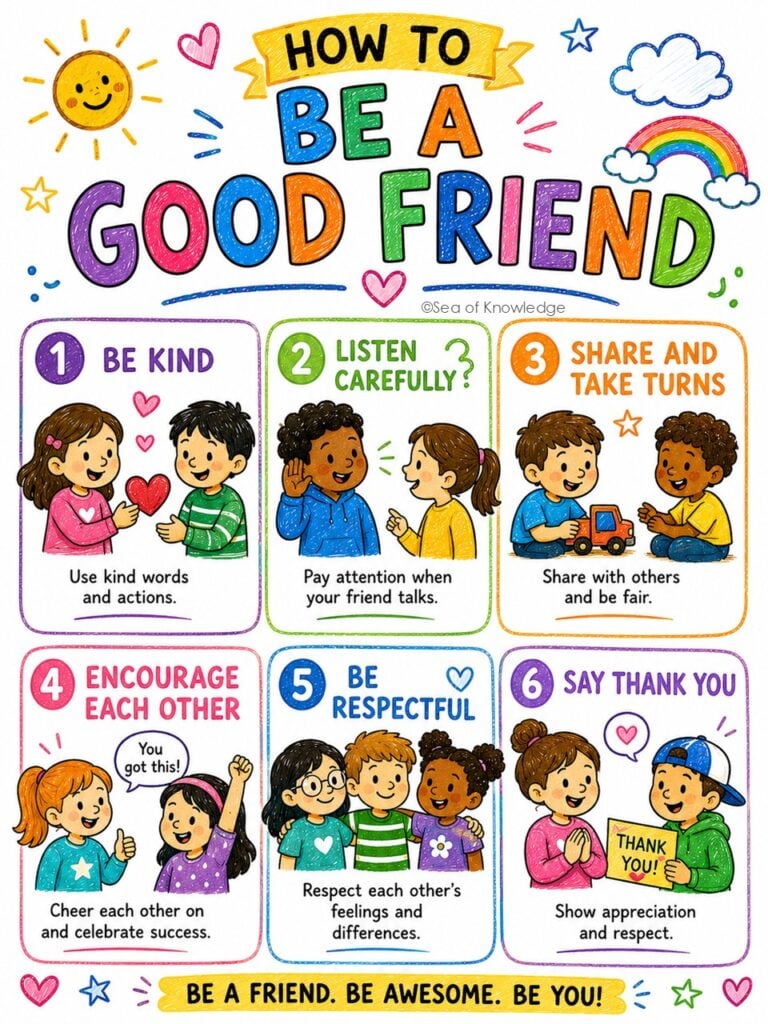
Poster 1: How to Be a Good Friend
The first poster in the set is the foundation. This friendship poster teaches the basic behaviors children need when learning how to be a good friend. It includes simple friendship rules such as being kind, listening carefully, sharing and taking turns, encouraging each other, and being respectful.
>>>Grab these SEL Friendship posters at the end of this post.
This poster is perfect for the start of the school year because it introduces the “big picture” of friendship in one place. You can display it near your morning meeting area, carpet space, classroom door, calm corner, or social skills display board.
For younger learners who enjoy creative activities, these posters connect really well with social skills coloring sheets that reinforce kindness, sharing, and emotional regulation. Sometimes coloring while discussing friendship situations makes conversations feel less intimidating and much more natural.
The key with this poster is to make it part of your classroom language. Instead of saying, “Stop arguing,” you might point to the poster and ask, “Which good friend skill do we need right now?” That tiny shift turns the poster into a teaching tool rather than wall decor that slowly becomes invisible next to the lunch menu.
This poster naturally supports preschool friendship, kindergarten friendship, and first grade friendship lessons because the language is simple enough for younger children but still meaningful for early elementary students.
It is also useful for special education classrooms, autism support classrooms, and inclusive classroom settings where visual supports can help students understand expectations more clearly.
Friendship discussions can also connect to emotional transitions using social stories about people leaving when students are struggling with classmates moving away, changing teachers, or friendship worries. Social stories help children process change while still feeling emotionally supported and safe.
This poster is especially helpful for speech therapy rooms, ESL students, shy learners, and children who need extra support with social communication. It can also be used during friendship activities, partner work, play based learning, and dramatic play.
You can make this poster interactive by choosing one phrase each day and modeling it with the class. For example, during a morning meeting, you might say, “Today we are practicing ‘Are you okay?’ When could we say that to a friend?” Then students can act out little scenarios.
Will one child make it wildly dramatic and pretend to faint beside the block shelf? Probably. But honestly, that is still engagement.
Poster 3: Good Friends Solve Problems Calmly
The third poster is the one you want when the friendship honeymoon period has ended and kids are suddenly having deep emotional disputes over who was “first” at the glue station.
>>>Grab these SEL Friendship posters at the end of this post.
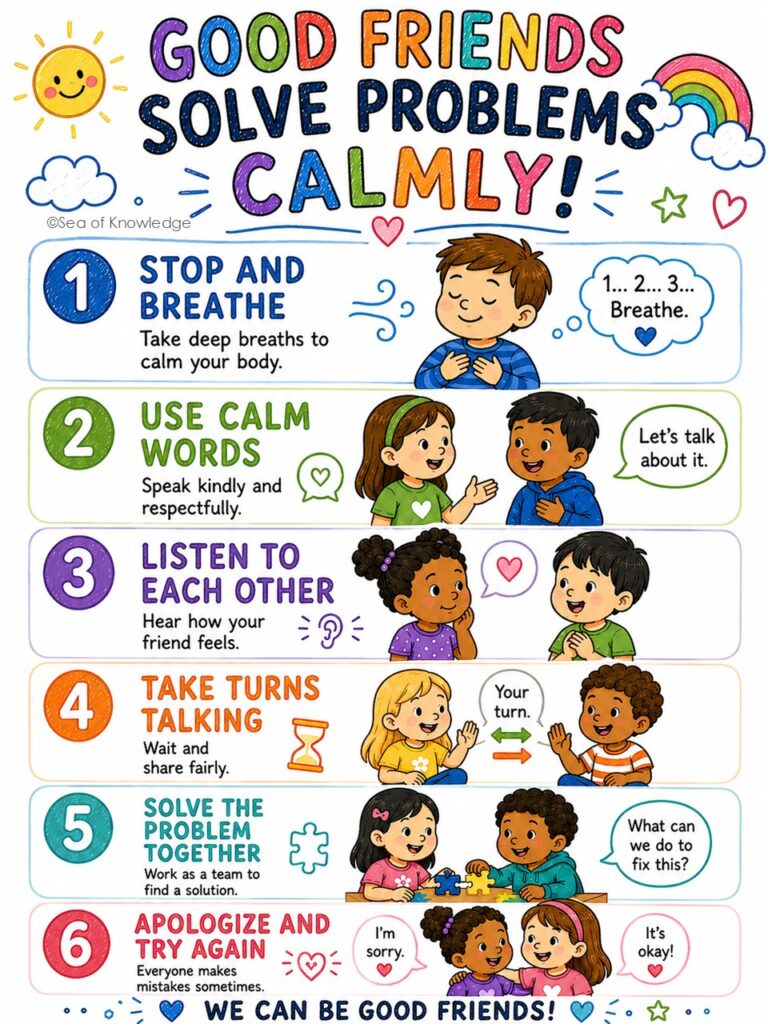
This conflict resolution poster teaches children what to do when friendship gets tricky. It includes steps like stop and breathe, use calm words, listen to each other, take turns talking, solve the problem together, and apologize and try again.
One of the biggest friendship struggles in early childhood classrooms is learning how to wait fairly, which is why these posters pair perfectly with taking turns social skills activities. Honestly, some classroom conflicts could probably be solved entirely with timers, turn taking visuals, and one less glitter pen argument.
This poster supports problem solving skills, self regulation, positive behavior, and classroom conflict resolution. It is a strong fit for a calm corner, counselor office, behavior support space, or any classroom area where children go to reset.
The benefit of this poster is that it does not just tell kids to “be nice.” It shows them how to repair. That matters because friendship problems are normal. Children are still learning how to manage frustration, disappointment, fairness, and communication.
The Learning Policy Institute’s 2023 brief on SEL summarizes evidence from many studies showing consistent positive effects of SEL programs on students’ social, emotional, behavioral, and academic outcomes.
That is why teaching repair skills and problem solving routines is not extra fluff. It is part of helping children function well in a classroom community.
These posters also fit naturally into kindness challenges and SEL routines alongside a kindness calendar for kids. Small daily acts of kindness help children build empathy and begin noticing ways they can include and encourage others throughout the day.
How to Use the Good Friend Poster During Morning Meeting
Morning meeting is one of the easiest places to use a good friend poster because children are already gathered and ready to discuss classroom expectations. You can use one friendship skill as a quick daily focus rather than trying to teach the entire poster at once.
>>>Grab these SEL Friendship posters at the end of this post.
For example, on Monday you might focus on “Be Kind.” Ask students what kind words sound like, what kind actions look like, and how kindness can help someone feel included. On Tuesday, move to “Listen Carefully” and practice what listening looks like with your body, eyes, and voice.
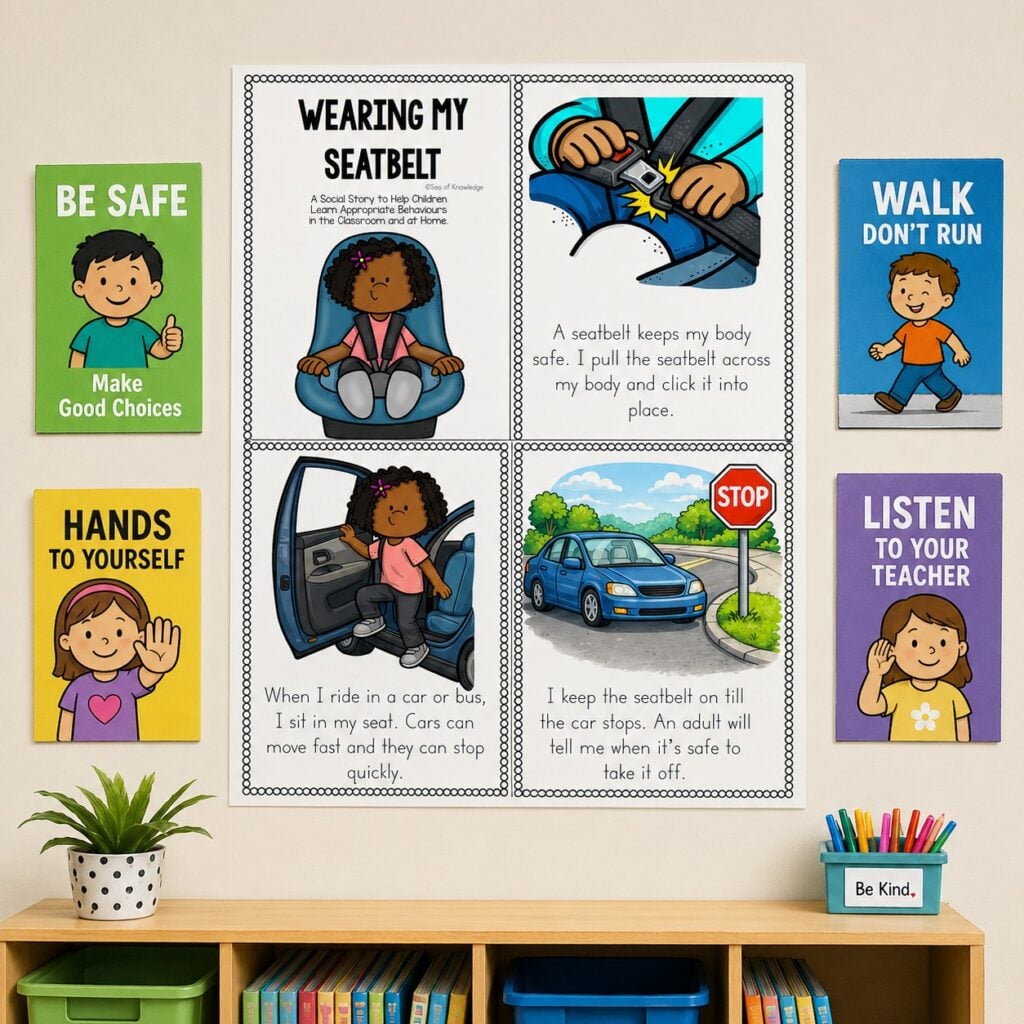
For children who benefit from structured visuals and predictable expectations, pairing friendship posters with a car safety social story free resource can help reinforce how social stories support behavior and emotional understanding in everyday situations. Many students thrive when social expectations are broken into calm visual steps.
This works well because young children need repeated practice. A poster is not a one and done lesson. It is more like a friendly little classroom billboard that keeps whispering, “Remember, we are not snatching blocks today.”
For stronger engagement, let students give examples from real classroom life. You might ask, “When did you see someone share yesterday?” or “What could you say if someone is sitting alone?” These small discussions help children connect the social skills poster to their daily interactions.
How Kids Can Interact With the Poster
A poster becomes much more powerful when students interact with it instead of just looking at it. You can invite children to point to the friendship skill they used, choose a goal for the day, or match real life situations to the poster.
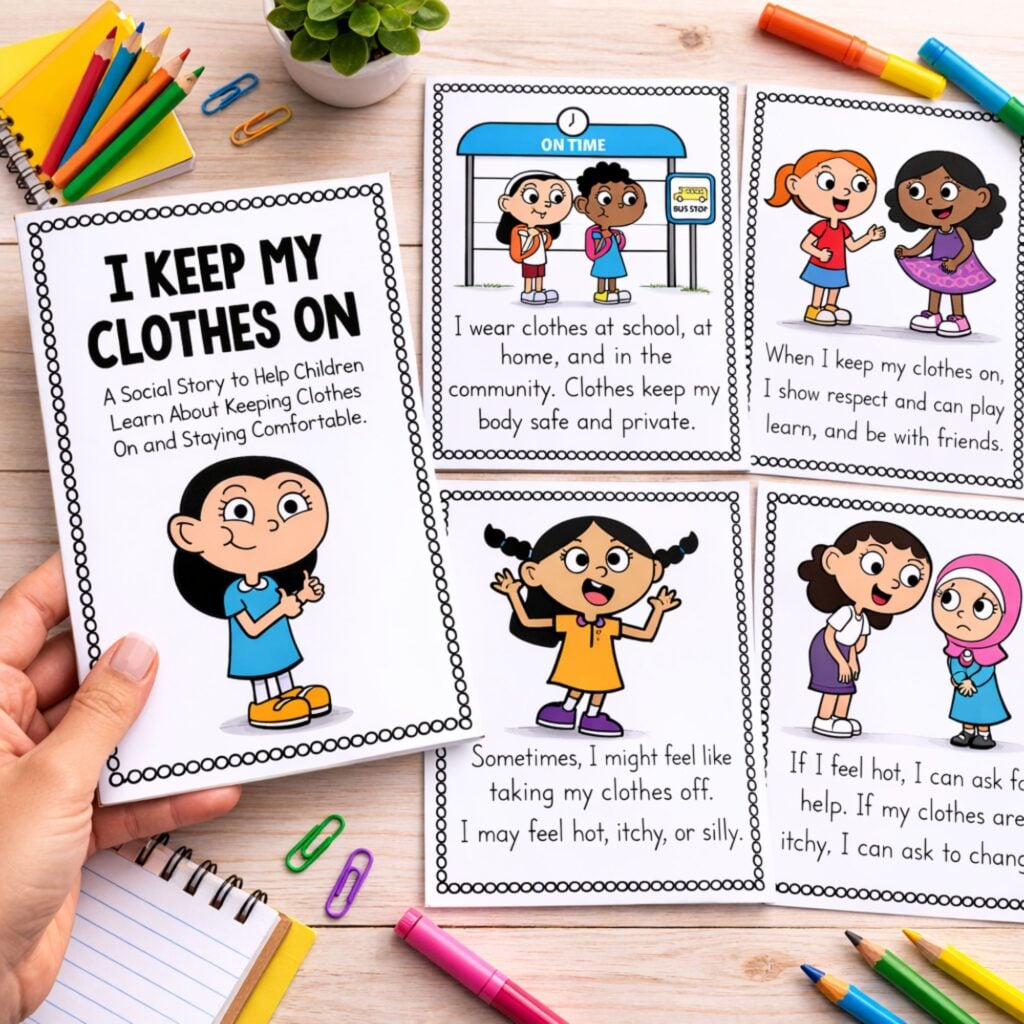
Some children also need direct support understanding body boundaries and classroom expectations, which is why visuals like these can complement a keeping my clothes on social skills story. Explicit teaching paired with visuals often helps students feel more confident and successful socially.
For example, if two children solve a small disagreement, you can ask them to find the step they used on the problem solving poster. Maybe they listened to each other. Maybe they apologized. Maybe they took turns talking after a tiny argument that felt, to them, like a national emergency.
>>>Grab these SEL Friendship posters at the end of this post.
You can also use sticky notes or small name cards beside the poster. When a student demonstrates a friendship skill, they can place their name near that section. This creates a visual celebration of kindness activities without turning it into a competition.
For children who benefit from visual supports, this kind of interaction is especially helpful.
A scoping review of social narrative research noted that social narratives are commonly used to support behavior change for individuals with autism, and other literature reviews describe social stories as a promising approach for increasing social interactions, though results can vary by student and implementation.
Respect is another huge friendship skill, and these posters connect naturally with respecting others social skills lessons that focus on listening, empathy, and understanding personal differences. Young children often need repeated examples of what respectful behavior actually looks like during real interactions.
That is a good reminder for teachers. Visuals work best when they are taught, modeled, practiced, and revisited. They are not magic wallpaper, although that would be lovely.
Other Ways to Use Friendship Posters Beyond the Wall
A good friend poster does not need to stay in one place forever. You can use the poster as part of a full friendship lesson, a small group intervention, a social story follow up, or a center activity.
Big emotional moments such as transitions and farewells can also affect friendships in the classroom, which is why saying goodbye to a teacher social story activities can support children who are struggling emotionally. Some kids truly feel like their entire world changes when a trusted adult leaves.
During small group lessons, choose one section of the poster and pair it with a role play. For “Let’s take turns,” give students a simple game and practice saying the phrase before each turn. For “I’m sorry,” talk about what a real apology sounds like and why it should include trying again.
>>>Grab these SEL Friendship posters at the end of this post.
You can also print smaller versions of the poster for student folders, calm down binders, take home SEL folders, or individual behavior support plans. Mini versions work well for students who need reminders close by, especially during recess, centers, partner work, or transitions.
Another easy idea is to use the posters with picture books about friendship. Read a story, then ask students which friendship skills the characters used.
Did someone encourage a friend? Did someone forget to listen? Did anyone need to apologize and try again? Picture book discussions are a gentle way to talk about social choices without putting one child on the spot.
Using the Posters in a Calm Corner
A calm corner is a perfect home for the Good Friends Solve Problems Calmly poster. When children are upset, long verbal explanations usually do not work well. A simple visual reminder can help them slow down and remember the next step.
Learning to hear “no” calmly is another major friendship skill, and these posters work nicely alongside an accepting no social story during SEL lessons. Many friendship conflicts happen because children are still learning how to handle disappointment, fairness, and boundaries appropriately.
Check out the calm down corner posters and set ups found here.
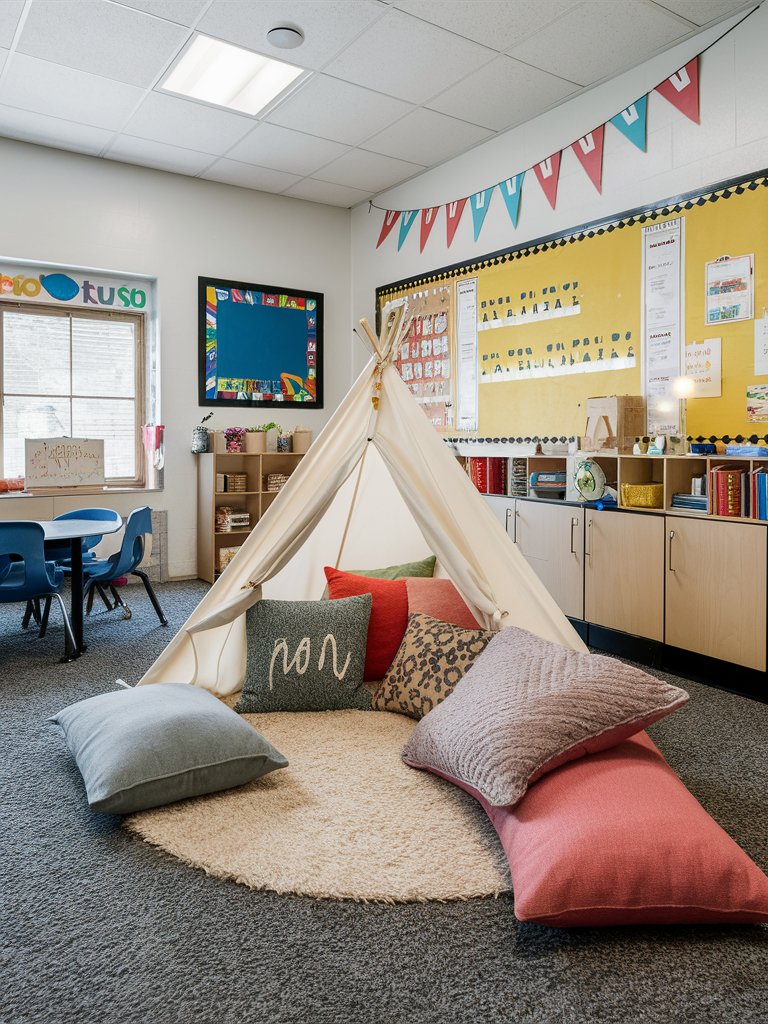
The poster can guide children through a calm problem solving routine. First, stop and breathe. Then use calm words. Then listen. Then take turns talking. Finally, solve the problem and repair if needed.
This is helpful because children often need the steps in front of them when emotions are high. They might know how to solve a problem during a lesson, but when someone takes their favorite dinosaur counter, that knowledge can temporarily leave the building.
Gentle behavior and empathy can also extend beyond friendships with classmates. Activities like the being gentle with pets social story help children practice kindness, patience, and safe behavior in other important relationships too.
Visual supports are commonly recommended to help children understand routines, expectations, and new skills. The NSW Department of Education notes that visuals can support children’s participation, communication, routines, desired behaviors, and smaller steps within a task.
SEL in the Classroom Does Not Have to Be Complicated
One of the best things about this poster set is that it keeps SEL in the classroom simple and practical. You do not need a giant scripted program to teach friendship skills every day. You can start with a clear visual, a few short conversations, and consistent modeling.
The CASEL framework includes relationship skills and responsible decision making as core SEL competencies, which connects directly to teaching children how to communicate, listen, solve problems, and make caring choices with others.
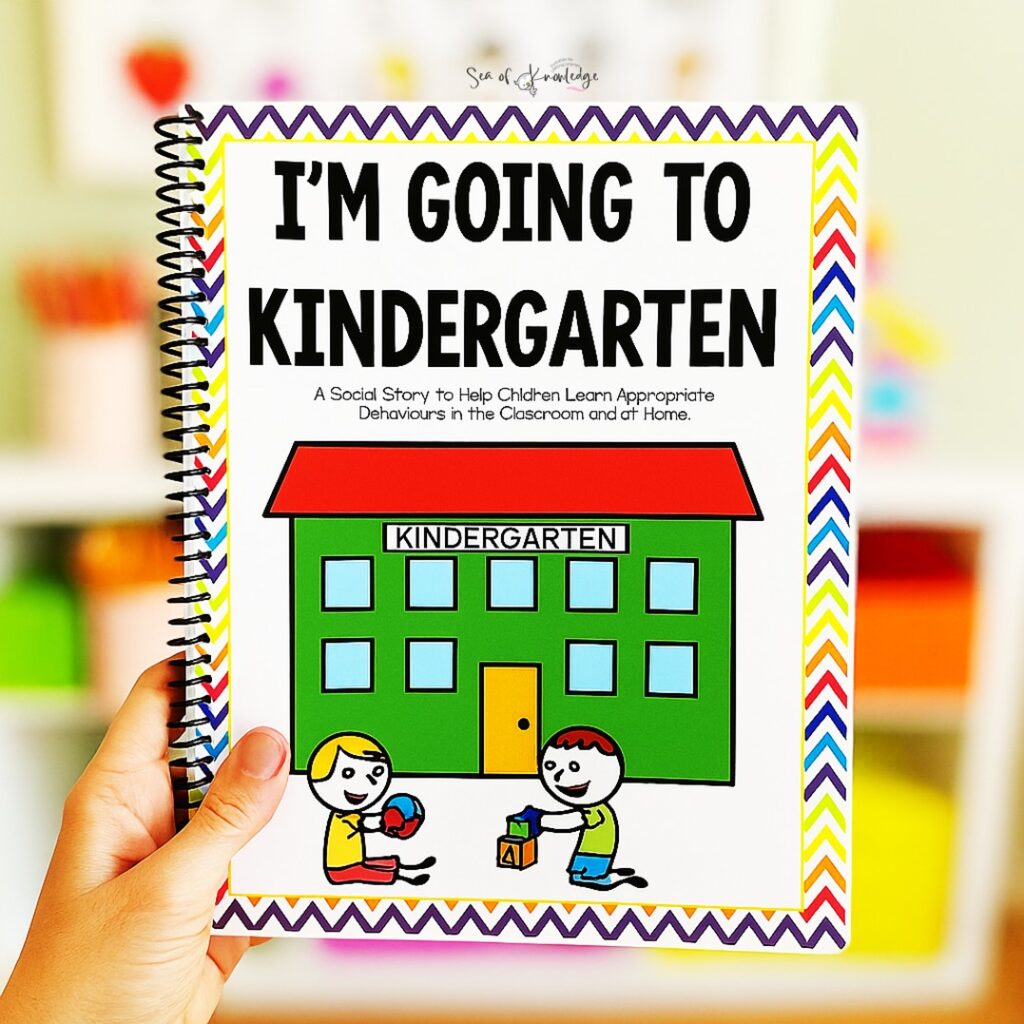
Social stories are a great way to get kids talking about difficult subjects or teaching appropriate behaviors.
That is exactly what these posters are doing. They are helping students see friendship as a set of skills they can practice, not a mysterious personality trait some children magically have.
A good friend is not just the child who shares perfectly every time or never gets upset. A good friend is also the child who learns to say sorry, tries again, includes someone new, and uses calm words after a disagreement. That is the message kids need.
Why These Posters Work Well for Preschool, Kindergarten, and First Grade
Younger children need friendship language that is clear, visual, and repeatable. These posters are designed with simple phrases, friendly illustrations, and practical classroom examples, which makes them easy to use in preschool SEL, kindergarten social skills, and first grade friendship lessons.
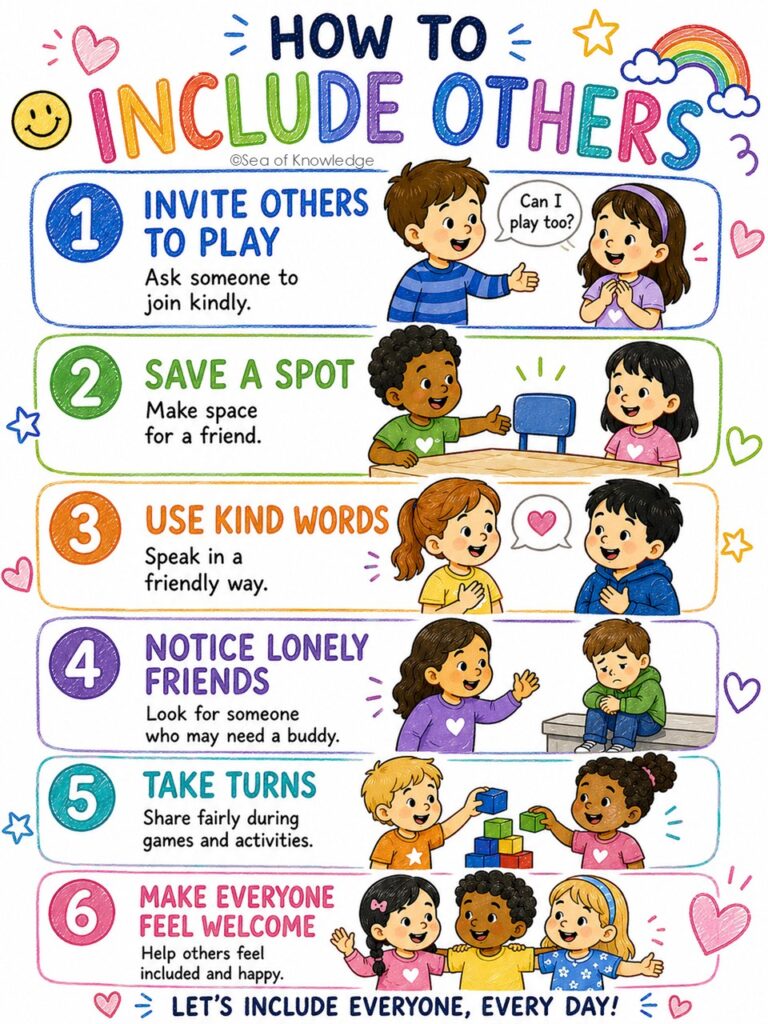
The first poster teaches what good friends do. The second poster teaches what good friends say. The third poster teaches how good friends fix problems. Together, they create a complete friendship toolkit for early learners.
Social stories are a great way to get kids talking about difficult subjects or teaching appropriate behaviors.

This structure also makes the posters easy to rotate. You might use the basic good friend poster at the beginning of the year, the kind words poster during friendship week or kindness month, and the conflict resolution poster whenever your class needs extra support with teamwork and problem solving.
Which, let’s be honest, might be right after indoor recess.
Simple Follow Up Activities for a Good Friend Poster
After introducing the posters, you can extend the learning with simple social skills activities that do not require a mountain of prep.
Students can draw a picture of themselves being a good friend, complete a sentence such as “I can be a good friend by…,” or act out friendship scenarios with a partner. You can also create a class friendship book where each student contributes one page showing a kind action.
Social stories are a great way to get kids talking about difficult subjects or teaching appropriate behaviors.
Another simple idea is to create a “friendship detective” routine. During the day, students look for classmates using kind words, sharing, listening, encouraging, or solving problems calmly. At the end of the day, students share what they noticed.
This helps children recognize friendship in action. It also builds a stronger classroom community because students begin looking for positive behavior instead of only noticing what went wrong.
A good friend poster is more than a cute classroom decoration. When used intentionally, it can support SEL lessons, friendship activities, social communication, conflict resolution, and positive classroom routines.
This car safety story is perfect for younger kids.
The real power comes from using the posters again and again. Point to them during real moments. Talk about them during morning meeting. Use them after read alouds. Place them in your calm corner. Let students interact with them. Keep the language simple and consistent.
Because friendship skills are not learned in one perfect lesson. They are built in all the tiny moments when children practice listening, sharing, apologizing, encouraging, and trying again.
And if a poster can help even one child say, “Let’s take turns,” instead of launching into a full glue stick crisis, I call that a classroom win.
Download the Friendship Posters
If you are looking for simple and kid friendly social emotional learning visuals, these friendship posters are a great addition to your classroom, calm corner, counseling office, speech therapy room, or homeschool space.
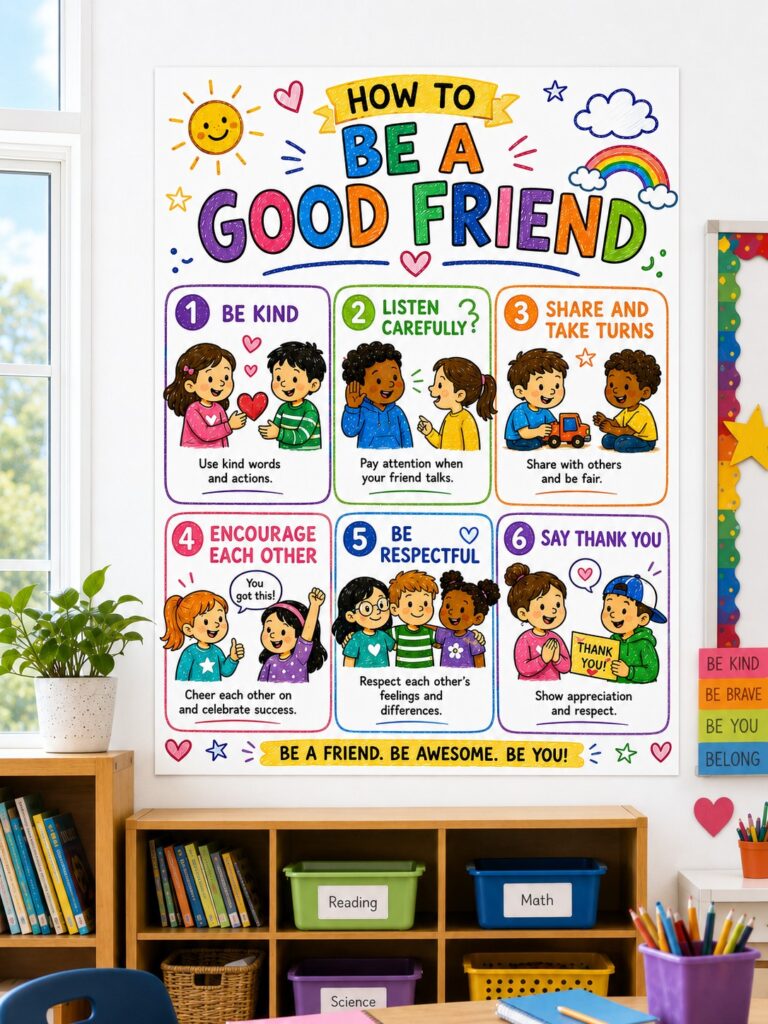
The set includes posters focused on kind words, including others, solving friendship problems calmly, and positive social skills for young learners.
You can use these posters during morning meetings, SEL lessons, role play activities, recess discussions, and friendship groups. They are designed with clear visuals, soft calming colors, and easy to read text to support preschool, kindergarten, first grade, special education, and autism support classrooms.
Download the friendship poster pack below and start building a kinder classroom community one small friendship skill at a time.



The link for the friendship poster set is not working. Please advise.
Thank you
The form is right there below the button!