Keeping My Clothes On Editable Social Skills Story for Autism and Special Needs (FREE Set)
Let’s talk about something that teachers do not always say out loud, but we all deal with at some point.
If you are searching for a keeping my clothes on social skills story, I already know what kind of week you have probably had. You are not alone, and you are definitely not the only one trying to figure out how to handle this gently and respectfully.
If you like having flexibility when creating behavior supports, these social story templates make it simple to adjust language for individual student needs. Sometimes a small tweak in wording helps a child truly understand why we keep our clothes on instead of just repeating the rule.
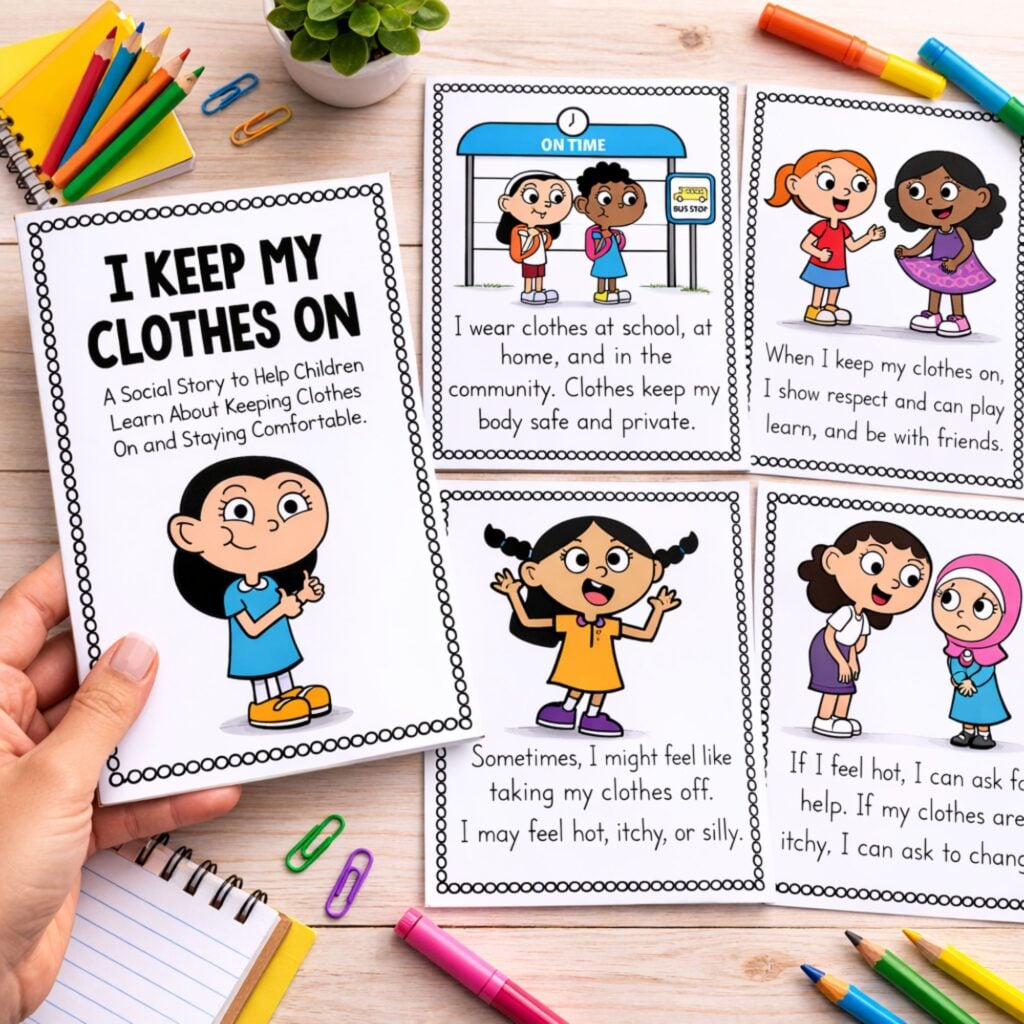
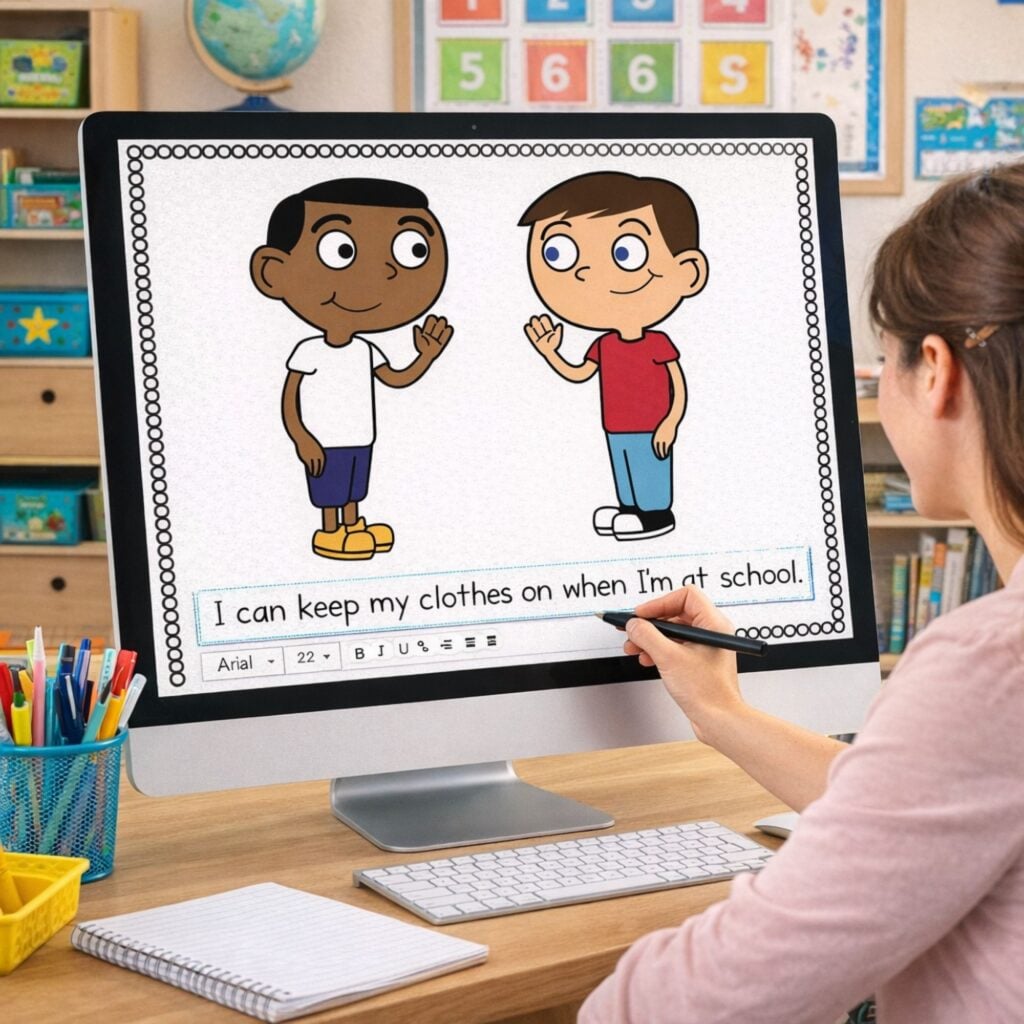
Some images have been created with AI to help visualise how this activity works in educational contexts.
Social Skill Stories (written in language for kids):
When a child struggles with keeping clothes on at school or in the community, it can feel overwhelming fast.
Transitions can often increase dysregulation, which is why pairing this with a saying goodbye to a teacher social story can provide extra reassurance during change. When children feel secure and prepared, behaviors linked to anxiety often decrease naturally.
Before road trips or school pickups, I like reviewing safety expectations in a calm way instead of waiting for problems to happen. This free printable social story about seatbelt safety works really well as part of a daily routine.
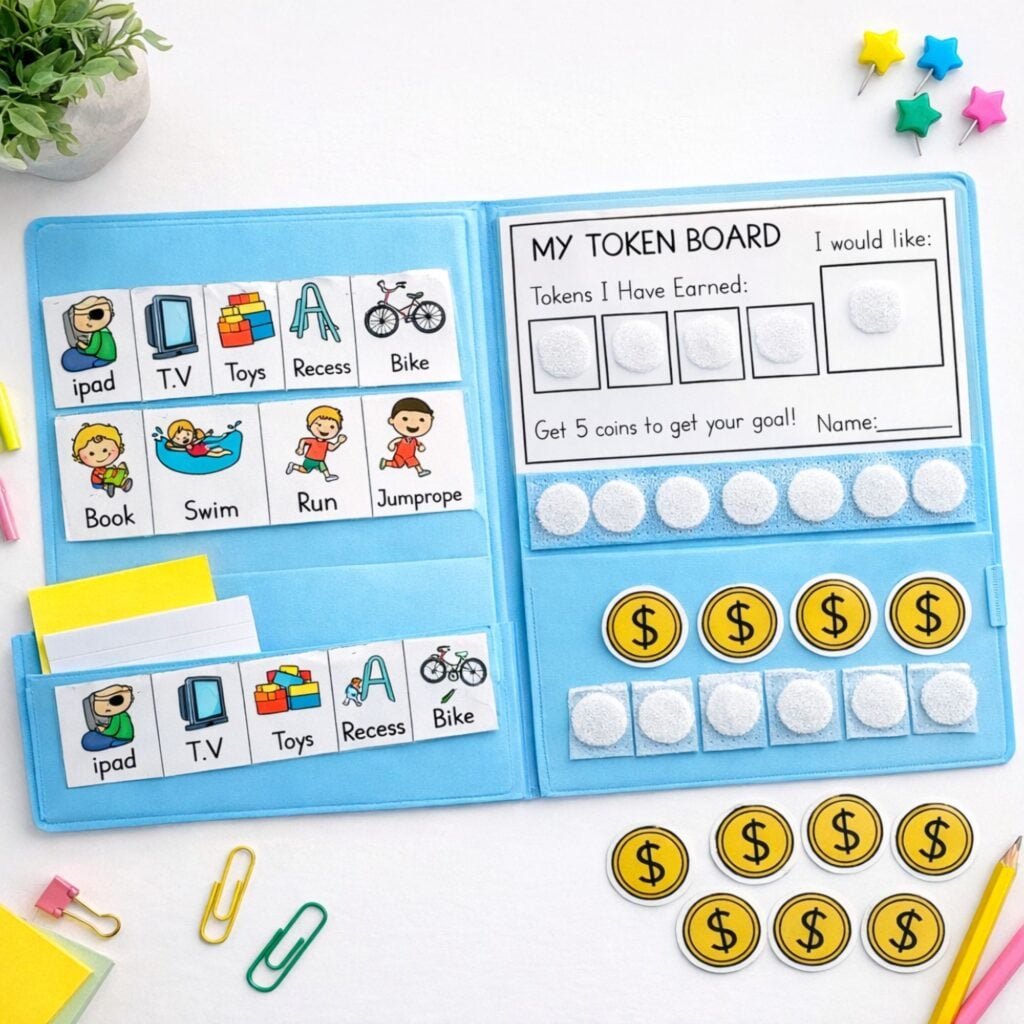
Don’t forget to grab your free token boards at the end of this post!
There is the social piece, the safety piece, the classroom management piece, and that quiet pressure of wondering if you are handling it the right way.
I promise you, this is not about bad behavior, and it is not about a child trying to make your life harder.
Most of the time, there is a reason underneath it. And once we understand that reason, everything shifts.
Why Some Kids Struggle With Keeping Their Clothes On
Here is what I have seen over and over again in special education settings. Sometimes it is sensory, and the child genuinely feels uncomfortable in their clothes.
Tags itch, seams rub, waistbands squeeze, and what feels normal to us can feel unbearable to them.
Sometimes it is not sensory at all, and it is simply a lack of understanding about public versus private rules. Social expectations are invisible, and if no one explicitly teaches them, how would a child just magically know?
We forget that some kids need direct instruction for things we assume are obvious.
And then there is regulation. A child who is overwhelmed, overheated, anxious, or dysregulated might remove clothing as a coping response because it gives immediate relief. It is fast, it is effective, and it communicates something when words are hard.
When we pause and ask, “What is this behavior telling me?” instead of “How do I stop this?” everything changes.
If a child struggles with limits or boundaries, adding an accepting no social story can reinforce that adults set rules to keep everyone safe. Understanding that “no” is part of safety makes clothing expectations easier to accept.
What Is a Keeping My Clothes On Social Skills Story?
A keeping my clothes on social skills story is a simple, structured story written in first person language that teaches the why behind the rule. It is not a lecture, and it is definitely not a scolding in printable form.
It gently explains what is expected, when it is expected, and what a child can do instead if they feel uncomfortable.
Social stories work because they make invisible rules visible. They break down concepts like safety, privacy, and respect into concrete language that children can understand and rehearse.
And repetition is where the magic happens, because the more we read it during calm moments, the more likely it is to stick during hard moments.
That is why I created this keeping my clothes on social skills story in a way that feels supportive instead of shame based.
Teaching respect and body awareness also connects well with the being gentle with pets social story, because both focus on safe and appropriate behavior. When children learn how their actions affect others, they begin to generalize that understanding to public and private expectations.
What This Social Story Teaches
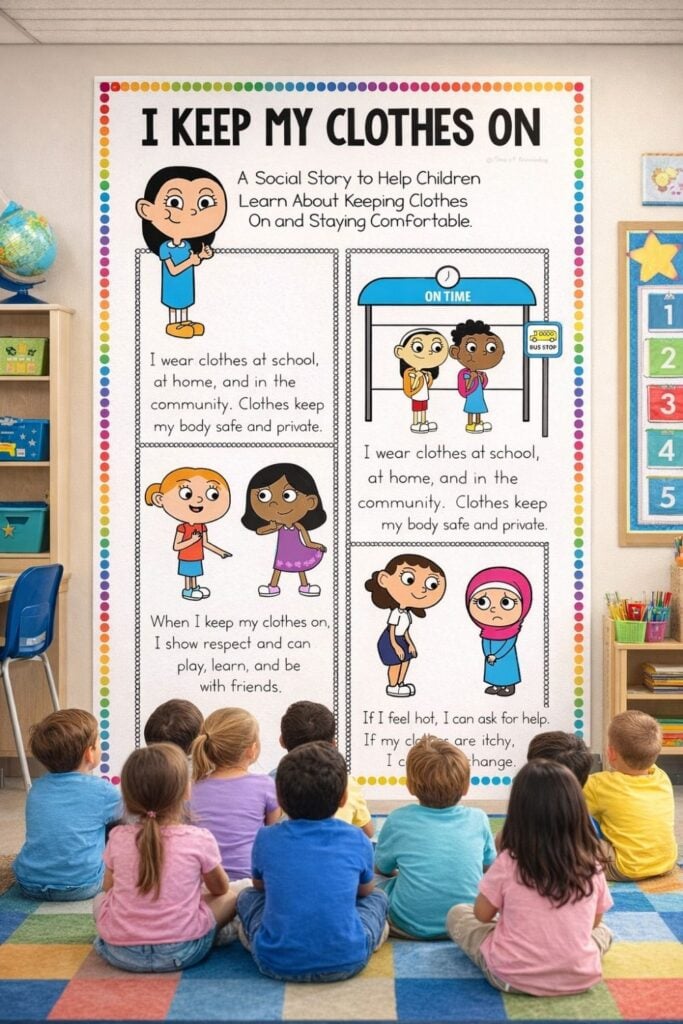
In this story, the language is simple and reassuring. It explains that we wear clothes at school, at home, and in the community because clothes help keep our bodies safe and private.
It also teaches that keeping clothes on shows respect and helps us learn, play, and be with friends.
But this is the part I really care about. It does not just say “keep your clothes on” and leave it there. It teaches what to do if a child feels hot, itchy, or uncomfortable.
That piece is huge.
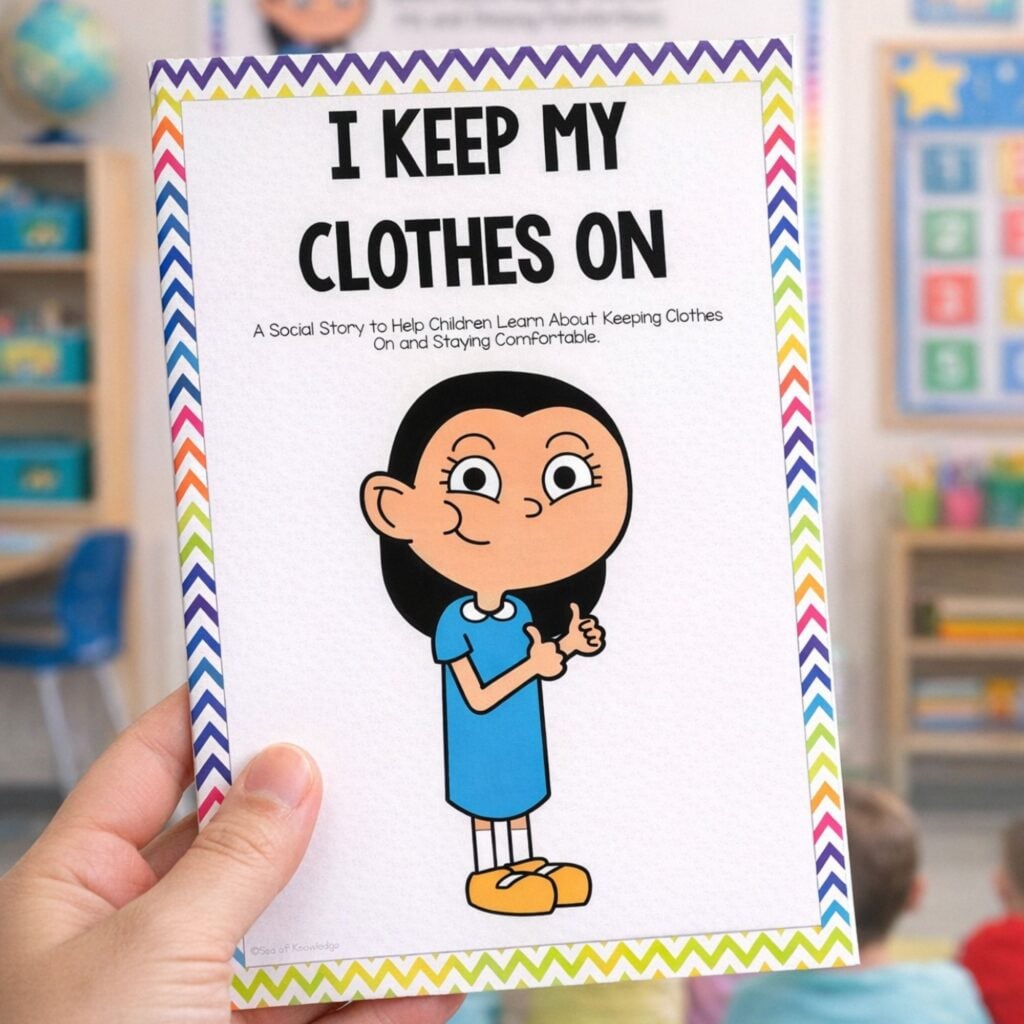
Because we are not just stopping a behavior, we are teaching a replacement. If clothes feel uncomfortable, I can ask for help. If I feel hot, I can talk to my teacher. If something is itchy, I can ask to change.
That shift from “don’t do this” to “here is what you can do instead” is everything.
If you are preparing students for new environments, a field trip social story can help them understand public behavior rules outside the classroom. Reinforcing that we keep our clothes on in community settings strengthens consistency.
How I Recommend Using This Story
Please do not wait until the behavior happens to introduce the story. Read it during calm times, maybe in the morning, during circle time, or as part of a social skills block. The goal is to build understanding before the moment arrives.
Pair it with visual reminders if needed. Use consistent language across staff so the child hears the same phrasing every time. And always respond privately and respectfully if the behavior occurs.
We are protecting dignity while teaching boundaries.
That balance matters so much.
For children who remove clothing when overwhelmed, the frustrated social skills story helps teach replacement coping strategies. When kids can say “I feel frustrated” instead of acting it out, regulation improves.
Teaching Public and Private in a Clear Way
One thing I always emphasize is explicitly teaching what “private” means. Some children truly do not understand that certain body parts are private and that clothing helps keep them covered in public spaces. We cannot assume knowledge that was never directly taught.
I like to connect it to locations. School is public. The playground is public. The grocery store is public. The bathroom at home or getting dressed in your bedroom is private.
Clear examples remove confusion.
And when confusion is removed, anxiety often decreases too.
Some children benefit from direct teaching about social engagement, and the eye contact social story supports understanding appropriate social behavior. Building overall social awareness makes boundary rules clearer.
Practical Strategies Beyond the Story
Let’s be honest, a story alone is not always enough. If sensory discomfort is the trigger, explore tagless clothing, softer fabrics, or different fits. Sometimes prevention solves more than intervention ever could.
Offer movement breaks and regulation supports if the behavior connects to overwhelm. Teach replacement language like “I feel hot” or “This is itchy” so the child has a voice before they reach a breaking point. And reinforce success quietly, without making it a big public event.
Small, consistent reinforcement builds confidence.
Social Skill Stories (written in language for kids):
To strengthen comprehension, you can pair your lessons with these wh questions for kids to check understanding. Asking who, where, and when questions helps reinforce public versus private rules.
Because clothing removal can sometimes be linked to bathroom habits, the toilet social story is another helpful support. Teaching where it is appropriate to remove clothing builds clarity and reduces confusion.
Free Keep My Clothes On Social Story:
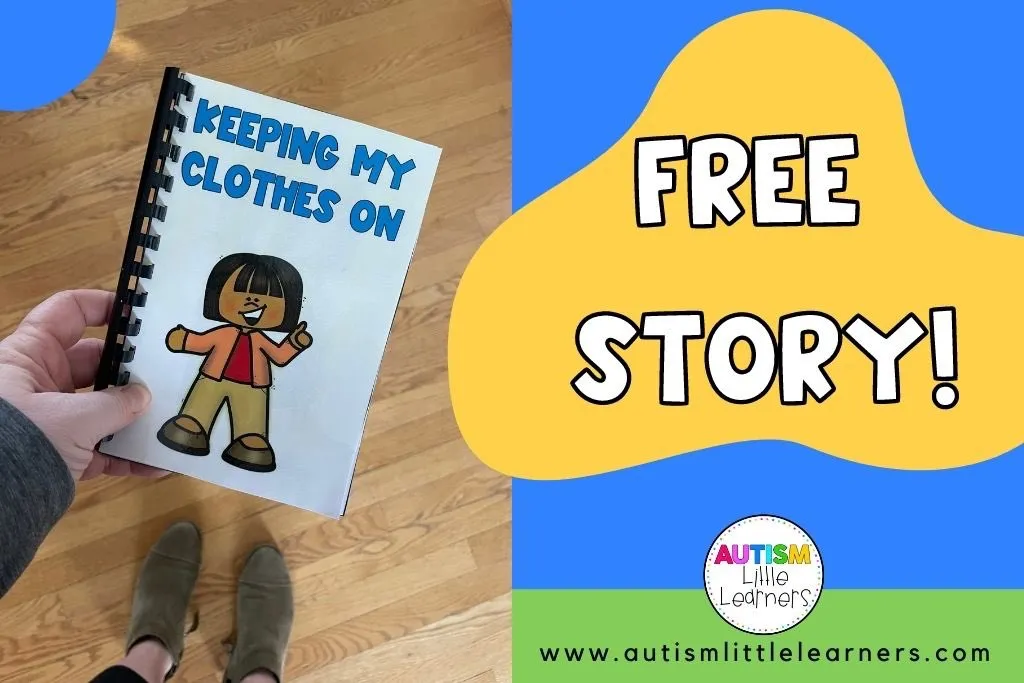
If you’re looking for a girl and boy version of keeping clothes on, these basic stories are perfect for that! Grab them from Autism Little Learners.
Who This Social Story Is For
This keeping my clothes on social skills story works beautifully for preschool, early elementary, special education classrooms, homeschool settings, and therapy environments. It is especially helpful for children with autism, ADHD, developmental delays, or communication challenges who need direct, visual teaching. The structure is predictable, calm, and designed to feel safe.
It is not about control. It is about understanding.
And when a child understands why something matters, cooperation grows naturally.
If you are dealing with clothing removal in your classroom right now, take a breath. You are not failing, and the child is not “bad.” This is a teachable skill, just like reading or turn taking or waiting in line.
A keeping my clothes on social skills story gives you a respectful starting point. And when we teach with patience instead of panic, we build skills that last far beyond this one challenge.
You have got this. And your students are lucky to have someone who cares enough to look for solutions instead of quick fixes.
And if your students are preparing for overnight experiences or new routines, the going to camp social story reinforces expectations in different environments. Consistency across settings helps children generalize the skill of keeping their clothes on.
Grab the Free Token Board to Pair With This Social Story
If you are using this keeping clothes on social skills story, I highly recommend pairing it with a simple token board. Kids do so much better when there is something visual and concrete they are working toward, especially when we are teaching a new boundary or replacement behavior.
I created a FREE printable token board that you can laminate and use with Velcro coins, real tokens, or even little stars. Your student picks a preferred activity, earns five tokens for demonstrating the expected behavior, and then celebrates reaching their goal in a positive and structured way.
It works beautifully with this story, but honestly, it also works with accepting no, toilet routines, gentle hands, and any other social skill you are teaching. You can grab the free token board below and start using it right away in your classroom or at home.