Accepting No Social Story: Helping Kids Learn to Say “No” Gracefully
Don’t let your child struggle with frustration or tantrums when hearing “no.” This Accepting No social story helps kids manage disappointment, avoid meltdowns, and build calm coping skills with simple, supportive language and visuals.
Learning to hear “no” without turning it into a meltdown—it’s a tough skill for many kids. Our Accepting No social story for kids, is a carefully crafted tool designed to teach emotional regulation, respect, and resilience.

This editable and interactive guide uses colorful visuals, concrete examples, and supportive language, making it engaging for young learners.
If you are working with students who struggle during transitions or car rides, this seatbelt safety for kids social story can help make expectations feel more predictable and less stressful. I especially love using visual supports before community outings.
Social story formats have been proven effective for children with autism, ADHD, anxiety, or everyday emotional challenges.
Social Skill Stories (written in language for kids):
But this resource isn’t limited to neurodiverse learners—it helps any child understand limits, cope with disappointment, and build social confidence.
In this article, we’ll cover:
- Why it’s critical to teach children accepting “no”
- Why kids connect with social emotional learning stories
- How to use this editable Accepting No social story
- How to boost learning with stickers, reflective questions, and more
Let’s get into the details!
If you’re looking to expand your collection beyond the Accepting No social story, these social story templates provide versatile options for teaching a variety of important social skills in both classroom and home settings.
Grab the Free Token Board to Pair With This Social Story
If you are using this keeping clothes on social skills story, I highly recommend pairing it with a simple token board. Kids do so much better when there is something visual and concrete they are working toward, especially when we are teaching a new boundary or replacement behavior.
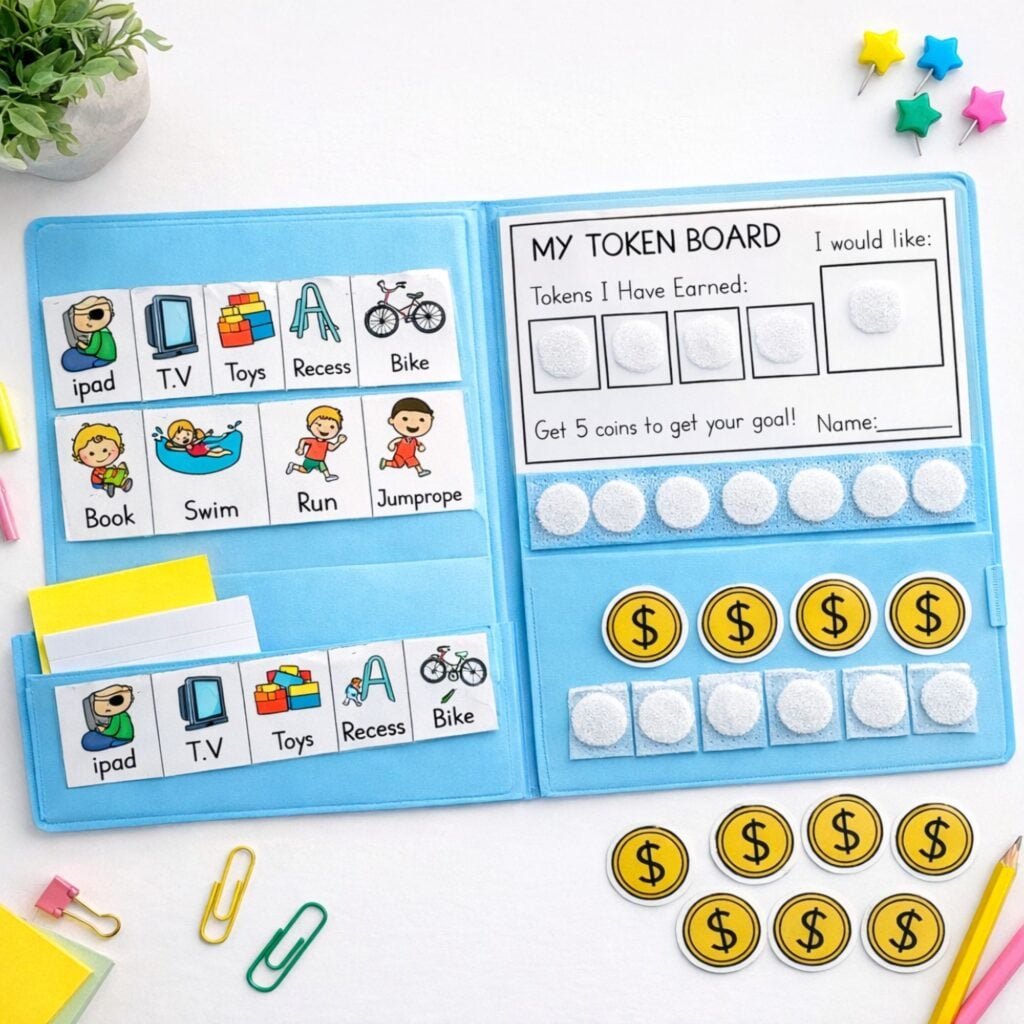
I created a FREE printable token board that you can laminate and use with Velcro coins, real tokens, or even little stars. Your student picks a preferred activity, earns five tokens for demonstrating the expected behavior, and then celebrates reaching their goal in a positive and structured way.
It works beautifully with this story, but honestly, it also works with accepting no, toilet routines, gentle hands, and any other social skill you are teaching. You can grab the free token board below and start using it right away in your classroom or at home.
[Grab the FREE Token Board Here]
Why Is It Important to Educate Kids on Accepting “No”?
Saying “no” is more than a word—it’s a boundary. But to many children, it can sound like rejection. Without guidance, hearing “no” can lead to emotional outbursts, anxiety, or even defiance.

Using a NO social story for kids helps normalize disappointment, teach delayed gratification, and model respectful responses.
Studies show that explicitly teaching how to accept “no” builds frustration tolerance, strengthens emotional resilience, and supports long-term positive behavior.
With structure and repetition, children learn that “no” isn’t the end—it can lead to alternatives, understanding, and growth.
Managing big feelings is just as important as accepting limits. This frustrated social skills story helps kids recognize and cope with frustration, making it a perfect companion to learning how to accept “no” calmly.
Why Do Kids Relate to Social Stories?
Social stories are built for connection. They use first-person voice, visuals, and simple language to describe both the situation and the child’s feelings.
A good Accepting No social story printable breaks down:
- What “no” sounds like and feels like
- Why people sometimes say no
- What to do next (like asking questions or taking deep breaths)
These quick, clear stories are perfect for children who struggle with emotional regulation or social cues.
For example, the version from Autism360 emphasizes that it’s okay to feel sad when hearing “not right now”, but it also models calm responses.
How to Use the Social Skills Story (Including Editable Components)
The editable Accepting No social story includes multiple customizable features:

- Personalizable text fields (child name, caregiver voice)
- Colorful visuals illustrating real-life scenarios
- Example scripts: “If Mom says ‘no,’ I can take three deep breaths”
- Printable booklets ready for easy reading
This product was built with classroom and home use in mind. It’s compatible with SPED environments, homeschool routines, ABA therapy sessions, or SEL circle time.
The editable PDF gives you freedom to adapt the story to your child’s triggers and language needs.
For children who struggle with nonverbal cues, an eye contact social story teaches the basics of looking and listening, skills that are essential for successful communication and social interaction.
How to Use This Story with Interactive Elements
To really cement the lesson, we’ve included:
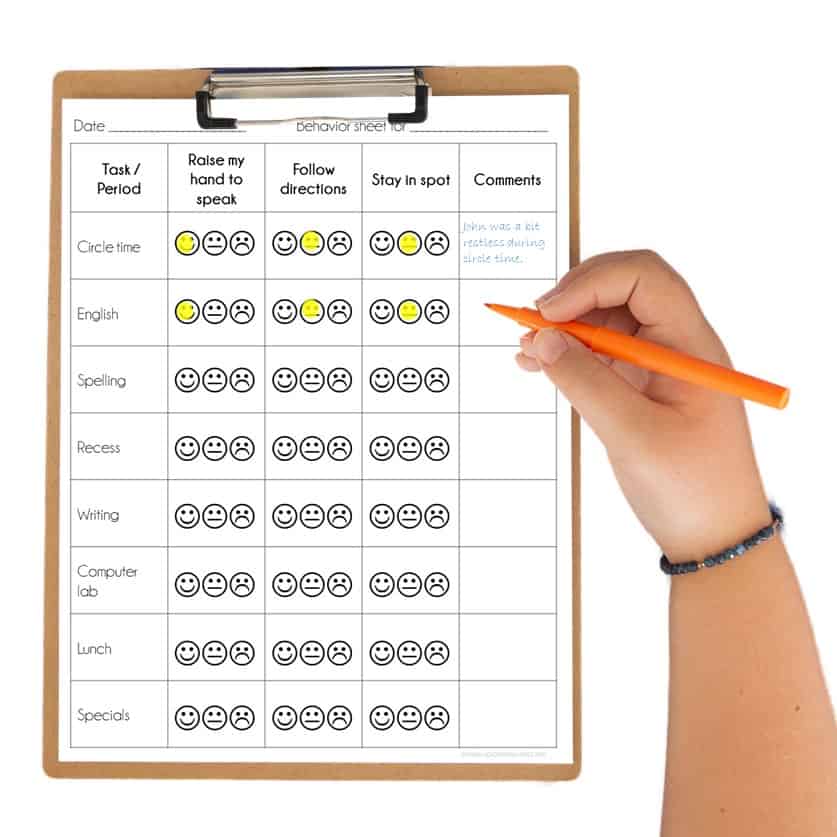
- Sticker reward sheets: Kids earn stickers for using calm responses—great for reinforcing positive behavior.
- Reflection questions: Simple prompts like “How did I feel when I heard no?” invite mindfulness.
- Sorting activity: Kids distinguish between calm and upset reactions, building emotional awareness.
- Role-play prompts: Caregivers read scenarios, and children practice saying “okay” or “can I try later?”
These hands-on tools make the resource much more than a story—it becomes a behavior plan that teaches emotional control, respect, and empathy.
Plus, the Accepting No social story for kids printable supports generalization—across home, school, and community settings.
Helping children accept “no” isn’t about stopping them—it’s about giving them tools to understand their feelings and move forward.
Many kids experience worry that can make hearing “no” even harder. This anxiety social story offers calming strategies and reassurance, helping children feel more secure when faced with challenges.
The Accepting No social story offers empathy, structure, and empowerment, turning frustration into learning moments.
Whether it’s managing anxiety, building boundary awareness, or simply teaching respect, it supports lifelong emotional skills.
By combining customizable visuals, behavior tracking, and reflection, this story becomes part of a holistic social skills toolkit.
Building friendships requires understanding and patience. Use the making friends social story PDF free to teach children how to connect with peers, complementing lessons on accepting limits and boundaries.
It doesn’t just tell; it models, reinforces, and supports real growth. Help your child discover that hearing “no” doesn’t have to be the end—it just might be the beginning of something better.