June Kindness Challenge for Kids (30 Day Friendship Challenge Printable)
June kindness challenge for kids with 30 daily friendship activities to build social skills, cooperation, and positive classroom behavior. Includes printable poster.
Looking for a June kindness challenge for kids that actually helps students build real friendships?
This June friendship challenge for kids is designed to go beyond simple kindness activities and focus on what kids really need—learning how to interact, include others, and handle social situations.
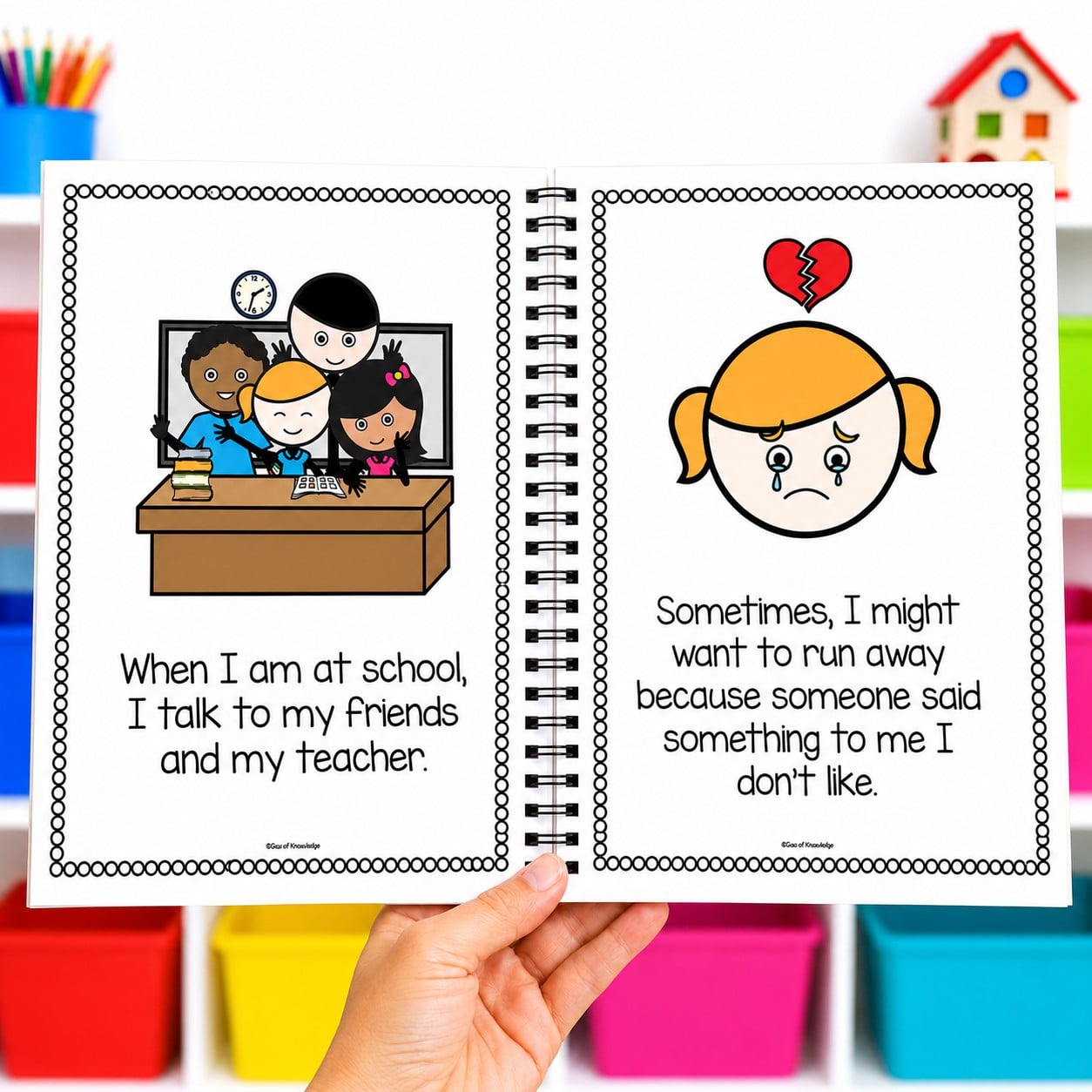
To support students who need clear examples of how to interact with others, using social story templates can make a big difference. These help break down friendship skills into simple, visual steps so students understand exactly what to do in real situations.
If you’re teaching in June (or even running summer learning), this type of 30 day kindness challenge for kids is one of the easiest ways to build strong social emotional skills without adding extra lessons to your day.
If you’ve already introduced kindness earlier in the year, you can build on those skills by connecting this challenge with your may kindness challenge for kids. It creates a natural progression from learning how to be kind to actually applying those skills in friendships.
What Is the June Kindness Challenge for Kids?
This June kindness challenge for kids is a 30-day friendship-focused activity where students complete one small social or kindness task each day.
Instead of random acts, this challenge focuses on:
- friendship skills
- communication
- cooperation
- problem solving
It’s perfect for:
- classroom routines
- summer school
- homeschool learning
- social emotional learning (SEL)
For students who are still developing personal boundaries, this keeping my clothes on social skills story can support respectful behavior alongside your friendship activities. It helps reinforce appropriate social expectations in a structured and supportive way.
Why a June Friendship Challenge Works So Well
By June, students are:
- more comfortable with each other
- more social during play
- more likely to have disagreements
That’s why a kindness and friendship challenge for kids works so well at this time.
This type of June kindness challenge for students helps children:
- learn how to make friends
- practice sharing and turn taking
- handle conflict calmly
- build positive peer relationships
Respect is a big part of friendship, which is why teaching respecting others social skills fits perfectly with this challenge. Students learn how to listen, take turns, and treat others kindly in everyday classroom situations.
30 Day June Kindness Challenge for Kids
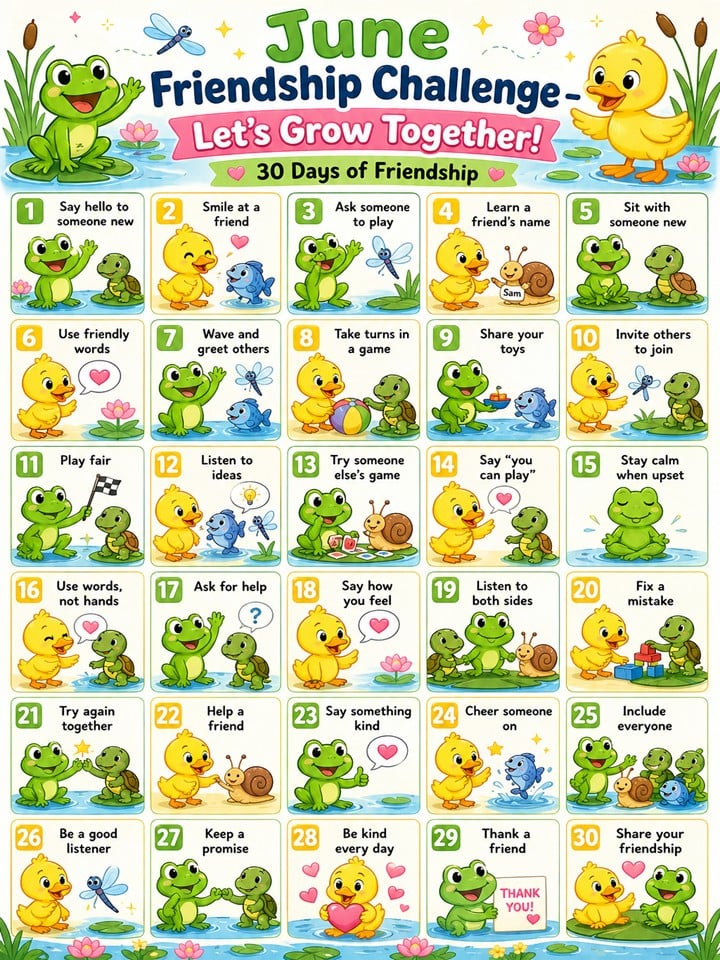
Here is the full June kindness challenge list for kids included in this printable:
Week 1: Making Friends
Say hello to someone new
Smile at a friend
Ask someone to play
Learn a friend’s name
Sit with someone new
Use friendly words
Wave and greet others
Week 2: Playing Together
Take turns in a game
Share your toys
Invite others to join
Play fair
Listen to ideas
Try someone else’s game
Say “you can play”
Week 3: Solving Problems
Stay calm when upset
Use words, not hands
Ask for help
Say how you feel
Listen to both sides
Fix a mistake
Try again together
Week 4: Being a Good Friend
Help a friend
Say something kind
Cheer someone on
Include everyone
Be a good listener
Keep a promise
Be kind every day
Final Days
Thank a friend
Share your friendship
Some friendship challenges come up when students hear “no,” and that’s where this accepting no social story can really help. It gives students strategies to respond calmly and appropriately when things don’t go their way.
How to Use This June Kindness Challenge Poster
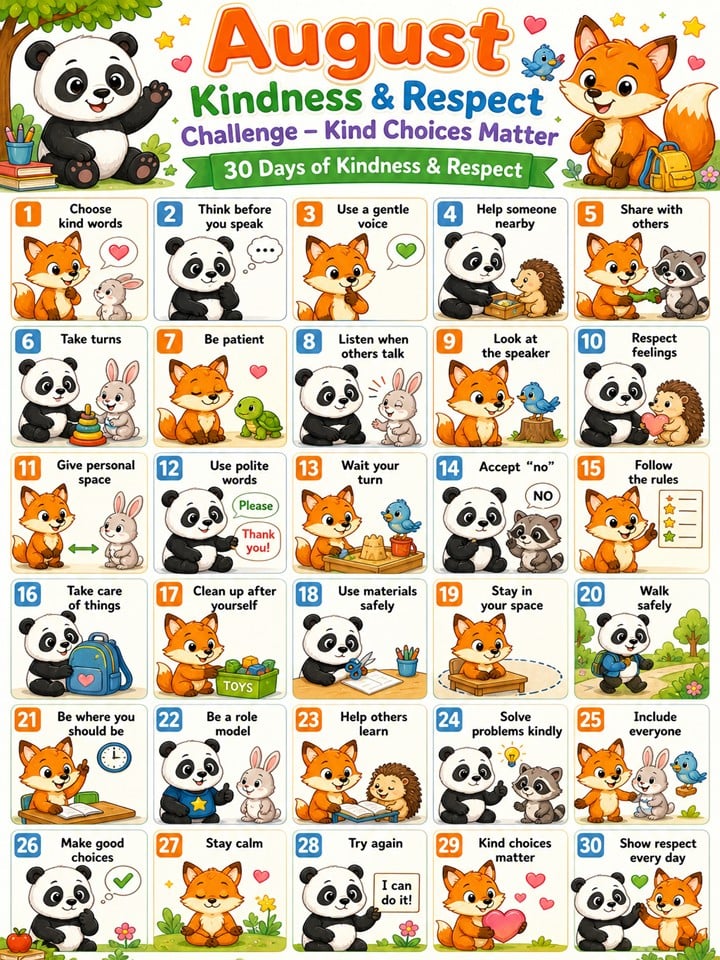
This June kindness challenge poster for kids is designed to be simple and easy to use.
Here’s how to implement it:
- display the poster in your classroom or learning space
- introduce one kindness task each day
- give a quick example of what it looks like
- reinforce and celebrate when students complete it
This works especially well for kindness challenge classroom routines because it becomes part of the day without needing extra planning.
You can also reinforce these friendship skills through read-alouds, and these social emotional books black characters provide meaningful examples of kindness, inclusion, and empathy. Stories make it easier for students to connect with the behaviors they are practicing.
Teacher Tip for Better Results
To get the most out of your June kindness challenge for students, shift from telling to observing.
Instead of saying:
“Be kind”
Try:
“Who used today’s friendship skill?”
This encourages students to:
- notice positive behavior
- reflect on their actions
- build social awareness
This is why kindness challenges for elementary students are so effective for improving classroom behavior.
Grab the June Kindness Challenge Poster Here
If you want to use this June friendship challenge printable, this poster includes all 30 kindness and friendship activities in one clear, kid-friendly layout.
You can use this June kindness challenge poster for the classroom during:
- morning meetings
- SEL lessons
- daily routines
- calm down or reflection areas
👉 Grab the June kindness challenge poster here and start using it right away with your students
Another key part of communication is learning how to focus on others, and this eye contact social story supports that skill directly. It helps students understand how eye contact plays a role in listening, speaking, and building stronger friendships.
Benefits of a June Kindness Challenge for Kids
A consistent June kindness challenge for kids helps students develop:
- communication skills
- emotional regulation
- cooperation
- empathy
- confidence in social settings
It also supports social emotional learning activities for kids in a natural, low-prep way.
A June kindness challenge for kids is not just about being nice—it’s about learning how to interact, solve problems, and build real friendships.
When students practice these skills daily, they begin to apply them naturally in the classroom and beyond.
That’s when you start seeing real growth.