
May Kindness Challenge for Kids (30 Easy Ideas for School and Home)
May kindness challenge for kids with 30 simple daily ideas to build kindness, social skills, and positive classroom behavior. Perfect for teachers and parents.
Looking for a simple May kindness challenge for kids that actually works in the classroom and at home?
By the time May rolls around, things can feel… a little chaotic. Kids are excited, routines are slipping, and everyone is counting down to summer.
That’s exactly why a 30-day kindness challenge for kids is such a game changer.
If you want to take your kindness lessons a step further, using social story templates can help you model exactly what kind behavior looks like in real situations. These are especially helpful for students who need clear, visual examples of how to act and respond kindly.
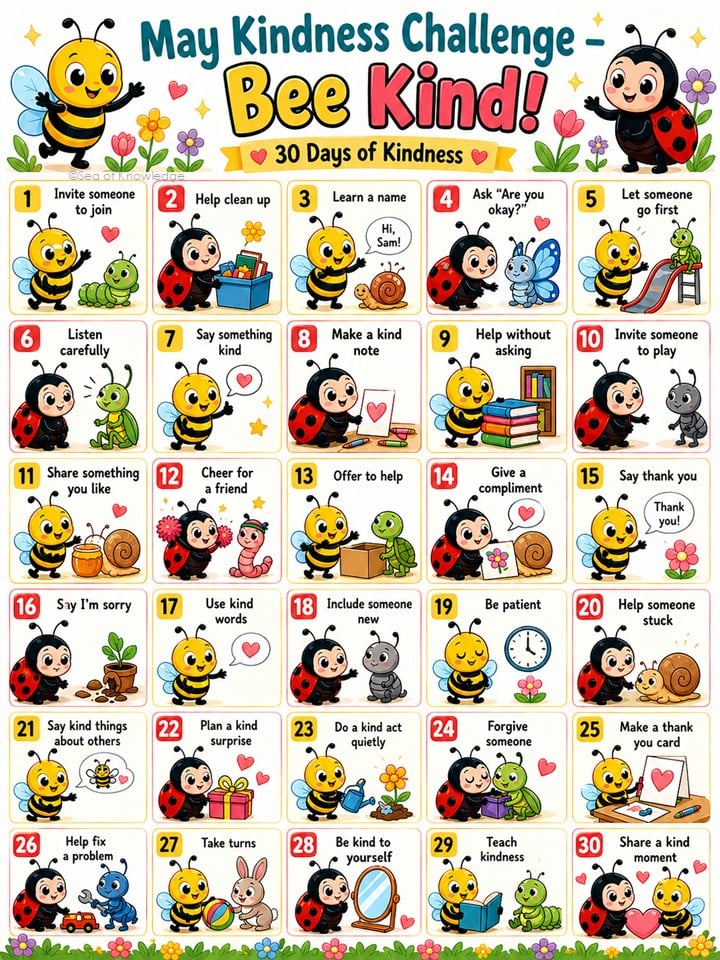
>> Grab this poster at the end of this post!
It gives you a clear, structured way to teach kindness, build positive behavior, and reset your classroom energy—without adding more to your plate.
You can also build stronger conversations around kindness by using wh questions for kids. Asking simple questions like “Who did something kind today?” or “Why was that helpful?” helps students reflect and connect their actions to real-life situations.
If you’re looking for an easy social emotional learning activity for summer, try this friendship challenge for kids. It helps children learn how small acts of kindness can make a big difference in someone’s day.
What Is a May Kindness Challenge for Kids?
A May kindness challenge for kids is a daily activity where children practice one small act of kindness each day throughout the month.
These are:
- simple
- quick
- easy to understand
- real-life social skills
Instead of long lessons, kids learn through daily kindness habits they can actually use.
This type of kindness challenge for students helps build:
- empathy
- social awareness
- positive classroom behavior
- strong peer relationships
For students working on personal boundaries, this keeping my clothes on social skills story ties in naturally with kindness and respect. It helps reinforce appropriate behavior while still supporting social-emotional learning goals in a gentle, structured way.
Why a Kindness Challenge in May Works So Well
A May kindness challenge for students is perfect because:
- End-of-year behavior needs a reset
- Students are more social (and sometimes more reactive 😅)
- It’s a great way to end the year on a positive note
Teachers often use a kindness challenge for the classroom during May to:
- reinforce expectations
- build classroom community
- reduce behavior issues
- encourage peer support
Transitions and routines are another great place to practice kindness, and this riding the bus social story shows students how to be respectful and considerate in shared spaces. It’s a great extension if your kindness challenge includes real-life situations outside the classroom.
30-Day May Kindness Challenge for Kids
Here’s a complete May kindness challenge list for kids you can use right away:
🌱 Week 1: Noticing Others
- Invite someone to join
- Help clean up
- Learn a name
- Ask “Are you okay?”
- Let someone go first
- Listen carefully
- Say something kind
🤝 Week 2: Taking Action
- Make a kind note
- Help without asking
- Invite someone to play
- Share something you like
- Cheer for a friend
- Offer to help
- Give a compliment
💛 Week 3: Kind Words and Emotions
- Say thank you
- Say I’m sorry
- Use kind words
- Include someone new
- Be patient
- Help someone stuck
- Say kind things about others
🌈 Week 4: Going the Extra Mile
- Plan a kind surprise
- Do a kind act quietly
- Forgive someone
- Make a thank you card
- Help fix a problem
- Take turns
- Be kind to yourself
🌟 Final Days
- Teach kindness
- Share a kind moment
Some students may struggle with big feelings, which is where this anxiety social story can really support your kindness challenge. When students understand their emotions better, they’re more able to respond kindly to others too.
How to Use a May Kindness Challenge in the Classroom
Using a kindness challenge for kids in school doesn’t need to be complicated.
Here’s what works best:
- Display your May kindness challenge poster
- Introduce one kindness task each day
- Give quick examples kids understand
- Notice and celebrate kindness in real time
That’s it.
No extra prep. No long lessons.
One simple daily focus can completely shift classroom behavior.
If you’re looking for a visual way to reinforce your challenge, these bulletin boards to promote kindness are perfect for keeping kindness front and center all month. It gives students a constant reminder and makes your classroom feel more positive overall.
Ways to Extend Your Kindness Challenge
Want to make your May kindness challenge activities even more engaging?
Try adding:
- ✔️ Kindness tracking sheets
- ✔️ Daily reflection prompts
- ✔️ Partner or buddy systems
- ✔️ Drawing or writing responses
- ✔️ Classroom rewards for completing the challenge
These work especially well for:
- kindergarten
- first grade
- second grade
- special education classrooms
Hands-on activities can make kindness stick even more, and these kindness art activities preschool fill bucket ideas are perfect for that. They give younger students a concrete way to understand how their actions can “fill someone’s bucket.”
Grab the Kindness Challenge Poster Here
If you want to make this May kindness challenge for kids super easy to use, I’ve put everything together into a simple, kid-friendly poster you can print and use right away.
This kindness challenge poster for the classroom includes all 30 daily kindness activities in one clear, visual layout so students can follow along and stay engaged each day.
👉 You can grab the May kindness challenge poster here and start using it immediately with your students or at home.
And if you love tying in read-alouds, these social emotional skills preschool books on kindness are a great addition to your May kindness challenge. Stories make it easier for kids to see kindness in action and relate it to their own behavior.
It’s perfect for:
- classroom morning routines
- social emotional learning (SEL) lessons
- kindness centers or calm down corners
- daily check-ins and discussions
I like to keep it visible and just point to the daily task—it becomes part of the routine without feeling like extra work.
And honestly? Once kids start noticing and completing the challenges on their own… that’s when the real magic happens.




What a great idea! I’m retired now but work with 3-prek at church.