25 Short Vowel Games Printable Activities That Make Reading Click for Kids
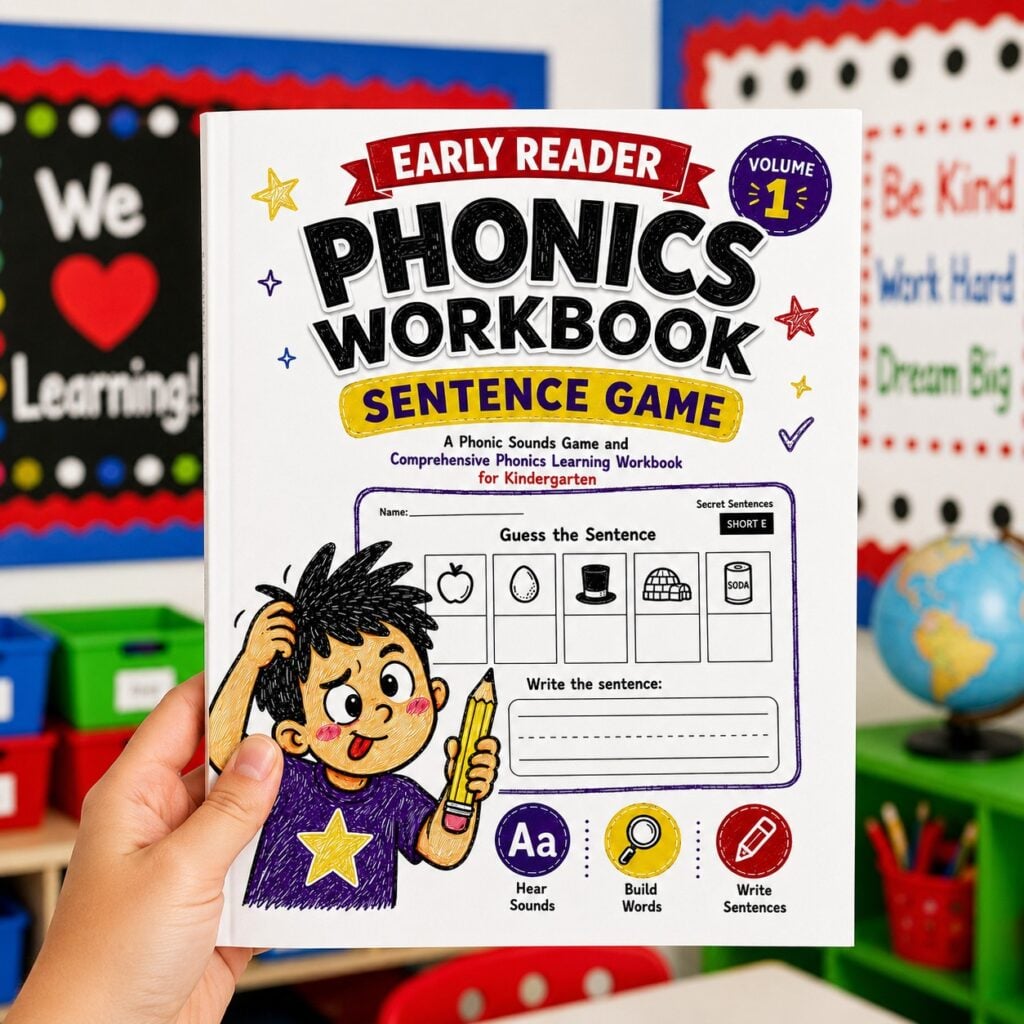
Kids keep mixing up short vowel sounds? These printable phonics games turn decoding into a challenge kids actually enjoy. See the workbook teachers are using to build stronger readers.
If you’ve ever had a student confidently read “cat” as “cot” and then “cut” all in the same sentence, you’re definitely not alone. Learning short vowels can be one of the trickiest parts of early reading because these sounds are similar and often confused.
If your students enjoy solving the secret sentence puzzles in this workbook, they’ll likely love these CVC short vowel decodable sentences worksheets too. They give children even more opportunities to practice blending sounds and reading simple decodable text while building confidence with short vowel patterns.
>>> Grab a free set of these free secret sentences below.
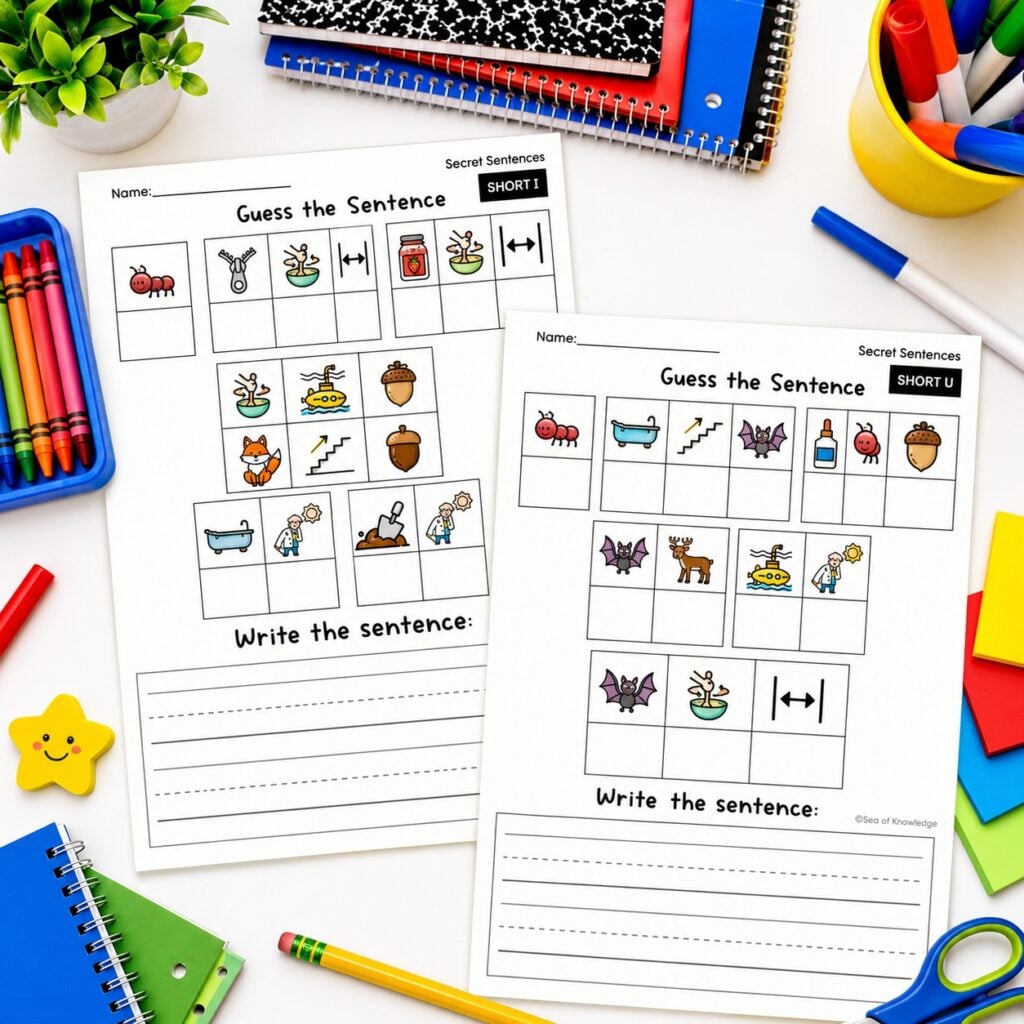
That’s why I love using short vowel games printable activities that feel more like puzzles than worksheets. Instead of simply circling answers, kids actively decode, blend sounds, and build complete sentences while having fun.
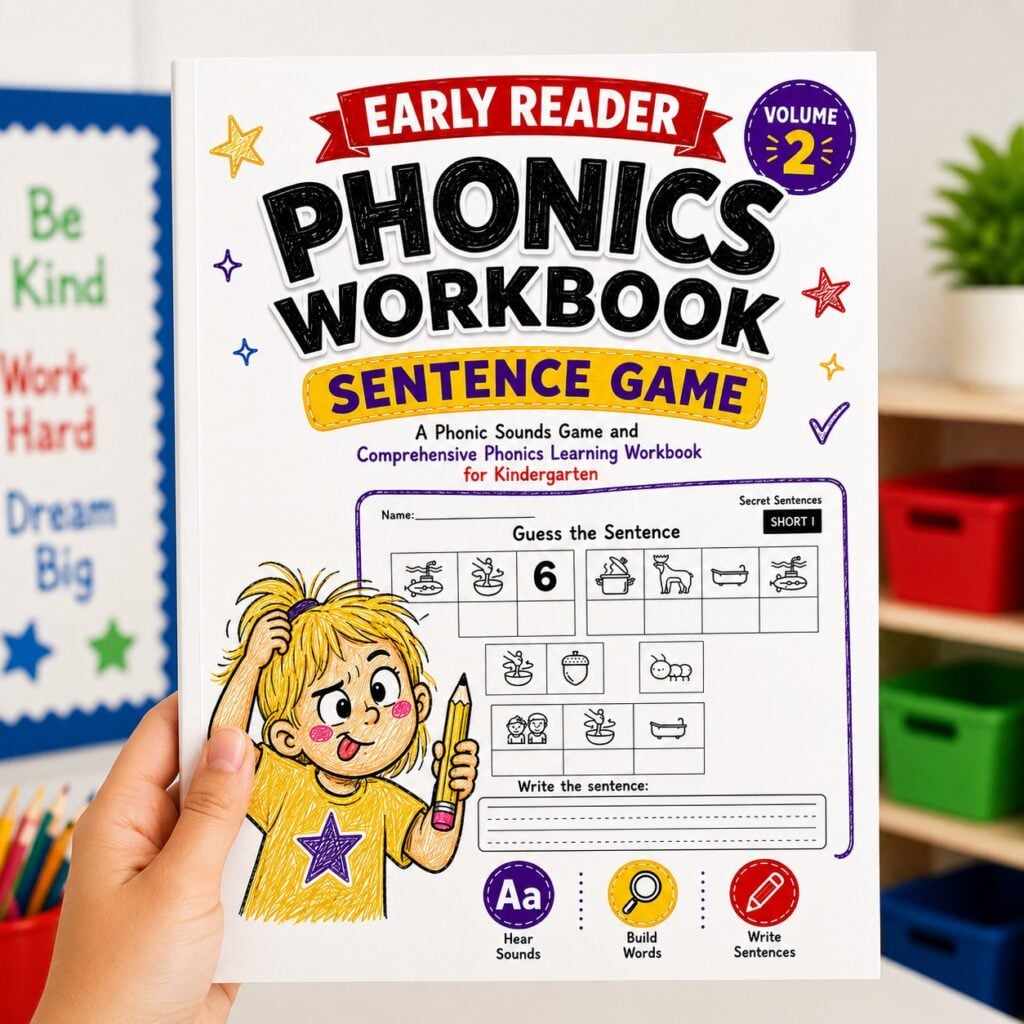
One of my favorite resources for this is the Phonics Workbook Sentence Game Volume 2, which turns reading practice into an engaging picture-based challenge. Students use visual clues, sound out words, and write complete sentences using their phonics skills.
You can find the workbook here: Phonics Workbook Sentence Game Volume 2
If your students are still working on basic decoding and blending skills, I also recommend pairing it with the companion CVC Phonics Workbook Series.
Why Short Vowel Games Work So Well for Beginning Readers
Research consistently shows that children benefit most from explicit phonics instruction combined with opportunities to apply those skills in meaningful reading tasks.
Rather than memorizing words, children learn how to:
- Decode unfamiliar words
- Blend sounds together
- Identify vowel patterns
- Build automaticity
- Improve reading fluency
The activities in these workbooks align with many evidence-based reading practices because students repeatedly work with:
short vowel sounds, CVC words, phonemic awareness, phonics practice, reading fluency, sound blending, segmenting words, decodable words, kindergarten phonics, and beginning reading skills.
Many teachers pair sentence-building activities with hands-on CVC practice reading activities to reinforce newly learned phonics skills. The combination of decoding games and reading practice helps students transfer their learning into real reading situations.
When students solve a sentence puzzle, they’re not just identifying letters. They’re actively processing sounds, connecting them to meaning, and constructing language.
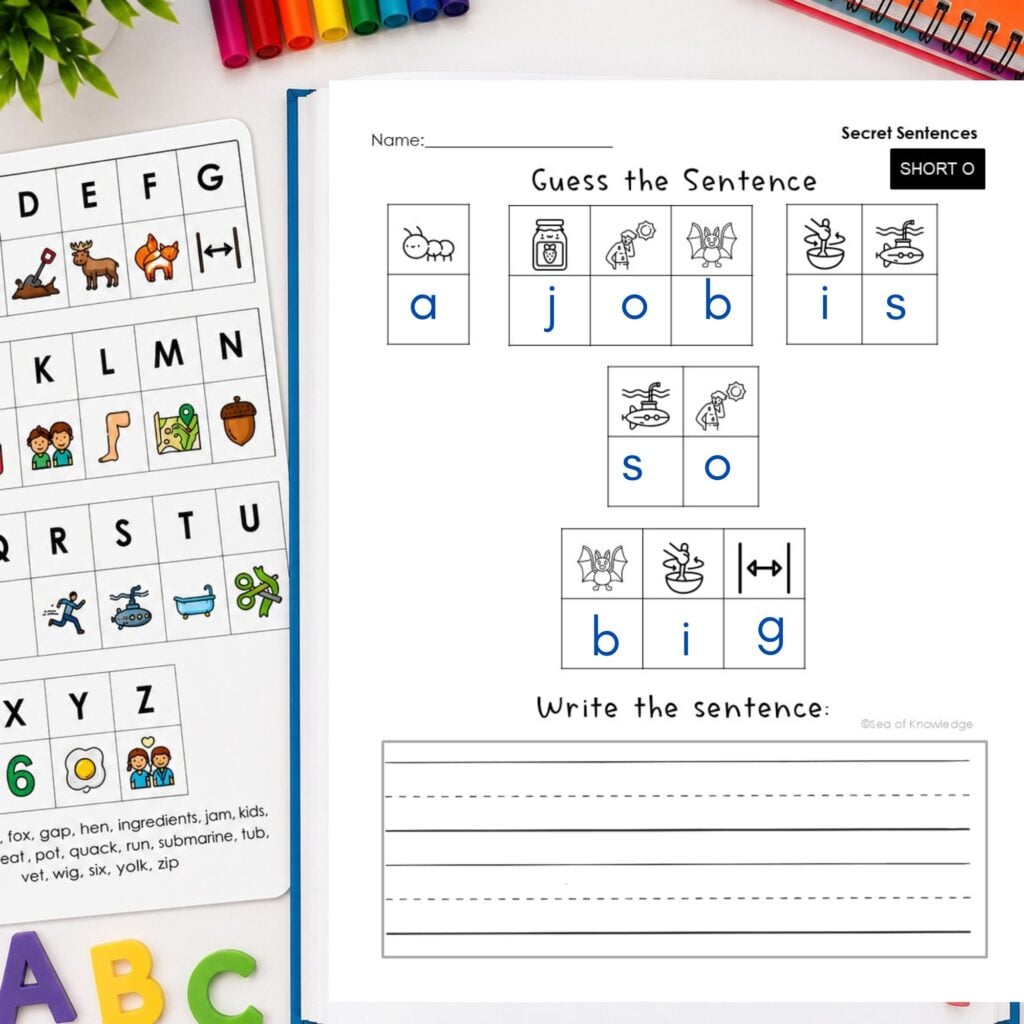
This type of active retrieval helps strengthen reading pathways far more effectively than passive worksheets alone.
One reason these workbook activities work so well is that they repeatedly expose children to common vowel patterns. If you’re focusing specifically on the short i sound, these short i vowel words activities provide extra practice with words children encounter frequently in beginning readers.
How These Sentence Games Build Stronger Readers
One thing I immediately noticed when using sentence-building activities is how much more engaged students become.
Instead of answering isolated questions, they have a purpose:
“Can I solve the mystery sentence?”
The workbook encourages students to practice:
short a words, short e words, short i words, short o words, short u words, word building activities, phonics games, decoding practice, reading comprehension skills, and sentence writing activities.
The visual clues support students who may still be developing confidence with reading. They can use both phonics knowledge and picture cues to work through each challenge.
For students who are ready to move beyond worksheets, CVC decodable readers phonics books for kindergarten can be a natural next step. Decodable texts allow children to apply the same sound blending skills they practice in phonics games and sentence puzzles.
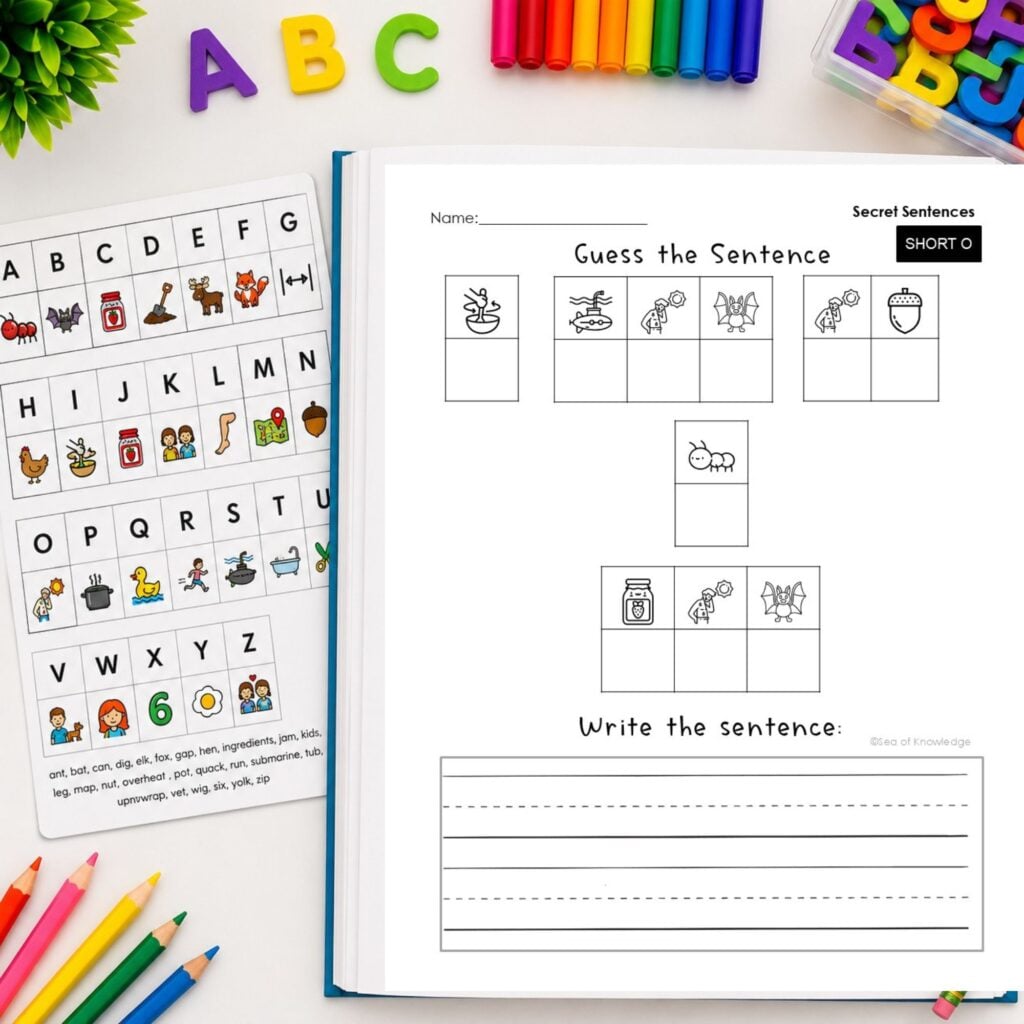
As students complete each page, they are simultaneously developing:
- Vocabulary
- Sentence structure
- Reading confidence
- Writing skills
- Sound-symbol correspondence
Many struggling readers benefit from this multi-sensory approach because it combines visual, auditory, and written learning.
Younger learners who are just beginning to blend sounds may benefit from these preschool CVC words worksheets. They introduce foundational word families and simple decoding skills that prepare children for more advanced sentence-building activities.
Printable Short Vowel Games for Home and School
One of the best things about phonics games is their flexibility. Grab the free set here:
Grab the free CVC Secret Decodable Sentences Pack here.
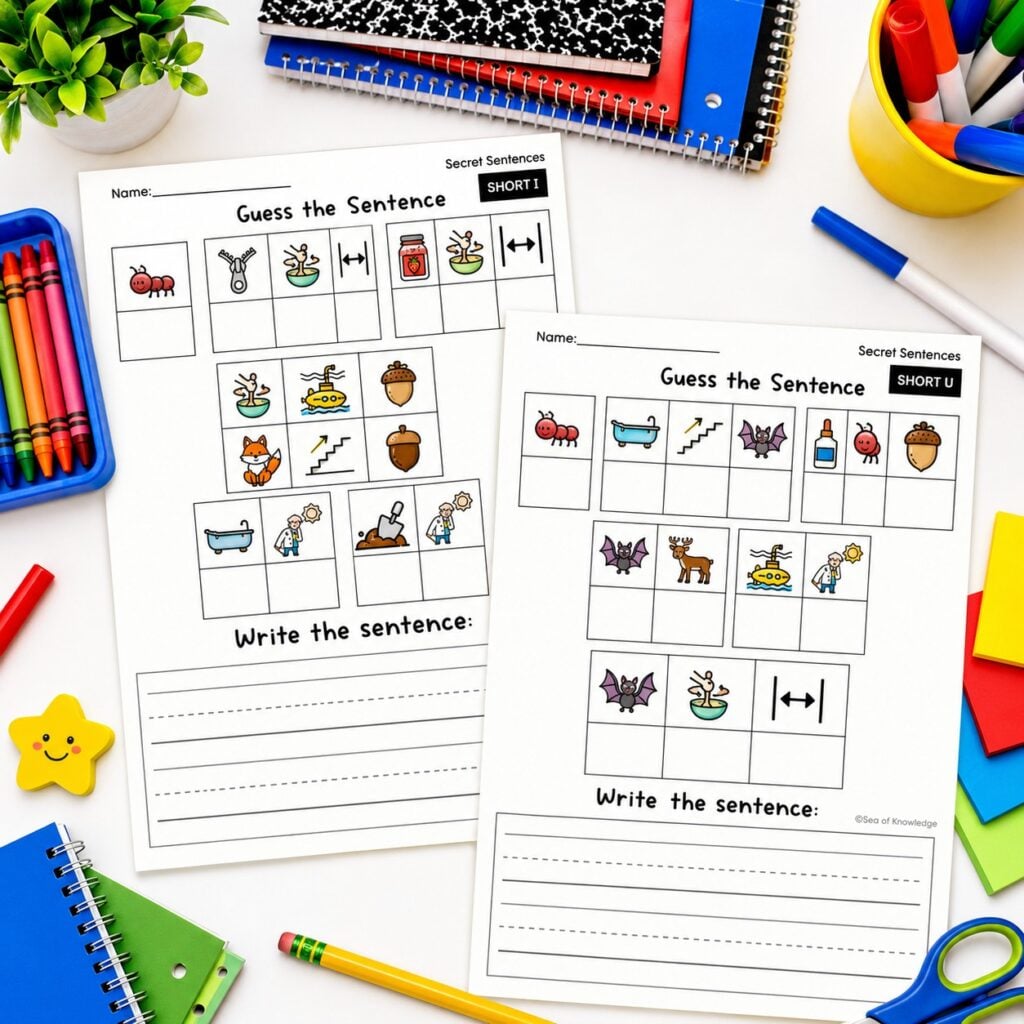
Whether you’re a classroom teacher, interventionist, homeschool parent, or tutor, these activities can be used for:
- Literacy centers
- Small group instruction
- Independent work
- Homework practice
- Reading intervention
- Summer review
- Fast finisher activities
The workbook naturally supports important foundational skills including:
phonics worksheets, phonics workbook, kindergarten reading activities, early reader activities, reading games printable, literacy center activities, phonics intervention, decodable sentence practice, learn to read worksheets, and phonics sentence building.
If you’re looking for additional independent practice, these CVC activity sheets make a great companion resource. They provide targeted phonics review while keeping students engaged through hands-on learning tasks.
Because students are working with complete sentences instead of isolated words, they begin applying phonics skills in a more authentic reading context.
That transfer is where real reading growth happens.
Games often lead to more repetition without students realizing they are practicing important skills. That’s why I also love this CVC worksheet reading dice game, which turns decoding practice into a fun challenge that students are eager to play.
Grab the Books and Try the Activities Yourself
In this post, I’ll be sharing a couple of sample pages from the workbook so you can see exactly how the sentence games work.
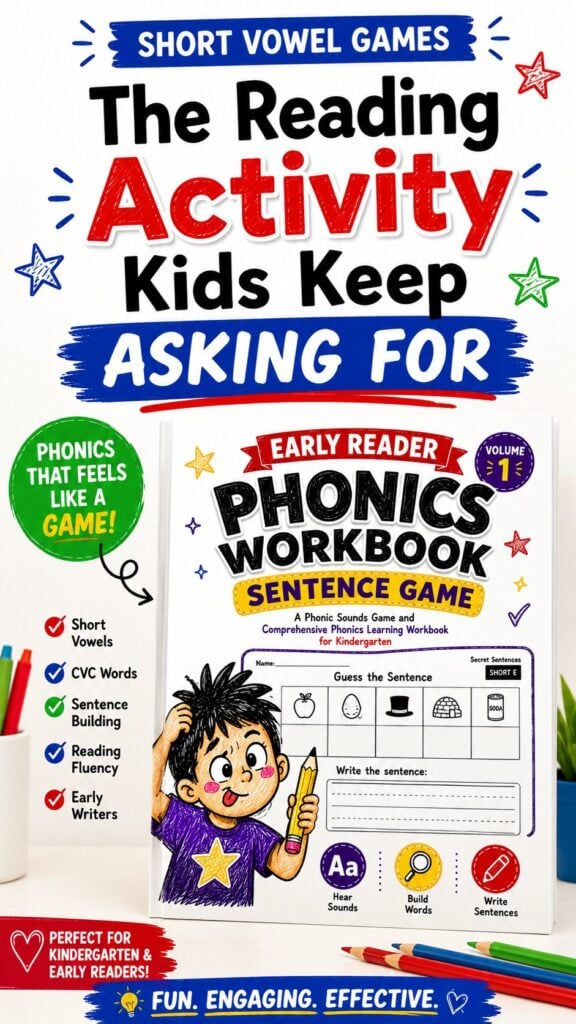
If you’re looking for engaging short vowel games printable activities that go beyond traditional worksheets, these books provide plenty of opportunities for students to practice decoding, blending, sentence building, and writing in one place.
Developing strong phonemic awareness goes hand in hand with learning to read. These CVC words kindergarten rhyming worksheets hole punch cards help children listen for sound patterns and word families while strengthening fine motor skills at the same time.
📚 Phonics Workbook Sentence Game Volume 2
For many young readers, the difference between frustration and success often comes down to having enough enjoyable practice. These sentence games give students exactly that while helping them build the strong phonics foundation needed for lifelong reading success.
Another valuable literacy skill to build alongside phonics is rhyming. These rhyming games for kindergarten encourage children to notice sound similarities between words, which supports decoding, spelling, and overall reading development.

![Easter Escape Room Printable Riddles [Secret Code]](https://www.seaofknowledge.org/wp-content/uploads/2023/03/Easter-escape-room-printable-1.jpg)