
Moving House Social Story: Helping Children Feel Calm About a Big Change
Moving house can leave kids feeling scared, anxious, and overwhelmed. This moving house social story helps children cope with change, reduce anxiety, and adjust to a new home with confidence.
Moving to a new home is a big adventure, but it can also bring big emotions. While adults may focus on packing boxes and unpacking furniture, children are often thinking about something very different. They might wonder if they’ll like their new bedroom, miss their old friends, or worry about what life will be like in a new neighborhood.
Creating your own social stories can help you tailor situations to your child’s unique needs. If you’d like to make personalized resources for transitions like moving house, these social story templates make it easy to create stories for almost any situation your child may face.
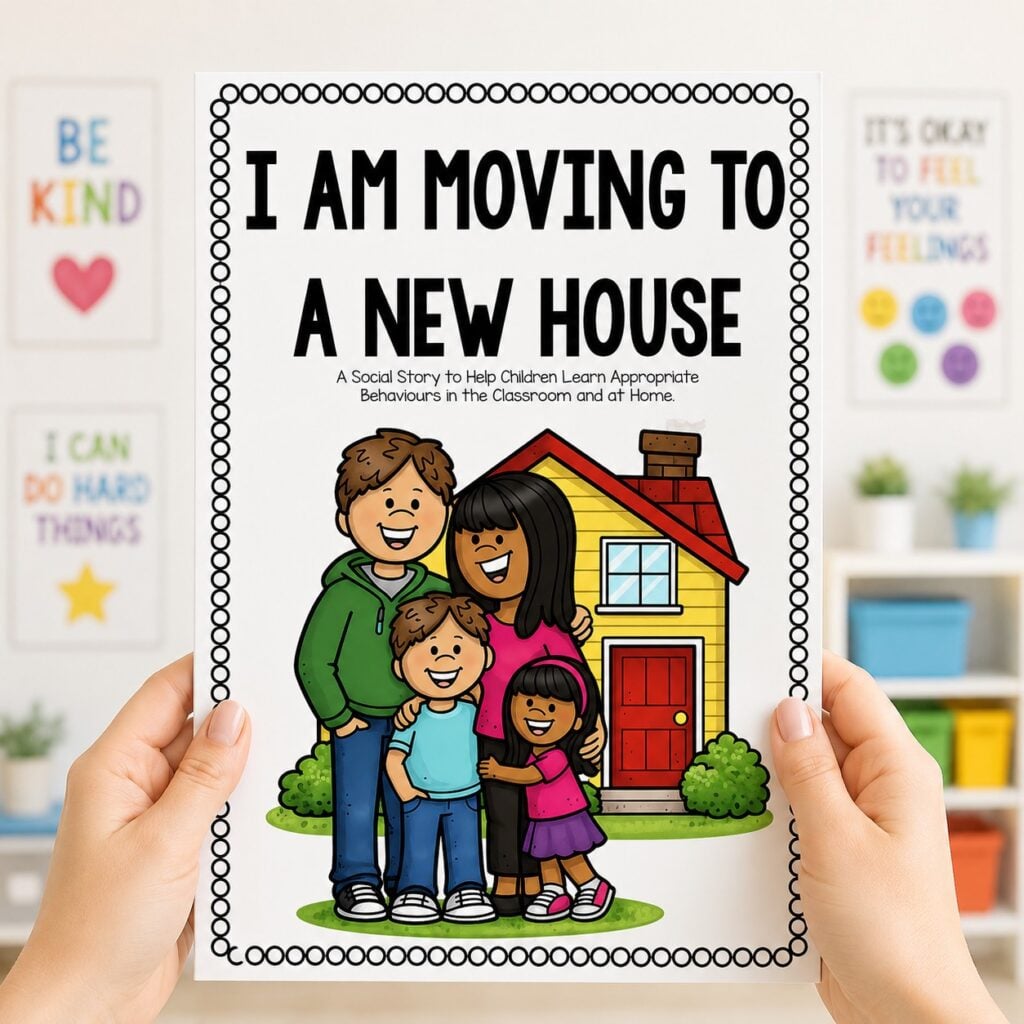
A moving house social story helps children understand what to expect before, during, and after moving day. By using simple language, predictable events, and reassuring pictures, social stories can make a major life transition feel much less overwhelming.
Whether you’re supporting a young child, a student with autism, or a child who simply struggles with change, this resource can provide comfort and confidence during the moving process.
Moving often means spending more time travelling to a new home, school, or neighborhood. Reading a car safety social story beforehand can help children understand how to stay safe during longer car trips and new routines.
Why Moving House Can Feel Difficult for Children
Children often develop strong emotional attachments to their home. It’s where they sleep, play, celebrate birthdays, and build daily routines. Even if they’re excited about a new house, they may also experience sadness, worry, or uncertainty.
Some children may be concerned about:
- Leaving their bedroom behind.
- Missing neighbors and friends.
- Starting at a new school.
- Living somewhere unfamiliar.
- Sleeping in a different room.
- Wondering if they’ll make new friends.
- Not knowing what moving day will look like.
Children with autism, ADHD, anxiety, or sensory differences may find these changes especially challenging because they often thrive on familiar routines and predictable environments.
A social story about moving house helps prepare children by explaining each step in a calm, reassuring way.
Moving to a new home sometimes means leaving behind trusted adults at school. This saying goodbye to a teacher social story helps children process those emotional goodbyes while preparing for exciting new beginnings.
How This Moving House Social Story Helps
This moving to a new house social story walks children through the moving process one step at a time. Instead of focusing only on the move itself, it also acknowledges the emotions that often come with leaving a familiar home.
Throughout the story, children learn that it is okay to:
- Feel excited about the move.
- Feel nervous about something new.
- Miss their old house.
- Talk to trusted adults about their feelings.
- Ask questions.
- Take time to adjust.
The story also helps children understand what they might see and experience, including packing boxes, arriving at an empty house, decorating a new bedroom, meeting neighbors, and slowly making the new house feel like home.
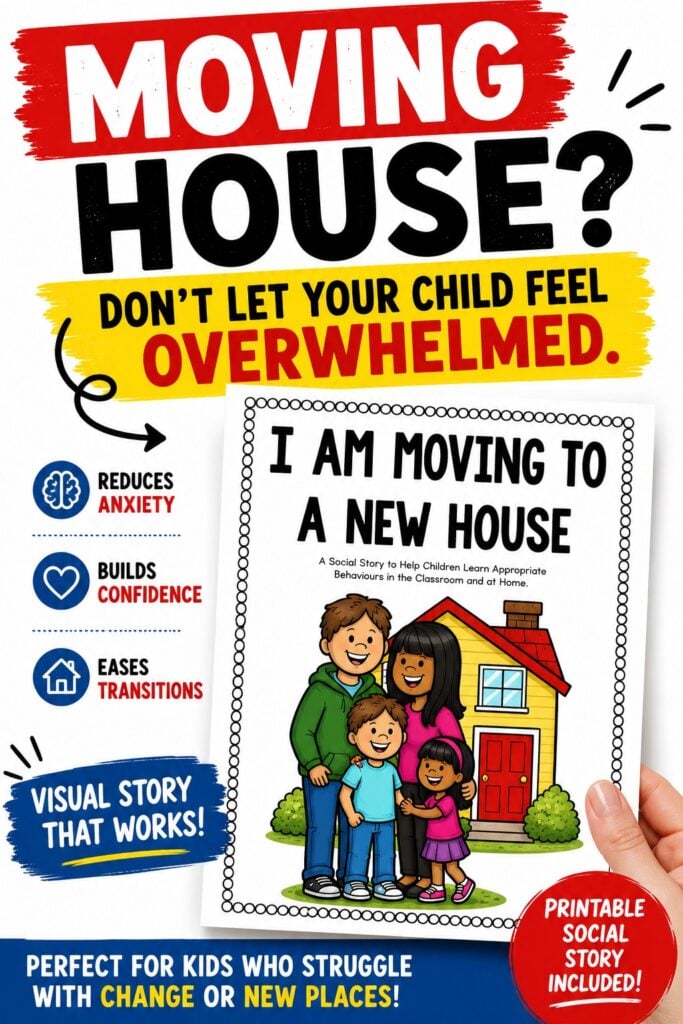
Because the story uses first-person language (“I”), children can easily relate to each page and picture, making the experience feel more personal and reassuring.
If your family is moving with a pet, it’s important to remember that animals can feel stressed by change too. Our being gentle with pets social story teaches children how to care for pets kindly during busy transitions like moving house.
Help Children Feel More Confident About Moving with Our Printable Social Story
If your child is feeling worried about moving, our Moving House Social Story provides a gentle, reassuring way to prepare them for this big life change.
Written in simple first-person language and supported with engaging illustrations, it walks children through each step of the moving process—from packing boxes and saying goodbye to settling into a new bedroom, talking about their feelings, and making new friends.
Designed for parents, teachers, speech therapists, school counselors, and occupational therapists, this printable resource is especially helpful for children with autism, anxiety, ADHD, or anyone who benefits from visual supports and predictable routines.
Children may not always like every part of moving, such as leaving a favorite playground or bedroom behind. This accepting no social story helps children learn healthy ways to cope when things don’t go exactly as they hoped.
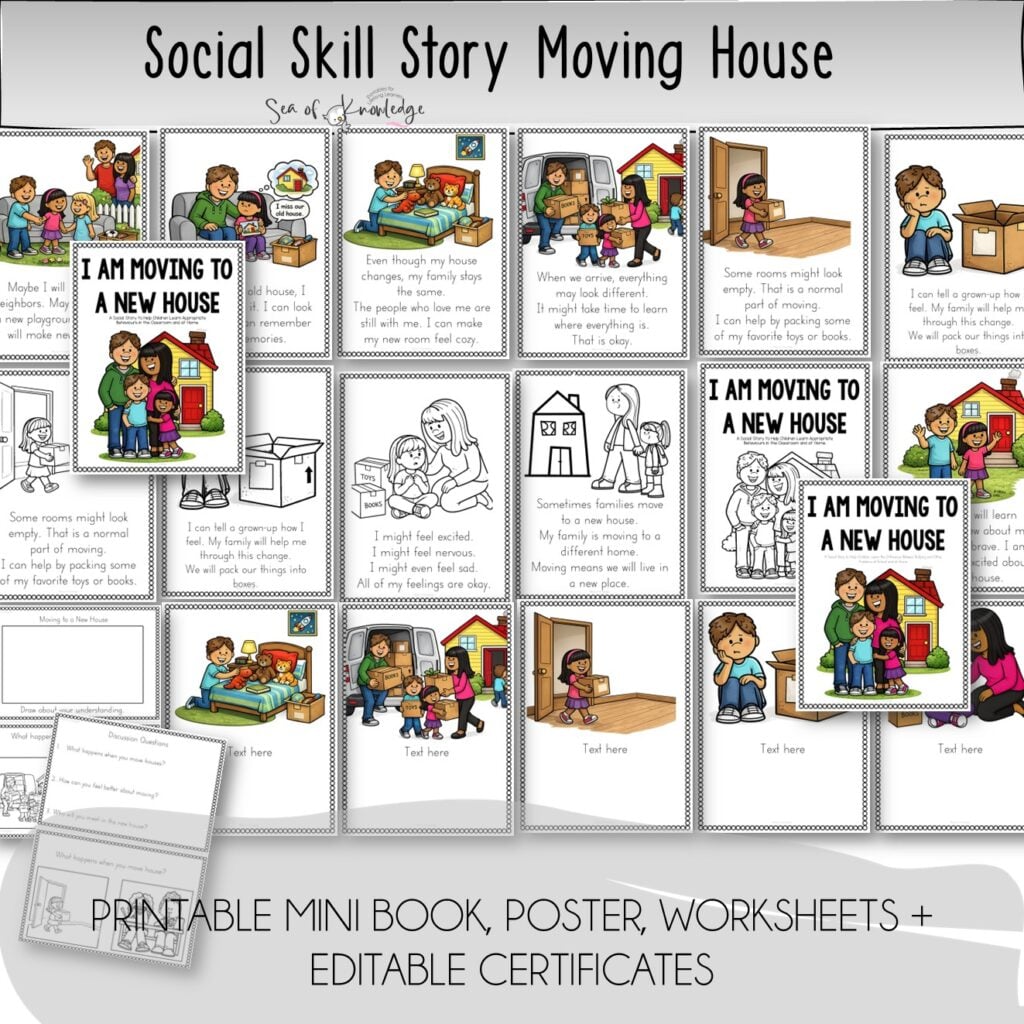
Whether you’re preparing for moving day or helping a child adjust afterward, this social story encourages confidence, emotional regulation, and a positive outlook as they begin making their new house feel like home.
Moving can introduce children to lots of unfamiliar places and experiences. Preparing them with a field trip social story can also help them feel more confident when visiting new locations and exploring unfamiliar environments.
Tips for Helping Children Adjust to a New Home
While a social story is a wonderful tool, there are also simple things parents and caregivers can do to make moving easier.
Let Your Child Pack a Special Box
Invite your child to pack a small box filled with their favorite toys, books, blanket, or comfort items. Having familiar belongings available on the first night can make a new bedroom feel much more comforting.
Keep Familiar Routines
Try to keep bedtime, meals, bath time, and reading routines as consistent as possible. Familiar routines help children feel safe even when their surroundings have changed.
Help Them Personalize Their New Bedroom
Allow your child to choose where their toys go, display special artwork, or help make the bed. Giving children a sense of ownership over their new room can help it feel familiar much sooner.
Talk About Feelings Often
Some children find transitions stressful and may need reminders about daily expectations during busy times. Our keeping my clothes on social skills story reinforces appropriate behavior using simple, reassuring language.
Remind children that it’s perfectly okay to have mixed emotions. You might say:
- “It’s okay to miss our old house.”
- “It’s okay to feel nervous.”
- “It’s also okay to be excited.”
Knowing that all feelings are accepted helps children feel understood.
It’s completely normal for children to feel nervous before moving to a new house. This anxiety social story helps children recognize anxious feelings and learn calming strategies they can use during times of change.
Big life changes often bring big emotions. Our frustrated social skills story teaches children simple coping strategies for managing frustration and expressing their feelings in positive ways.
Explore the New Neighborhood Together
Go for walks, visit a nearby playground, stop at the local library, or explore local parks together. Positive experiences help children begin creating happy memories in their new community.
Download the Moving House Social Story
Our printable moving house social story is designed for parents, teachers, school counselors, speech therapists, occupational therapists, and psychologists who are supporting children through this important life transition.
The resource includes child-friendly illustrations and simple first-person language that explains each stage of moving in a reassuring and predictable way. It’s ideal for preschool, kindergarten, early elementary students, and children with autism or anxiety who benefit from visual supports during periods of change.
A new home also means learning new bathroom routines and becoming familiar with a different environment. This toilet social story can help children feel more comfortable using an unfamiliar bathroom with confidence.
Remember you can grab the editable social skills story here.
If you’d like a free introduction to social stories about moving, you can also read My Family Is Moving to a New House by Benzie’s Autism Social Stories here.
Talking about moving is a wonderful opportunity to build language skills. These engaging WH questions for kids encourage children to discuss their new home, neighborhood, feelings, and daily routines while strengthening comprehension.
Frequently Asked Questions
When should I read a moving house social story?
Start reading the story one to two weeks before moving day. Continue reading it during packing, on moving day if appropriate, and during the first few weeks in the new home to reinforce what your child is experiencing.
Are social stories only for autistic children?
No. Although social stories were originally developed to support autistic children, they are helpful for any child experiencing a new situation, big transition, or unfamiliar routine.
Can teachers use a moving house social story?
Absolutely. Teachers, school counselors, speech pathologists, occupational therapists, and psychologists often use social stories to support students who are adjusting to changes at home.
What if my child misses their old house?
This is completely normal. Encourage your child to talk about their memories, look through family photos, and share what they miss. At the same time, help them create new memories by exploring their new home and neighborhood together.
How long does it take children to adjust after moving?
Every child is different. Some settle in within a few days, while others may take several weeks or months. Patience, reassurance, consistent routines, and open conversations all help children feel more comfortable over time.
If moving means catching a different school bus or learning a new route, preparing ahead can make all the difference. Our riding the bus social story helps children understand what to expect and feel more confident during their new daily routine.




![Separation Anxiety Goodbye Social Story Printable [Ease into Transitions]](https://www.seaofknowledge.org/wp-content/uploads/2026/08/separation-anxiety-posters-and-story-3.jpg)