Avoid These Earth Day Reading Comprehension Mistakes (I Learned the Hard Way)
Let’s be real for a sec. Teaching reading comprehension is hard enough without throwing in “save the planet” vibes and expecting your students to care that plastic takes a gazillion years to break down. I mean, one of my kiddos thought recycling meant giving their crusty sandwich to the class next door. 😂
But Earth Day? It’s the perfect time to sneak in meaningful literacy skills and sprinkle in a little “let’s not destroy our only home” motivation. That’s where Earth Day reading comprehension comes in—because if they’re going to read, they might as well learn that Earth isn’t just a floating marble for TikToks and Roblox.
If you’re looking to extend the learning beyond reading, these fun and fine motor Earth Day cutting activities are the perfect hands-on addition. We used them right after our comprehension card sessions to keep the theme going without more worksheets!
Why Teach Kids About Planet Earth?
Okay, let’s cut to the chase. We teach about Earth Day because kids need to understand that paper doesn’t grow back the second you waste it, and trees are more than just climbing equipment. 🙄
Also? It’s part of being a decent human. Plus, there’s something magical about watching your ELL students connect words like “pollution” and “recycle” to the trash they just tried to shove behind the bookshelf. 💀
Even better? When they finally get what Earth Day is all about, the conversation goes from “Can I eat this leaf?” to “Miss, I used a reusable straw!” 🥹 Small wins, my friend.
Mistakes with Reading Comprehension Worksheets (Yep, I’ve Made Them Too)
Let’s talk about the elephant in the photocopy room: not all reading comprehension worksheets are created equal. 🙃 And if you’ve ever watched a kid stare blankly at a worksheet like it just personally offended them, you know what I mean.

Here are a few mistakes I’ve made (and seen a million times) when it comes to comprehension tasks—especially around themes like Earth Day:
- Too much text, not enough support.
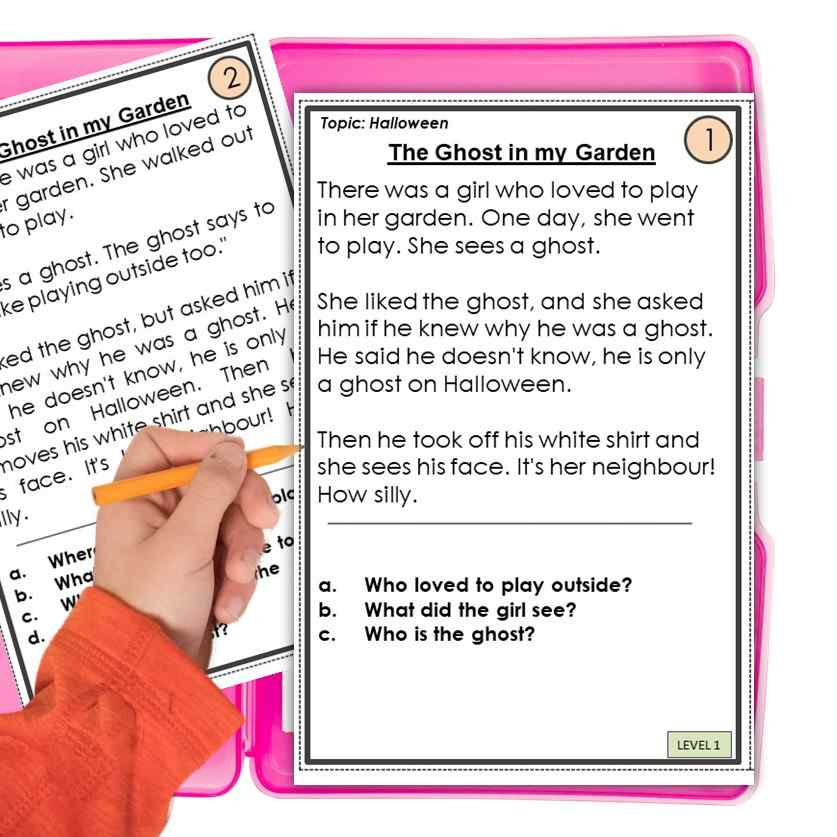
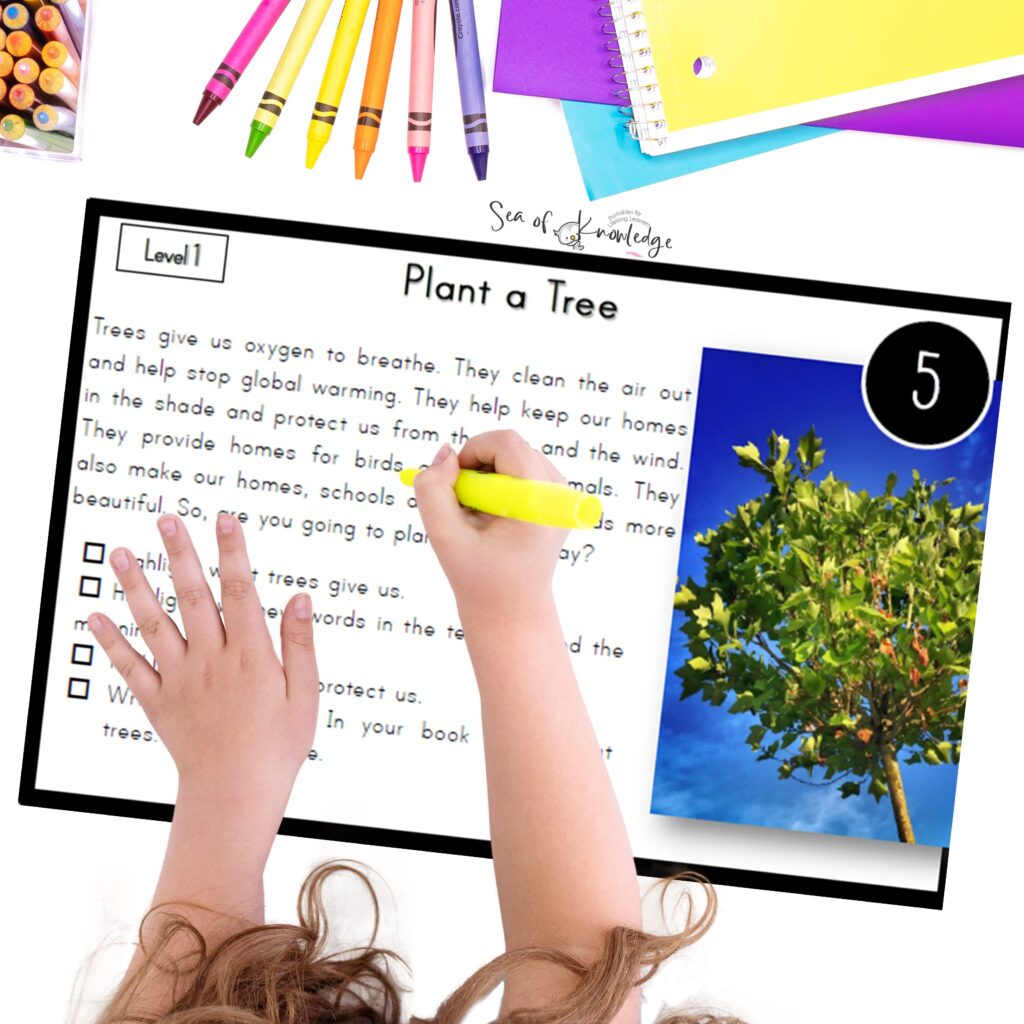
Ever handed your students a dense paragraph about carbon emissions and expected them to just get it? Yeah, same. If a worksheet looks like a novel, kids shut down fast. This is why I swear by short, leveled texts with visuals—like the ones in my Earth Day reading comprehension task cards. - One-size-fits-all questions.
We’ve all used those “Who, What, Where, When” questions… but when your ELLs are still decoding “recycle,” they need support. Differentiation isn’t just a buzzword—it’s what keeps your whole class engaged without 47 versions of the same worksheet. - No context or connection.
Kids don’t care about melting ice caps if they don’t understand what ice caps are. Building background knowledge is key. I like to pair themed sets like these nonfiction animal classification passages with Earth Day content to make things click. - Zero follow-up.
Just handing out a worksheet and calling it a day? But without follow-up discussions, vocabulary review, or visual aids, comprehension gets tossed out with the glue sticks. A good worksheet should spark a convo, not silence.
So if your students are zoning out mid-passage or doodling in the margins, don’t toss the whole thing—just tweak your approach. Start small. Use something like my differentiated nonfiction bundle, and actually see how much they understand when they feel set up for success.
After all that Earth Day vocab building, I always sneak in some handwriting practice printables. They’re a great follow-up, especially for reinforcing tricky words like “pollution” and “conservation” in a meaningful way.
How to Use These Reading Comprehension Task Cards?
Oh, buckle up, because these babies SAVED me during one of those weeks. You know the ones—half the class is sneezing, the printer jammed (again), and your brain is held together by coffee and leftover Easter chocolate.
That’s why I made the mega Reading Cards bundle.
I printed, laminated, and basically blessed these cards because they became my go-to grab when I needed small group work fast. While I was working one-on-one with a sweet little struggler decoding “reduce,” the rest of the class wasn’t just twiddling their thumbs—they were using context clues, answering differentiated comprehension questions (yes, even my early readers could manage it), and actually enjoying it.
The real MVP though? This whole Reading Comprehension Task Card Bundle:
👉 Get the mega pack here
It includes 40+ themed nonfiction sets, and it’s saved me for every single holiday season. And before you ask—yes, it includes a Christmas Around the World pack (because who doesn’t want to read about Santa in Brazil?).
And because no Earth Day week is complete without a little laughter, we wrap up with these Earth Day jokes for kids. Trust me—after all the comprehension work, a few “Why did the leaf go to school?” moments are much needed. 😂
Earth Day Reading Comprehension: My ELL Students’ Reactions
You won’t believe this, but when I introduced the Earth Day reading cards, my ELL students thought I was handing them a game. They were so into it. One of them said, “This is much easier than m book at home.”
That’s the energy I live for.
We started with the easier questions using the picture-supported cards, and by the end of the week, my more confident readers were using inference skills I didn’t even know they had.
One student even made a mini poster explaining why we should stop littering—cutest thing ever—and taped it to our class bin. (Which, ironically, they then forgot to put their rubbish in. But hey. Progress.)
More Themed Reading Comprehension That Actually Sticks
If your students are like mine, they need themes to stay engaged—and honestly, so do I. These comprehension activities follow the same low-prep, high-impact format as my Earth Day cards, and they’ve saved my sanity more times than I can count.
After finishing up our Earth Day unit, we dove into some Easter reading comprehension passages that helped keep the momentum going. The kids already knew the routine, so they were able to focus on comprehension strategies (not asking if they could eat the paper eggs).
I always use St. Patrick’s Day comprehension worksheets to introduce key vocabulary before Earth Day. Why? Because by the time April rolls around, they’re already warmed up on informational texts—and can decode “recycle” like pros.
My students loved exploring traditions in our Christmas around the world reading passages, and we even compared how different countries take care of their environments. A perfect lead-in to global discussions during Earth Day week!

If you need a way to boost comprehension and context clue practice, these Chinese New Year reading activities are gold. Just like the Earth Day set, they help build background knowledge, especially for my ELLs.
When I teach Earth Day, we always do a science tie-in using these animal classification reading passages. It’s a fun way to show kids how every living thing fits into the big picture—and how pollution affects all of it.
Don’t sleep on the quirky holidays! These Groundhog Day and Leap Day reading comprehension sheets are a great way to break things up in February while still reinforcing those same reading skills you’ll use again for Earth Day.

Finally, I love using this Christmas Around the World printable pack to sneak in nonfiction reading during the silly season. The layout is similar to the Earth Day cards, so it’s a smooth transition when you need to keep comprehension front and center—even in December chaos.
Teaching Earth Day reading comprehension doesn’t have to make you want to bury your head in a pile of paper scraps. Use what works. Use what’s low-prep, kid-approved, and teacher-sanity-saving.
Want my best advice? Laminate those cards. Hand them out. Drink your coffee hot while your kids are actually reading and learning something that matters.
And hey—if they leave knowing the difference between “recycle” and “reuse,” I call that a win.