How to Teach Sight Words to Struggling Readers PDF – Epic Reading in Context Program
Struggling readers often fail with traditional sight word methods. This guide on how to teach sight words to struggling readers pdf explains what actually works and why most approaches don’t.
A step by step, research based approach that actually works.
Teaching sight words to struggling readers can feel overwhelming. Many students can recognize a word one day and forget it the next. Others can read a word in isolation but freeze when they see it inside a sentence. This is especially common with students who have language delays, learning difficulties, or are learning English as an additional language.
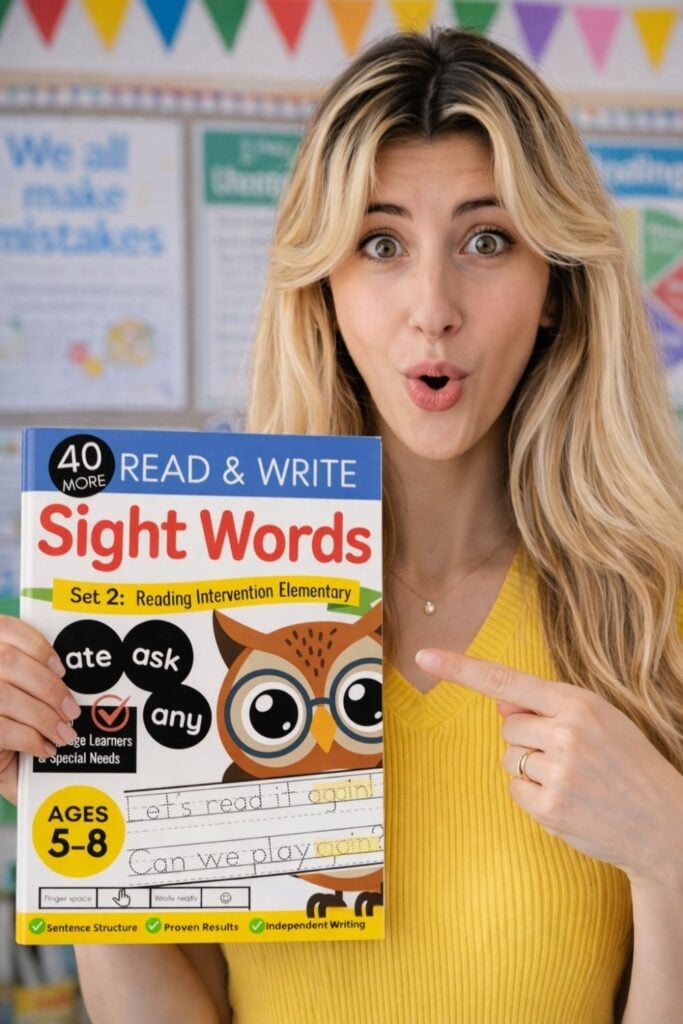
This article contains affiliate links, and some images have been AI enhanced to accurately represent the workbooks, as classroom photos cannot be shared.
Over the years, I have learned that how sight words are taught matters just as much as which sight words are taught.
In this article, I will walk you through a research based, low stress method for teaching sight words to struggling students using a structured PDF workbook system.
I will also share exactly how I use these workbooks in real teaching sessions, one sight word at a time, so students build confidence, fluency, and sentence understanding without feeling rushed.
When working with younger or beginning learners, starting even earlier can make sight word instruction less overwhelming. These preschool sight words printable activities are a helpful bridge before formal intervention, especially for children who need more exposure before moving into sentence level reading.
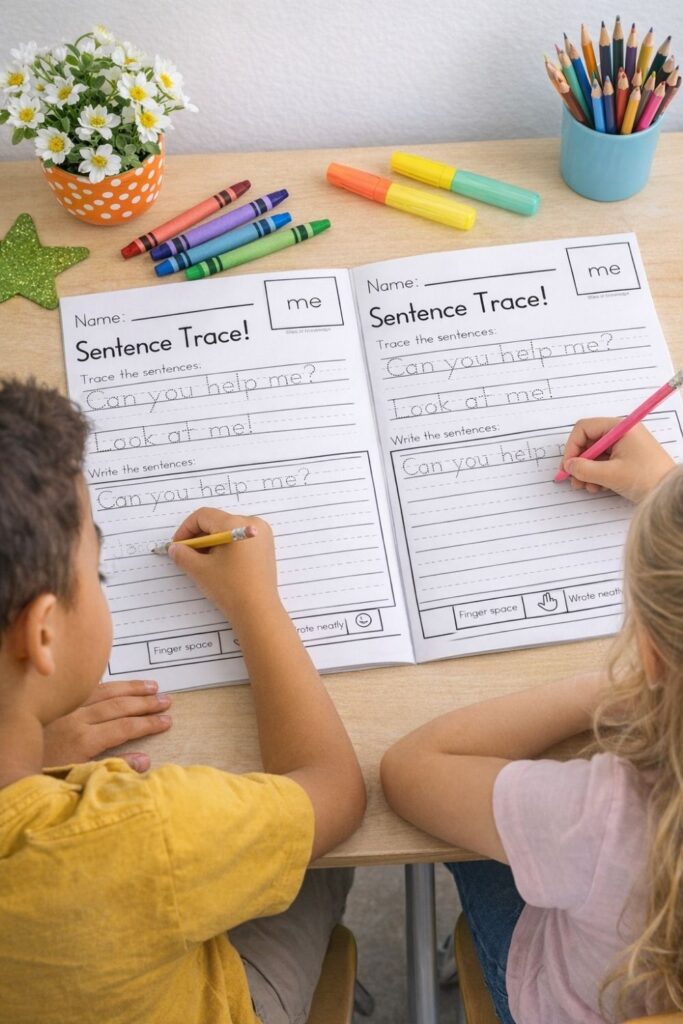
Having the right tools on hand can make a big difference when implementing a structured routine like the one described above. These supplies for teaching sight words support hands on learning and help struggling readers stay engaged during short, focused practice sessions.
Why Struggling Readers Need a Different Sight Word Approach
Many sight word programs rely on:
- Flashcards
- Isolated word drills
- Repeating the same sentence frame again and again
While these methods may work for some learners, they often fall short for struggling readers. Students may memorize the word temporarily but fail to transfer it into real reading.
Some students respond well when sight words are framed in a more playful way alongside structured instruction. Using popcorn words kindergarten activities can add variety while still reinforcing the same high frequency words taught in context.
Research based strategies for teaching sight words consistently show that students benefit most when:
- Sight words are taught in meaningful context
- Reading and writing are combined
- Instruction is explicit, structured, and cumulative
This is why I moved away from one size fits all sight word drills and toward a sentence based workbook system that supports learning to read sight words through real language use.
What Are the 4 Steps for Teaching Sight Words Effectively?
Before diving into the specific workbooks, it helps to understand the four core steps I follow when teaching sight words to struggling students.
Step 1: Introduce one sight word at a time
Struggling readers benefit from a narrow focus. Introducing too many words at once often leads to confusion and frustration.
Step 2: Teach the word in meaningful sentences
Students need to see how the sight word functions inside a sentence, not just recognize it in isolation.
Step 3: Combine reading, tracing, and writing
Reading alone is not enough. Writing reinforces memory, sentence structure, and word order.
Step 4: Monitor progress and revisit as needed
Repeated exposure over time matters more than speed. Tracking helps identify which words need to be revisited.
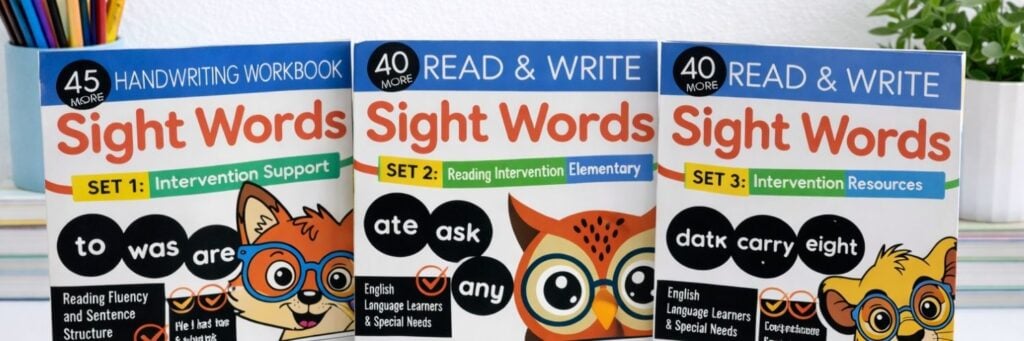
The Read and Write Sight Word Reading Intervention Resources Series PDF workbooks follow these four steps naturally and consistently.
For students who need extra motivation or visual reinforcement, creative practice can support retention. These sight word coloring pages can be used as review activities for words flagged on the tracker as needing additional practice.
How I Use These Sight Word Workbooks Step by Step
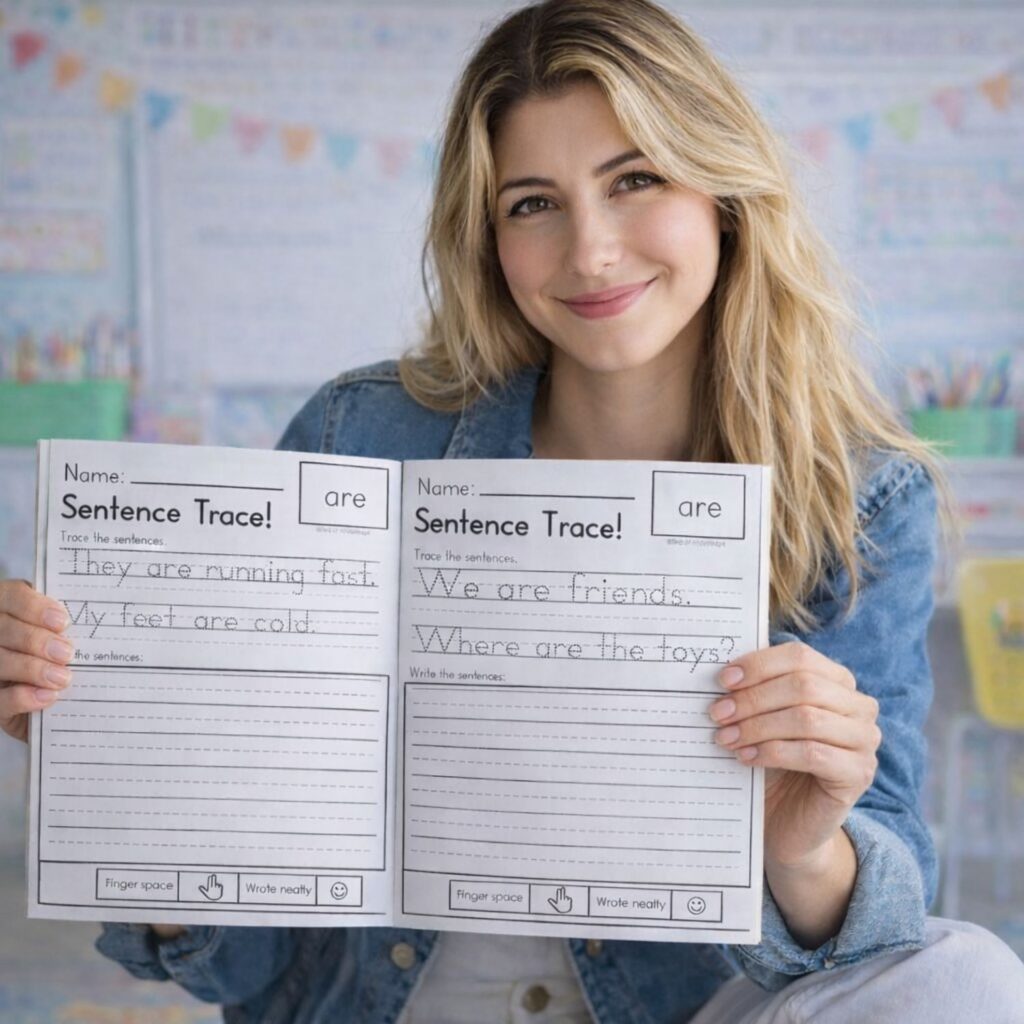
This is the exact routine I use when teaching sight words to struggling readers, ESL students, and early readers who need extra support.
Day 1: Introduce one sight word
I begin with one sight word only. I introduce the word orally, say it together, and briefly talk about what it means.
I then open to one workbook page that contains two sentences using that sight word.
Before reading, we look at the sentences together and discuss them:
- What is happening in the sentence
- Who or what the sentence is about
- How the sight word is being used
This discussion is especially important for sight words for ESL students, as it builds language comprehension alongside word recognition.
Visual learners often benefit from pairing words with images before transitioning fully into sentence reading. These sight words with pictures printables can support comprehension for struggling readers and ESL students before moving into text only sentences.
Day 1 Continued: Read and write the sentences
Next, we read the two sentences aloud together. I model fluent reading first, then have the student read with me or independently depending on their confidence.
After reading:
- The student traces the sentences
- Then writes the sentences independently
This step supports learning to read sight words by engaging visual, auditory, and motor pathways together.
Sessions are short, usually 5 to 10 minutes.
When deciding which words to prioritize in intervention, having a clear scope matters. This kindergarten sight words list printable can help teachers and parents align instruction with grade level expectations while still pacing instruction appropriately.
Day 2: Add two more sentences with the same sight word
The next day, we do not switch sight words.
Instead, we continue with the same sight word, using a new page with two different sentences. These sentences use the same word but in new contexts and sentence structures.
This is critical.
Rather than memorizing one pattern, students see the sight word used flexibly. This helps struggling students understand how the word works across different sentences.
We repeat the same routine:
- Discuss the sentences
- Read them aloud
- Trace and write
Sentence level exposure is critical for struggling readers learning how words function in context. These high frequency words sentence posters free resources reinforce sentence structure and can be displayed as visual support during small group instruction.
Days 3 and 4: Continue building context and confidence
We continue adding more sentences across additional days, always keeping the same sight word as the focus.
By the end of several sessions, students have:
- Read the sight word in multiple sentence structures
- Written the word repeatedly in meaningful context
- Developed stronger sentence awareness
This approach supports both how to teach sight words to struggling students and how to teach your child to read sight words at home, because it is simple, repeatable, and calm.
While flashcards alone are not enough for most struggling readers, they can still be useful when paired with sentence based work. These free printable flash cards sight words work best as brief review tools rather than the main instructional method.
For multilingual learners, explicit sentence discussion is especially important. These sight words for ESL students resources support language comprehension and help bridge the gap between word recognition and meaning.
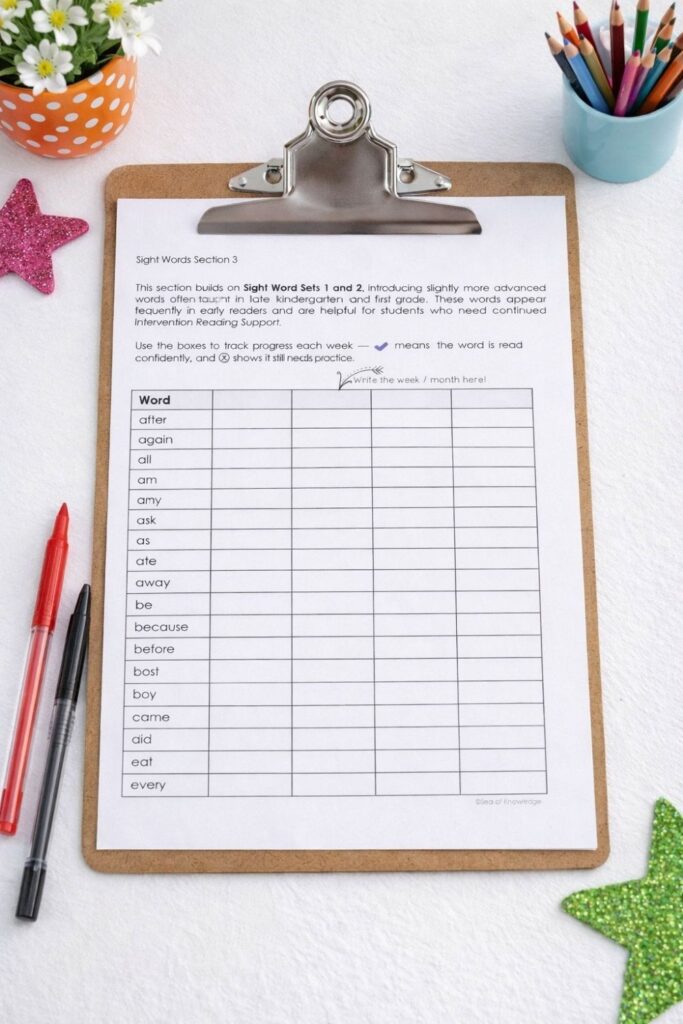
Using the Sight Word Tracker for Review and Intervention
One of the most valuable features of these PDF workbooks is the built in sight word tracker.
I use the tracker to:
- Mark which sight words the student can read confidently
- Identify words that need revisiting
- Plan review sessions intentionally
Instead of guessing or reteaching everything, I use the tracker to guide instruction. This is especially helpful for:
- RTI documentation
- ESL progress monitoring
- Small group intervention planning
Words that need reinforcement are simply cycled back into future sessions using the same structured routine.
How This Supports Teaching Sight Words at Home
Parents often ask how to teach sight words at home without overwhelming their child.
This method works well because:
- Only one word is taught at a time
- Sessions are short and predictable
- Parents do not need teaching experience
For families wondering how to teach your child to read sight words, this routine removes pressure and focuses on steady progress.
Why This Method Works for ESL and Struggling Readers
This system is particularly effective for:
- Sight words for ESL students
- Children with language delays
- Students with working memory challenges
Because the sentences change while the sight word stays the same, students develop real language understanding instead of rote memorization.
This aligns closely with research based strategies for teaching sight words and structured literacy principles.
Teaching Sight Words to Struggling Readers
If you are searching for a how to teach sight words to struggling readers PDF that goes beyond flashcards and drills, a sentence based workbook system can make a meaningful difference.
Teaching sight words does not need to be fast to be effective. It needs to be:
- Intentional
- Structured
- Repetitive in meaningful ways
By focusing on one sight word at a time, using varied sentence contexts, and tracking progress carefully, struggling readers can build confidence and real reading skills that last.
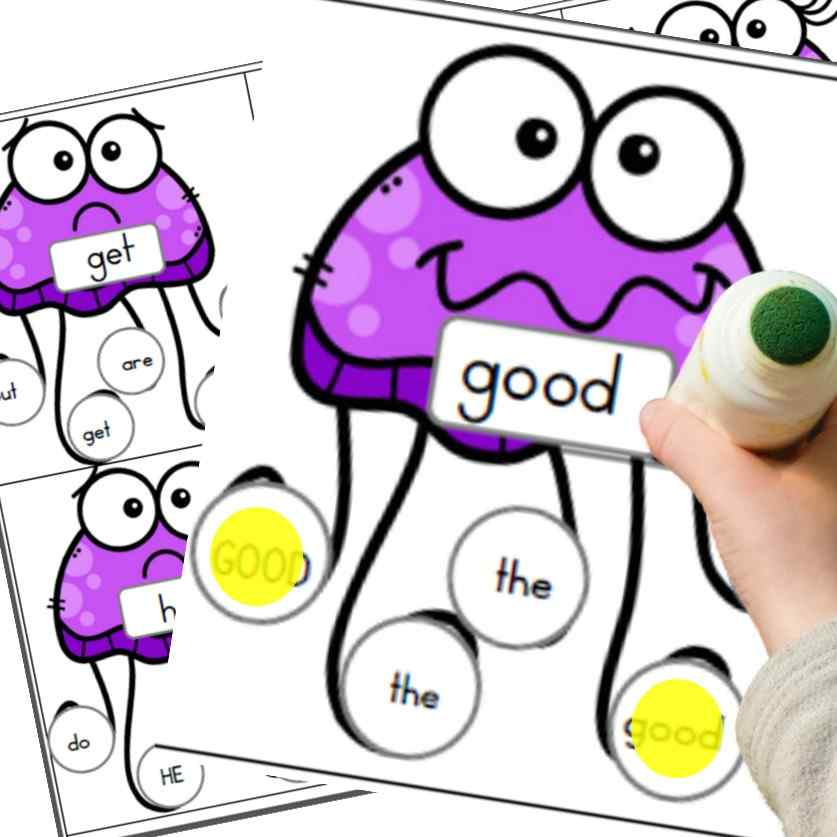
Fine motor integration can strengthen memory and engagement for some learners. Activities like q tip painting sight words fine motor activity can be used as a follow up for words that need repeated exposure without additional worksheet fatigue.

![Spring Busy Book Page Ideas [Free Download]](https://www.seaofknowledge.org/wp-content/uploads/2023/03/Busy-Book-Page-Ideas--scaled.jpg)