High Frequency Words Sentences: Easy Sentence Building Activities for Early Readers
Struggling with students who can read words but can’t build sentences? These high frequency words sentences activities fix what worksheets miss using simple, hands-on strategies.
Helping students move from recognizing words to forming complete sentences can feel like a big leap. Many early readers can identify sight words with ease, but when asked to build a sentence, they often hesitate. This is where high frequency words sentences become essential.
If your students are just starting out with sentence building, adding structured practice like sight word sentences worksheets can really help reinforce those early high frequency words sentences in a clear, supportive way. These give students a simple model to follow before transitioning into more hands-on sentence building activities.
When I need an easy low prep literacy activity, I always come back to these CVC short vowel reading worksheets because they combine decoding, fluency, and sentence reading all in one place.
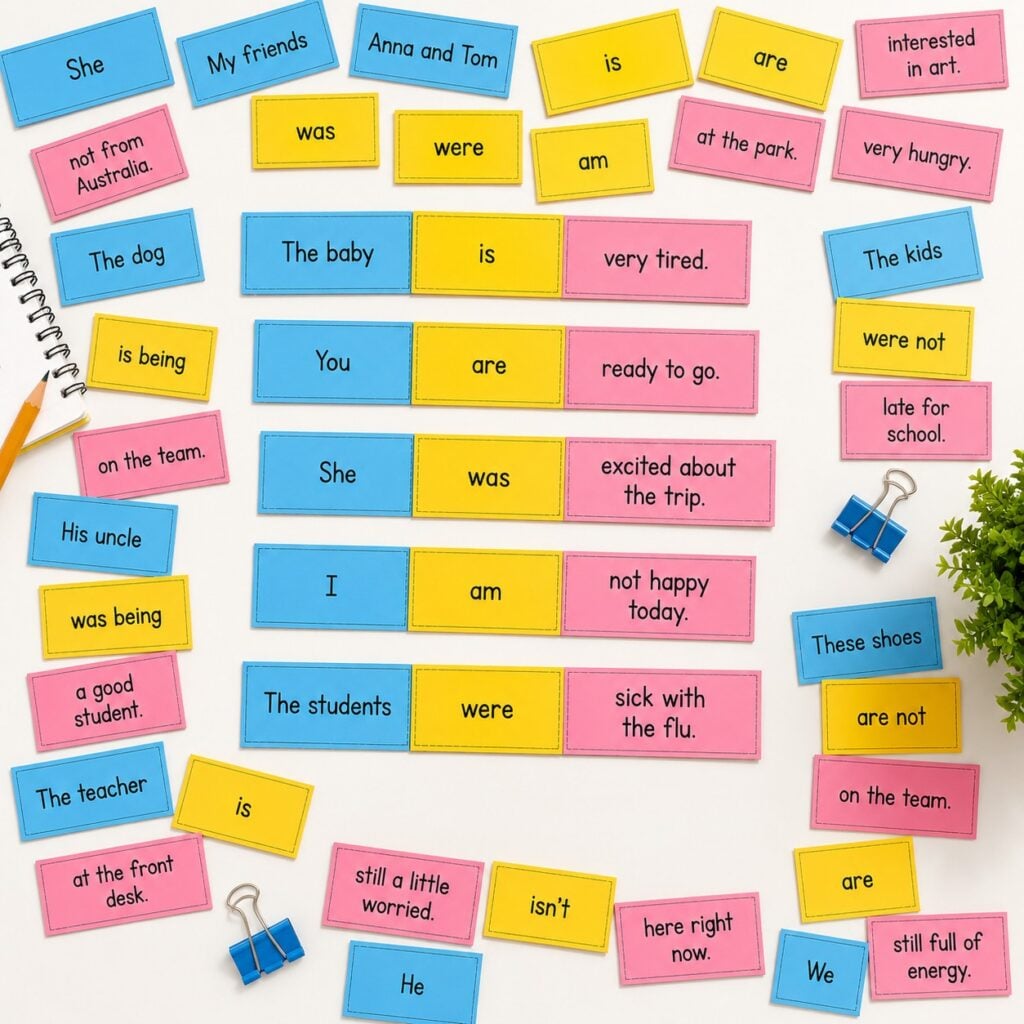
By focusing on structured, meaningful sentence building, students begin to understand how words connect, rather than seeing them as isolated pieces. In this post, you’ll find simple, effective strategies to teach sentence structure using high frequency words, along with a free verb to be activity and ideas to extend learning with hands-on resources.
Why High Frequency Words Matter in Sentence Building
High frequency words are the foundation of early reading and writing. Words like is, was, the, she, and they appear in most texts children encounter. However, recognition alone is not enough. Students need consistent exposure to high frequency words sentences to truly understand how language works.
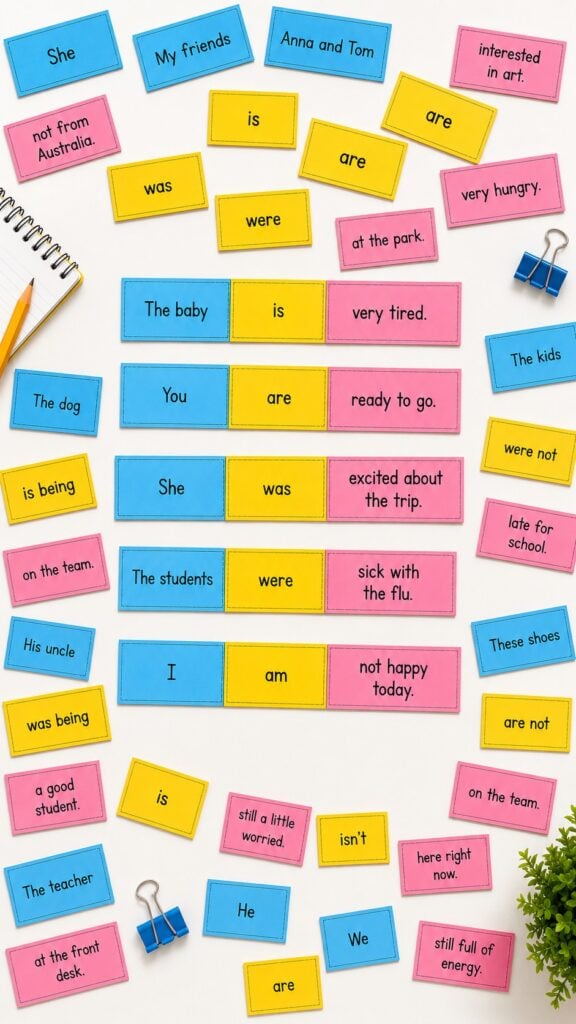
When students practice simple sentences using high frequency words, they begin to:
- improve reading fluency
- develop confidence in writing
- understand basic sentence structure
This type of practice bridges the gap between phonics and writing, especially for kindergarten and early primary learners.
For students who are still working on decoding, pairing sentence work with phonics is key. Using cvc short vowel decodable sentences worksheets helps students read and build sentences at the same time, making it easier to connect sounds with meaning.
The Limitations of Traditional Worksheets
While worksheets can provide repetition, they often lack depth. Many activities focus on filling in blanks or copying sentences, which does not always support true understanding.
Students may complete the task correctly but still struggle to create their own sentences independently. This is why incorporating sentence structure activities for beginners that are interactive and visual can make a significant difference.
Visual supports can make a huge difference when teaching sentence structure. That’s why tools like high frequency words sentence posters free are so effective for modeling how sentences should look, especially for younger learners or ESL students.
A More Effective Approach: Hands-On Sentence Building
Hands-on learning allows students to actively engage with language. Using movable sentence strips or cards transforms sentence building into a meaningful activity.
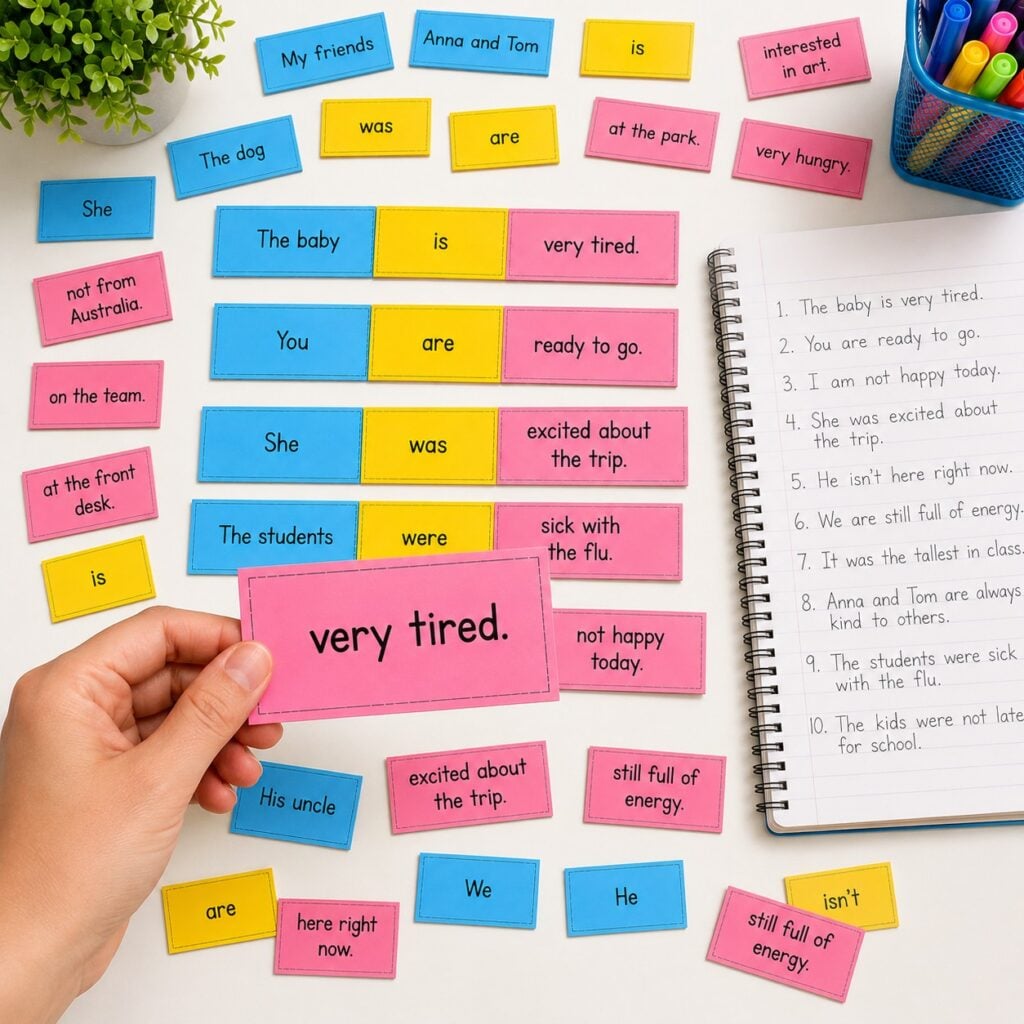
For example:
- subject cards (e.g., She, The dog, They)
- verb cards (e.g., is, was, are)
- object or detail cards (e.g., at school, happy, in the park)
Students can combine these to form complete high frequency words sentences, adjusting and rearranging until the sentence makes sense.
This approach supports:
- sentence building activities kindergarten
- hands on sentence building activities
- sentence building centers kindergarten
- ESL sentence building activities
It also encourages students to experiment with language in a low-pressure way.
If you’re working specifically with younger learners, resources like kindergarten sight word sentences worksheets provide simple, repetitive sentence structures that build confidence while reinforcing key vocabulary.
Teaching Sentence Structure in a Simple Way
When introducing sentence structure, simplicity is key. A clear framework helps students understand how sentences are formed without overwhelming them.
A practical approach is:
- Who (subject)
- Doing what (verb)
- Where or what (object/detail)
Examples include:
- She is happy.
- The students were at school.
- The cat is on the mat.
Using this structure consistently helps students internalize how high frequency word practice sentences are formed.
Grammar practice also plays a role in sentence building, especially with common verbs. Activities like the do does printable game help students understand verb usage, which naturally improves their ability to form correct sentences.
Free Verb To Be Sentence Building Activity
To support this learning, a free verb to be activity can be a great starting point.
This set focuses on:
- is, am, are, was, were
- building correct sentence patterns
- reinforcing grammar in a simple, visual way
Students use sentence strips to create their own high frequency words sentences, which helps them practice verb agreement and sentence flow at the same time.
This activity works well for:
- small group instruction
- literacy centers
- intervention support
- independent practice
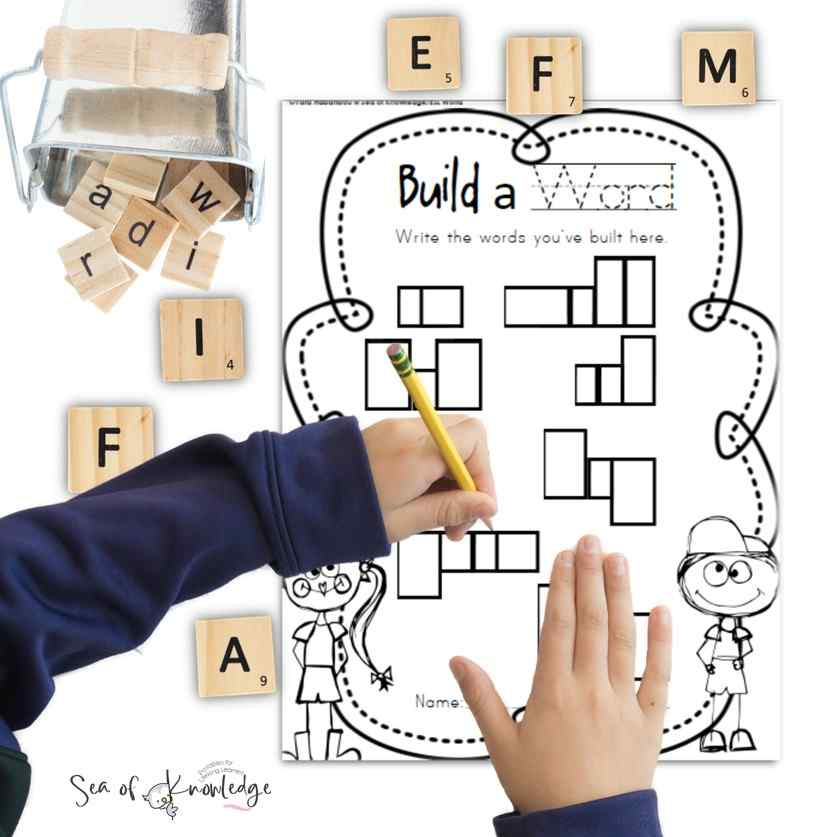
If your students need more guided support, a build a sentence worksheet can be a great stepping stone before moving into fully independent sentence construction. These worksheets help students organize their thinking and understand sentence order.
Examples of High Frequency Word Sentences
Providing clear examples helps students model their own writing. Here are a few simple options:
- She is happy.
- I am ready.
- They were at school.
- The dog is big.
- We are in class.
These simple sentence practice for beginners examples are easy to replicate and build upon.
For a more interactive approach, incorporating activities like sentence writing activities puzzles in action allows students to physically manipulate words and build sentences, reinforcing structure in a hands-on way.
How to Use Sentence Building Activities in the Classroom
Sentence building activities can be used in multiple ways throughout the day. Incorporating them regularly increases student confidence and independence.
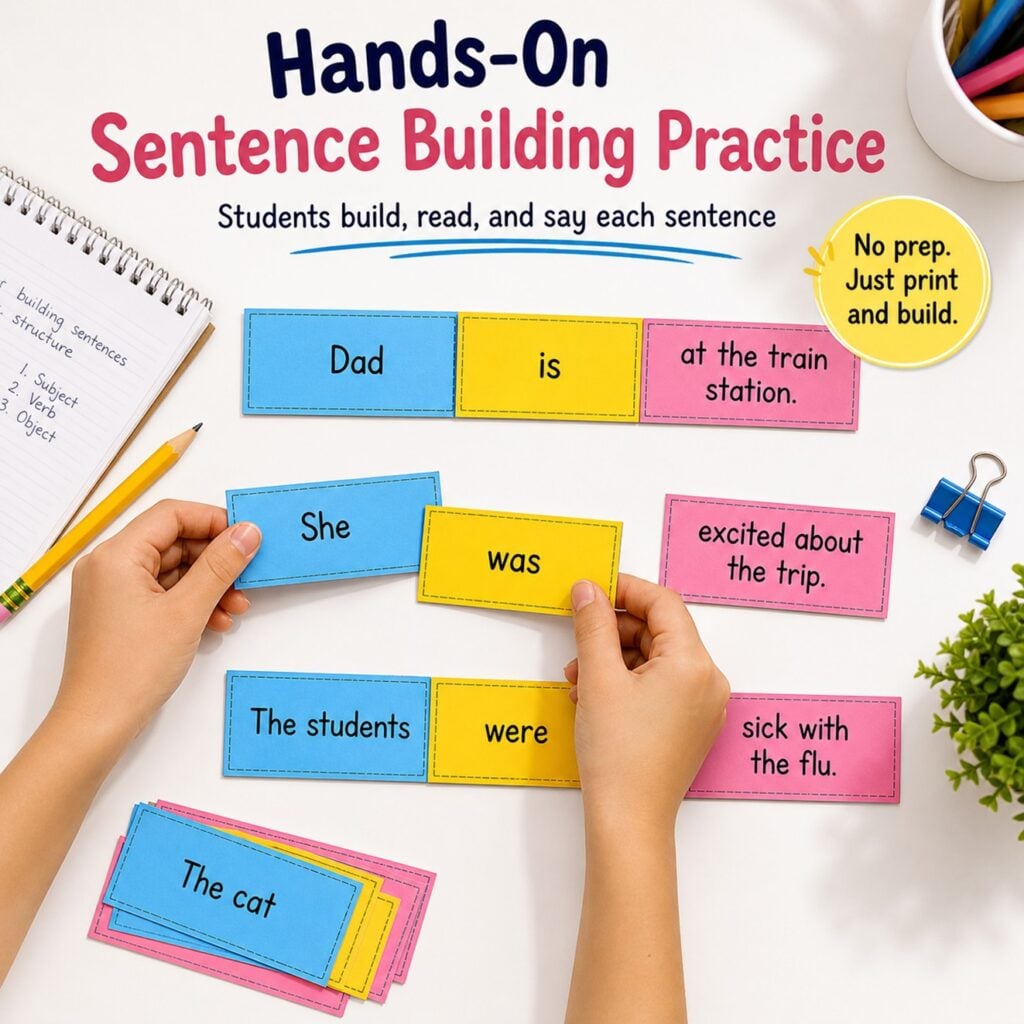
You can use these activities for:
- literacy centers
- morning work
- guided reading groups
- ESL support sessions
- early finishers
Using printable sentence building activities ensures that students have repeated exposure to sentence structure in a hands-on format.
If you’re supporting struggling readers, it’s important to go back to the basics. This guide on how to teach sight words to struggling readers pdf offers practical strategies to strengthen word recognition, which directly impacts sentence building success.
Extend Learning With a Full Sentence Building Bundle
Once students are comfortable with basic sentences, expanding their practice is important. A full resource that includes a variety of sentence combinations allows students to continue building skills.
A comprehensive bundle can include:
- different verb types
- varied vocabulary
- more complex sentence structures
- differentiated levels for learners
This progression helps students move from simple making sentences with sight words to more advanced sentence construction.
Teaching sentence structure does not need to be complicated. With the right approach, students can quickly move from recognizing words to confidently building sentences.
Focusing on high frequency words sentences provides a strong foundation for both reading and writing. When students can see, build, and manipulate sentences, their understanding becomes deeper and more lasting.
Finally, if you’re introducing high frequency words in a more engaging way, using themes like popcorn words kindergarten can make learning feel more fun while still building the foundation students need to create complete sentences.
Consistent practice with engaging, hands-on activities is what makes the biggest difference.