No Running Away Social Story: A Gentle Safety Resource for Kids
A no running away social story can give children clear, calm language for an important safety skill: staying close to their safe adult. Whether a child bolts from the classroom, runs ahead in a car park, leaves the playground, or wanders during a transition, visual stories can make the rule easier to understand and practise.
Want to see what else is waiting for you? Explore everything included in the Printable Membership and discover more premium printables, crafts, learning activities and classroom resources. See What’s Included in the Printable Membership →
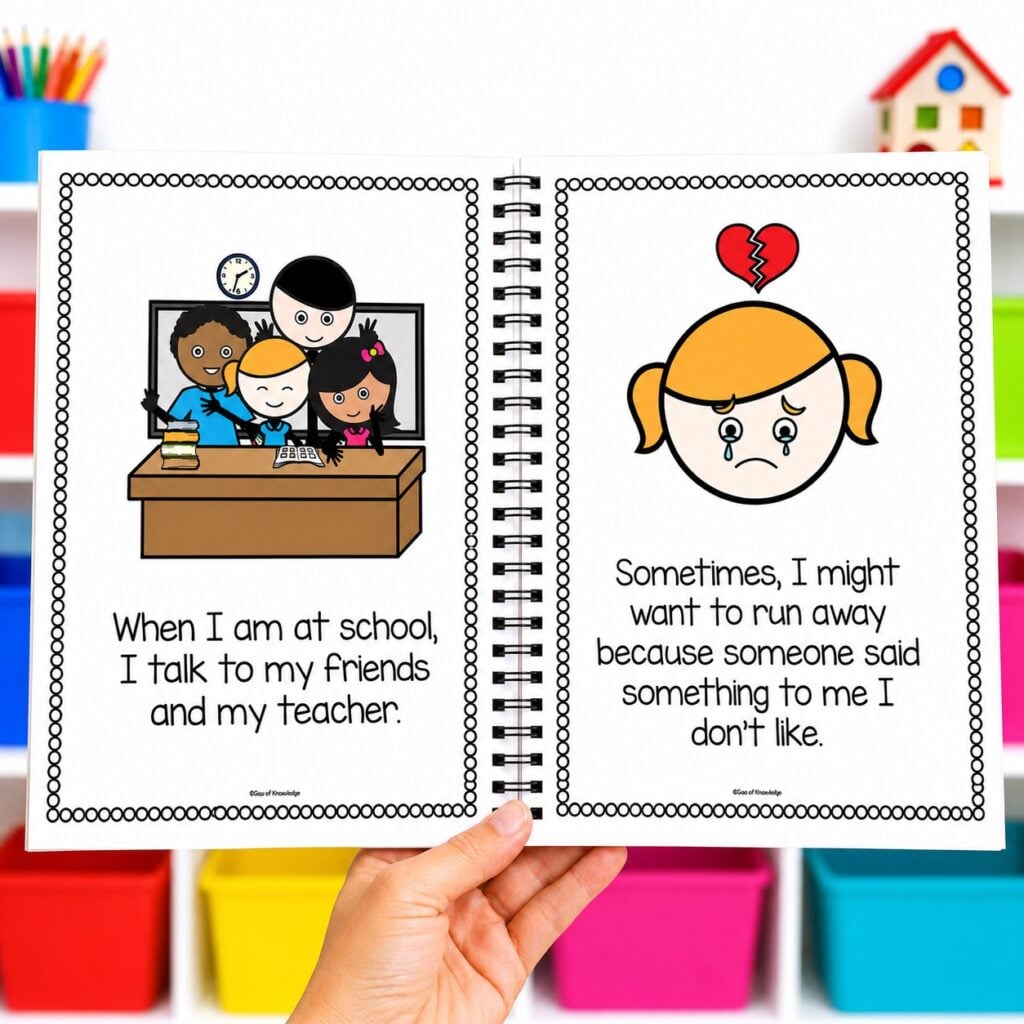
This resource uses simple visuals and child-friendly wording to explain that running away is not safe—and, more importantly, what a child can do instead. Because “don’t run!” is not always enough when little bodies are already in zoomie mode.
Why Children Run Away or Elope
Running away is often called elopement behavior, wandering behavior, or school elopement. It is not simply a child trying to be naughty. A child may run because they are overwhelmed, trying to escape a difficult task, excited to reach something they love, upset by a change in routine, seeking sensory input, or struggling to communicate a need.
For many children, especially autistic children and children with additional support needs, a busy environment can feel enormous. Sensory overload, an unexpected transition, frustration, anxiety, or wanting a break can all lead to a quick dash for the door.
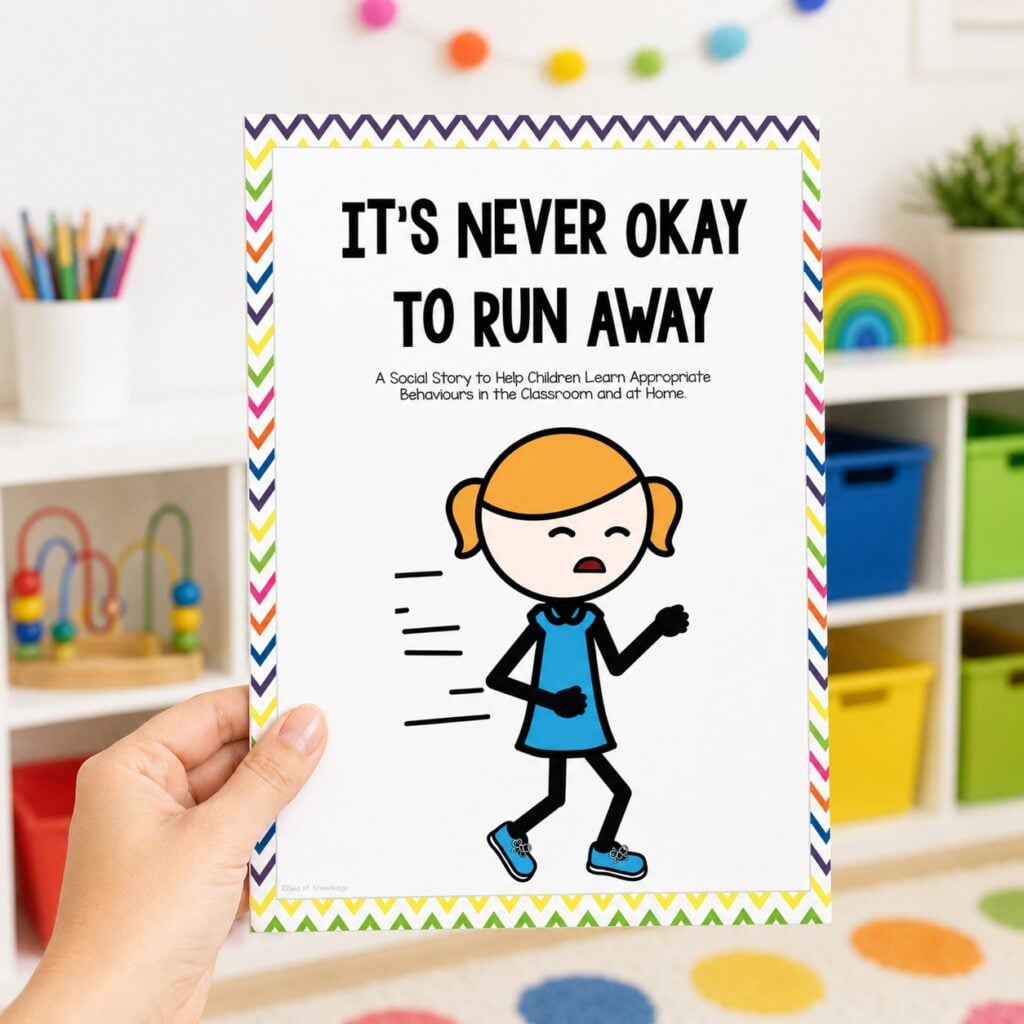
That is why it helps to teach elopement safety proactively. A social story gives children a predictable, visual way to learn that they can stop, stay near an adult, ask for help, use their words, or show a break card instead. It supports safety awareness without using shame or scary language.
Use this story alongside active adult supervision and your school or family safety plan. If running away happens frequently or suddenly increases, it can also be helpful to work with the child’s support team to notice patterns and identify the reason behind the behaviour.
How to Use This Running Away Social Story
Read the story with the child at a calm time—not only right after an incident. Sit together, point to the pictures, and use a warm, matter-of-fact voice. You might say, “Sometimes running feels like a fast idea. Let’s practise what you can do to stay safe.”
Start by reading it regularly for a short period, especially before times when running away is more likely. Think school arrival, recess, transitions, community outings, car parks, or lining up after play. Repetition helps the language become familiar before a child needs it.
After reading, ask simple social story questions such as:
- What can you do if you want to leave?
- Who can you ask for help?
- Where do we stay when we are at school?
- What can you say when you need a break?
Then practise the replacement skill. Role-play walking beside an adult, stopping at a doorway, using a visual support, holding a hand when appropriate, or showing a card that says, “I need help” or “I need a break.” Praise the specific safe choice you see: “You stopped at the door and waited for me. That was safe!”
This little bit of behavior support turns the story from something children merely hear into a skill they can actually use.
Download This No Running Away Social Story in the Premium Section
My running away social story is designed to make safety teaching clear, visual, and practical for preschool, kindergarten, special education, and early elementary learners.

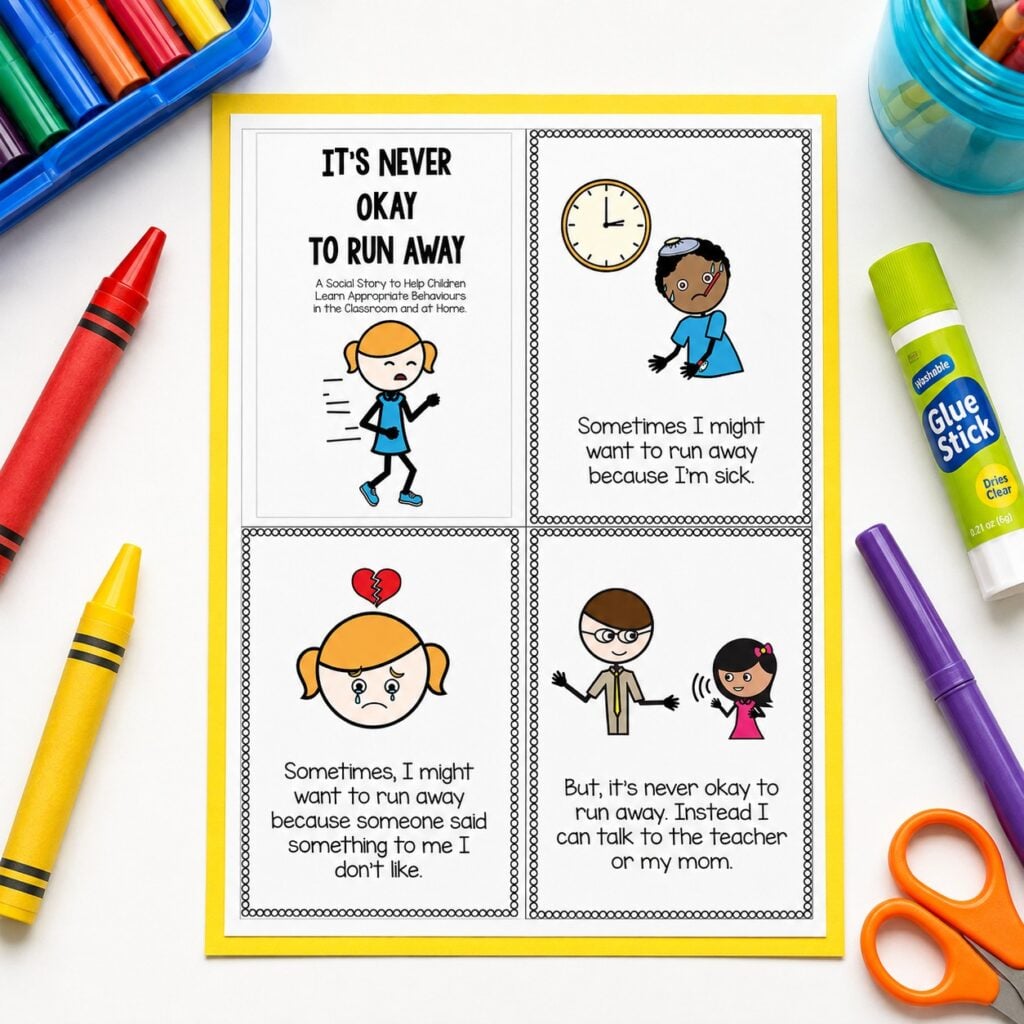
It includes two flexible printing options. You can print the story as a small mini social story booklet for a child to hold and revisit, or use the one-page version as a quick classroom safety poster or visual reminder near a doorway, calm-down area, desk, or transition space.
The resource also includes discussion questions, activity pages, and editable reward certificates to celebrate children as they practise staying close, waiting, and asking for help. It is a helpful addition to your autism safety resources, special education social skills activities, or classroom behavior tools.
You can grab this resource in store or in the premium download section, once you unlock your membership, the red button appears and you’re able to download it directly from here.
Want a Free Running Away Visual Support?
If you would like to try a free printable first, you can download this free visual supports resource for “It’s Not Okay to Run Away” from Teachers Pay Teachers.
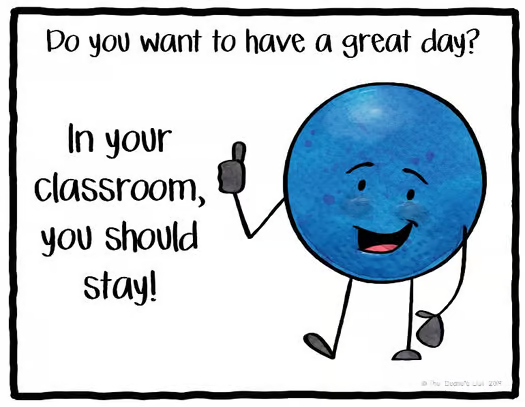
It can be a useful starting point for introducing running away safety, staying with an adult, and child safety skills at home, school, or in the community. Pair it with calm practice, clear routines, and plenty of encouragement. Safety learning is not a one-and-done chat—it is more like teaching shoe-tying: small practise moments add up.


![Empathy Bulletin Board Ideas [In Your Boots Craft]](https://www.seaofknowledge.org/wp-content/uploads/2023/01/empathy-bulletin-board-ideas.jpg)