
Separation Anxiety Poster for Children: Free Printable Posters and Fact Sheets for Parents
Saying goodbye can be hard for many young children. Whether it is the first day of preschool, kindergarten, daycare, or simply spending time away from a parent, feelings of worry and uncertainty are common.
A well-designed separation anxiety poster for children can help kids understand their emotions while providing simple strategies they can use when they feel nervous.
Many children experiencing separation anxiety benefit from predictable routines and visual supports. Using social story templates allows teachers and parents to create personalized stories that prepare children for transitions, helping them feel more confident when separating from caregivers.
These stories pair perfectly with separation anxiety posters because they reinforce the same coping strategies and reassuring messages.
Grab these infographics at the end of the post!
To support both children and caregivers, we’ve created four colorful printables including a separation anxiety poster for children, a coping skills toolkit, a separation anxiety fact sheet for parents, and a practical goodbye routine guide. Together, these resources help families build confidence, consistency, and emotional resilience during separations.
Support Big Feelings Here
Big feelings can feel overwhelming for kids and tweens, especially during friendships, school stress, anxiety, confidence struggles, and everyday growing up moments. That’s why I created this growing SEL & Coping Skills Workbook Series filled with calming activities, reflection prompts, movement breaks, coping tools, confidence building exercises, and creative emotional support activities designed to help kids feel safe, supported, and understood.
What Is Separation Anxiety?
Separation anxiety occurs when children become distressed when separated from a parent, caregiver, or trusted adult. While it is a normal developmental stage, some children experience stronger emotions that can affect daily routines.
If you’re looking for an additional resource to support worried children, this separation anxiety social story provides a step-by-step explanation of what children can expect during separations. Reading the story alongside the posters can help children understand that feeling nervous is normal and that they have tools to manage those feelings successfully.
Grab these infographics at the end of the post!
Common signs include:
- Crying during drop-off
- Clinging to parents
- Difficulty saying goodbye
- Refusing school or daycare
- Complaints of stomach aches
- Excessive worry about caregivers
- Sleep difficulties
Using visual supports such as a separation anxiety poster for children can help children recognize these feelings and learn healthy coping skills.
Changes in relationships can also trigger worries similar to separation anxiety. This saying goodbye to a teacher social story helps children navigate the emotions that come with leaving a familiar teacher or classroom. It complements the goodbye routine poster by teaching children healthy ways to handle change and transition.
Free Poster 1: Separation Anxiety Poster for Children
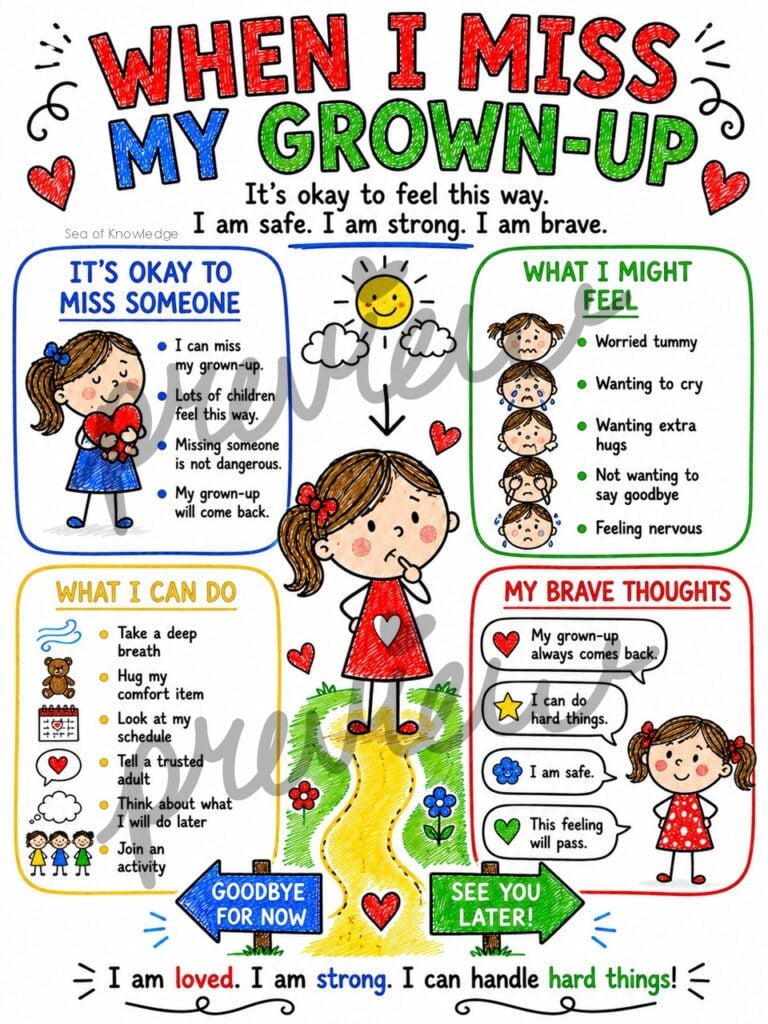
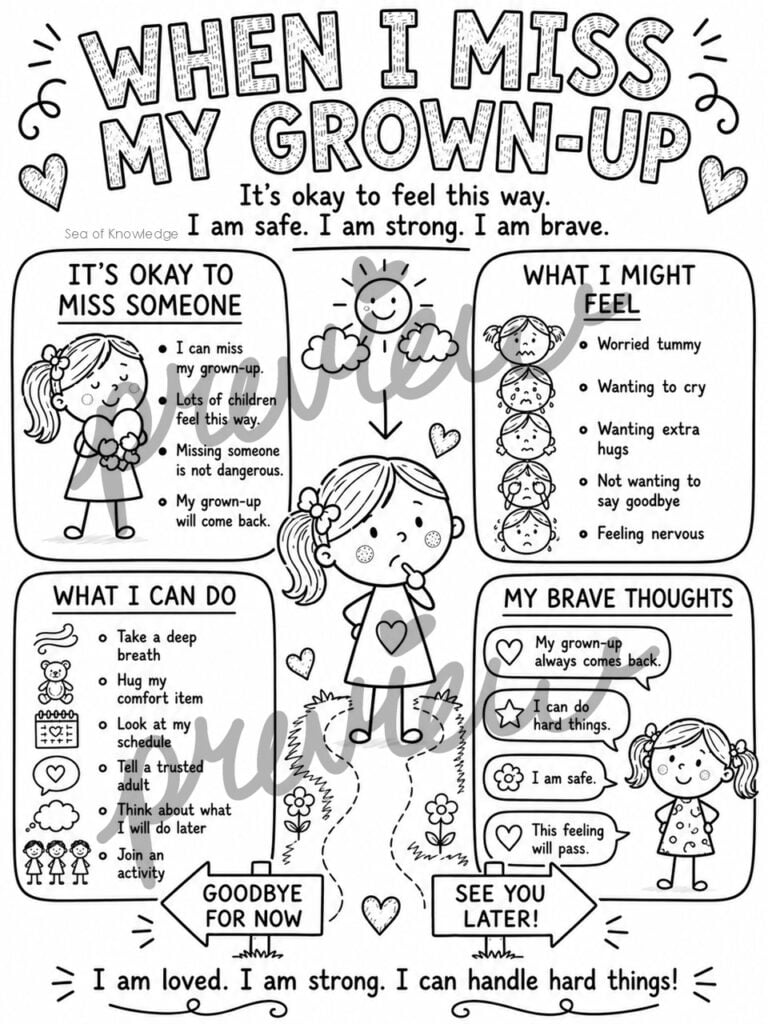
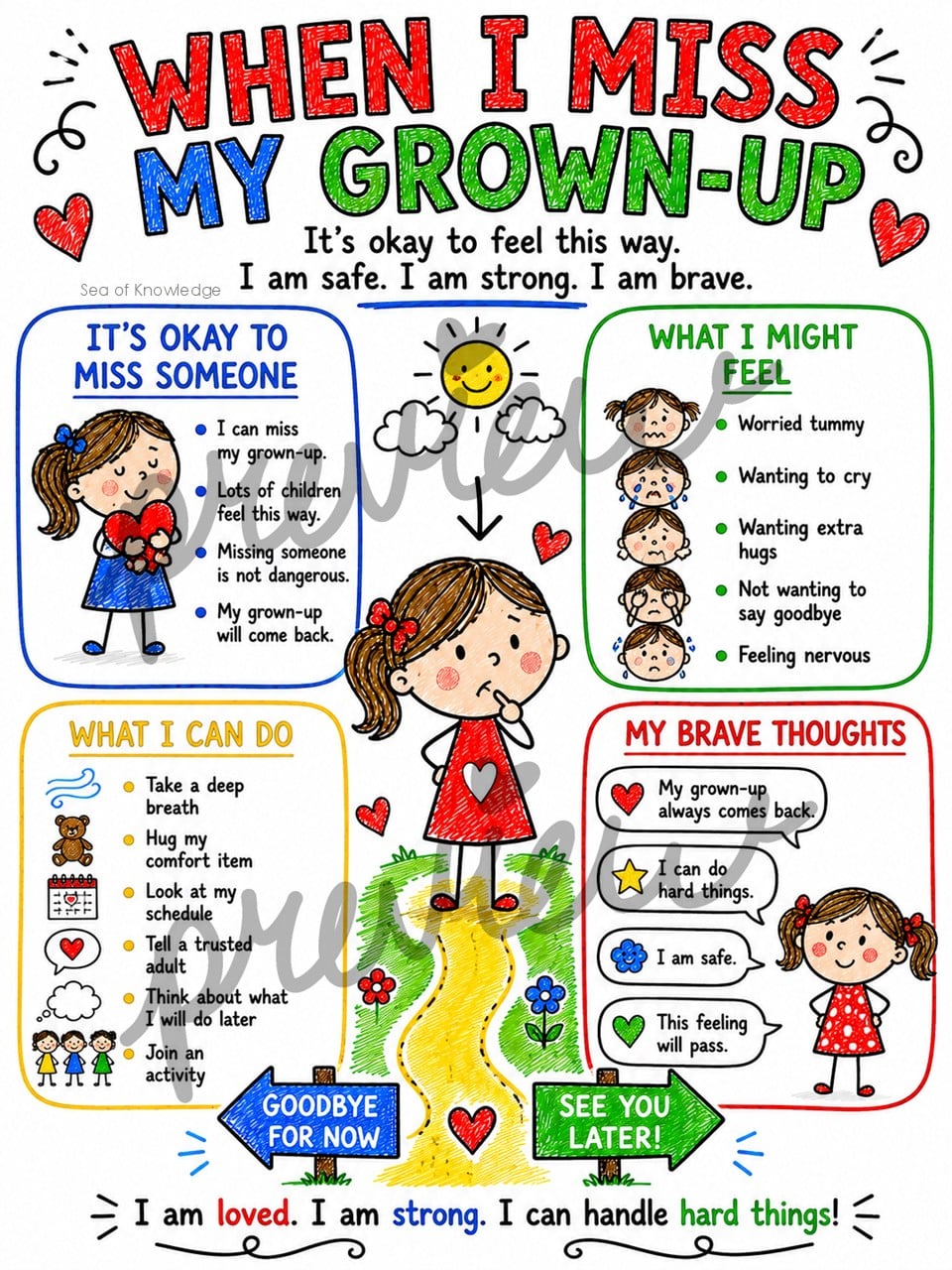
“When I Miss My Grown-Up”
Our first printable is a child-friendly separation anxiety poster for children designed to help students understand what they are experiencing.
Grab these infographics at the end of the post!
What Children Will Learn
The poster teaches:
- Missing someone is normal
- Feelings are temporary
- Trusted adults can help
- Children are safe even when apart from parents
- Brave thoughts can replace worried thoughts
Key Sections Included
It’s Okay to Miss Someone
Children learn that:
- They are not alone
- Lots of children miss their parents
- Missing someone is not dangerous
- Their grown-up will return
What Separation Anxiety Feels Like
The poster identifies common emotions:
- Worried tummy
- Feeling nervous
- Wanting extra hugs
- Crying
- Difficulty saying goodbye
What I Can Do
Simple coping skills include:
- Deep breathing
- Using a comfort item
- Talking to a trusted adult
- Looking at a visual schedule
- Joining a classroom activity
Brave Thoughts
Positive self-talk examples include:
- “My grown-up always comes back.”
- “I can do hard things.”
- “I am safe.”
- “This feeling will pass.”
How Teachers Can Use This Poster
Display the poster:
- Near classroom entrances
- In calming corners
- Beside visual schedules
- In school counseling offices
- At preschool drop-off areas
Teachers can refer to the poster during morning transitions and encourage students to point to the coping strategy they want to try.
Many children experience separation worries before starting school. These first day of kindergarten activities are designed to build confidence, establish routines, and reduce anxiety about entering a new environment. Pairing these activities with a separation anxiety toolkit can help create a smoother start to the school year.
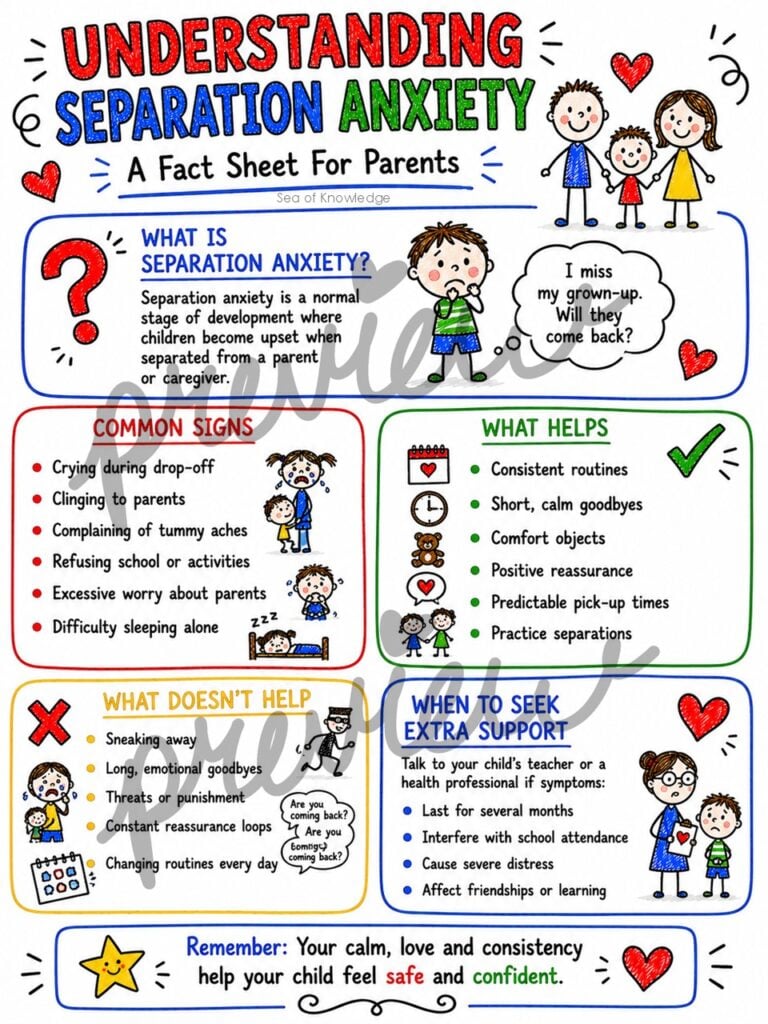
Free Poster 2: My Separation Anxiety Toolkit
Teaching Coping Skills Through Visual Supports
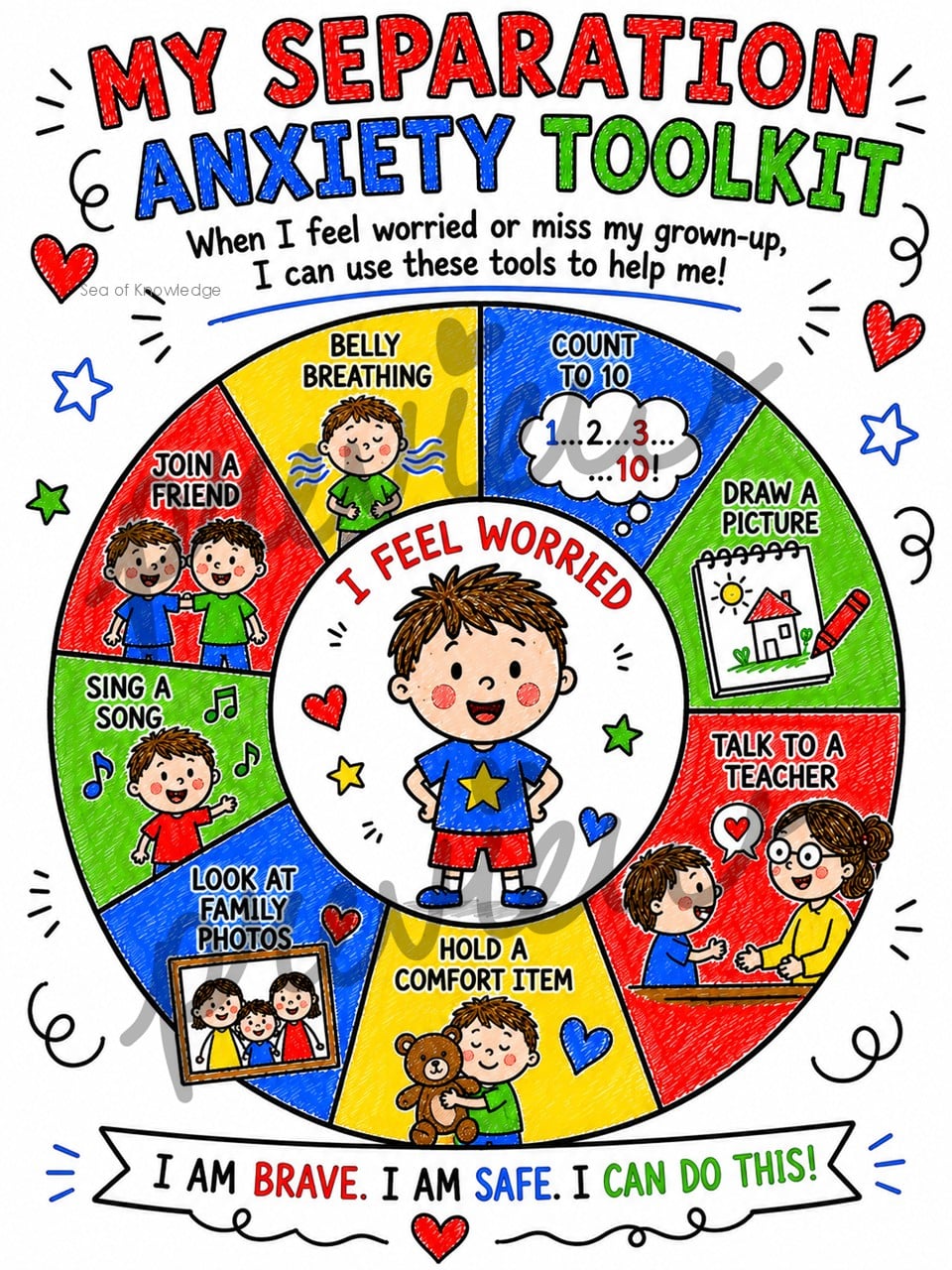
Our second poster acts as a visual coping skills wheel for separation anxiety.
Grab these infographics at the end of the post!
Instead of focusing on feelings, this poster focuses on solutions.
Toolkit Strategies Included
Children can choose from:
- Belly breathing
- Counting to 10
- Drawing a picture
- Talking to a teacher
- Holding a comfort item
- Looking at family photos
- Singing a song
- Joining a friend
Separation anxiety can sometimes be connected to concerns about people moving away or leaving. These social stories about people leaving help children understand that relationships can remain important even when someone is no longer nearby. They provide reassurance and emotional support for children who struggle with change and uncertainty.
Why Choice Helps
Research shows that children feel more confident when they have options. Rather than being told what to do, they can select a coping tool that feels helpful.
Grab these infographics at the end of the post!
This makes the toolkit especially useful for:
- Preschool students
- Kindergarten students
- First-grade classrooms
- Special education settings
- School counseling programs
Activity Idea
Laminate the poster and place a clothespin on the coping strategy the child wants to try each morning.
Support Big Feelings Here
Big feelings can feel overwhelming for kids and tweens, especially during friendships, school stress, anxiety, confidence struggles, and everyday growing up moments. That’s why I created this growing SEL & Coping Skills Workbook Series filled with calming activities, reflection prompts, movement breaks, coping tools, confidence building exercises, and creative emotional support activities designed to help kids feel safe, supported, and understood.
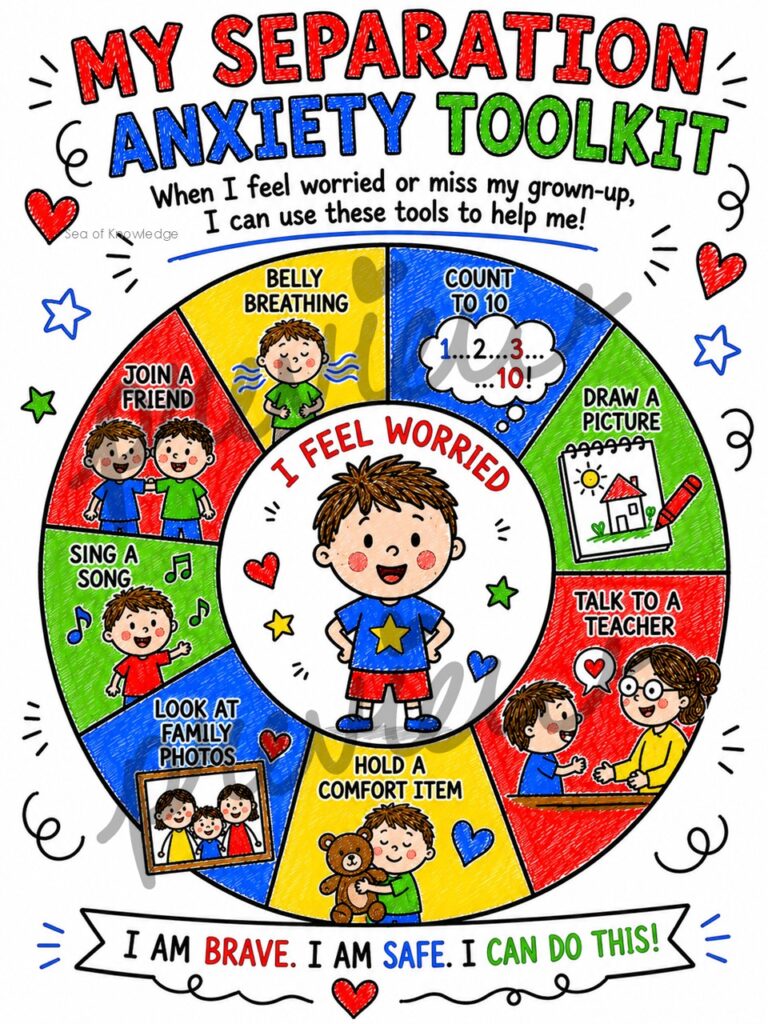
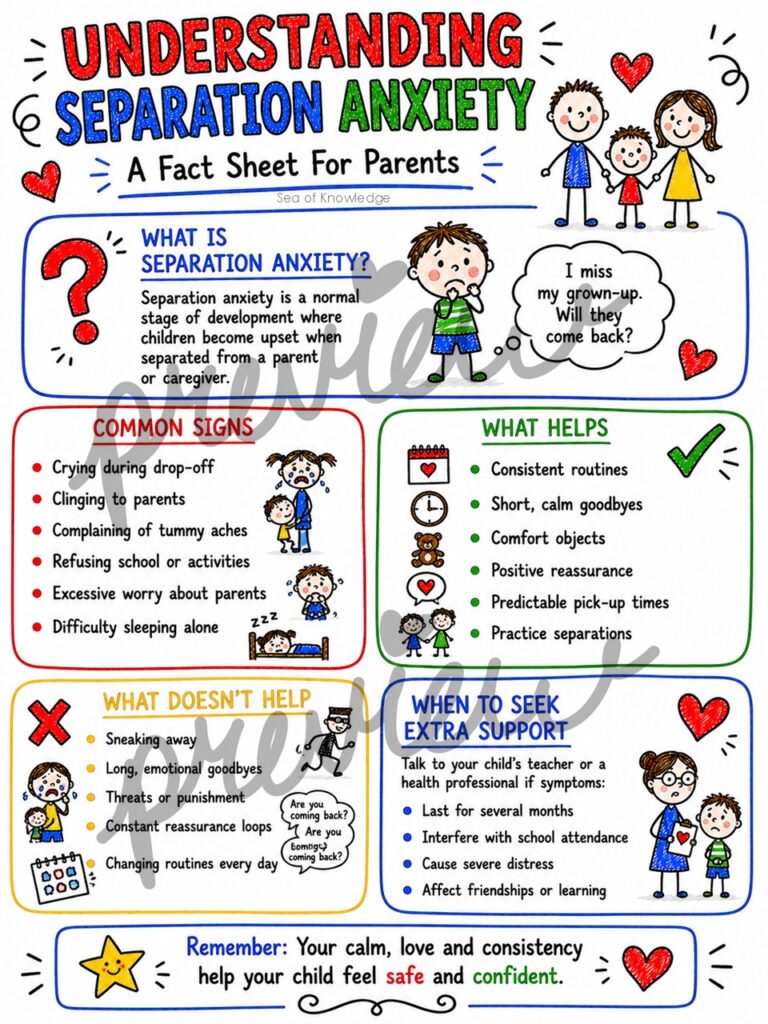
Free Poster 3: Separation Anxiety Fact Sheet for Parents
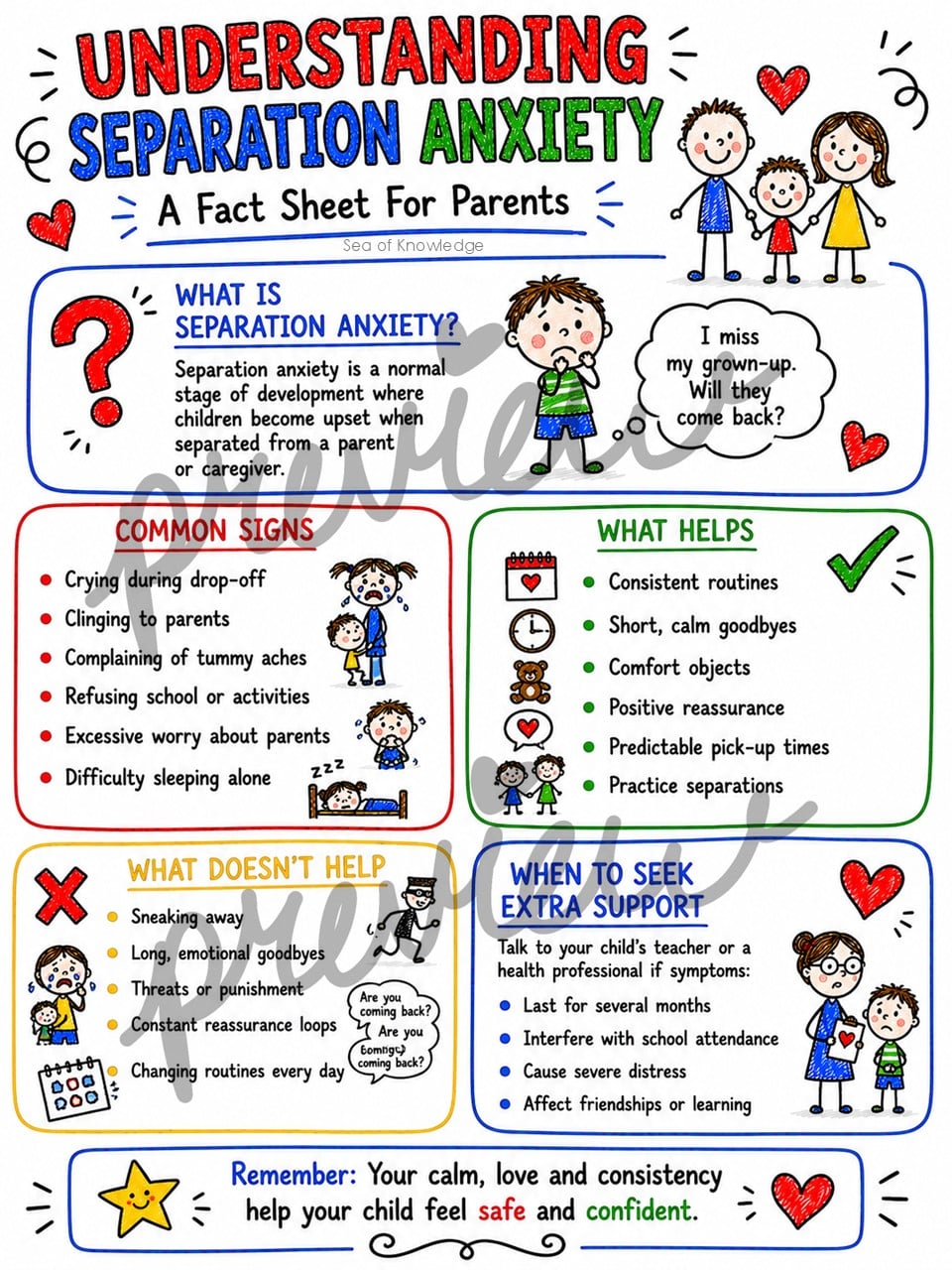
Parents often wonder whether their child’s worries are normal or if additional support is needed. That’s why we created a comprehensive separation anxiety fact sheet for parents.
Children dealing with separation anxiety often experience other strong emotions throughout the day. This frustrated social skills story teaches children how to recognize and manage feelings of frustration in healthy ways.
Combining emotional regulation stories with separation anxiety resources helps children develop a broader set of coping skills they can use in different situations.
Grab these infographics at the end of the post!
This printable provides quick, easy-to-understand information that families can reference at home.
Grab these infographics at the end of the post!
What Parents Will Learn
What Is Separation Anxiety?
The fact sheet explains:
- Why separation anxiety happens
- Typical developmental stages
- Normal emotional responses
- Common triggers
Common Signs
The infographic covers:
- Drop-off tears
- Clinginess
- School refusal
- Excessive worrying
- Physical complaints
- Sleep concerns
What Helps
Parents learn effective strategies such as:
- Consistent routines
- Predictable schedules
- Short goodbyes
- Comfort objects
- Positive reassurance
- Practice separations
What Doesn’t Help
The poster also highlights common mistakes:
- Sneaking away
- Long emotional goodbyes
- Punishment
- Frequent routine changes
- Reassurance loops
When to Seek Additional Support
The separation anxiety fact sheet for parents includes guidance on when professional support may be beneficial.
This is especially important when symptoms:
- Persist for several months
- Impact school attendance
- Cause significant distress
- Affect friendships and learning
Support Big Feelings Here
Big feelings can feel overwhelming for kids and tweens, especially during friendships, school stress, anxiety, confidence struggles, and everyday growing up moments. That’s why I created this growing SEL & Coping Skills Workbook Series filled with calming activities, reflection prompts, movement breaks, coping tools, confidence building exercises, and creative emotional support activities designed to help kids feel safe, supported, and understood.
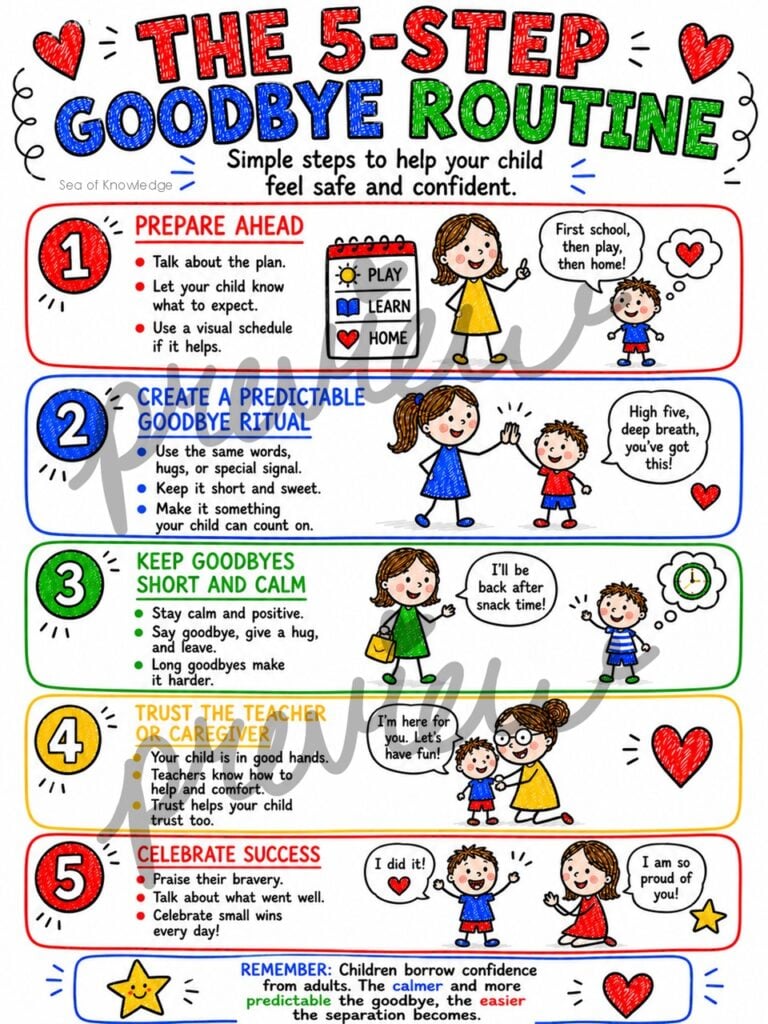
Free Poster 4: The 5-Step Goodbye Routine
Many children benefit from predictable routines. This printable provides parents with a simple plan they can use every day.
Grab these infographics at the end of the post!
Step 1: Prepare Ahead
Talk about the day’s schedule before leaving.
Children feel more secure when they know what will happen next.
Step 2: Create a Predictable Goodbye Ritual
Examples include:
- Special handshake
- High-five
- Hug
- Goodbye phrase
Consistency builds confidence.
Step 3: Keep Goodbyes Short and Calm
Long emotional departures often increase anxiety.
A brief, positive goodbye helps children transition more successfully.
Step 4: Trust the Teacher or Caregiver
Children borrow confidence from adults.
When parents appear calm and confident, children often feel safer.
Step 5: Celebrate Success
Praise brave behavior after pickup.
Focus on effort rather than perfection.
Even small successes deserve recognition.
Why Visual Supports Help Children With Separation Anxiety
Visual supports provide reassurance in a way that verbal explanations often cannot.
Children benefit from seeing:
- Clear expectations
- Predictable routines
- Emotional vocabulary
- Coping strategies
- Positive reminders
This is why classroom posters and family handouts are often effective tools for supporting emotional development.
Download Your Free Separation Anxiety Printables
To help children feel more confident during difficult goodbyes, I’ve put together a collection of free printable resources that can be used at home, in the classroom, in counseling sessions, or as part of a calming corner.
Inside the free separation anxiety infographics download, you’ll receive:
✅ When I Miss My Grown-Up – a child-friendly separation anxiety poster for children that helps kids understand their feelings and learn positive coping strategies.
✅ My Separation Anxiety Toolkit – a visual coping skills wheel packed with simple tools children can use when they feel worried, nervous, or miss their grown-up.
✅ Understanding Separation Anxiety – a practical separation anxiety fact sheet for parents explaining common signs, helpful strategies, and when additional support may be needed.
✅ The 5-Step Goodbye Routine – an easy-to-follow parent guide for creating calm, predictable, and successful drop-off routines.
These colorful infographics are designed for preschool, kindergarten, early elementary classrooms, homeschool settings, therapists, counselors, and families looking for simple ways to support children through separation anxiety. Simply print, laminate if desired, and display them where children can easily see and reference them throughout the day.
Click below to download your free separation anxiety posters and parent fact sheets and start building confidence one goodbye at a time. ❤️
Separation anxiety can feel overwhelming for both children and parents, but it is often a normal part of development. Using a visual separation anxiety poster for children, a coping skills toolkit, and a practical separation anxiety fact sheet for parents can make daily transitions much easier.
Support Big Feelings Here
Big feelings can feel overwhelming for kids and tweens, especially during friendships, school stress, anxiety, confidence struggles, and everyday growing up moments. That’s why I created this growing SEL & Coping Skills Workbook Series filled with calming activities, reflection prompts, movement breaks, coping tools, confidence building exercises, and creative emotional support activities designed to help kids feel safe, supported, and understood.
These four printables provide children with reassurance, teach healthy coping skills, and give parents practical strategies they can implement immediately. With consistency, patience, and support, children learn that goodbyes are temporary—and that they are capable of handling hard things with confidence.

![Separation Anxiety Goodbye Social Story Printable [Ease into Transitions]](https://www.seaofknowledge.org/wp-content/uploads/2026/08/separation-anxiety-posters-and-story-3.jpg)
![15 Growth Mindset Activities That Actually Change How Kids Think [and we’ve tried everything]](https://www.seaofknowledge.org/wp-content/uploads/2026/07/Growth-Mindset-Activities.jpg)