30+ Fun Social Emotional Activities for Preschoolers (strategies for calm kids 2024)
It’s not always easy to find emotional activities for preschoolers and ideas suitable for this age group. But there are ways to calm kids and help them develop emotional intelligence from when they are young and they are so much fun and doable – and I’ll show you how. I am always on the lookout for fun and engaging social emotional activities for preschoolers and toddlers because there are hardly any curriculum ideas for this age group.
Over the years, I’ve added many social emotional learning activity ideas right here. From small group activities for preschoolers, to individual activities and SEL activities for kids, which help them develop proper emotional skills.
Small acts of kindness can make a big difference in a classroom or at home. The 30 day kindness challenge for kids gives children easy ways to show compassion, gratitude, and friendship throughout the month.
This post contains affiliate links*
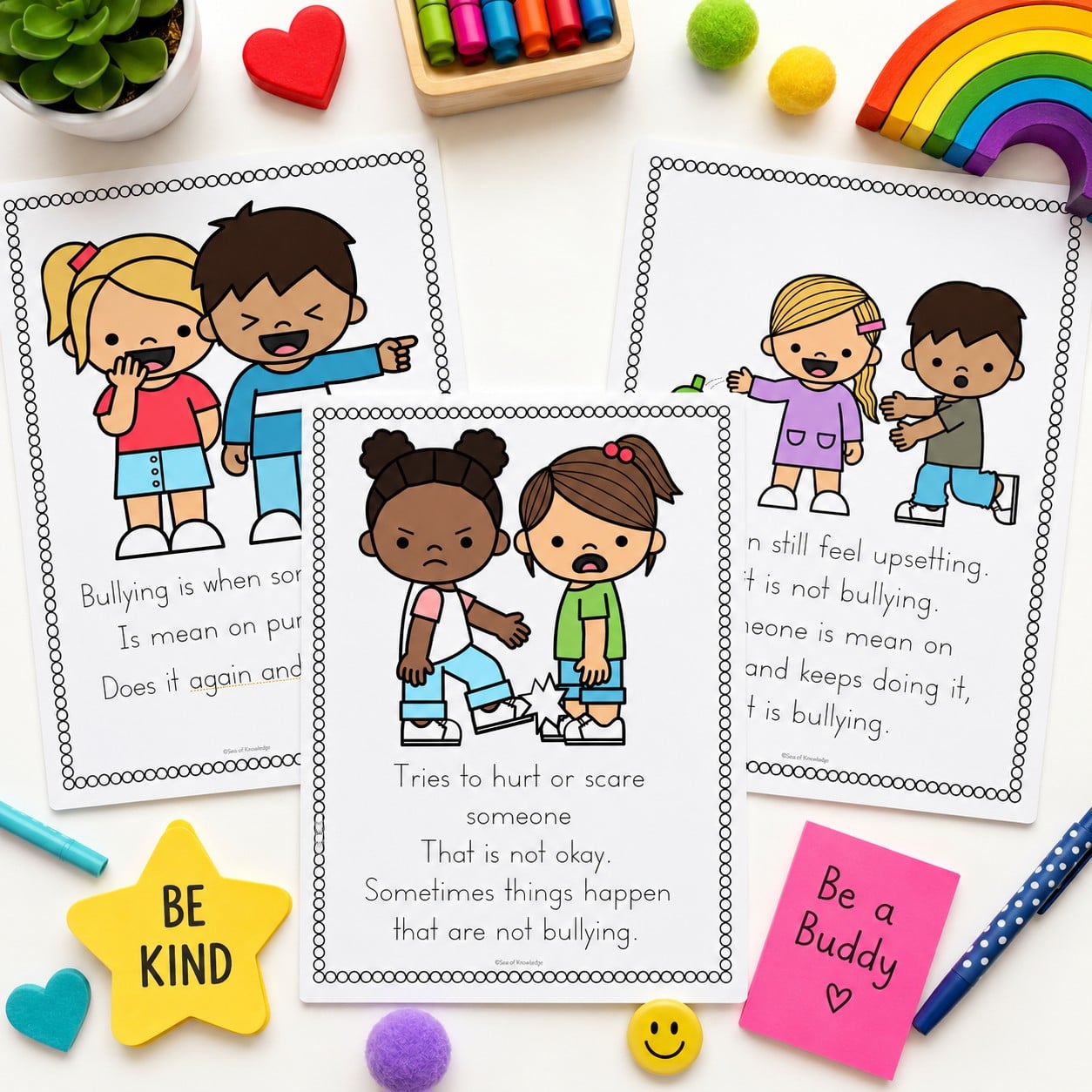
Social Skill Stories (written in language for kids):
Whether you are teaching social skills or simply encouraging positive behavior, kindness challenges are a wonderful addition to your lessons. This kindness activities for elementary students guide offers plenty of inspiration for getting started.
Search and Find Books for Kids That Do More Than Keep Children Busy
Not every search and find book for kids helps children build real-life skills. Many are simply filled with random objects to spot, leaving little opportunity to teach kindness, empathy, friendship, or social skills. If you’re looking for an activity that keeps children engaged and encourages meaningful conversations, this printable bundle offers over 60 pages of search-and-find challenges, emotions activities, real-life social scenarios, and kindness practice designed to help children learn while they play.
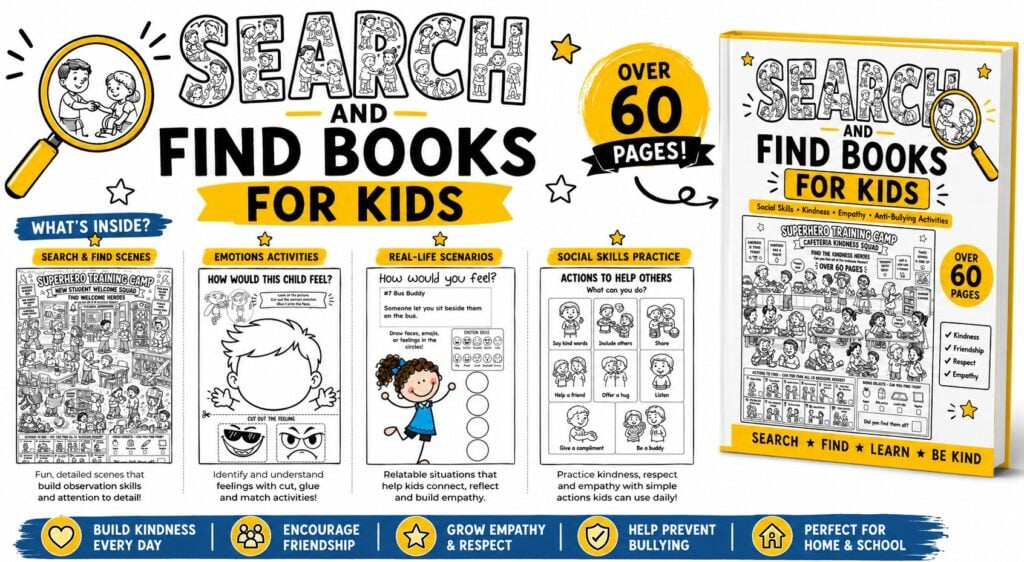
Perfect for classrooms, homeschool, counseling sessions, speech therapy, and quiet time, these activities help children notice emotions, solve everyday social situations, practice respectful choices, and develop stronger observation skills.
Instead of another worksheet that gets completed and forgotten, these pages encourage discussion, critical thinking, and positive behavior—making them a fun way to reinforce the social skills many children struggle with most.
Grab the Free Token Board to Pair With This Social Story
If you are using this keeping clothes on social skills story, I highly recommend pairing it with a simple token board. Kids do so much better when there is something visual and concrete they are working toward, especially when we are teaching a new boundary or replacement behavior.
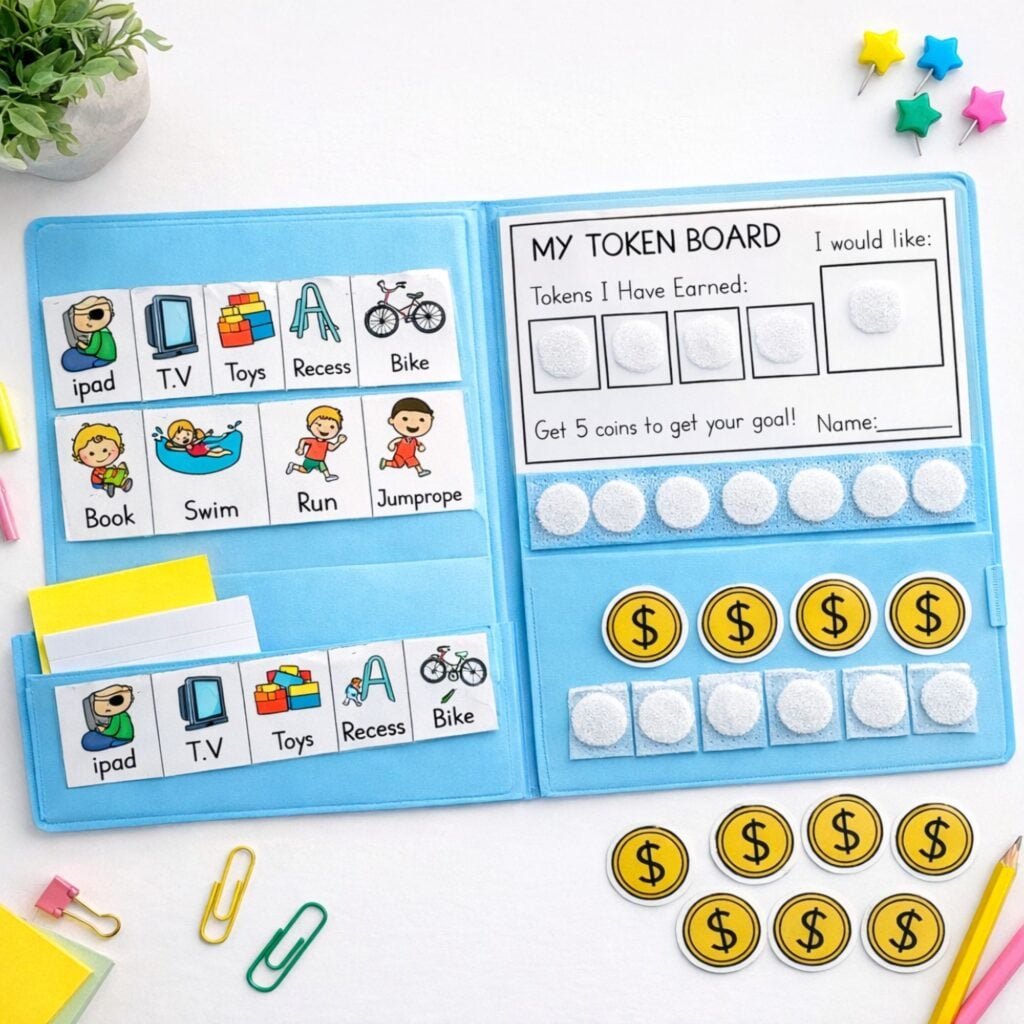
I created a FREE printable token board that you can laminate and use with Velcro coins, real tokens, or even little stars. Your student picks a preferred activity, earns five tokens for demonstrating the expected behavior, and then celebrates reaching their goal in a positive and structured way.
It works beautifully with this story, but honestly, it also works with accepting no, toilet routines, gentle hands, and any other social skill you are teaching. You can grab the free token board below and start using it right away in your classroom or at home.
[Grab the FREE Token Board Here]
What is social emotional learning?
You know the drill – we’re in the classroom, mid-morning snack time, and suddenly it happens. Little Liam throws a full-on meltdown because the goldfish crackers aren’t goldfish-shaped enough. Sound familiar? Yeah, been there, done that (and maybe even bought a lifetime supply of perfectly-shaped goldfish crackers – don’t judge!).
The thing is, those meltdowns are a normal part of the preschool territory. This is why social skills activities for preschool are so important, and why we should incorporate activity for emotional development ideas any chance we get.
Their little brains are working overtime, trying to figure out this crazy world of emotions, and sometimes, well, it all just comes bursting out. But here’s the good news: we can help them navigate those stormy emotions with some fun and creative activities!
Why is teaching emotions for preschoolers important?
Think of it like this: we wouldn’t expect a tiny human to just “know” algebra, right? So why should we expect them to magically understand how to deal with anger?
That’s where Social-Emotional Learning (SEL) comes in. It’s all about helping our little learners recognize their feelings, understand why they feel that way, and then teaching them healthy ways to cope.
My favorite go-to SEL resources:

- Little Spot Social…
- Emotion Cards: This…
- Create a Spot: As…

- FAMILY ACTIVITIES…
- CALMING CORNER ITEMS…
- THERAPY TOYS…


- Spot the Face, Spot…
- Never the Same…
- A Fun Way to Talk…

- 【Recognize and…
- 【Social Emotional…
- 【ADHD & Autism…
And guess what? It can be way more fun than flashcards and lectures – enter these creative anger management activities!
Social Skills Activities for Preschool
Let’s think of these as awesome tools to help our little learners become emotion savvy!
We all know those moments – you’re in the middle of circle time, singing about bunnies and rainbows, and then BAM! Suddenly, there are tears flying because someone “borrowed” (read: stole) another child’s favorite stuffed animal. These meltdowns can feel overwhelming, but here’s the secret: a calm down corner can be your saving grace.
Think of it as a little oasis in the classroom, a safe space where kids can take a deep breath and work through their big emotions.
We can fill it with comfy cushions, calming books, maybe even a squishy stress ball or two (because let’s be honest, sometimes adults need those too!). I talk all about it here on the blog too.
The key is to create a space that feels inviting and helps our little ones self-regulate.
But here’s the coolest part: these activities aren’t just for meltdowns!
We can incorporate them throughout the day to help kids recognize their emotions before they erupt.
Think of it as preventative maintenance for tiny tantrums! Although, some of the time, these things are preventable, at times, we cannot control everything.
So go in with an open mind, and keep trying. Because, it may not work on the first go, second or third, but perhaps on the 50th go that child will come up to you and say something to make you cry (in a good way) – something you’ve taught them.
So keep at it! Below, I will share of my super fun strategies for tackling these!
5 Activities to Help Kids calm Down
Now, let’s get down to the nitty-gritty: the fun activities that will turn your classroom into a zen garden (well, maybe not exactly a zen garden, but you get the picture!).
First up, we have our superstar activity:
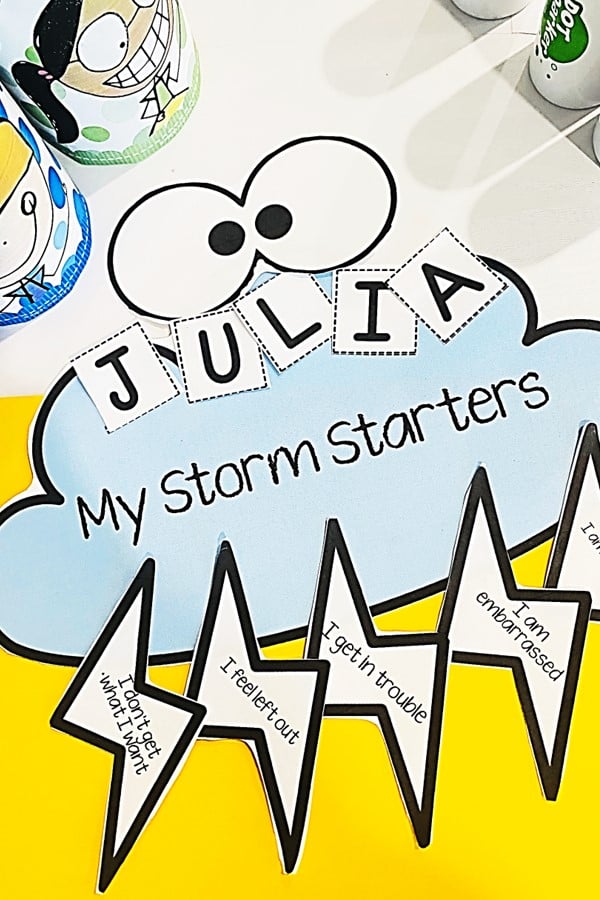
Storm Starters Craft

>> You can get this anger management craft here <<
Remember that time Billy threw a fit because you wouldn’t let him climb on top of the bookshelf? Yeah, me too.
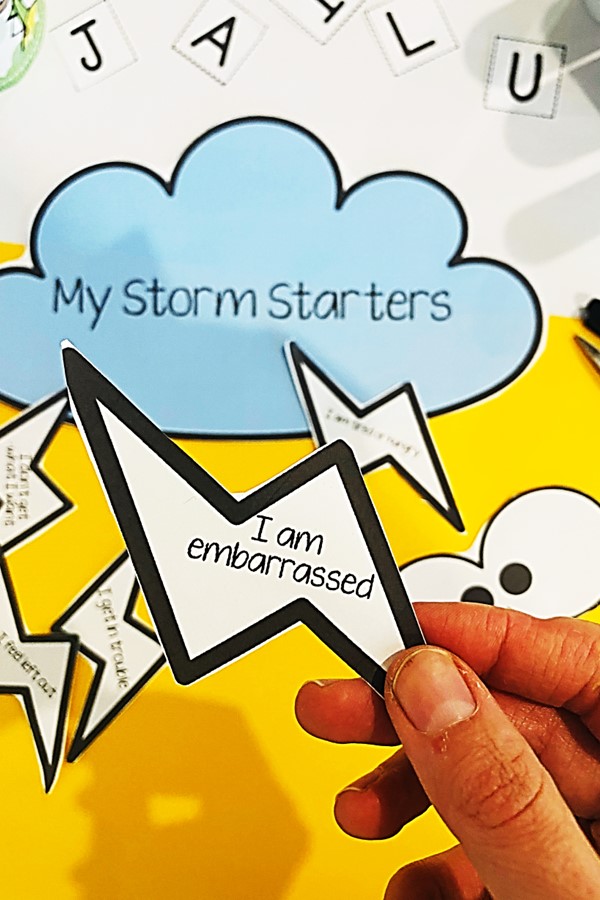
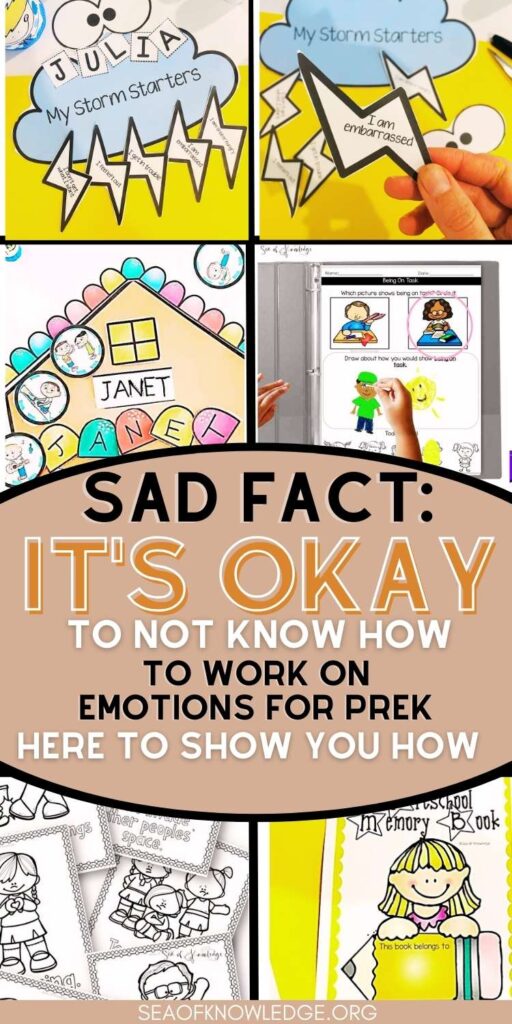
This activity tackles those specific triggers head-on. On construction paper clouds and lightning bolts (because, let’s face it, lightning bolts are pretty cool and kids love them).
You can however use the template provided so you can add your own names and triggers etc.
The kids get to decorate their clouds, and then comes the fun part: they get to glue lightning bolts underneath, representing the things that make them mad (like not being allowed to climb bookshelves!).
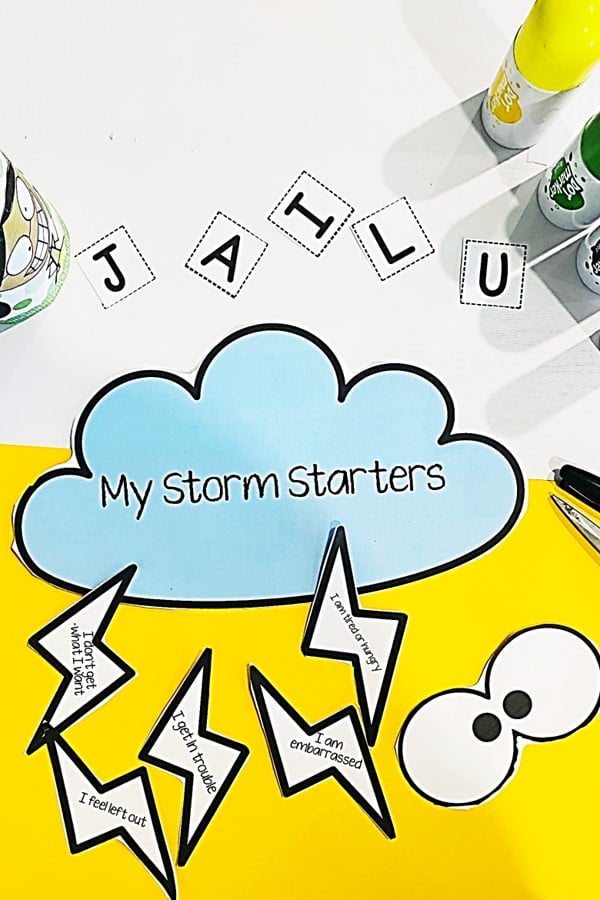
See what I did there? It’s like emotional detective work! They’re identifying their triggers while creating a mini craft (because bonus points for creativity, right?). Plus, it opens up a conversation about healthy ways to deal with those stormy emotions before they turn into a full-blown meltdown. Win-win!
Okay, so we tackled the “Storm Starters” and helped our little detectives identify their emotional triggers.
Now, let’s explore some other awesome activities in our anger management arsenal.
Breathe Like a Bear
Remember those adorable videos of bears getting ready to hibernate? This activity is a fun way to teach breathing and calming skills. This helps them with their overall behavior skills too.
It’s a simple breathing exercise that even the littlest learners can master. Imagine this: the kiddos pretend to be sleepy bears getting ready for winter.
They raise their arms high like they’re sniffing the crisp air and take a big, slow breath in.
Then, they slowly lower their arms and exhale, pretending to drift off to sleep. It’s a cute way to teach them the power of deep breathing to calm down during those frustrating moments. (Bonus points if you can add some bear growls and snores for extra giggles!)
Counting Critters
Sometimes, all it takes is a little distraction to shift gears and move away from anger.
This activity combines that distraction with a sneaky way to practice counting skills. We grab a basket full of little toy animals (or cutouts work just fine too) and get comfy on the rug.
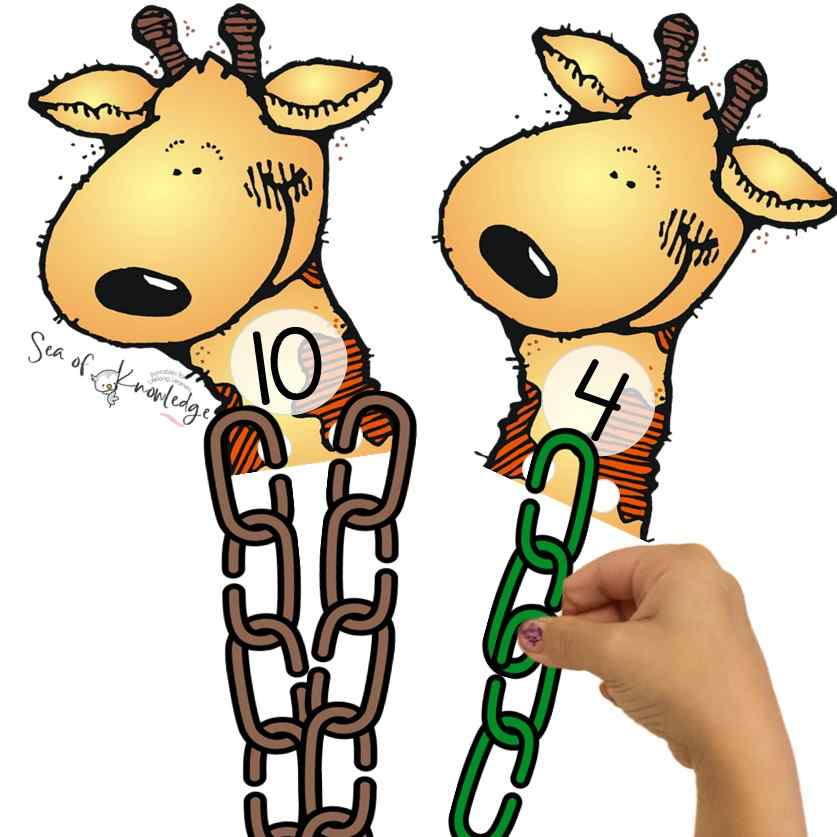
The mission? To calmly count each and every critter, one by one. Focusing on counting those adorable bunnies and ladybugs can help take their minds off whatever was making them mad and refocus their energy.
Sensory Squeeze
Let’s face it, sometimes you just gotta squeeze something! This activity provides a safe and healthy outlet for those pent-up frustrations.
We can set up a little sensory station with some calming tools like play dough.
Play dough is another BIG player in my classroom and with the kids.
Some of my favorite ‘sensory and squeeze toys’:

- CHEESE & MOUSE: The…
- HIGH QUALITY…
- EFFECTIVE STRESS…

- 3 PACK MINI STRESS…
- COLOR CHANGING…
- CALMING SENSORY TOYS…

- NEE DOH Gummy Bear
- High-quality…
- Novel Decompression…
- Minor Toys…
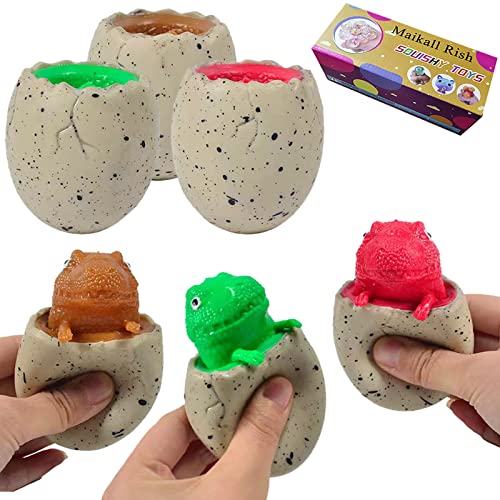
The kiddos can squish and mold the dough to their heart’s content, releasing some of that physical tension that often builds up with anger.
Stress balls and beanbags are also great options for this activity. Squeezing and tossing them gently can be super grounding and help them regain a sense of control.
Happy Place Visualization
This activity takes us on a little mental vacation to a place where worries melt away. We ask the children to close their eyes and imagine their favorite happy place.
Maybe it’s a sandy beach with crashing waves, grandma’s cozy living room, or even a magical forest filled with talking squirrels (hey, no judgment here!).
The key is to get them to describe all the sights, sounds, and smells of their happy place in vivid detail.
By creating this mental escape route, they learn to self-soothe and find a sense of calm when they’re feeling overwhelmed.
How can I help my child with anger?
We’ve all been there – stuck in the cereal aisle while our little angel transforms into a full-blown meltdown machine because, well, who even knows why anymore?
Look, anger is a normal emotion, even for our tiny humans. The trick is helping them navigate those big feelings in a healthy way. But how do we do that, you ask? Don’t worry, I’ve got some ideas here (or should I say backpack?) to turn you into a pro at helping your child deal with anger.
First things first, let’s ditch the idea of punishment. Shaming or yelling won’t magically erase their anger. Instead, let’s focus on helping them understand what’s going on and develop healthy coping mechanisms. Think of it like teaching them a new skill – the skill of managing their emotions.
You can even use social stories to help them overcome this.
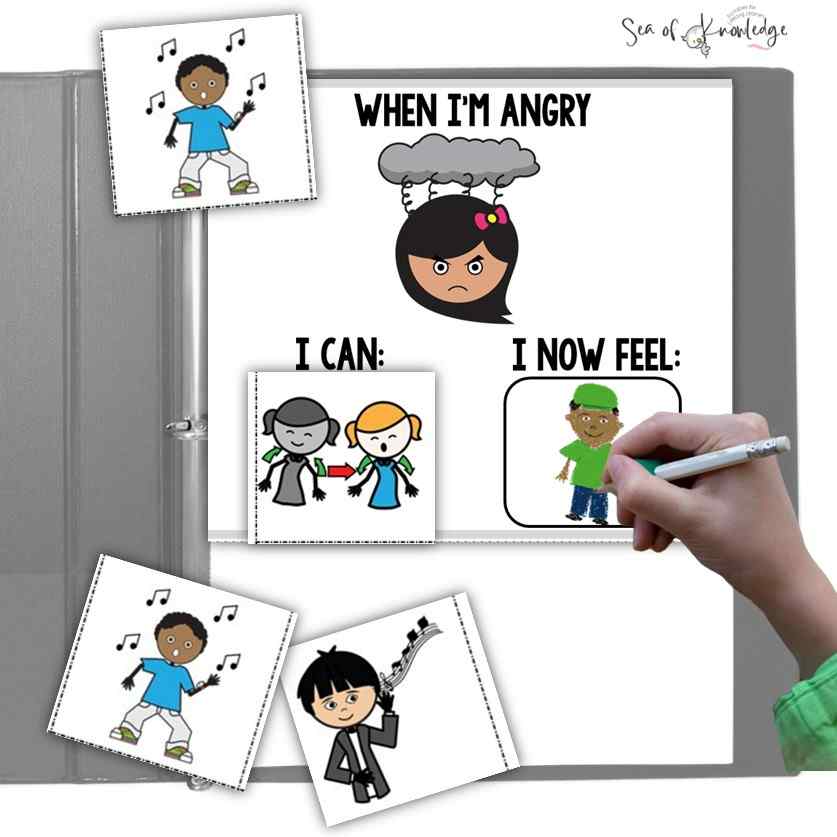
Here’s the cool part: a lot of these strategies can be incorporated into your everyday routine.
Let’s say your little one is having a meltdown because they can’t reach their favorite toy on the top shelf. Instead of getting frustrated yourself, get down to their eye level and acknowledge their feelings.
Say something like, “I see you’re really upset because you can’t get your toy. That must be frustrating!”
By validating their emotions, you show them it’s okay to feel angry, but you also open the door to a conversation about how to deal with it calmly.
We can also use some of the activities mentioned earlier – like counting critters or taking deep breaths like a bear – to help them calm down in the moment.
The key is to be patient and consistent. It won’t happen overnight, but with a little practice, your little superhero will be mastering their emotions in no time!
Remember, they’re learning, and sometimes those meltdowns are just part of the process. Just take a deep breath yourself (because let’s be honest, parenting can be frustrating too!), and keep reminding yourself that you’re raising a tiny emotional ninja in the making!
Can a 7 year old have anger issues?
Remember that time little Sarah came home from school fuming mad because someone “borrowed” (a.k.a. stole) her favorite sparkly marker?
Yeah, me too. Tantrums might be a thing of the past (hopefully!), but sometimes our grade-schoolers can still get pretty fired up. So the question is: when is normal anger a sign of something bigger?
Here’s the deal: it’s totally normal for a 7-year-old to experience anger. Their brains are developing like crazy, and they’re figuring out this whole social-emotional thing.
Think of it like this: they’re learning to navigate friendships, deal with frustration, and understand complex emotions – it’s a lot to process! So, occasional outbursts or meltdowns over a lost toy or a sibling stealing the last cookie? Totally normal.
But what if the anger feels constant, explosive, or starts to interfere with their daily life? For example, maybe Sarah isn’t just mad about the marker – she’s throwing things, yelling at her classmates, or having trouble controlling her emotions on a regular basis.
That’s when it might be a good idea to chat with your pediatrician or a therapist. They can help you figure out if there’s something more going on and develop strategies to help Sarah manage her anger in a healthy way.
Here’s the key takeaway: don’t panic if your 7-year-old gets angry sometimes. But if those angry outbursts seem excessive or disruptive, it’s always best to err on the side of caution and seek professional guidance.
Remember, a little support can go a long way in helping our little ones become calm, cool, and collected (even when faced with a sparkly marker thief!).
Final Thoughts
We’ve explored a whole arsenal of awesome activities to help our little cubs navigate those tricky emotions. Remember, teaching healthy anger management is a marathon, not a sprint.
There will be good days and not-so-good days (think back to that goldfish cracker meltdown, anyone?), but by being patient and consistent, we can equip our little ones with the tools they need to become emotional ninjas.
And hey, these activities aren’t just for the kiddos!
Sometimes us grown-ups could use a little deep breathing exercise or a mental vacation to our happy place (because let’s be honest, adulting can be pretty frustrating sometimes too!). So next time you feel that anger bubbling up, take a deep breath, grab some play dough, and remember – you’ve got this!