CVC Decodable Readers: The Top 10 Best Phonics Books for Kindergarten
If you teach kindergarten, you’ve probably seen this happen.
A child flips through a predictable book and confidently “reads” it… until you cover the picture.
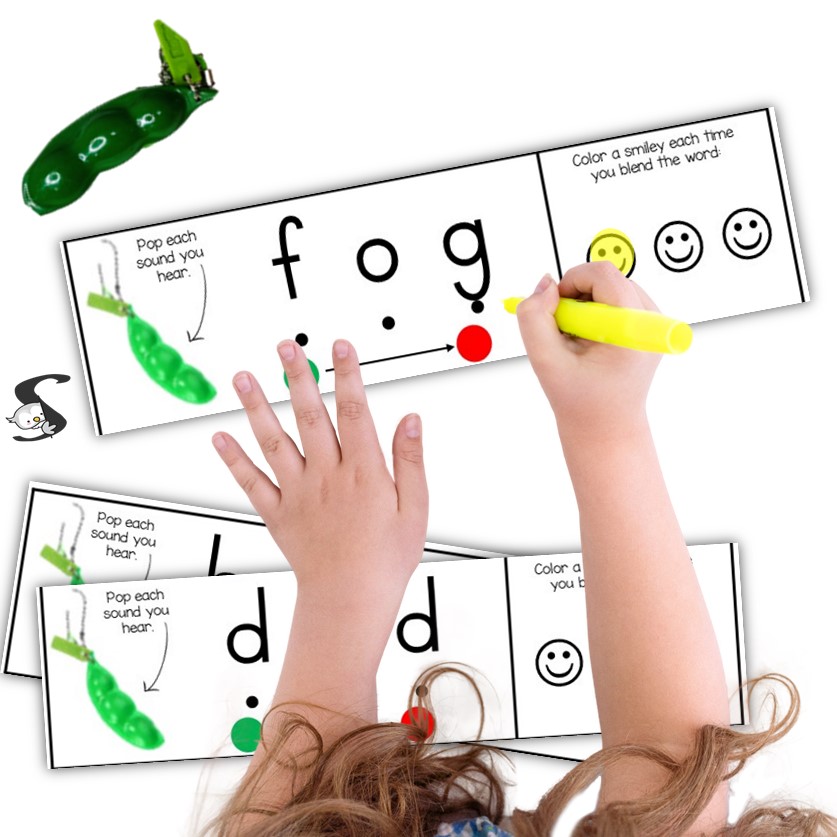
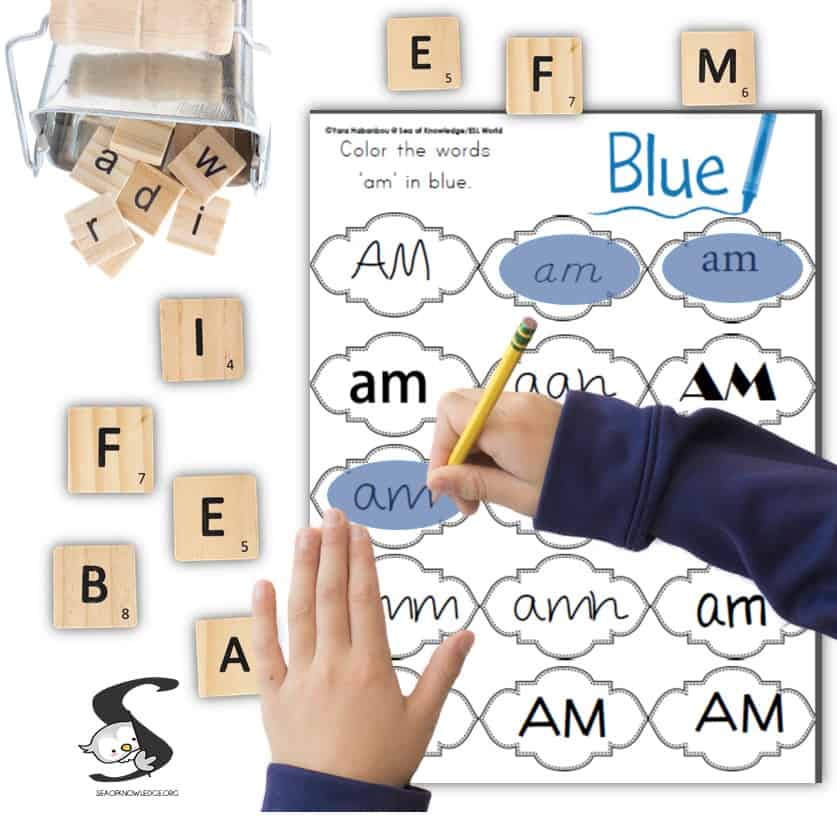
If your students still need extra practice with blending before jumping into readers, my CVC blending flashcards are perfect for building that automatic sound-by-sound confidence. I love using them as a warm-up before reading the mini books so kids are primed and ready to decode smoothly.
You can see these readers here: Leprechaun CVC Decodable Readers & Sticker Sequencing Stories
Then suddenly?
Silence.
Or guessing.
Or “pony” when the word clearly says “dog.”
That’s exactly why CVC decodable readers matter.
Kindergarten students don’t just need cute books. They need structured phonics books for kindergarten that actually teach them how to decode words.
And when done right, CVC decodable readers can completely transform early reading confidence.
Let’s break down why. I will also link to 5 more CVC decodable activities you can try right now on TPT.
You can also tuck these decodables right into your literacy centers alongside my busy learning binder printables. The hands-on binder format makes it easy for students to reread, match, and build CVC words independently without constantly asking for help.
What Are CVC Decodable Readers?
CVC decodable readers are beginning reader books built around consonant vowel consonant words like:
cat
hat
pig
log
sun
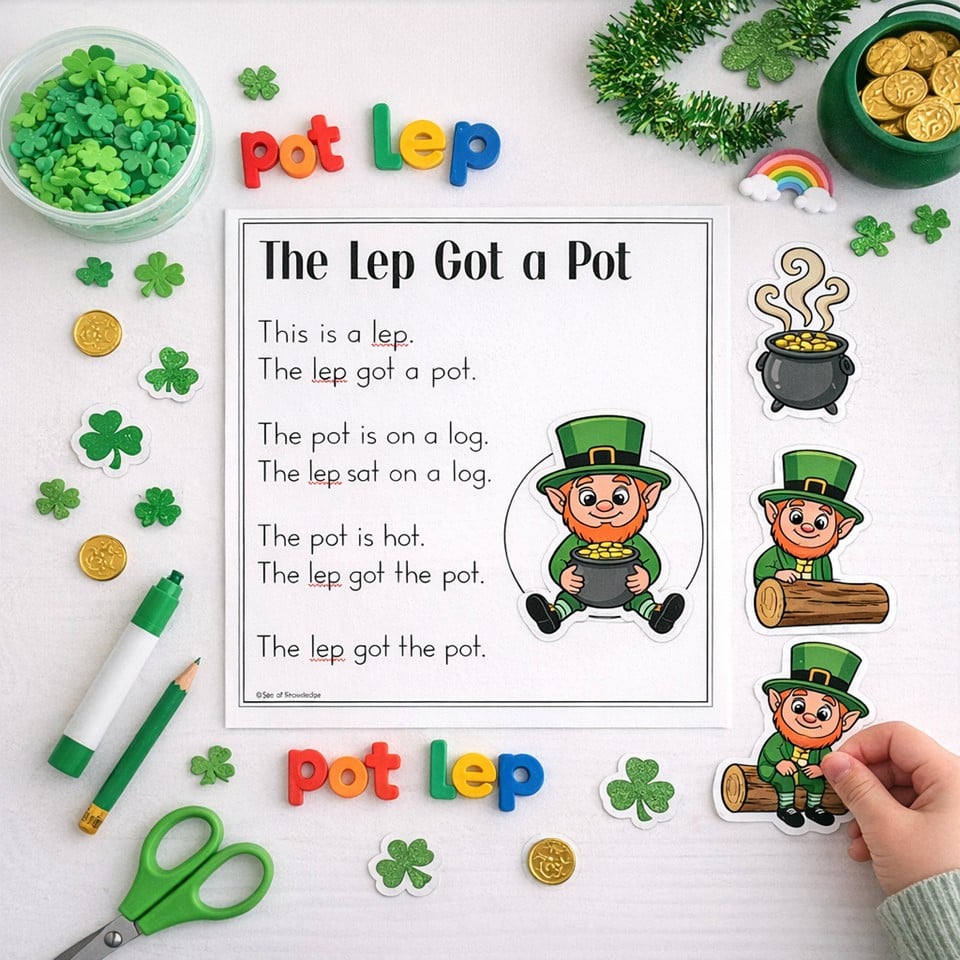
These books are carefully written so children can sound out nearly every word using phonics skills they’ve already learned.
That’s what makes them decodable.
Unlike many leveled readers, printable CVC decodable readers don’t overload children with irregular words. Instead, they focus on short vowel patterns and controlled text.
You can see these readers here: Leprechaun CVC Decodable Readers & Sticker Sequencing Stories
For kindergarten students just learning to blend sounds, this structure is essential.
If you’re working with younger learners, these readers pair beautifully with my preschool CVC words worksheets. They give students extra repetition with the same short vowel patterns so decoding feels familiar instead of overwhelming.
Why CVC Decodable Readers Are Essential in Kindergarten
When children are first learning to read, they need success.
CVC decodable readers for kindergarten:
- Build blending skills
- Strengthen short vowel recognition
- Prevent guessing habits
- Increase reading confidence
- Support phonemic awareness
Kindergarten phonics readers that match instruction help students connect what they learn during phonics lessons to real reading.
Need even more targeted practice? My CVC activity sheets reinforce blending and simple sentence reading in a structured, low-prep way. They’re great for small groups that need just a little more time with short vowel words.
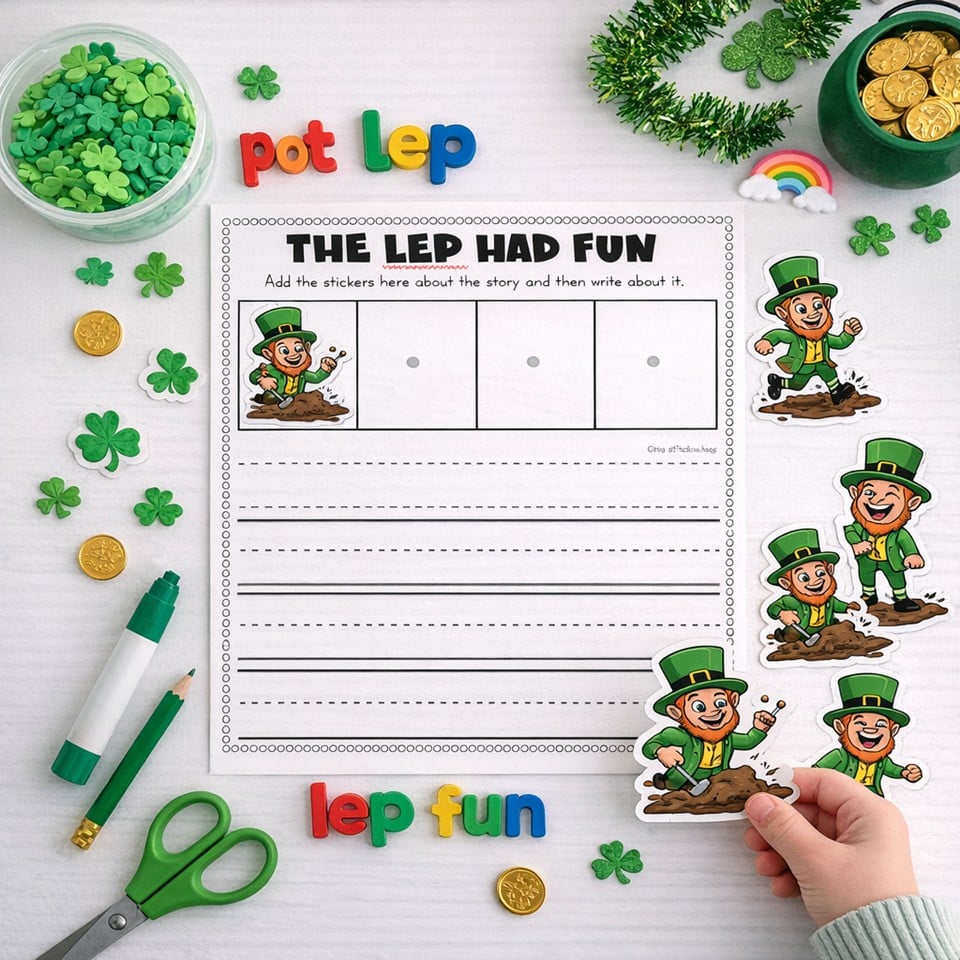
You can see these readers here: Leprechaun CVC Decodable Readers & Sticker Sequencing Stories
That bridge is powerful.
And when students can independently decode a short vowel book?
You see it on their faces immediately.
That spark of “I did it.”
Why These Make the Best Phonics Books for Kindergarten
Parents often search for phonics books for kindergarten because they want something simple and effective.
Teachers search for CVC decodable readers because they want controlled practice.
These sticker-based CVC books do both.
Each short vowel book focuses on:
- One vowel at a time
- Repeated sentence structure
- Simple CVC word patterns
- Minimal high-frequency word overload
That repetition builds fluency without sacrificing decoding practice.
For a playful fluency boost, try adding the CVC worksheet reading dice game into your rotation. Students roll, read, and repeat — and somehow forget they’re practicing the same phonics pattern multiple times.
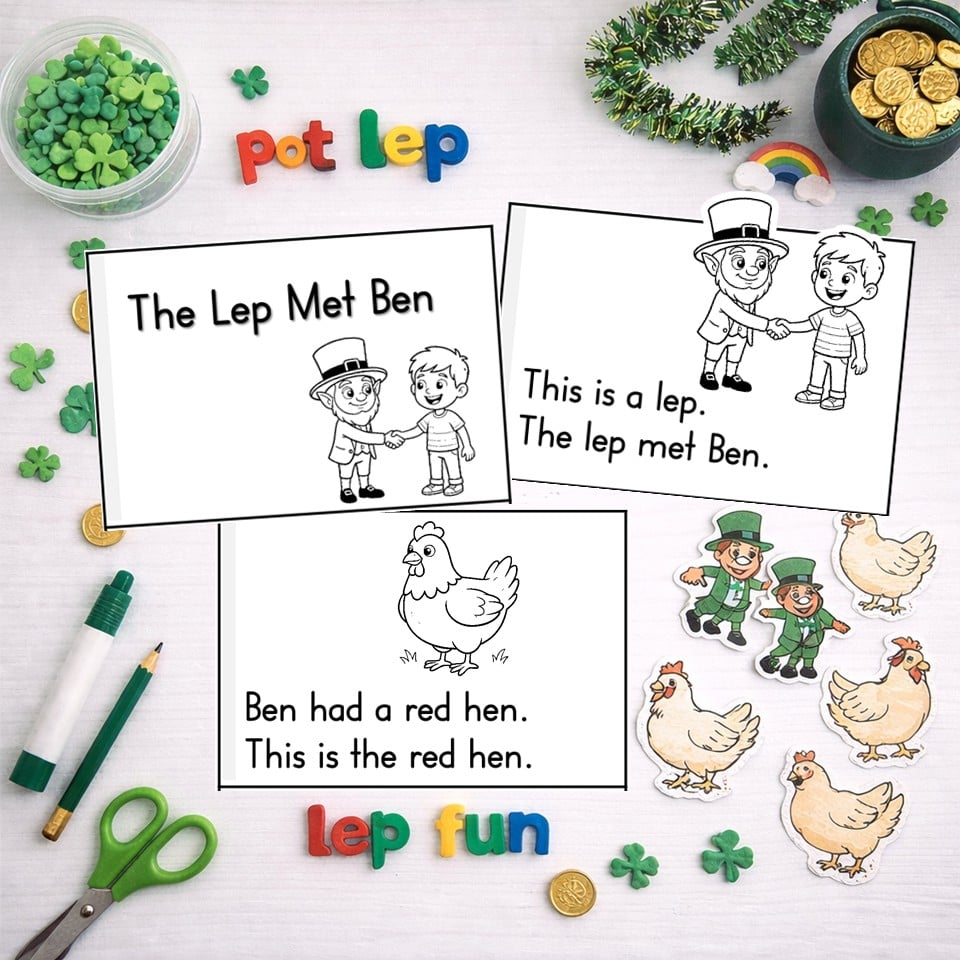
You can see these readers here: Leprechaun CVC Decodable Readers & Sticker Sequencing Stories
They aren’t random beginner reading books.
They are structured kindergarten phonics books aligned to skill progression.
What Makes a High-Quality CVC Decodable Reader?
Not all CVC books for kindergarten are truly decodable.
A strong CVC decodable reader should include:
- Clear short vowel focus
- Controlled vocabulary
- Predictable sentence structure
- Matching illustrations
- Opportunities for rereading
- Extension activities
That’s exactly why I designed these as more than just printable decodable readers.
Each set includes:
- A short vowel CVC decodable reader
- Matching character stickers
- A writing page
Because reading alone is good.
Reading plus interaction? Even better.
And if you want to strengthen word families and rhyming alongside decoding, my CVC words kindergarten rhyming worksheets hole punch cards make it hands-on and memorable. They’re especially helpful for students who need to see and feel the pattern while building fluency.
How to Use These Sticker CVC Decodable Readers
These printable CVC decodable readers are structured to move beyond passive reading.
Step 1: Read the CVC Decodable Reader
Students read the short vowel book slowly.
They:
- Point to each word
- Blend the CVC sounds
- Reread for fluency
Because the text is controlled, they can decode nearly every word independently.
That builds confidence fast.
Step 2: Match the Stickers to the Sentences
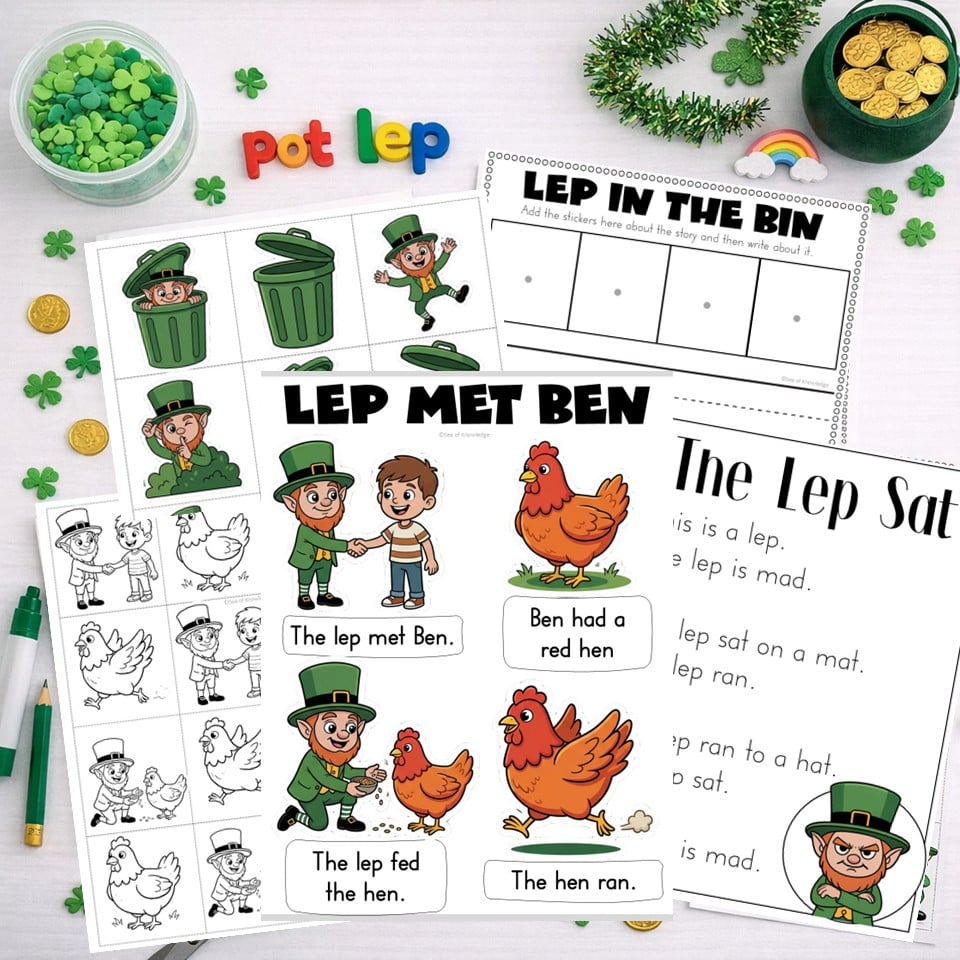
After reading, students match the leprechaun sticker to the correct sentence.
For example:
“The Lep ran.”
They find the running character.
“The Lep is mad.”
They find the angry one.
This reinforces comprehension and forces careful rereading.
Step 3: Paste and Build
Students paste the stickers onto the writing sheet. This tactile step makes kindergarten phonics readers feel like a craft, not a worksheet.
And kindergarteners love cutting and sticking.
Step 4: Write the Sentence
On the writing page, students:
- Rewrite the CVC sentence
- Fill in missing words
- Or create their own short vowel sentence
Reading and encoding together strengthens phonics mastery.
You can see these readers here: Leprechaun CVC Decodable Readers & Sticker Sequencing Stories
5 More CVC Decodable Games and Activities
#1 Kindergarten Decodable CVC Word Phonics Reading Comprehension Passages & Games
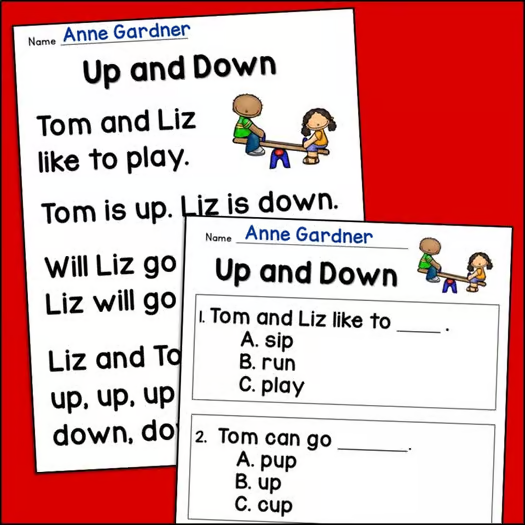
When I need something structured but still engaging, I pull out these Kindergarten Decodable CVC Word Phonics Reading Comprehension Passages & Games. I use the passages during small group first, then let students reread independently during centers.
The built-in comprehension keeps them accountable, so it’s not just “read and forget” — they actually have to think about what they decoded.
#2 Short A Reading Passages Decodable Readers with CVC Words
If I’m introducing short a, I like to stay focused and not overwhelm my students with mixed vowels. These Short A Reading Passages Decodable Readers with CVC Words are perfect for that.
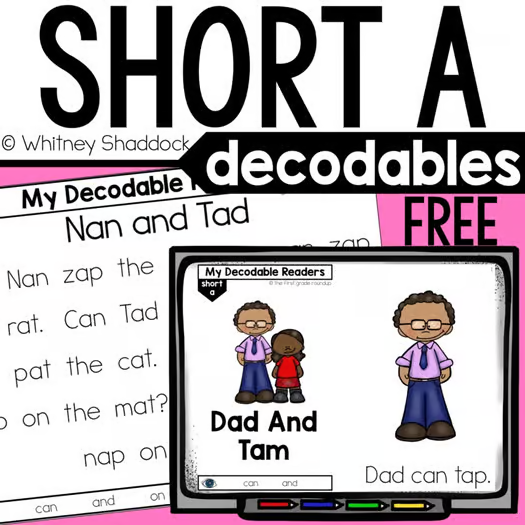
I use them after explicit blending practice so students can apply the skill immediately. We read together once, echo read once, and then they highlight all the short a words to reinforce the pattern.
#3 CVC Words Decodable Passage Reading Comprehension Short A Worksheets
Sometimes I just need something simple and effective. These CVC Words Decodable Passage Reading Comprehension Short A Worksheets are great for independent practice.
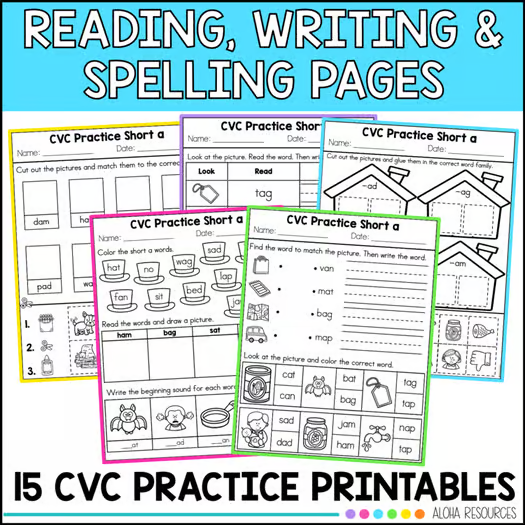
I use them as a follow-up after a mini lesson — students read the passage quietly, then answer the questions to show they truly understood what they decoded.
#4 Decodable Short Vowel CVC Sentences Roll & Read Fluency Practice Game
Fluency doesn’t happen by accident. That’s why I love turning practice into a game. With this Decodable Short Vowel CVC Sentences Roll & Read Fluency Practice Game, students roll a die and read the sentence they land on.
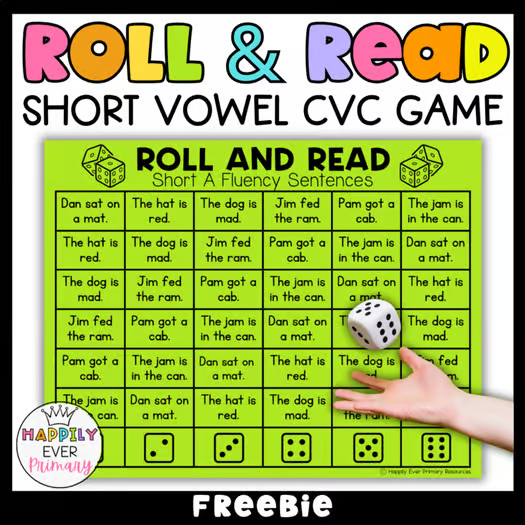
I use it during literacy centers and require them to reread each sentence twice for smoothness. They think it’s a game. I know it’s repetition with purpose.
Decodable Readers vs Leveled Readers
A common question teachers ask is whether CVC decodable readers are better than leveled books. Leveled readers are based on difficulty. Decodable readers are based on phonics patterns. In early kindergarten, decodable readers for beginning readers provide clearer support because they match phonics instruction directly.
They give children a fair chance to apply what they’ve learned.
And that’s what builds independent reading skills.
Frequently Asked Questions About CVC Decodable Readers
What is a CVC decodable reader?
A CVC decodable reader is a short phonics book built around consonant vowel consonant words that students can sound out independently using short vowel patterns.
Are CVC decodable readers good for kindergarten?
Yes. CVC decodable readers are ideal phonics books for kindergarten because they focus on controlled short vowel practice and build blending skills.
When should students start CVC readers?
Students can begin CVC decodable readers once they know basic letter sounds and are starting to blend simple words.
Can parents use printable CVC decodable readers at home?
Absolutely. Printable CVC decodable readers are simple to use at home with short daily reading practice and rereading for fluency.
If you’re looking for structured phonics books for kindergarten that actually build decoding skills, CVC decodable readers are one of the most effective tools you can use.
They:
Support phonics instruction.
Build confidence.
Reduce guessing.
Strengthen short vowel mastery.
And when you add interactive elements like stickers and writing pages?
You move from passive reading to active learning.
That’s where the growth really happens.

![Z Words for Kindergarten [Cookie Jar Printable Craft]](https://www.seaofknowledge.org/wp-content/uploads/2023/03/z-words-for-kindergarten2.jpg)