Why Coding Games for Kids Are the Sneakiest (and Funniest) Way to Teach STEM
Stop wasting time on boring STEM worksheets! Discover fun and easy coding games for kids that build math, logic, and problem-solving skills—without the frustration. Try this free Monkey Coding Map activity and see why kids love it.
Let’s get one thing straight—coding isn’t just for hoodie-wearing computer whizzes chugging coffee in a dark room. Nope. Coding is basically the sneaky way to teach kids math, logic, and problem-solving without them realizing they’re doing schoolwork. It’s like hiding veggies in spaghetti sauce… only this time, the “veggie” is critical thinking, and the “sauce” is a really fun game.

This post is sponsored by CodeMonkey, but all opinions, ideas, and banana-loving monkeys are my own.
Whether you’re a teacher, parent, or homeschooler, bringing digital coding activities into your lessons can open up a whole new world for kids. Think stronger STEM skills, more independence, and the kind of creative problem-solving that will serve them long after they leave your classroom.
In this post, I’m going to:
- Share why coding games are gold for kids.
- Give you a peek at my Monkey Coding Map Google Slides game (it’s free—yay!).
- Show you how platforms like CodeMonkey can take all this goodness and level it up.
I’ve previously shared the Star Heroes coding task cards version and the kids absolutely loved them and wanted more!
Why Teach Coding to Kids?
Here’s the thing—coding isn’t just about computers. It’s about thinking in a way that works. It’s learning to break down a problem, test a solution, and not throw the laptop out the window when it doesn’t work the first time (or the fifth).

Here’s why I think it’s such a superpower:
- Builds logic and sequencing skills – Kids start seeing that steps matter, and order matters. (Ever tried putting your socks over your shoes? Exactly.)
- Encourages problem-solving and resilience – “Okay, that didn’t work… what’s Plan B?” becomes second nature.
- Supports early math concepts – Directions, patterns, spatial awareness—coding sneaks all this in without the math anxiety.
- Boosts creativity – It’s not all numbers; coding can be storytelling, game design, and building wild ideas.
- Improves working memory – They have to remember and apply instructions without a meltdown.
- Teaches real-world tech skills – But in a way that feels like play, not like a 3-hour IT tutorial.
💡 Did you know? Early coding activities can even help with literacy skills and executive functioning. Yes, even in preschool! (Which is why I happily let my 5-year-old students “code” long before they can read full sentences.)
If you’re working with younger learners, you’ll love these beginner-friendly coding games for 5 year olds that break big concepts into simple, playful steps—perfect for introducing logic without overwhelming little minds.
Try This Free Coding Game for Beginners!
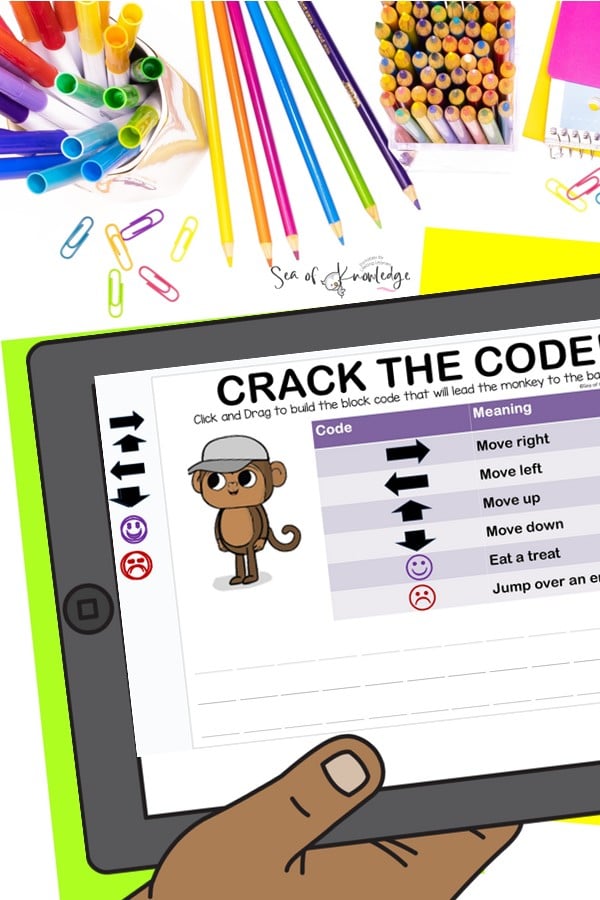
Meet my Monkey Coding Map—a simple Google Slides activity I whipped up to help kids dip their toes into coding logic.

What it covers:
- Directional commands – Up, down, left, right.
- Obstacle navigation – Avoid enemies, grab treats.
- Sequencing steps – Plan the route before moving.
How it works:
- Kids build a path from a monkey to a banana (the ultimate motivation).
- They sprinkle in treats and enemies for extra fun.
- They drag and drop block code icons to “crack the code” that gets the monkey to the goal.
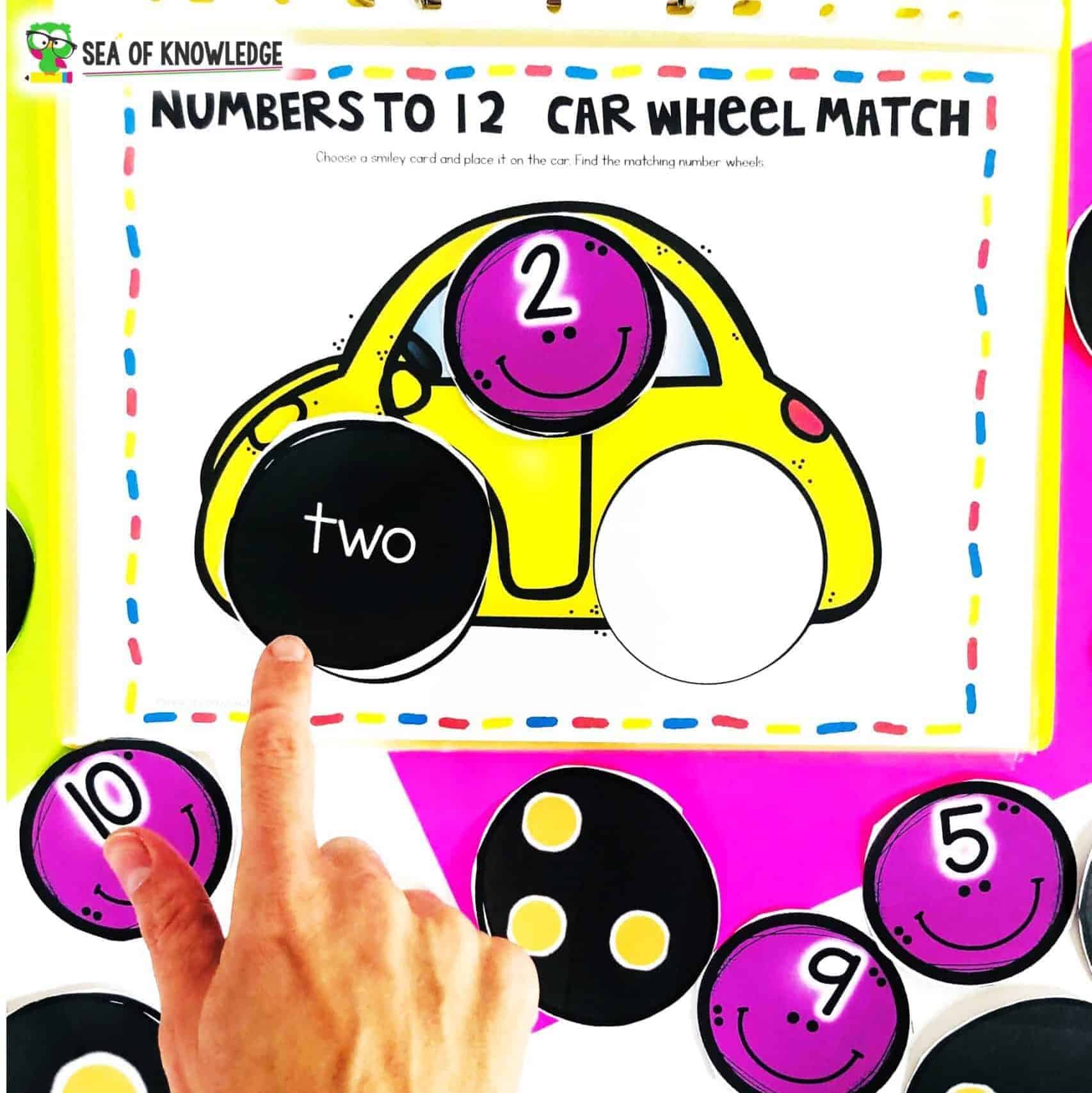
Pairing coding with early math? Check out these hands-on free printable math activities for preschoolers to reinforce number recognition and counting skills alongside your STEM lessons.
🛠 Perfect for:
- PreK–2nd grade students
- Whole group lessons or independent centers
- Fine motor and visual discrimination practice
👉 [Download the free Monkey Coding Map here!]
For more focused practice, this fun math activity for preschool blends movement, problem-solving, and early numeracy—great for brain breaks or center time after coding games.
Extend the Learning with CodeMonkey
Once kids get comfy with drag-and-drop coding, it’s time to level up. That’s where CodeMonkey comes in.
They’ll move from just pretending to code to learning real coding languages like Python and CoffeeScript—but still in a kid-friendly, game-based environment.
Why I’m a big fan:
- It’s teacher-friendly (you don’t need to be a coding expert).
- It aligns with ISTE and CSTA computer science standards.
- It adapts to multiple skill levels, so mixed-ability groups can thrive.
- The kids are so busy playing they don’t realize they’re learning.
💡 Pro tip: I link to a free CodeMonkey trial right inside my Monkey Coding game. That way, teachers can smoothly transition from a freebie to the “real deal” without kids skipping a beat.
Ready to explore screen-based coding? CodeMonkey is the perfect place to begin. You can try it out for free and see how your child or students enjoy the experience! Don’t forget code: CMSOK25 for an exclusive 25% off.

If your kids love a challenge, they’ll get hooked on solving an image math puzzle, which exercises visual discrimination and math fluency in one.
Real Classroom Benefits
With my own students, I’ve noticed:
- Engagement skyrockets – Some kids will literally skip recess to keep coding.
- Accessibility – Even non-readers follow visual block coding with ease.
- Reward factor – It’s the rare “fun activity” that’s also 100% educational (teacher win!).
Final Thoughts: Coding Builds More Than Just Tech Skills
Teaching kids to code isn’t about turning them all into Silicon Valley entrepreneurs. It’s about giving them a way to think. To problem-solve. To get creative.
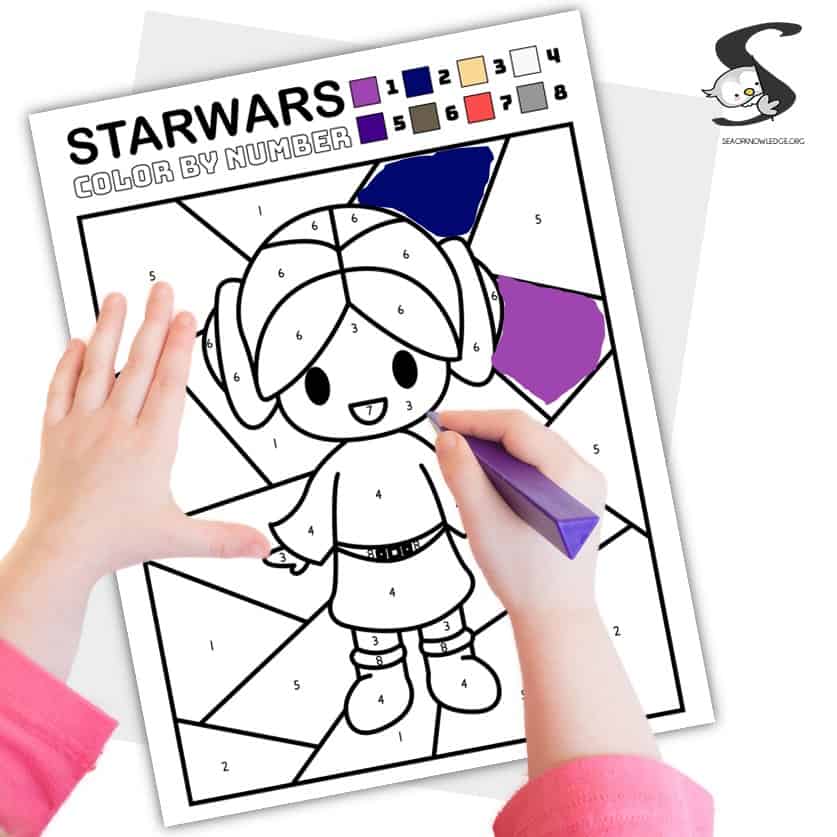
And for the ultimate themed twist, bring in the force with Star Wars math activities—because who wouldn’t want to practice math and coding with lightsabers and droids in the mix?
And honestly? If you can do all that with a cute monkey chasing a banana, that’s a win in my book. 🍌
Want more fun STEM games and freebies? Hop on my email list below—I send out weekly printables, activities, and classroom hacks that keep kids learning and smiling.