Handwriting Practice Sheets for Adults That Aren’t Childish or Boring
Tired of childish handwriting worksheets? Try these engaging handwriting practice sheets for adults and older students featuring funny, relatable short stories.
Handwriting practice is not only for young children learning to form their first letters. Adults, teenagers and older students may also need help making their writing clearer, neater and easier to read.
Learners who want to build confidence can also use these ideas to practice English speaking alongside their handwriting work. After copying a story, students can retell the events, discuss the funny ending or answer the response question with a partner.
Unfortunately, many printable handwriting worksheets feature cartoon animals, oversized dotted letters and sentences written for five-year-olds. These activities may teach the correct skills, but they can feel childish or embarrassing for mature learners.
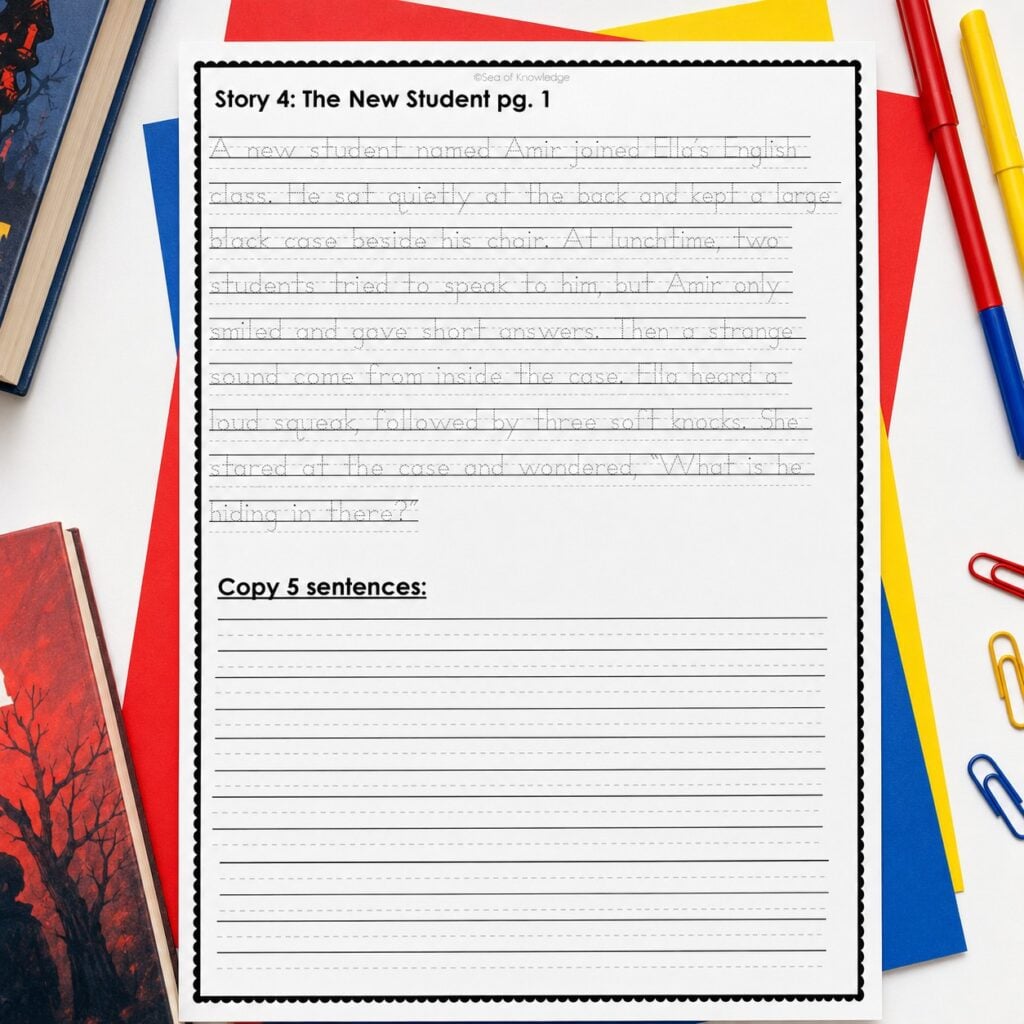
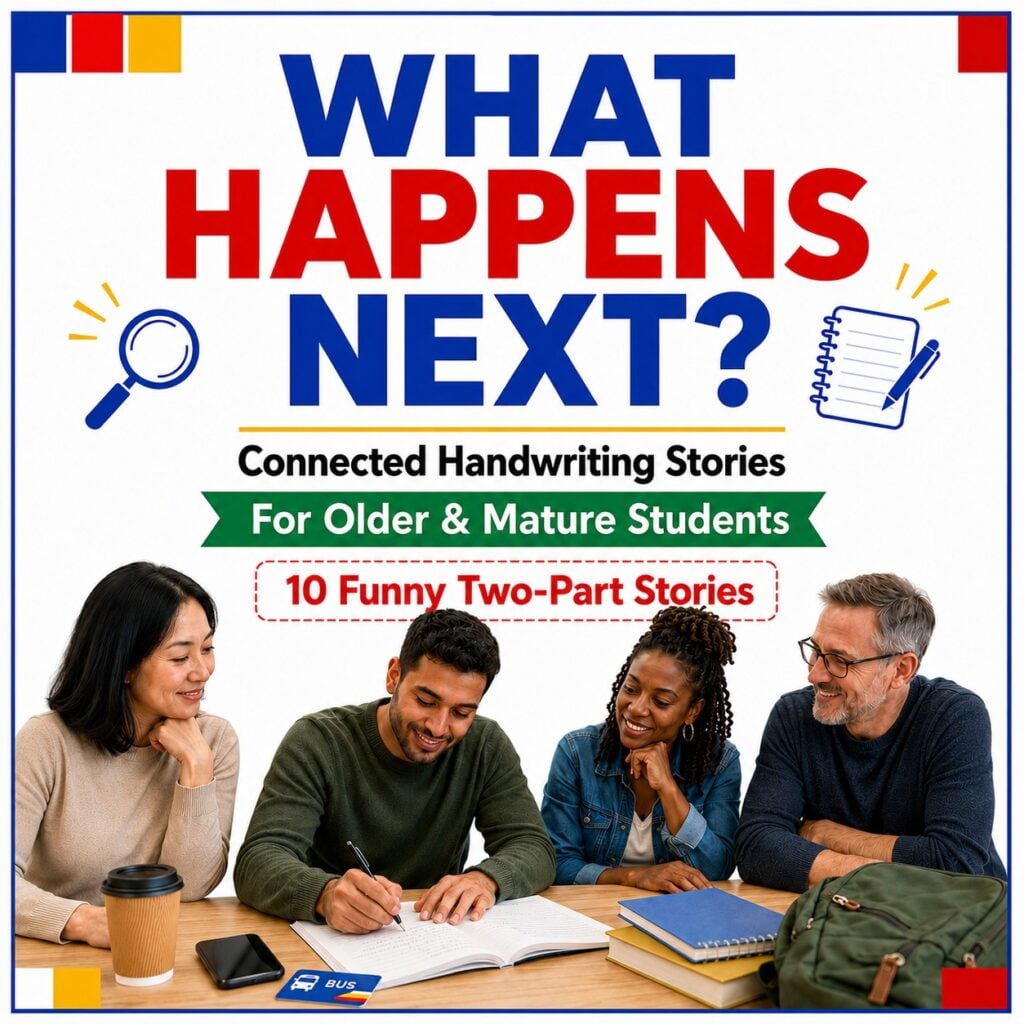
That is why I created these handwriting practice sheets for adults and older students. Instead of copying random words, learners read and copy funny short stories based on familiar, everyday situations. The passages provide meaningful handwriting practice while building reading, punctuation and comprehension skills.
Why Might Adults and Older Students Need Handwriting Practice?
There are many reasons someone may need extra handwriting support. An adult might be learning English, returning to study, preparing for a new job or simply trying to make their everyday writing easier to read.
Older students can also understand difficult ideas while still struggling with letter formation, spacing or writing neatly on a line. Some rush when writing, while others become tired after completing only a few sentences.
Regular handwriting exercises for adults and older learners can help them practise:
- Forming letters clearly and consistently
- Keeping letters at a similar size
- Leaving appropriate spaces between words
- Writing neatly along a line
- Copying complete sentences accurately
- Using capital letters and punctuation
- Checking their work for missing words
- Developing better writing stamina
The goal is not to make everyone’s handwriting look exactly the same. Clear, readable and comfortable writing is far more important than perfect penmanship.
Clear handwriting and confident speech are both important communication skills. These engaging ESL pronunciation games provide an easy follow-up activity for learners who need extra practice saying unfamiliar words from the passages aloud.
Handwriting Worksheets That Respect the Learner’s Age
Finding suitable handwriting worksheets for teens and adults can be surprisingly difficult. Most handwriting resources are created for early elementary students.
A middle school student who needs extra practice should not have to copy “The pig is pink” beside a smiling cartoon pig. The pig has done nothing wrong, of course, but it is clearly in the wrong classroom!
You can extend each short story with simple ESL listening activities that strengthen attention and understanding. Read the passage aloud before showing it, then ask learners to listen for key details, arrange events in order or identify the main problem.
Handwriting practice for older students should look clean and mature. It should contain familiar vocabulary, age-appropriate situations and activities that have a genuine purpose.
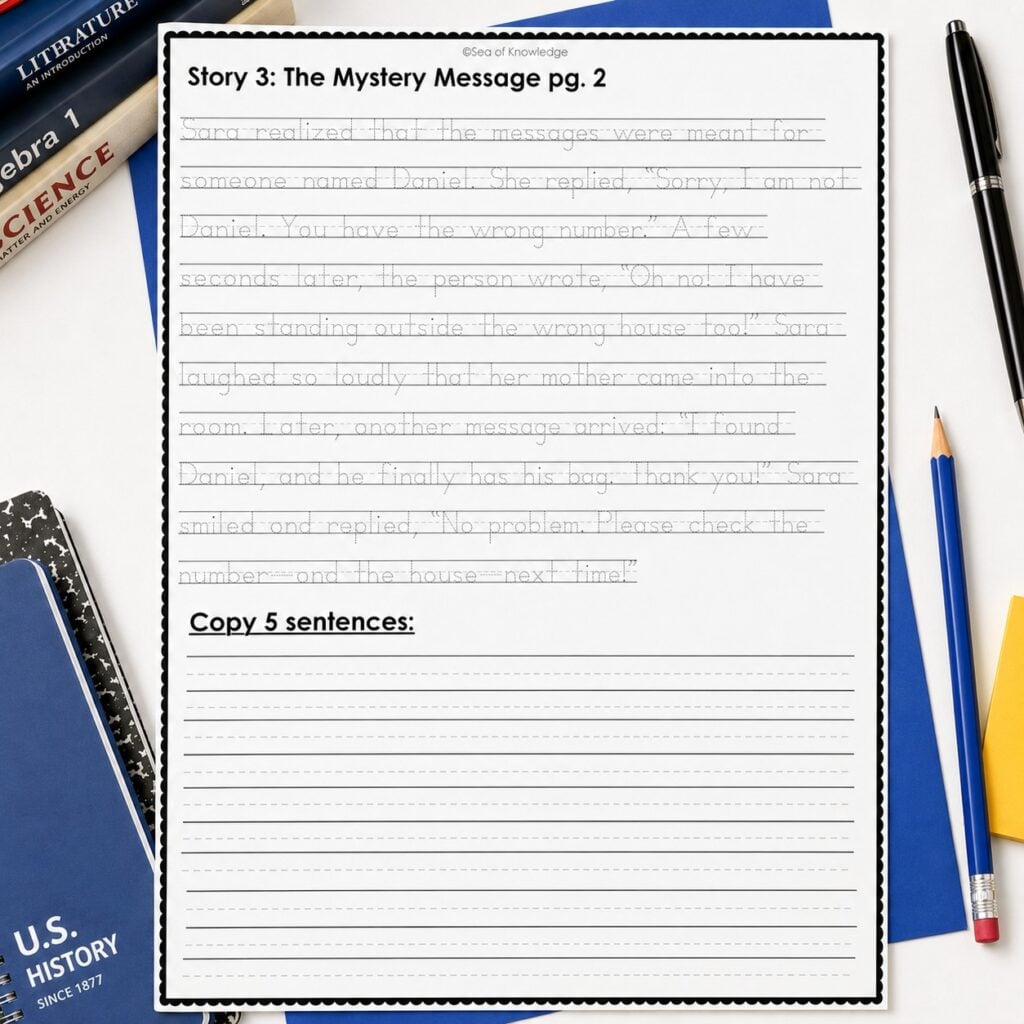
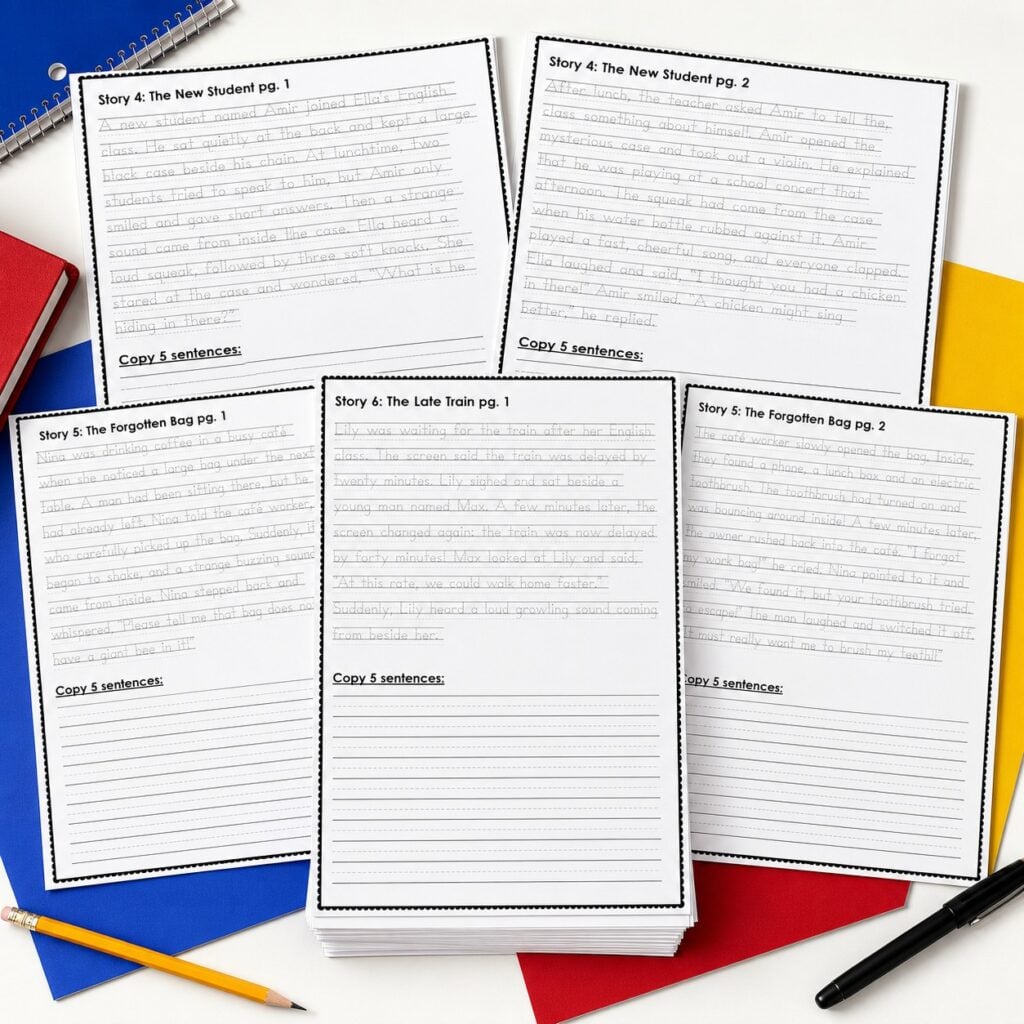
These printable handwriting worksheets use complete stories rather than disconnected sentences. Every story begins with a small problem, mystery or funny misunderstanding. Learners copy the first passage, make a prediction and then continue to the second page to discover what happened.
Short Stories Make Handwriting Practice More Meaningful
This printable handwriting practice PDF contains ten short stories. Each story is divided into two connected passages, providing 20 pages of paragraph handwriting practice.
Part One introduces the characters and a small problem. It ends with a prediction question that encourages the student to think about what might happen next.
Part Two reveals the solution, usually with a funny twist. A personal response question then helps the learner connect the situation to their own experiences.
The stories included are:
- The Missing Phone
- The Wrong Bus
- The Mystery Message
- The New Student
- The Forgotten Bag
- The Late Train
- The Locked Door
- The Lost Dog
- The Surprise Delivery
- The Café Mix-Up
The situations are easy to understand without sounding childish. Learners read about missing phones, delayed trains, strange messages, lost dogs and incorrect food orders. The light humour makes the passages suitable for middle school handwriting practice, high school learners and adults.
For a seasonal literacy lesson, these scary Halloween stories for ESL students offer age-appropriate reading material with a little more suspense. Students can read, discuss or copy selected passages as part of their October handwriting and English practice.
More Than Neat Handwriting Practice
Although the resource focuses on neat handwriting practice, it also develops other reading and writing skills.
Reading Comprehension
Students must read each passage carefully before copying it. They need to follow the events, understand the problem and notice clues about what might happen next.
The prediction and personal response questions turn the passages into simple reading and writing worksheets. They also give teachers an easy way to check whether students understand what they have read.
Before beginning a longer copying passage, try one of these quick ESL warm-up activities to help learners feel comfortable and ready to participate. A short vocabulary, prediction or speaking task can introduce the story topic without adding too much preparation.
Capital Letters and Punctuation
The stories contain full stops, commas, apostrophes, question marks, exclamation marks and quotation marks. This makes them useful as punctuation practice worksheets as well as handwriting activities.
Before students copy a passage, ask them to circle the capital letters or highlight a particular punctuation mark. They could find every comma, underline speech marks or explain why a question mark was used.
This provides natural capital letters and punctuation practice without giving students another page of unrelated grammar questions.
Spelling and Attention
Copying paragraphs requires more concentration than tracing individual words. Learners must notice spelling, word order, spaces and punctuation while moving their eyes between the model text and their own writing.
This makes the resource useful as copywork for older students who need to practise copying accurately without losing their place.
Writing Stamina
Longer passages help students become more comfortable writing complete paragraphs. However, the stories are divided into two manageable parts so the activity does not become overwhelming.
Teachers can begin with one paragraph and gradually ask learners to complete both parts. This makes the pages useful for writing intervention, learning support and special education handwriting practice.
How to Use These Handwriting Practice Sheets
The worksheets can be used in several ways, depending on the learner’s needs.
Students can read the story aloud, copy the paragraph and answer the question independently. Teachers could also use one passage each morning as a handwriting warm-up or literacy activity.
For learners who need more support, try this routine:
- Read the paragraph together.
- Discuss any unfamiliar words.
- Circle the capital letters.
- Highlight one type of punctuation.
- Copy the paragraph onto the handwriting lines.
- Compare the copied work with the original.
- Answer the prediction or personal response question.
This routine combines handwriting, reading comprehension, spelling and punctuation in one manageable lesson.
The pages may also be used for:
- Adult ESL handwriting practice
- EAL and English language lessons
- Middle school literacy centres
- High school learning support
- Fine motor writing practice
- Reluctant writers
- Homework and revision
- Independent morning work
- Early finisher activities
- Occupational therapy writing activities
Supporting Learners at Different Levels
Not every learner will need the same amount of support. Some students may copy an entire paragraph independently, while others may need to work one sentence at a time.
If your older learners enjoy adding technology to their lessons, these online games for ESL provide an engaging extension after handwriting practice. They can reinforce vocabulary, spelling, reading and sentence skills while giving students a welcome break from the pencil.
Allow students who tire easily to take short breaks. A pencil grip, sloped writing surface or wider writing lines may also make the task more comfortable.
You can cover part of the model paragraph with a blank sheet of paper and reveal one sentence at a time. This can help learners who lose their place or feel overwhelmed by a full block of text.
More confident writers can complete an extension activity. Ask them to write another ending, add a sentence of dialogue or create a similar story based on something that happened to them.
Students could also complete a handwriting self-assessment by checking:
- Are my letters sitting on the line?
- Did I leave spaces between the words?
- Did I copy every punctuation mark?
- Can another person read my writing?
- Did I check my work carefully?
These questions encourage students to notice their own progress without expecting flawless handwriting.
Free Handwriting Practice Sheets for Older Students
If your older learners need targeted support with clear, readable printing, these free handwriting practice sheets for older students provide a mature alternative to worksheets designed for young children. The manuscript activities help students practise forming letters correctly, maintaining consistent letter sizes and leaving appropriate spaces between words.
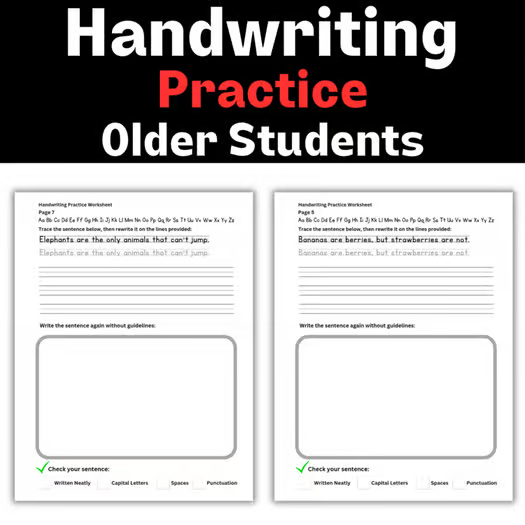
They are ideal for middle school students, high school learners, adults, ESL and EAL classes, special education settings and anyone who needs additional fine motor or handwriting support. Teachers can use the pages for short daily warm-ups, independent literacy work, intervention sessions, homework or occupational therapy practice.
Because the design is appropriate for mature learners, students can concentrate on improving their printing without feeling as though they have been given a kindergarten worksheet. The resource is free to download from Teachers Pay Teachers, making it an easy, no-prep addition to your handwriting lessons.
Free Letter Formation and Handwriting Fluency Practice for Older Learners
Learners who are still developing consistent letter shapes may also benefit from this free letter formation and handwriting fluency practice. The three-line format gives students helpful visual guidance as they practise letter height, placement and alignment, without using an overly childish design.
It can be particularly useful for older students who form letters inconsistently, struggle to keep their writing on the line or need to slow down and rebuild their printing habits.
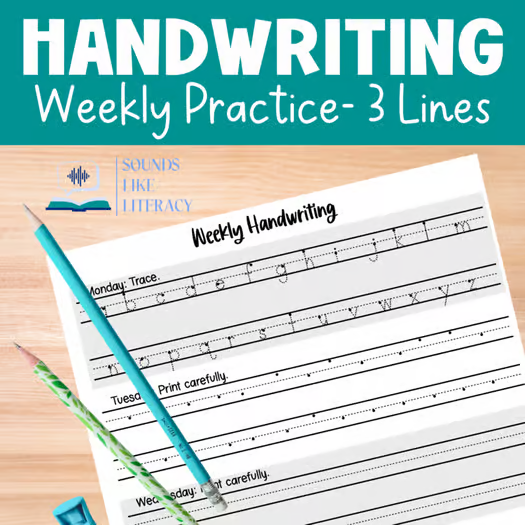
Use the pages for handwriting intervention, morning work, literacy centres, adult education, ESL lessons, special education or individual practice at home. Students can complete a small section each day before progressing to longer words, sentences and paragraphs.
This free Teachers Pay Teachers resource also pairs well with story-based handwriting passages because it allows learners to review individual letter formation before applying those skills to meaningful writing. It is simple, focused and ready to print.
Mature Handwriting Practice With a Purpose
Older students and adults deserve handwriting activities that respect their age and experience. They should not have to choose between childish tracing pages and long, difficult passages.
Story-based handwriting practice gives learners a reason to read, copy and continue. The familiar situations make the language easier to understand, while the small mysteries and funny endings help maintain interest.
If you need practical handwriting practice sheets for adults, teenagers or older students, this set includes 20 connected passages with handwriting lines, prediction prompts and response questions.
Learners can improve their letter formation, punctuation, paragraph copying and reading skills while discovering what happens next. Handwriting practice becomes much less boring when a missing phone, a strange package or a runaway toothbrush is involved!