50 Behavior IEP Goals (Plus a Free Template List)
Behavior IEP goals aren’t something we instantly know how to tackle, they are complicated. That’s why I’ve created this easy guide here to help you on the way to learning which behavior goals to target and add to your IEP.
Plus, it’s something that has a huge impact on our kids’ daily lives and, honestly, is often managed in the least effective way. Previously on this blog, I outlined some simple IEP goals for social skills.
In this post, we will target some simple behavior IEP goals. Every teacher or even speech pathologist should have access to a bank of these for reference.
It’s an important but rather complex topic. Making a positive change in a child’s behavior, whether through an IEP or other methods, has evolved big time in the last ten years.
It’s not just about behavior goals anymore. These adaptive behavior iep goals are a great way to monitor behavior and make the necessary changes to target appropriate ones.
Behavioral Goals to Target
Special education teachers are constantly looking for measurable goals specific to grade level tasks and skills.
It’s essential that students and kids get movement breaks in intervals while they are being taught or monitored for a specific goal.
The IEP team usually have specific goals to target for every classroom setting. Teachers and speech pathologists can refer to a list of measurable behavioral goals examples when developing individualized education plans for students.
The best practice would be to monitor how well these goals are going with respect to how well the student or child is responding to independent tasks.
When you encounter unexpected behavior (which is almost always the case – because who could predict everything?!) – always try to redirect with appropriate behaviors and don’t expect the response to be immediate.
What are some behavioral goals for students?
In discussing behavior IEP goals for students, it is important to consider what strategies can be implemented to support their growth and development.
These goals can range from improving social interactions, managing emotions, following directions, staying focused, or working collaboratively with peers.
By setting clear and achievable behavioral goals, educators can provide the necessary support and guidance for students to succeed in their learning environment.
Here are some behavioral goals for students:
In Class:
- Listen well: Pay attention to the teacher and classmates when they’re talking.
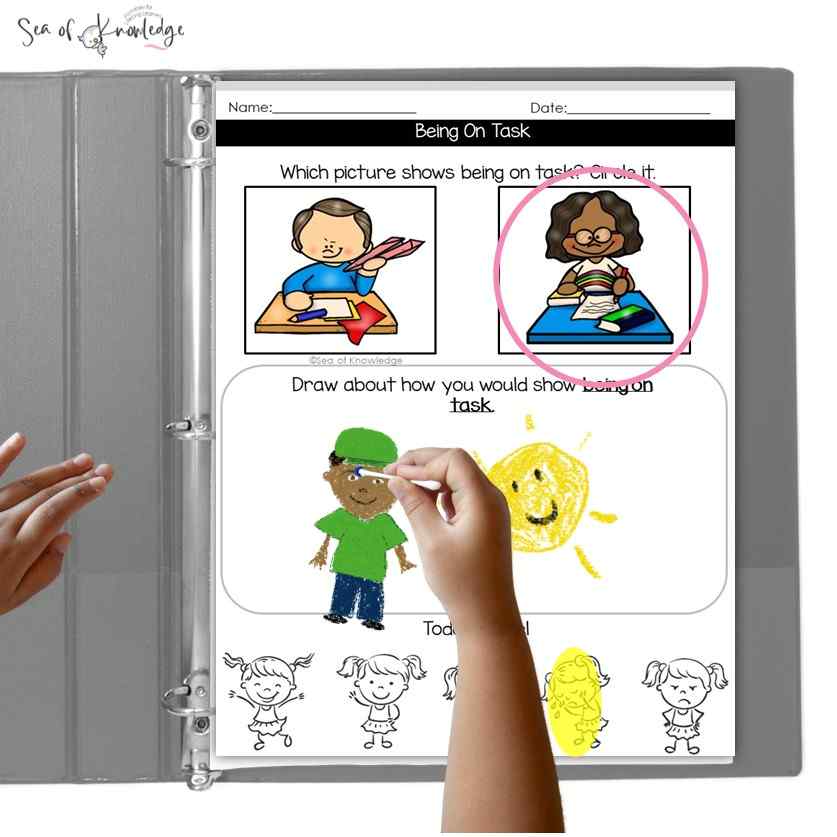
- Stay on task: Focus on your work and avoid distractions.
- Be respectful: Use kind words and avoid interrupting others.
Getting Along:
- Work well with others: Be a good teammate and cooperate on projects.
- Solve problems peacefully: Use your words to work out disagreements.
- Be a good friend: Be helpful and include others in games.
Responsibility:
- Be prepared: Come to class with all your supplies.
- Complete assignments on time: Do your homework and classwork neatly.
- Follow directions: Listen carefully and do what the teacher asks.
These are just a few examples, and the specific goals will vary depending on the age and needs of the students.
An example of a measurable goal
Need a specific example on how to write a behavioral goal for an IEP? Here’s an example of a measurable goal idea written specifically for a student:
- Goal: Jack will improve his participation in class discussions by 50% within the next two weeks.
How it’s measurable:
- Baseline (current situation): Count the number of times he participates in class discussions (asking questions, answering prompts) over a baseline week. Let’s say he currently participates 2 times a week.
- Improvement target: Aim for a 50% increase, so he’d participate 2 times/week x (1 + 50%) = 3 times a week.
- Tracking progress: Throughout the next two weeks, keep track of how many times he participates in class discussions. If he reaches 3 times or more by the end of the two weeks, he’s achieved his goal!
Behavior IEP Goals
If you’re looking for some goal tracking sheets for IEP’s here are some of my favorites.
I will share this one at the end of this post for FREE. I love using this with preschool students.
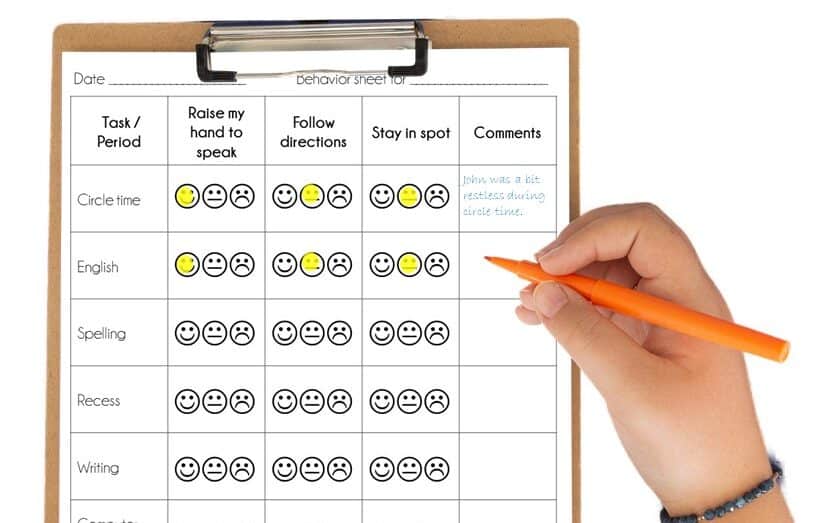
IEP Goals Data Collection Behavior Tracking Weekly Point Sheet Template – from the Jump Drive.
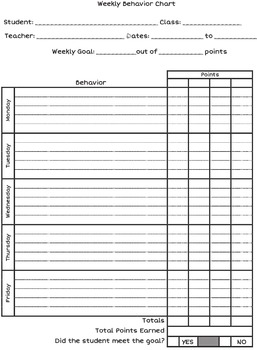
Another goal tracking sheet I like is this one from Kathryn Sanders. It’s a Google sheet link, so if technology is your jam – this will be perfect!
IEP Behavior Goals
In a school setting, if you see disorganised behavior, here are some measurable goals to work towards:
– The student will have appropriate materials ready for the activity on hand.
– The student will organise their materials at the beginning and end of the activity.
– The student will complete one task before moving onto the next task.
– The student will sort the materials they need into appropriate locations on the desk.
– The student will follow a sequential order to complete the task or activity.
If the student has difficulty concentrating or understanding / attending to tasks (task avoidance):
– The student will work on a task for ___ amount of time.
– The student will continue to work on a task until complete.
– The student will work on one task at a time.
– The student will try to understand the task before beginning the task.
– The student will ask for a break if they need it when trying to complete a task.
IEP Goal Data Tracker Digital Free
If you’re managing IEP goal and objective data in your classroom, this Google Sheets template is your ultimate progress tracking tool!
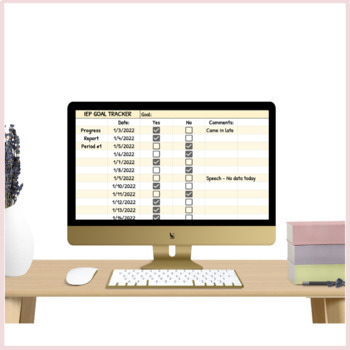
Designed for special education, it offers space to document:
- Goal names (e.g., “Reads Letters”)
- Criteria (e.g., 80% accuracy over 3 trials)
- Daily performance checkboxes to log “Yes” or “No” based on learner outcomes
Keep monitoring streamlined and effective with this simple, practical resource!
[Download this Goal Data Tracking Sheet Plus Google Doc Version here.]
First / Then Chart Free
Need a simple tool to support classroom routines and behavior management? Grab this First/Then Chart to help students understand what’s expected and stay on track. Great for visual learners, this chart is perfect for transitions, task completion, and reinforcing positive behavior!

Whole Class Rewards System Marble Jar
Looking for a simple classroom management tool? Try this free Marble Jar Visual — it’s an easy whole-class reward system that helps promote positive behavior.
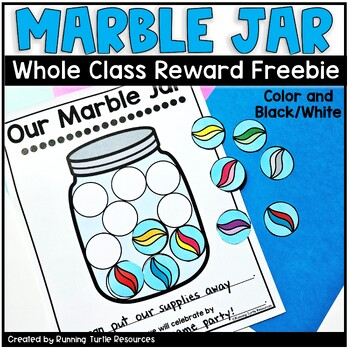
Just set a goal, choose an incentive, and watch your students work together to earn their reward! It’s a great way to build classroom community and keep things running smoothly.
Measurable Behavioral Goals Examples
As always, adapting your IEP goals for each student to meet them where they are at is essential.
The student’s task avoidance IEP goals are essential for review as you update the IEP. You can create specific behavior goals for students with individualized education plans to help them succeed in the classroom.
Here are some specific preschool IEP behavior goals you can use.
– Student can follow one step directions throughout the classroom.
– Student can listen to one step directions throughout the task.
– Student can complete the task after reading a one step direction.
– Student can sit in circle time for 5 minutes, with their classmates.
– Student can sit and listen during circle time for 5 minutes.
– Student can transition from one activity to another.
– Student can work with simple manipulatives.
– Student can use an appropriate fidget toy.
– Student can transition from one activity to another without frustration.
– Within one year, when a student is frustrated, he or she will not push, kick, or hit to cause any physical harm to his or her classmates.
– Within one year, when a student is frustrated or angry, they will deal with their emotions in an appropriate way, such as stomping foot, showing a verbal expression or more.
With a preschool class, it’s essential we show them classroom rules in a positive manner. A school district will usually have plans in place for that. Once you have your baseline data, it’s easy to continue collecting progress information from your students.
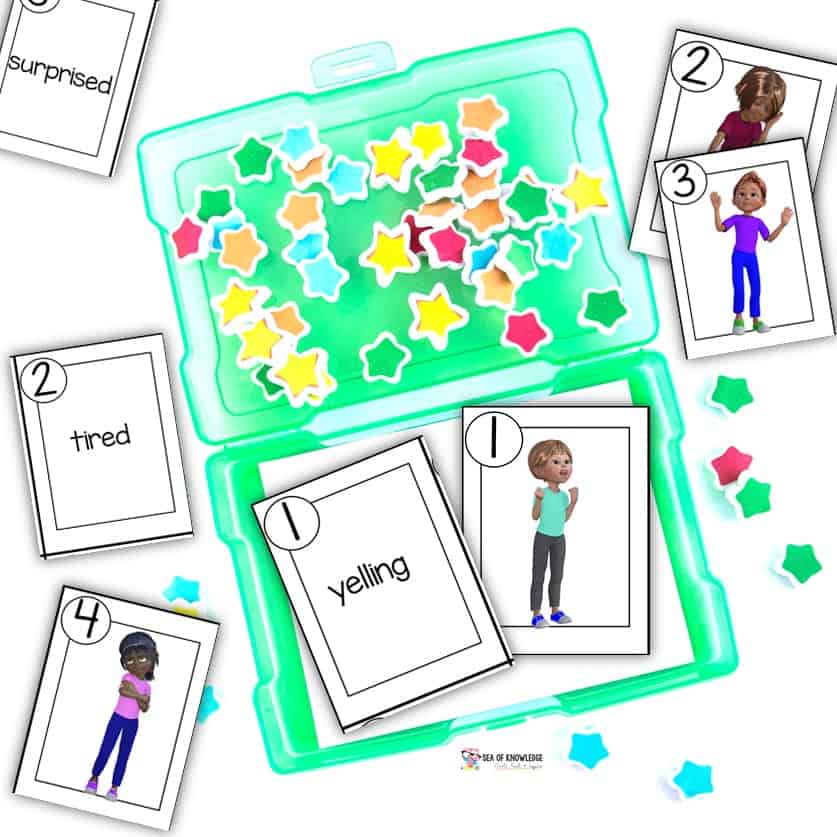
Free Social Skills activities for kids!
Preschoolers will still be working on self-regulation skills in the classroom and at home, it’s essential we don’t forget these and I’ve outlined 50 IEP social skills at this post here to get you started. There are some SEL goals that you could also add to your program.
Sometimes, it’s enough to give a verbal cue to a student to redirect them when they’re doing an undesired task. Sometimes, in stressful situations we need to adapt out goals and individualized education program (IEP) for each student to suit their levels and abilities.
Problem behaviors don’t always start out at school, but they most certainly start appearing more in the classroom and the general education setting.
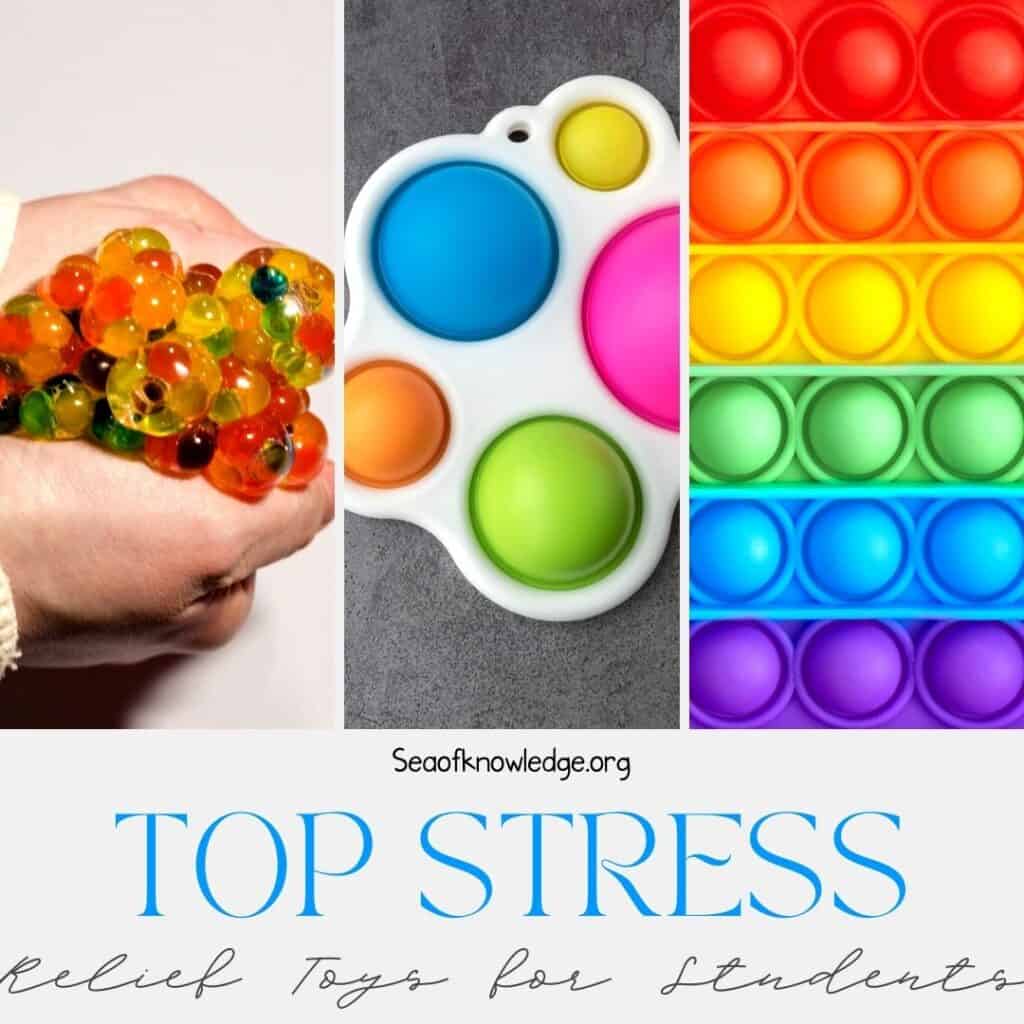
BEST Stress Relief Toys for Students and Kids
If you find that the student is having a hard time to finish complete tasks, try a quiet space break or the use of an appropriate fidget toy. Once they are able to focus again, have them return to the assigned task.
Important Positive Self-talk for Students
School psychologists will always advise that positive self-talk is so important. teaching students and our children to do this regularily, will create a positive environment and will in turn, help reach more academic goals in the long run.
Sometimes kids will show withdrawn behavior and this has a lot to do with their own home life, or even simple not having their needs met like food and shelter.
A family member may be concerned with these behaviors, so they might reach out for help.
Students will usually respond well to scenarios of social conflicts in the classroom to act out appropriate behavior. Having a set daily routine will encourage positive behaviors.
Social Stories for Modeling Appropriate Behaviors
I love using social stories to manage and redirect appropriate behavior. Sometimes targeting specific behavior goals with them like calm down techniques and more.
Student success is often not immediate, however over the course of several years, they will learn the use of self-regulation strategies and deep breathing techniques for example.
Sign into the site below to grab your goal tracking sheet:

Behavior IEP Goals Goal Tracking Sheet Free
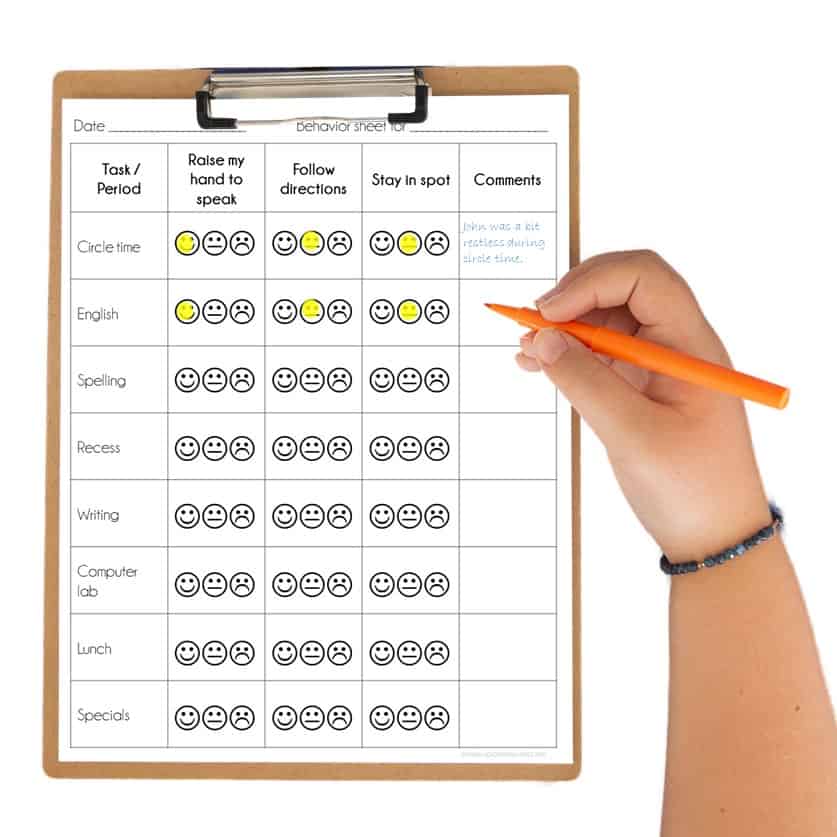
Use this sheet to help track behaviors during different times of the day. It contains a blank section to add your own times or subjects.
Teachers can quickly mark each goal during different tasks or subjects and add comments for easy communication with parents. 🙌
This is especially helpful for behavior IEP goals, daily check-ins, positive behavior support plans, and classroom management systems. It can be used as a behavior intervention tool, student reflection sheet, behavior data tracking, or a simple visual behavior chart to build consistency in routines.
How to use it:
✔️ Print and laminate for daily use
✔️ Use dry erase markers to save paper
✔️ Send home for parent communication
✔️ Pair with your SEL lessons, calm down strategies, or positive reinforcement systems
Don’t forget to grab your IEP goals sheet here and this free behavior chart is perfect for supporting your students’ social-emotional growth each day. I
t includes clear visuals with smiley faces to help kids self-monitor goals like raising hands to speak, following directions, and staying in their spot.
Social Emotional Learning Activities
Whether you’re looking for hands-on SEL activities for elementary students, interactive social-emotional learning games, or engaging SEL group activities, our related blog posts have you covered. Each post offers a variety of creative and practical ideas that are easy to implement, making it simple to integrate SEL into your daily routine.
- Guess the Emotion Card Games Preschool Worksheets
- Free Fun Social Emotional Coloring Activities
- Egg Basket Printable Craft for Impulse Control Activities For Kids
- Journal Worksheets for Social Emotional Activities
- Fun Emotions and Senses Preschool Worksheets
- Free Printable Worksheets to Boost Social and Emotional Skills
- How to Use Emotional Flashcards Preschool Worksheets
- Social Emotional Coloring Pages for Early Learners
- Creative Social Emotional Craft Ideas to Celebrate School Year
- Free PDF Fun Emotional Regulation Activities
- Mr. Bear Emotional Regulation Preschool Worksheets
- My Basket of Emotions Kids Printable Worksheets
- Fun Virtual Social Emotional Activities for Kids
- Back To School Routine Printable Booklets
- Social Activities for Children with Special Needs
- Fun Social Emotional Activities for Preschoolers
- Social Skills Activities for Special Needs Students
- Engaging Social Skills Coloring Activities
- Fun Behavior Activities for Kids




Thank you for sharing these IEP items. They will be very helpful in keeping the children skills and goals organized.
I am not able to find the download button for these, but would really like them. Where it says “click here” it is just to sign up, which I did.