WH Questions Exercises Using Fun I Spy Picture Scenes [Free Library Scene Set]
Looking for engaging WH questions exercises? This printable I Spy library activity helps students build speech, language, inferencing, vocabulary, and comprehension skills through fun picture-based learning.
If you’ve ever worked with a child who struggles to answer questions like “Who?”, “What?”, “Where?”, or “Why?”, you know how challenging it can be to keep them engaged. Traditional worksheets often feel repetitive, and many students need visual support to fully understand what they’re being asked.
That’s why I love using WH questions exercises built around detailed picture scenes. Instead of answering questions in isolation, students can search, observe, discuss, and explain what they see. It turns a simple language activity into an engaging conversation starter that supports multiple communication skills at once.
If your students enjoy picture-based language activities, they may also love these WH questions Easter task cards. Seasonal scenes provide another fun way to practice answering who, what, where, when, and why questions while building observation and comprehension skills.
In this post, I’ll share how I use these printable WH questions worksheets to support speech therapy, language development, oral language skills, and critical thinking activities for a wide range of learners.
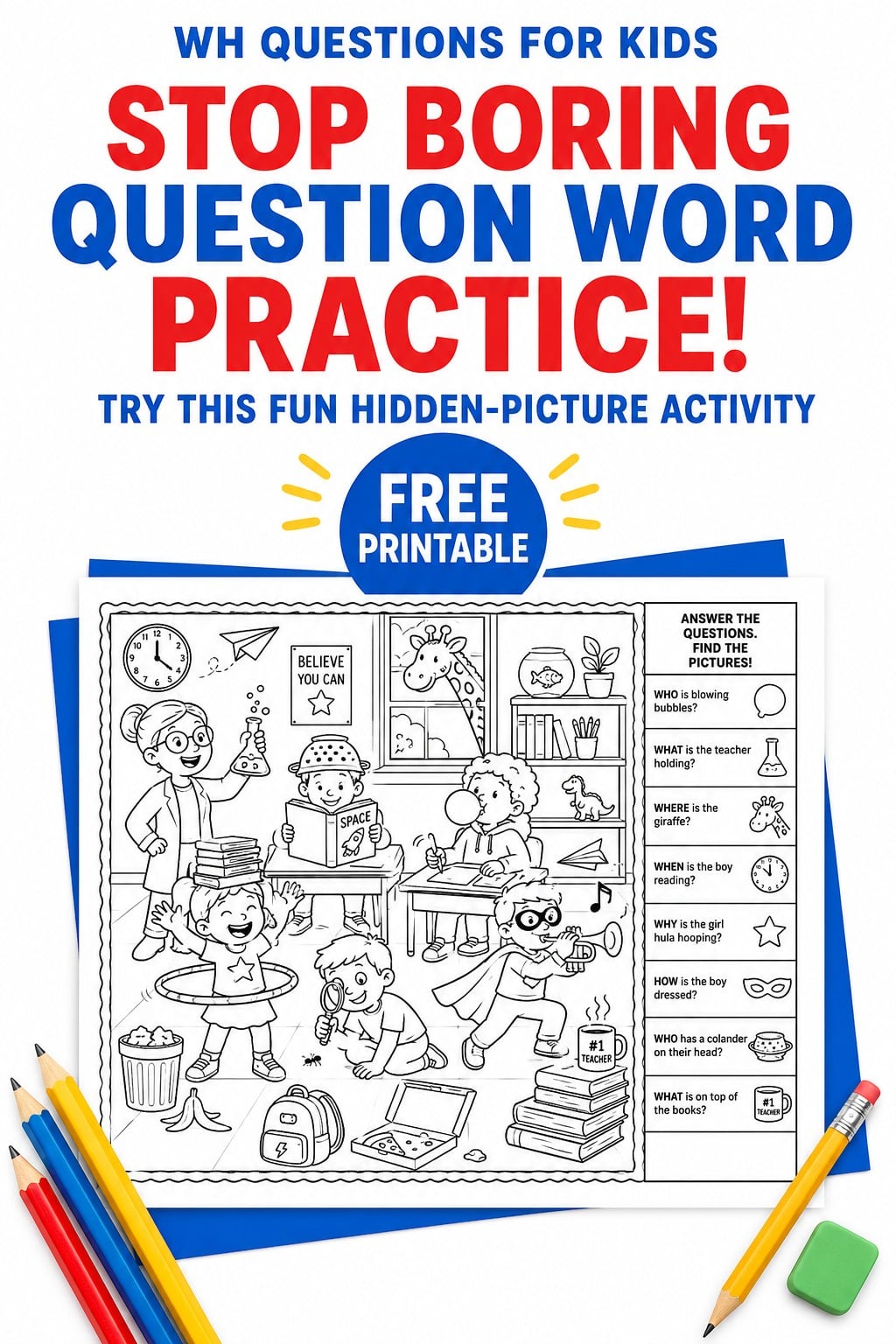
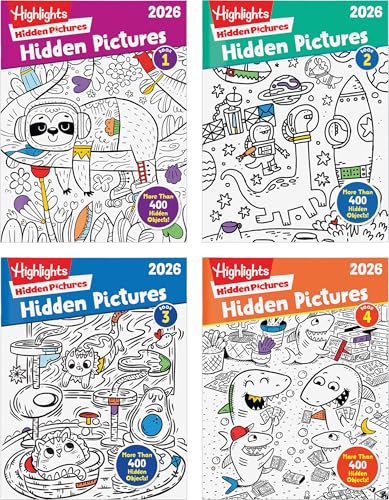
If your students love searching for hidden objects, I’ve also found that hidden picture books make a great companion activity before introducing WH questions and language discussion tasks.
I often let students complete a hidden picture page first, then move into WH questions. The search activity gets them looking closely at details, which makes it easier for them to answer comprehension and inferencing questions afterward.
Some Speech and I Spy Activities You May Like:


- Hardcover Book

What Are WH Questions?
WH questions are questions that begin with words such as:
- Who
- What
- Where
- When
- Why
- How
These questions help students gather information, explain their thoughts, and participate in conversations. Strong WH question skills are important for reading comprehension, social interactions, classroom discussions, and everyday communication.
Many speech therapists and teachers specifically target WH questions exercises because they help build both receptive language skills and expressive language skills.
For students who need additional language support, these WH questions for speech therapy activities provide targeted practice with question answering, sentence expansion, and receptive language development. I often find that combining visual scenes with structured questioning helps keep learners engaged for longer.
For example:
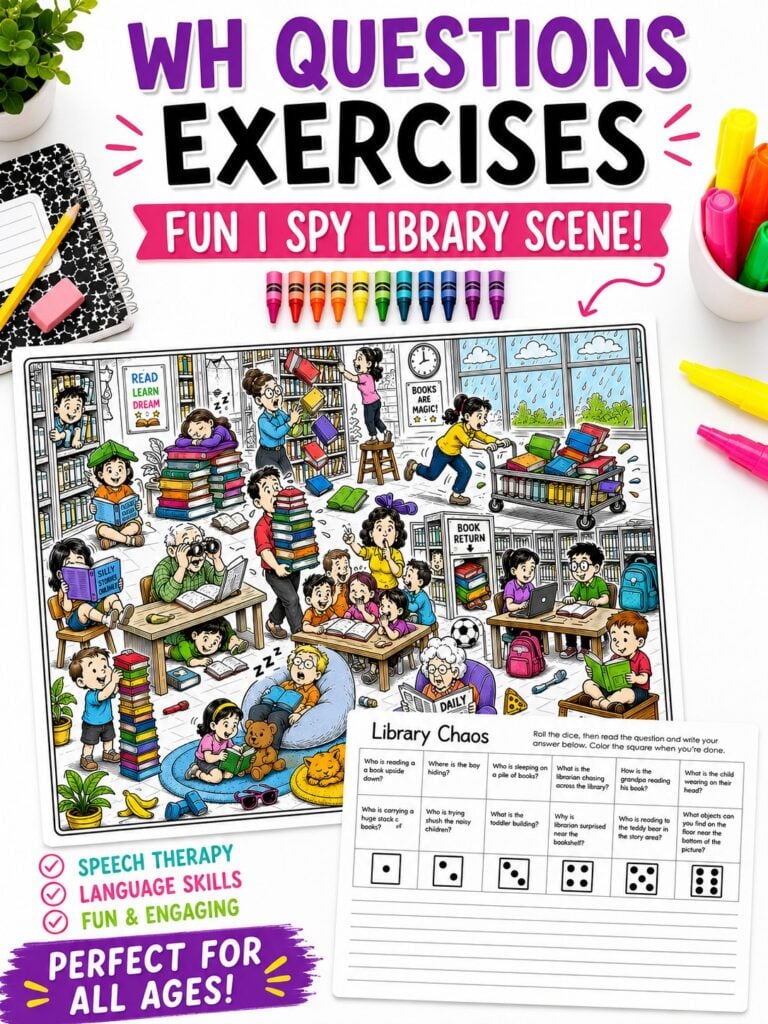
- Who is reading a book?
- Where is the child hiding?
- Why is the librarian surprised?
- What is the toddler building?
As students answer these questions, they learn to process information, make observations, and communicate their ideas clearly.
Why Visual Activities Work So Well for WH Questions Exercises
One reason many students struggle with WH questions is that they cannot easily visualize the information being discussed.
Using picture comprehension activities gives learners immediate visual support. Instead of trying to remember details from a story or conversation, they can look directly at the scene and search for clues.
Many students working on WH questions are also developing conversation and social communication skills. These social pragmatic goals speech therapy ideas can help learners practice turn taking, topic maintenance, and responding appropriately during discussions about picture scenes.
Visual activities support:
- Language development activities
- Speech therapy activities
- Listening and speaking skills
- Vocabulary development
- Inferencing activities
- Critical thinking activities
When students have something interesting to look at, conversations happen much more naturally.

- 4-BOOK SET OF HIDDEN PICTURES FUN – A favorite…
- DOUBLE THE ACTIVITIES – Black-and-white puzzles…
- BUILD SKILLS THROUGH PLAY – Hidden Pictures…
Using I Spy Pictures for Speech Therapy
These printable WH questions exercises work especially well during speech therapy sessions.
Themed activities are another great way to motivate reluctant learners. These camping speech therapy activities combine language practice with exciting outdoor adventure themes, making speech sessions feel more like play than work.
Speech therapists can use the same picture scene to target multiple goals at once.
For example, students can:
- Answer WH questions
- Practice complete sentences
- Build descriptive vocabulary
- Explain their reasoning
- Improve conversation skills
- Strengthen inferencing abilities
Instead of simply asking, “Who is sleeping?” you can encourage students to expand their answers.
Basic response:
“The girl is sleeping.”
Expanded response:
“The girl is sleeping on top of a huge pile of books.”
Advanced response:
“I think the girl is tired because she fell asleep while reading.”
One picture can generate dozens of opportunities for language practice.
What’s Included in This WH Questions Activity?
This printable includes two engaging pages.
When students identify objects and characters in busy scenes, it creates natural opportunities to practice articulation targets too. These z words speech therapy activities can easily be paired with picture discussions to increase opportunities for speech sound practice.
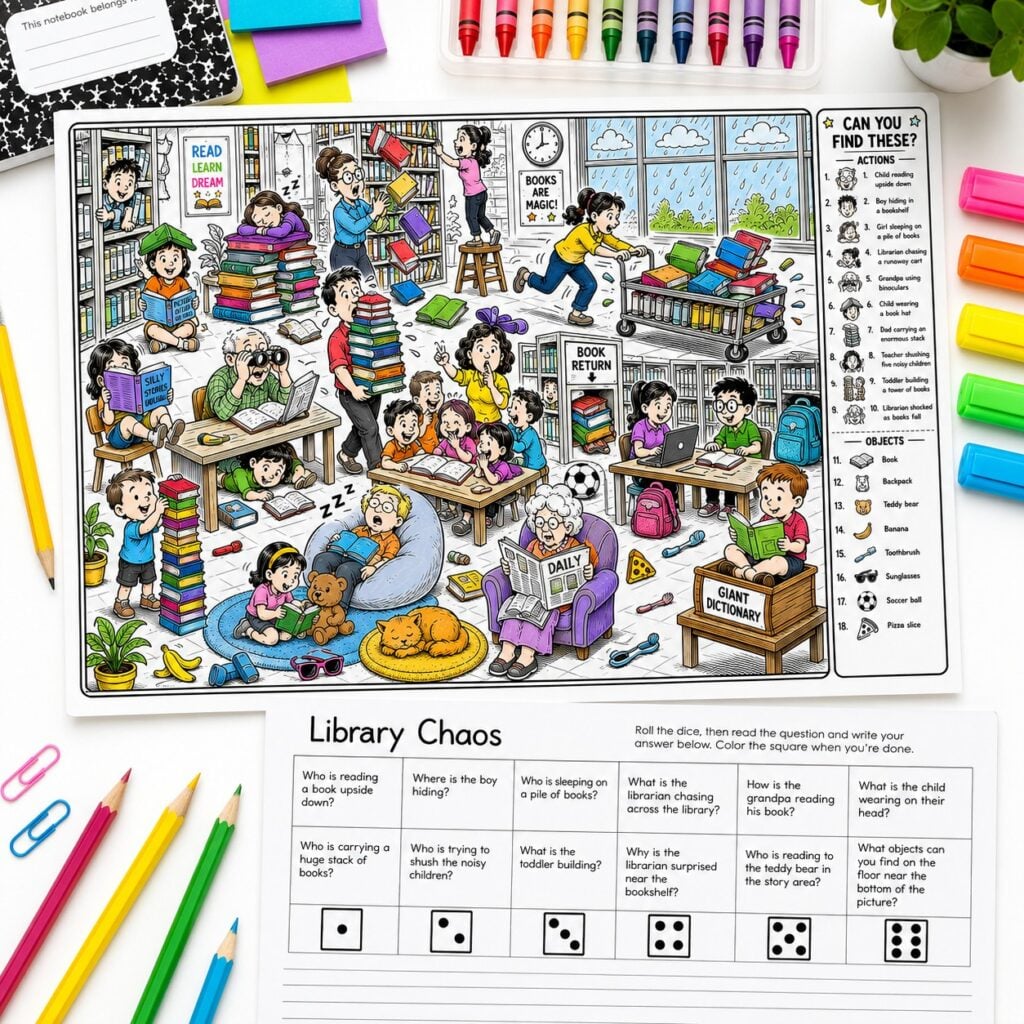
The first page features a detailed library-themed I Spy picture scene packed with funny characters, hidden objects, and unexpected situations.


- Highlights silliest hidden pictures puzzle book…

Students search for:
- A child reading upside down
- A boy hiding in a bookshelf
- A librarian chasing runaway books
- A grandpa using binoculars
- Hidden objects throughout the scene
The second page includes a set of discussion prompts and WH questions exercises designed to encourage students to think more deeply about what they observe.
Questions include:
- Who is carrying a huge stack of books?
- Where is the boy hiding?
- Why is the librarian surprised?
- What objects can you find on the floor?
These prompts move beyond simple identification and encourage students to explain their thinking.
Skills Students Practice During These WH Questions Exercises
Vocabulary Development
Students encounter new words naturally while describing what they see.
This type of vocabulary activity helps learners connect words with meaningful visual contexts.
Listening and Speaking Skills
Students practice answering questions verbally and participating in discussions.
This makes the activity ideal for oral language activities and speaking and listening activities.
Inferencing and Critical Thinking
Some questions require students to think beyond what is directly visible.
Picture-based language activities can also be adapted for younger learners. If you’re working with little ones, these tips for speech therapy for toddlers offer simple ways to encourage vocabulary growth, question answering, and early communication skills through play.
For example:
“Why is the librarian surprised?”
Students must examine clues and make logical predictions.
This turns the activity into an engaging inferencing activity rather than a simple worksheet.
Sentence Building
Many students answer WH questions using only one or two words.
This printable provides opportunities to encourage complete sentence responses and more advanced language structures.


Visual Attention and Observation
Students must carefully search the scene to locate characters, actions, and hidden objects.
These observation skills support both language learning and reading comprehension.
Who Can Use These WH Questions Exercises?
One of my favorite things about these printables is how flexible they are.
You can even extend these library scenes into articulation practice by asking students to find and describe objects containing target sounds. These k words speech therapy activities are a great companion for combining speech production with language development.
Speech Therapy
Perfect for targeting:
- WH questions
- Inferencing
- Vocabulary
- Sentence expansion
- Conversation skills
Special Education
Students benefit from visual supports that reduce language demands while increasing engagement.
ESL and EAL Learners
These ESL speaking activities provide meaningful opportunities to practice English vocabulary and sentence structure.
Adult ESL learners can also benefit because the scenes encourage discussion without requiring advanced reading skills.
For learners working on articulation and expressive language at the same time, these s sounds speech therapy activities provide plenty of opportunities to practice target sounds while answering questions, describing pictures, and building complete sentences.
Elementary Classrooms
Teachers can use these pages during:
- Literacy centers
- Small group instruction
- Morning work
- Early finisher activities
- Reading intervention groups
Homeschool Learning
Parents can easily use these language development activities at home with minimal preparation.
How to Differentiate WH Questions for Different Ability Levels
One of the easiest ways to adapt these activities is by adjusting the level of language expected.
Level 1: Point and Identify
Students answer using one word.
Example:
“Girl.”
Level 2: Complete Sentences
Students answer using a full sentence.
Example:
“The girl is sleeping on a pile of books.”
Level 3: Expanded Responses
Students add details.
Example:
“The girl is sleeping on a pile of books near the bookshelf.”
Level 4: Inferencing and Discussion
Students explain their thinking.
Example:
“I think the librarian is surprised because books are falling off the shelf.”
This simple adjustment allows the same activity to work across many ages and ability levels.
More Than Just a WH Questions Worksheet
Although this resource focuses on WH questions exercises, it also supports:
- Speech therapy activities
- Expressive language activities
- Receptive language activities
- Picture comprehension activities
- Oral language activities
- Inferencing activities
- Conversation activities
- Critical thinking activities
- Vocabulary development activities
That’s what makes it such a versatile addition to a language toolkit.
Grab Your WH Questions Exercises Printable
If you’re looking for engaging WH questions worksheets that go beyond simple drill practice, this printable is a fun way to encourage conversation, vocabulary growth, observation skills, and language development. Grab these library scene I spy scene here with WH questions.
Whether you’re a speech therapist, teacher, homeschool parent, special educator, or ESL instructor, these picture-based WH questions exercises provide meaningful opportunities for students to talk, think, and communicate while having fun.