Respecting Others Social Skills for Kids: What NOT to Do in the Classroom
Respecting others social skills for kids doesn’t have to be stressful, boring, or impossible. Skip the endless lectures and try these fun scenarios, games, and a free printable that actually work.
So, I don’t know about you, but every time I try to explain respect to kids, I feel like I’m describing an alien language. I’ll say, “Respect means treating others how you want to be treated,” and they nod like little philosophers—then immediately snatch a crayon right out of someone else’s hand. Classic, right?
It’s one of those essential social skills we need to not only teach, but lead by example.

But here’s the thing: respecting others social skills for kids isn’t just about saying “please” and “thank you.”
It’s about those little everyday choices—listening, waiting, not rolling their eyes at their teacher (ahem, me). There are social skills stories and social scenarios which I will delve deep into here.
I’ve packed this and so many other social skills into the social scenarios mega bundle, because honestly, the world needs more tools to help our kids grow up in inclusive spaces where everyone can belong.
And let’s face it—sometimes just modeling respect isn’t enough.
And if you’re looking for more than just one story? I’ve got you covered with a complete social story bundle filled with over 40+ social skills stories to guide kids through tricky moments. But first, let’s dive into this freebie!
Social Skill Stories (written in language for kids):
What Are Good Social Skills Anyway?
So before I explain good social skills, here is the difference between scenarios and social narrative. Social Narratives these are like mini-stories. A social narrative walks kids through a situation step-by-step, almost like a script. They usually explain:
- What’s happening (“When it’s time to line up for recess…”)
- What the child should do (“I stand behind the person in front of me…”)
- Why it matters (“This helps everyone stay safe and get outside quickly.”)
They’re written in clear, predictable language (often in first-person “I” statements) and are great for kids who need extra support understanding routines, expectations, or feelings.
Social scenarios, on the other hand, are like practice problems. Instead of giving the “answer,” they present a situation and ask the child to think it through. For example:
- “Sam lost his pencil and sees one on his friend’s desk. What should Sam do?”
- “Your friend is talking, but you really want to share your idea. What’s the respectful choice?”
These encourage kids to problem-solve, reflect, and talk about multiple possible responses.
You know how people ask, what are good social skills? Honestly, for kids, it’s the basics:
- Not interrupting when someone’s speaking.
- Sharing even when it’s your favorite marker.
- Saying “excuse me” instead of bulldozing through a line.
I mean, I don’t expect them to write a thesis on emotional intelligence, but a simple “Thanks for letting me play” goes a long way.
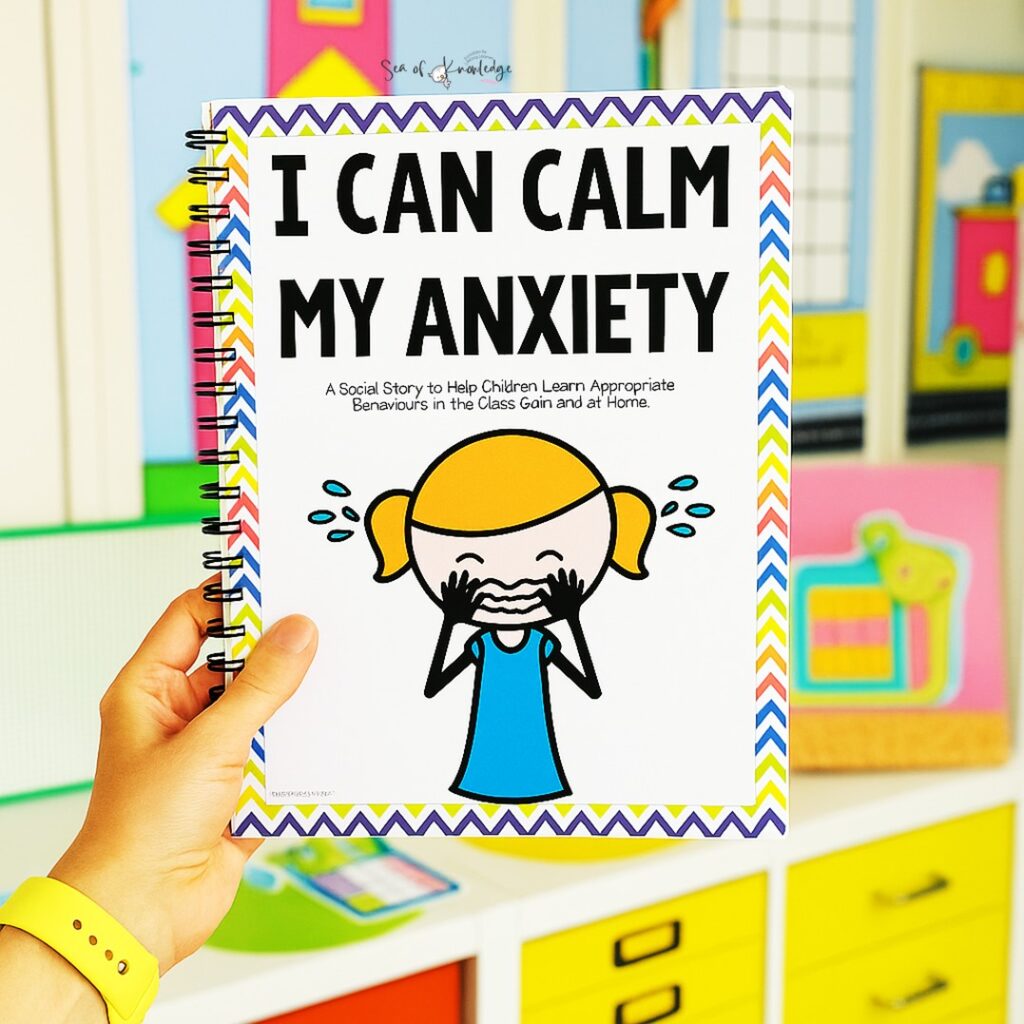
For many students, saying goodbye can feel overwhelming because it triggers worry. That’s why I like to pair this with an anxiety social story to help children recognize and manage those anxious feelings.
Funny Little Scenarios to Act Out
One of my favorite tricks is role-play. You’d be amazed how much kids learn by pretending. Like, imagine this:
- One kid pretends to be the “talker” and the other the “listener.” Listener’s job? Just nod, smile, and not blurt out, “That’s boring!” (It’s harder than you think.)
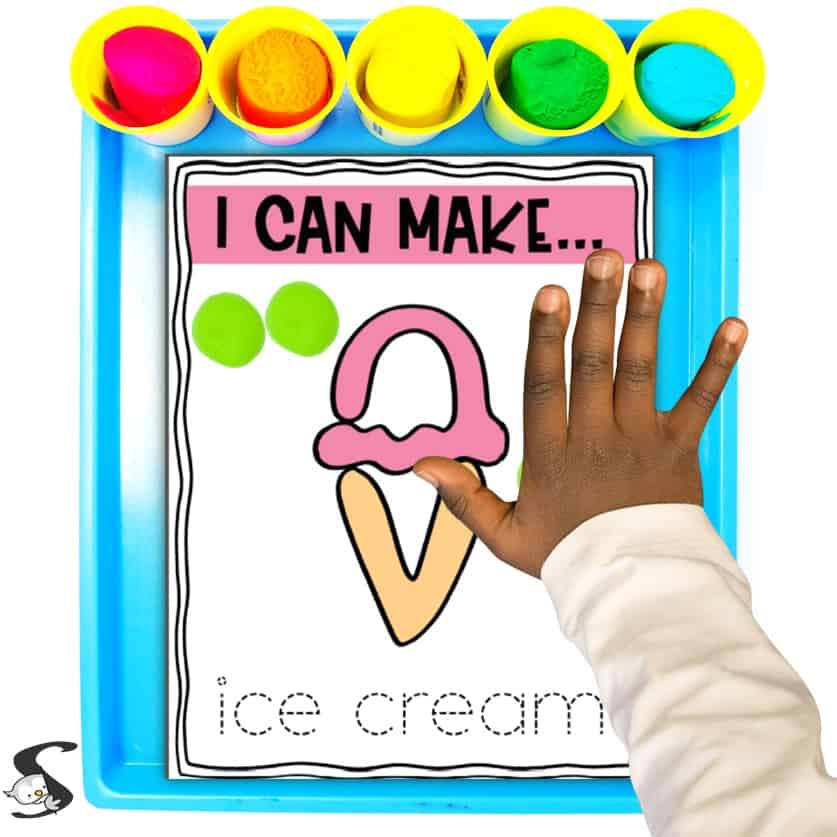
- Another scenario: sharing the last piece of Play-Doh without making it a courtroom drama.
These quick activities show examples of respecting someone in action, and they crack kids up while teaching at the same time. Win-win.
Along with practicing routines, you can support comprehension skills with wh questions for kids—a fun way to build language and understanding during SEL activities.
Respect Games That Actually Work
Let’s be real—kids will learn way more through games than through my mini-lectures. A few I love:
- Compliment Toss: Throw a ball, and whoever catches it has to say one nice thing about someone else.
- Respect Charades: Act out something respectful (holding the door, helping someone pick up their crayons), and the others guess what it is.
- The Talking Stick: Only the person holding the stick can speak. Everyone else has to wait. (And yes, they LOVE snatching that stick.)
Anther one on TPT which I recommend and it’s FREE: Character Education Respect Activity Pack – Social Emotional Learning Activities
“This Showing Respect FREEBIE is perfect for teaching your students about respect and the different ways they can show themselves, others, and their school respect! It has three pages of printable activities to accompany your social responsibility and character education lessons!”

Just like teaching respect can be tricky, so can handling disappointment. That’s why this accepting no social story is a great tool to pair with your SEL lessons—it helps kids learn how to cope when things don’t go their way.
Social Skill Stories (written in language for kids):
Teaching Respect Reading Comprehension
Okay, let’s be honest—sometimes teaching respect feels like shouting into the void. You can give the best pep talk of your life and five minutes later, bam—two kids are fighting over a purple marker again.
In the Respecting Others activity pack, you’ll find 20 texts the first 10 are at a level 1 great for grades 1-2 and the level 2 can be used with kinders and SPED.

That’s exactly why I made this little gem free for you here: Respecting Others Free Social Scenario SEL Printable Reading Comprehension.
Here’s what’s inside:
- Short, kid-friendly passages all about real-life moments where respect is tested. (Think: waiting in line, losing a game, borrowing supplies without being a tornado about it.)
- Simple comprehension questions after each passage to make sure kids actually “get it.”
- Built-in discussion starters so you can turn a worksheet into a whole class conversation about examples of respecting someone.
Transitions don’t just happen at the end of the school day. Preparing students with a field trip social story can make outings smoother and less stressful for everyone involved.
The best part? It’s super low-prep. You literally print, pass out, and let the magic happen.
I used this with my kiddos, and it sparked the funniest (and surprisingly deep!) discussions. One student even told me, “Respect means not licking someone else’s ice cream.” I mean… technically correct?
If you’ve been looking for a way to sneak in social skills respecting others practice without adding to your never-ending to-do list, this freebie is a lifesaver. And hey, it’s free. Who doesn’t love that?
At the end of the day, social skills respecting others don’t come naturally to most kids. They need us modeling, reminding, and sometimes bribing (yep, I said it). But with a few fun games, silly scenarios, and maybe a freebie or two, teaching respect doesn’t have to feel like pulling teeth.
So next time a kiddo snatches that crayon, just remember—you’re not alone. We’re all in the Respect Olympics together.
Grab the Free Token Board to Pair With This Social Story
If you are using this keeping clothes on social skills story, I highly recommend pairing it with a simple token board. Kids do so much better when there is something visual and concrete they are working toward, especially when we are teaching a new boundary or replacement behavior.
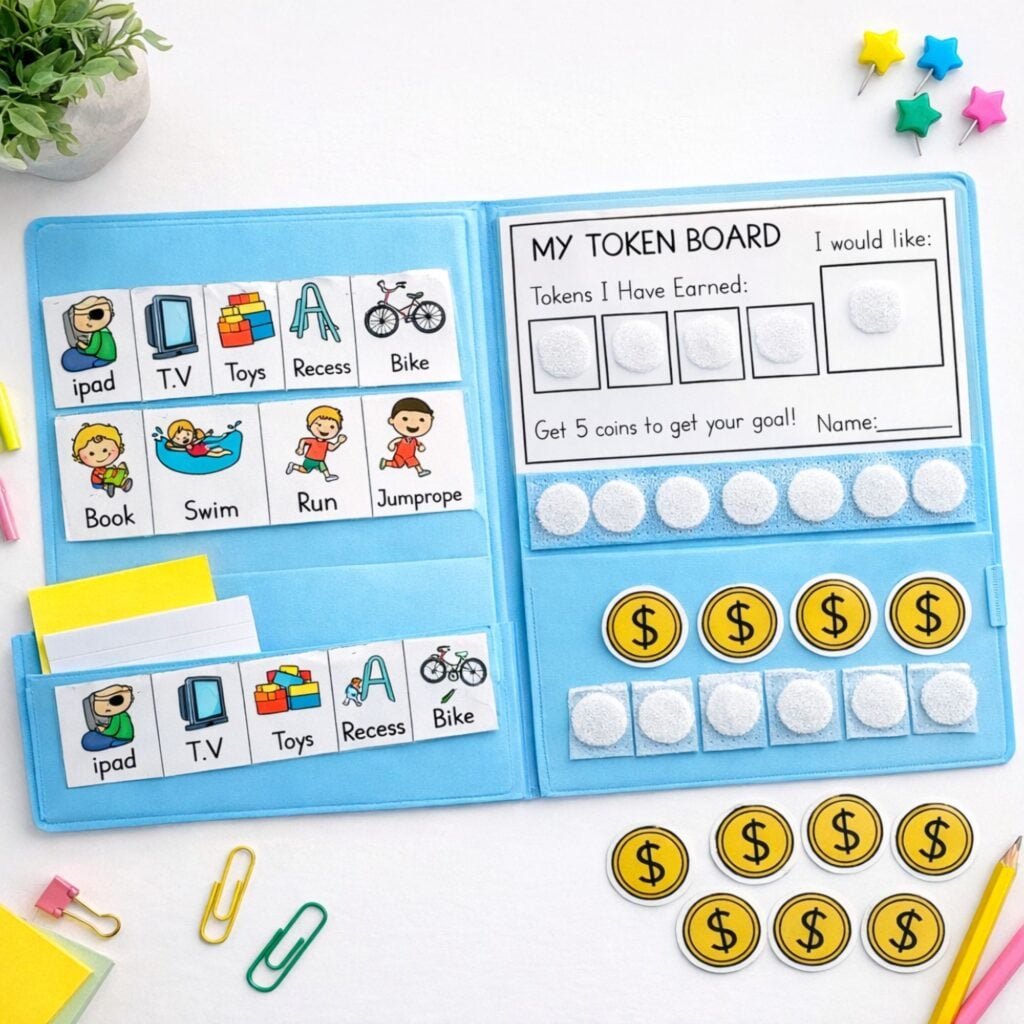
I created a FREE printable token board that you can laminate and use with Velcro coins, real tokens, or even little stars. Your student picks a preferred activity, earns five tokens for demonstrating the expected behavior, and then celebrates reaching their goal in a positive and structured way.
It works beautifully with this story, but honestly, it also works with accepting no, toilet routines, gentle hands, and any other social skill you are teaching. You can grab the free token board below and start using it right away in your classroom or at home.