Language Learning Versus Language Acquisition: Why I Ditched Flashcards for Rosetta Stone (and Netflix)
The secret to mastering a new language naturally! Say goodbye to boring textbooks and hello to immersive learning with fun methods like TV shows, music, and real-life conversations.
I used to think learning a new language meant sitting hunched over a textbook, reciting conjugations like a robot and highlighting vocabulary words I’d never actually use in conversation. Turns out, I was doing it all wrong.
If you’ve ever crammed for a Spanish test only to forget everything two weeks later, you’ve experienced the difference between language learning (painful, unnatural) and language acquisition (effortless, immersive). So, let’s talk about why the latter is the secret sauce to real fluency—and how Rosetta Stone became my go-to tool for acquiring languages the right way.
I started using it for my ELL newcomers and it became my favorite tool for checking on their progress, assigning them new work and bets of all. What language learners need – pronunciation and focused conversational skills.
Heck, it even worked with my speech therapy students!
Starting your ESL lessons with engaging bell ringers can set a positive tone for the class. For creative ideas on how to get your students thinking in English right away, check out these helpful ESL Bell Ringers.

Disclosure: This post contains sponsored links. If you make a purchase through these links, I may earn a small commission at no extra cost to you. I only recommend products and services I personally trust and believe in.
Why Traditional Language Learning Fails Many Learners
Let’s be real. Memorizing grammar rules from a textbook feels about as exciting as watching paint dry. And what’s worse? It rarely sticks. Traditional language learning relies on rote memorization, translation exercises, and forced drills—none of which reflect how we naturally pick up our first language.
Think about how babies learn to talk. They don’t study verb charts or take quizzes. They’re surrounded by language, absorbing words, and making connections through real-world experience. Meanwhile, adults are stuck writing out “Je suis, tu es, il est…” like it’s a spell from an ancient textbook.
The problem? Learning a language consciously (through traditional methods) doesn’t activate the same brain mechanisms as acquiring one naturally.
This is why I sought out to find some NEW ways I can help my own ESL students learn the language, enjoy it and most of all – actually use it.
If you’re looking for great resources to reinforce language learning, ESL Workbooks are a fantastic way to practice and solidify new vocabulary and grammar skills.
The Secret to Acquiring a Language Like a Native Speaker
If you’ve ever binge-watched a foreign TV series and suddenly started mimicking phrases, congratulations—you’ve experienced language acquisition in action.
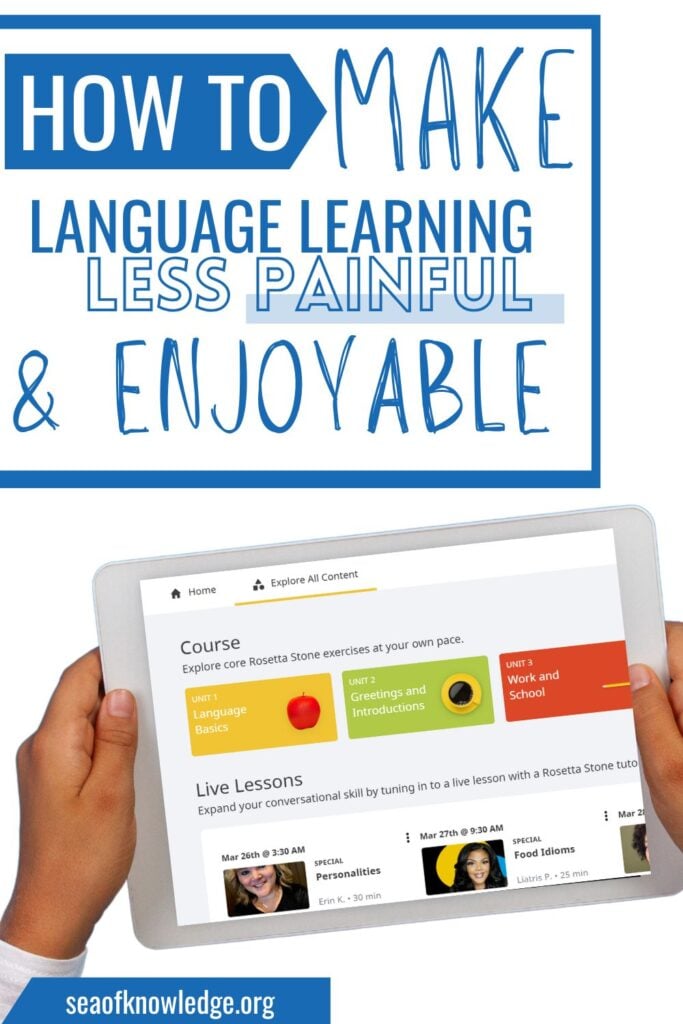
When we immerse ourselves in a language, we pick up pronunciation, sentence structure, and meaning without even realizing it. That’s why methods like:
- Watching TV shows in your target language (hello, Money Heist)
- Listening to music (Despacito on repeat, anyone?)
- Reading simple books or comics
- Surrounding yourself with native speakers
…work so well. They mimic how we learned our first language—through context, repetition, and real-life interaction.
And that’s exactly what makes Rosetta Stone different from old-school learning methods.
To boost fluency, practicing sight words through sentence creation is key. Get started with some effective Sight Word Sentences Worksheets to help your students put words into context.
Why Rosetta Stone is the Next Best Thing to Living Abroad
I’m not saying you need to pack up and move to Paris to finally master French (although, if you do, can I visit?). But the beauty of Rosetta Stone is that it recreates the immersive experience of being surrounded by a language—even if you’re sitting at home in pajamas.
Instead of throwing vocabulary lists at you, Rosetta Stone:
- Uses images, sounds, and context to teach meaning (no translation needed!)
- Focuses on pronunciation with speech recognition technology (goodbye, awkward mispronunciations)
- Reinforces words and phrases naturally over time, so they actually stick
I tried this as a group activity with my ELL learners and they LOVED the experience of having to actually hear speakers with real pronunciation and hence repeating them.
It’s like learning the way a native speaker would—by being in the language rather than analyzing it like a science experiment.
And unlike classroom-style learning, you’re not just memorizing words—you’re actually thinking in the new language.
Which in turn helps you acquire the language more easily.
Keep your classroom visually engaging with creative ESL Bulletin Board Ideas that inspire language learning and promote student participation.

But Don’t Just Take My Word for It…
Studies have shown that immersive methods lead to better retention and fluency than traditional memorization. In one study, learners using Rosetta Stone improved their speaking skills significantly compared to those relying on textbook-based methods. And countless users rave about how it helped them finally break through language barriers.
One review I saw said: “After years of Duolingo and random flashcards, Rosetta Stone was the only thing that made me feel like I could actually hold a conversation.”
Conversational skills are what my ELL learners constantly complain about. Whether they were adults or younger students.
To improve listening skills, it’s essential to incorporate interactive and fun activities. Discover effective ESL Listening Activities that will make learning English both enjoyable and impactful for your students.
Want to Acquire a Language Naturally? Start Today!
If you’re ready to help your students (or yourself) stop memorizing and start speaking, Rosetta Stone’s immersive method is the way to go. And the best part? You can try it for free today.


Who knows? In a few months, you might just be dreaming in Spanish. Or at least maybe your students will become masters of the English spoken language!