
Being Gentle with Pets Social Story – Teach Kids Kindness with Pets
Don’t let rough play hurt your pets or confuse your students—this being gentle with pets social story teaches kids exactly how to treat animals with care. Includes editable visuals, calming strategies, and printable rewards so you don’t have to guess what works.
If you’ve ever caught your toddler “loving” the cat a little too hard or chasing the dog with superhero enthusiasm, you know how tricky it can be to explain boundaries. That’s where a being gentle with pets social story can truly work its magic.

Social stories are powerful tools for helping children understand new situations, especially when it comes to behavior and emotional regulation.
Whether a child is neurodivergent or just young and still learning, a social story gives them something clear and consistent to lean on.
To expand your collection of visual narratives like this being gentle with pets social story, check out these printable social story templates. They’re easy to personalize and can be used to support a wide range of classroom routines and behaviors.
In this post, you’ll find:
- Why teaching pet safety for kids is a must
- Why children of all abilities connect so well with social emotional learning pets stories
- How to use this gentle touch story to teach empathy and care
- Ways to extend the lesson using interactive tools like visuals, sticker rewards, and behavior check-ins
Let’s dig into it!
Grab the Free Token Board to Pair With This Social Story
If you are using this keeping clothes on social skills story, I highly recommend pairing it with a simple token board. Kids do so much better when there is something visual and concrete they are working toward, especially when we are teaching a new boundary or replacement behavior.
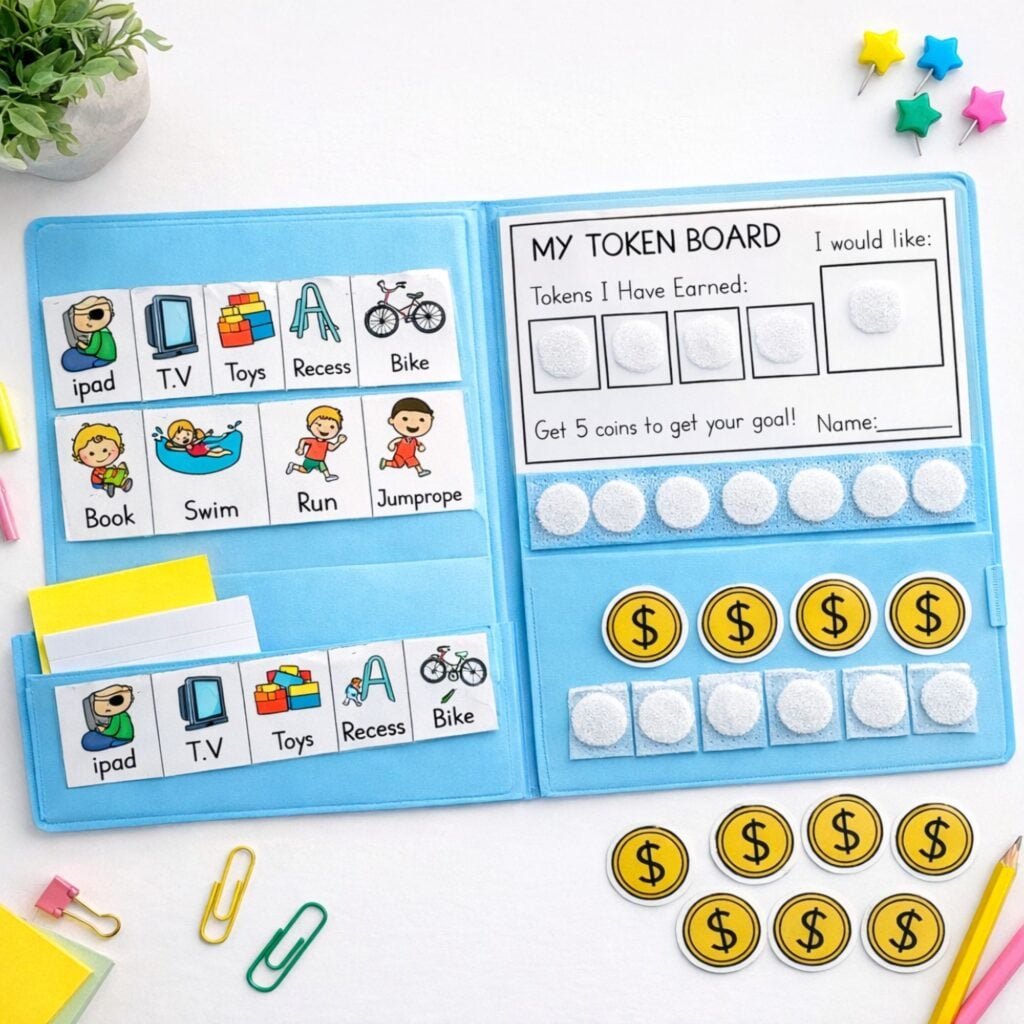
I created a FREE printable token board that you can laminate and use with Velcro coins, real tokens, or even little stars. Your student picks a preferred activity, earns five tokens for demonstrating the expected behavior, and then celebrates reaching their goal in a positive and structured way.
It works beautifully with this story, but honestly, it also works with accepting no, toilet routines, gentle hands, and any other social skill you are teaching. You can grab the free token board below and start using it right away in your classroom or at home.
[Grab the FREE Token Board Here]
Why Is It Important to Educate Kids on How to Handle Pets?
It might seem obvious to us, but teaching toddlers to be gentle with pets isn’t something that happens automatically. Little ones are still developing impulse control, body awareness, and empathy.

Without clear guidance, children may tug ears, grab tails, or run at full speed toward a nervous pet. That’s not only scary for animals, but it can lead to bites, scratches, or long-term fear—on both sides.
If you’re planning outings with your students or little ones, this field trip social story is a must. It walks kids through what to expect on a trip and can help reduce overwhelm and unexpected meltdowns.
Using a pet care social story printable gives kids the language and structure to approach pets safely and lovingly.
Plus, with pet interaction visuals showing what “gentle hands” look like, even non-readers can follow along.
When we model and reinforce respecting animals social story style behaviors, we’re building not just safety—but compassion too.
Just like learning to be gentle with pets, handling frustration is a key emotional skill. This frustrated social skills story teaches kids what to do when big feelings take over in a relatable, visual way.
Social Skill Stories (written in language for kids):
Why Do Kids Relate to Social Stories?
Social stories are bite-sized, easy-to-understand narratives that focus on one skill or routine at a time. The strength of a pet social skills story lies in its simplicity.

Kids relate to social stories because:
- They use visuals and first-person language
- They offer positive pet behavior story models
- They show clear cause and effect
- They feel supportive rather than corrective
Even children with limited verbal skills or those with autism pet interaction needs benefit immensely from the repetitive, visual structure.
When children can anticipate what will happen—and what they should do—it reduces anxiety and increases confidence.
That’s why preschool pet care lessons work best when paired with concrete visuals and stories. Whether it’s cat care for toddlers or dog safety for children, stories help make abstract ideas real.
Struggling with eye contact during conversations? This eye contact social story pairs beautifully with stories about pet interaction, especially for students working on social communication and nonverbal cues.
How to Use the Social Skills Story (Includes Editable Components!)
This editable pet social story is designed to be used at home, in SPED or preschool classrooms, and in therapy sessions. It includes:
- Realistic, kid-friendly illustrations of dogs and cats
- Editable text fields so you can customize the character or pet names
- Reinforcing language around being kind to animals
- Reminders like “I use a quiet voice,” and “I move slowly”
Teachers and parents can print this as a booklet, display it on a gentle hands story for preschool bulletin board, or laminate it for a calm-down corner.

Need to adapt it? No problem. You can swap in a child’s photo, change the pet type, or add your own specific behavior goals. It works beautifully alongside other calming strategies for kids and pets.
Reinforce comprehension after reading your social story with these targeted wh- questions for kids. They’re great for checking understanding and prompting more thoughtful responses during discussion.
How to Use the Social Story and Interactive Elements
You know what makes a good pet safety for kids lesson stick? Repetition and interaction. This printable includes a ton of extras to make that happen:
- Sticker reward sheets: Each time your child uses gentle hands or a quiet voice, they earn a sticker. Motivation = boosted.
- Cut-and-paste sorting activity: Kids sort images into “gentle” and “not gentle.” Great for reinforcing what they’ve read.
- Behavior check-ins: Add an emotion thermometer or feelings chart to help kids reflect. This pairs well with animal empathy activities.
- Discussion cards: Use these for role-play or prompting questions like “What should I do if the puppy runs away?”
This going to camp social story helps prepare children for big transitions—just like learning how to treat pets gently. It’s perfect for students who benefit from predictable routines and visual prep.
It’s not just a pet care social story printable—it’s a full SEL mini-lesson packed with reward chart pet behavior visuals.

Teaching kids to be kind and respectful to animals is about more than just avoiding accidents. It’s about developing compassion, empathy, and emotional awareness—skills they’ll carry into every relationship they build.
This being gentle with pets social story gives children the tools they need to interact safely and kindly with their furry friends.
Whether you’re a parent, teacher, therapist, or homeschooler, this resource helps kids understand expectations, feel proud of their actions, and build lifelong habits of kindness.

By weaving in gentle touch story concepts and pairing them with visuals for pet interaction, we’re giving kids a strong emotional foundation.
Many kids who struggle with pet interaction also show signs of worry or avoidance. This anxiety social story is a gentle, affirming way to help kids identify anxious feelings and build coping tools they can rely on.
Add in some neon stickers and silly voice practice—and trust me, they’ll be begging to read it again.

![Empathy Bulletin Board Ideas [In Your Boots Craft]](https://www.seaofknowledge.org/wp-content/uploads/2023/01/empathy-bulletin-board-ideas.jpg)
I think this is a great idea,we have support dogs at our school that we use for our students that need that extra support……